Kirjojen hintavertailu – 12 859 828 kirjaa ja 27 kauppaa

Kirjailija

Joel S. Baden

Kirjat ja teokset yhdessä paikassa: 13 kirjaa, julkaisuja vuosilta 2009–2025, suosituimpiin kuuluu The Literary History of the Pentateuch. Vertaile teosten hintoja ja tarkista saatavuus suomalaisista kirjakaupoista.

Nimi esiintyy myös muodoissa: Joel S Baden

13 kirjaa

Kirjojen julkaisuvuodet: 2009–2025.

Source Criticism

Source Criticism

Joel S Baden

Cascade Books
2024
sidottu
Source criticism has been at the center of biblical studies for the last two centuries. In that time, it has produced a wide range of theories and approaches, often conflicting. This book provides a concise overview of the major approaches and positions in the field, helping the reader understand where scholarship has been and where it currently stands, and situating each major development within its broader intellectual and social context.
Source Criticism

Source Criticism

Joel S Baden

Cascade Books
2024
pokkari
Source criticism has been at the center of biblical studies for the last two centuries. In that time, it has produced a wide range of theories and approaches, often conflicting. This book provides a concise overview of the major approaches and positions in the field, helping the reader understand where scholarship has been and where it currently stands, and situating each major development within its broader intellectual and social context.
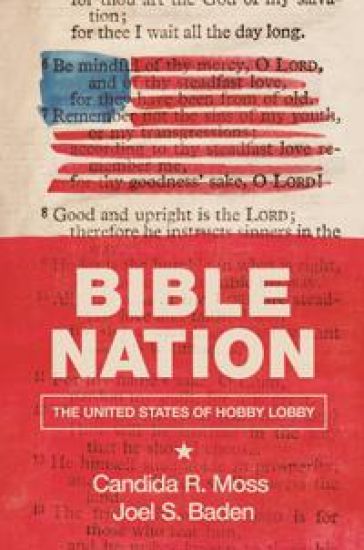
Bible Nation

Bible Nation

Candida R. Moss; Joel S. Baden

Princeton University Press
2019
pokkari
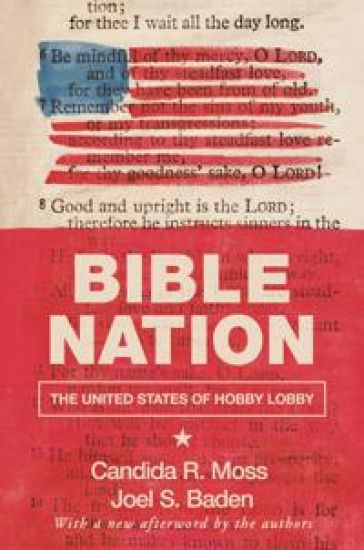
How the billionaire owners of Hobby Lobby are spending hundreds of millions of dollars to make America a “Bible nation”The Greens of Oklahoma City—the billionaire owners of the Hobby Lobby chain of craft stores—are spending hundreds of millions of dollars in an ambitious effort to increase the Bible’s influence on American society. In Bible Nation, Candida Moss and Joel Baden provide the first in-depth investigative account of the Greens’ sweeping Bible projects. Moss and Baden tell the story of the Greens’ efforts to place a Bible curriculum in public schools; their rapid acquisition of an unparalleled collection of biblical antiquities; their creation of a closely controlled group of scholars to study and promote the collection; and their construction of a $500 million Museum of the Bible in Washington, D. C. Revealing how all these initiatives promote a very particular set of beliefs about the Bible, the book raises serious questions about the trade in biblical antiquities, the integrity of academic research, and the place of private belief in public life.
The Museum of the Bible

The Museum of the Bible

Candida R. Moss; Joel S. Baden

Lexington Books/Fortress Academic
2019
sidottu
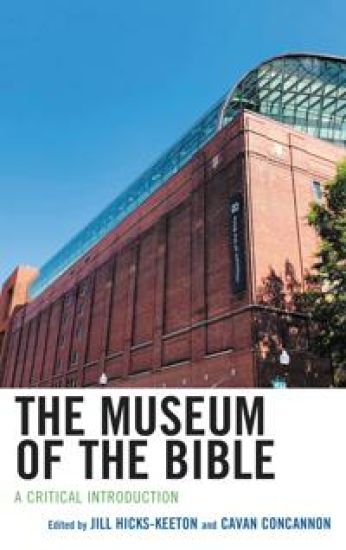
Bringing together nationally and internationally-known scholars, The Museum of the Bible: A Critical Introduction analyzes the newly opened Museum of the Bible in Washington, D. C., from a variety of perspectives and disciplinary positions, including biblical studies, history, archaeology, Judaic studies, and religion and public life. Nominally eschewing ties to any particular religious tradition, the Museum of the Bible is poised to wield unparalleled influence on the national popular imagination of the Bible’s contents, history, and uses through time. This volume provides critical tools by which a broad public of scholars and students alike can assess the Museum of the Bible’s presentation of its vast collection and wrestle with the thorny interpretive issues and complex histories that are at risk of being obscured when private funds put a major museum on the National Mall.
The Museum of the Bible

The Museum of the Bible

Candida R. Moss; Joel S. Baden

Lexington Books/Fortress Academic
2019
nidottu
Bringing together nationally and internationally-known scholars, The Museum of the Bible: A Critical Introduction analyzes the newly opened Museum of the Bible in Washington, D. C., from a variety of perspectives and disciplinary positions, including biblical studies, history, archaeology, Judaic studies, and religion and public life. Nominally eschewing ties to any particular religious tradition, the Museum of the Bible is poised to wield unparalleled influence on the national popular imagination of the Bible’s contents, history, and uses through time. This volume provides critical tools by which a broad public of scholars and students alike can assess the Museum of the Bible’s presentation of its vast collection and wrestle with the thorny interpretive issues and complex histories that are at risk of being obscured when private funds put a major museum on the National Mall.
The Book of Exodus

The Book of Exodus

Joel S. Baden

PRINCETON UNIVERSITY PRESS
2019
sidottu
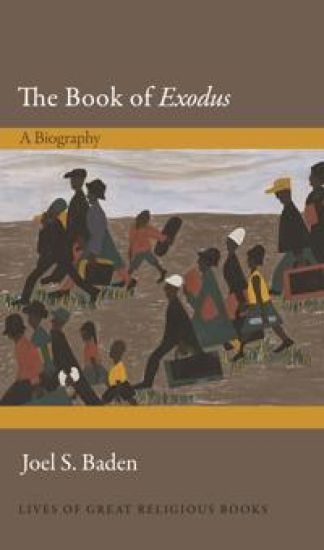
An essential biography of one of the Bible’s most powerful and inspiring booksExodus is the second book of the Hebrew Bible, but it may rank first in lasting cultural importance. It is here that the classic biblical themes of oppression and redemption, of human enslavement and divine salvation, are most dramatically expressed. Joel Baden tells the story of this influential and enduring book, tracing how its famous account of the Israelites’ journey to the promised land has been adopted and adapted for millennia, often in unexpected ways. Baden draws a distinction between the Exodus story and the book itself, which is one of the most multifaceted in the Bible, containing poems, law codes, rituals, and architectural plans. He shows how Exodus brings together an array of oral and written traditions from the ancient Middle East, and how it came to be ritualized in the Passover Seder and the Eucharist. Highlighting the remarkable resilience and flexibility of Exodus, Baden sheds light on how the bestowing of the Torah to Moses on Mount Sinai divided Jewish and Christian thinkers, on the importance of Exodus during the Reformation and the American Revolution, and on its uses in debates for and against slavery. He also traces how the defining narrative of ancient Israel helped to define Mormon social identity, the American civil rights movement, and liberation theology. Though three thousand years old, the Exodus—as history, as narrative, as metaphor, as model—continues to be vitally important for us today. Here is the essential biography of this incomparable spiritual masterpiece.

Bible Nation

Bible Nation

Candida R. Moss; Joel S. Baden

Princeton University Press
2017
sidottu
How the billionaire owners of Hobby Lobby are spending hundreds of millions of dollars to make America a "Bible nation" Like many evangelical Christians, the Green family of Oklahoma City believes that America was founded as a Christian nation, based on a "biblical worldview." But the Greens are far from typical evangelicals in other ways. The billionaire owners of Hobby Lobby, a huge nationwide chain of craft stores, the Greens came to national attention in 2014 after successfully suing the federal government over their religious objections to provisions of the Affordable Care Act. What is less widely known is that the Greens are now America's biggest financial supporters of Christian causes--and they are spending hundreds of millions of dollars in an ambitious effort to increase the Bible's influence on American society. In Bible Nation, Candida Moss and Joel Baden provide the first in-depth investigative account of the Greens' sweeping Bible projects and the many questions they raise. Bible Nation tells the story of the Greens' rapid acquisition of an unparalleled collection of biblical antiquities; their creation of a closely controlled group of scholars to study and promote their collection; their efforts to place a Bible curriculum in public schools; and their construction of a $500 million Museum of the Bible near the National Mall in Washington, D. C. Bible Nation reveals how these seemingly disparate initiatives promote a very particular set of beliefs about the Bible--and raise serious ethical questions about the trade in biblical antiquities, the integrity of academic research, and more. Bible Nation is an important and timely account of how a vast private fortune is being used to promote personal faith in the public sphere--and why it should matter to everyone.
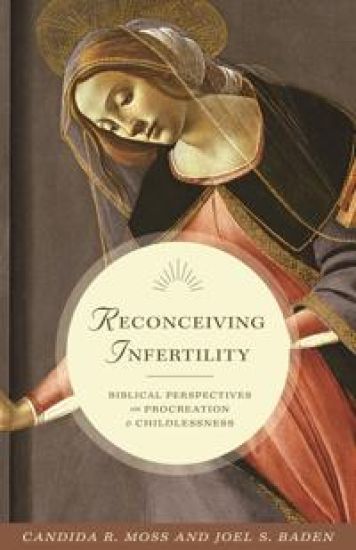
Reconceiving Infertility

Reconceiving Infertility

Candida R. Moss; Joel S. Baden

PRINCETON UNIVERSITY PRESS
2015
sidottu
In the Book of Genesis, the first words God speaks to humanity are "Be fruitful and multiply." From ancient times to today, these words have been understood as a divine command to procreate. Fertility is viewed as a sign of blessedness and moral uprightness, while infertility is associated with sin and moral failing. Reconceiving Infertility explores traditional interpretations such as these, providing a more complete picture of how procreation and childlessness are depicted in the Bible. Closely examining texts and themes from both the Hebrew Bible and the New Testament, Candida Moss and Joel Baden offer vital new perspectives on infertility and the social experiences of the infertile in the biblical tradition. They begin with perhaps the most famous stories of infertility in the Bible--those of the matriarchs Sarah, Rebekah, and Rachel--and show how the divine injunction in Genesis is both a blessing and a curse. Moss and Baden go on to discuss the metaphorical treatments of Israel as a "barren mother," the conception of Jesus, Paul's writings on family and reproduction, and more. They reveal how biblical views on procreation and infertility, and the ancient contexts from which they emerged, were more diverse than we think. Reconceiving Infertility demonstrates that the Bible speaks in many voices about infertility, and lays a biblical foundation for a more supportive religious environment for those suffering from infertility today.
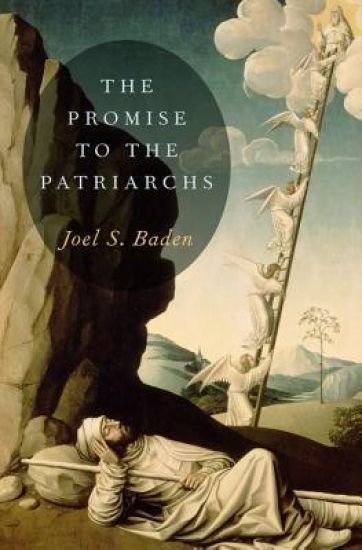
The Promise to the Patriarchs

The Promise to the Patriarchs

Joel S. Baden

Oxford University Press Inc
2013
sidottu
The promise of land and progeny to the patriarchs-Abraham, Isaac, and Jacob-is a central, recurring feature of the Pentateuch. From the beginning of the story of Abraham to the last moment of Moses's life, this promise forms the guiding theological statement for each narrative. Yet literary and historical inquiries ascribe the promise texts to a variety of sources, layers, and redactions, raising questions about how the promise functioned in its original manifestations and how it can be used to understand the formation of the Pentateuch as a whole. Joel S. Baden reexamines the patriarchal promise in its historical and contemporaneous contexts, evaluating the benefits and drawbacks of both final-form and literary-historical approaches to the promise. He pays close attention to the methodologies employed in both documentary and non-documentary analyses and aims to bring source-critical analysis of the promise to bear on the understanding of the canonical text for contemporary readers. The Promise to the Patriarchs addresses the question of how the literary-historical perspective can illuminate and even deepen the theological meaning of the Pentateuch, particularly of the promise at the heart of this central biblical corpus.
The Composition of the Pentateuch

The Composition of the Pentateuch

Joel S. Baden

Yale University Press
2012
sidottu
For well over two centuries the question of the composition of the Pentateuch has been among the most central and hotly debated issues in the field of biblical studies. In this book, Joel Baden presents a fresh and comprehensive argument for the Documentary Hypothesis. Critically engaging both older and more recent scholarship, he fundamentally revises and reorients the classical model of the formation of the Pentateuch. Interweaving historical and methodological chapters with detailed textual case studies, Baden provides a critical introduction to the history of Pentateuchal scholarship, discussions on the most pressing issues in the current debate, and a practical model for the study of the biblical text.
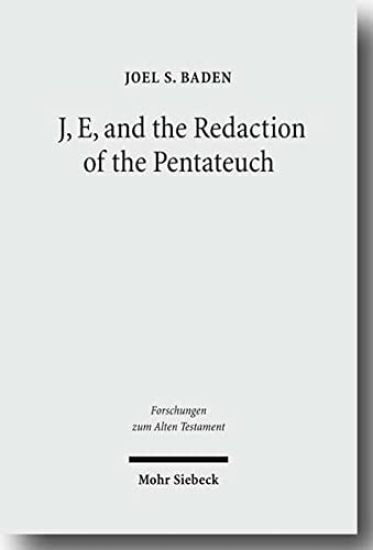
J, E, and the Redaction of the Pentateuch
Joel S. Baden addresses the relationship between the J and E documents in the Pentateuch. He demonstrates that, contrary to the standard claims of classical source criticism, the J and E sources were never combined into a "JE" document. Rather, these two sources were combined with each other at the same time that they were combined with the P and D documents, in one process of redaction. After investigating the history of scholarly arguments regarding the existence and combination of J and E, the author goes on to argue in detail for the dependence of D on the separate, independent narratives of J and, primarily, E. Significant attention is paid to the issue of redaction. In particular, Baden critiques the manner in which passages have traditionally been attributed to redactors, and argues for a more restrictive concept of the redactor and his work. It is further argued that the literary evidence in the Pentateuch provides for the existence of only a single redactor, to whom the compilation of all four sources of the Pentateuch is to be attributed. In the course of this study, a number of important questions regarding the composition of the Pentateuch are addressed: the existence of E, the relationship between D and the narratives of Genesis-Numbers, and the nature of the redactor. In the end, this study stands as both a critique of traditional documentary analysis of the Pentateuch and a defense of its fundamental claims.