Kirjojen hintavertailu – 12 903 725 kirjaa ja 27 kauppaa

Kirjailija

Joel Slemrod

Kirjat ja teokset yhdessä paikassa: 7 kirjaa, julkaisuja vuosilta 1994–2022, suosituimpiin kuuluu Taxes in America. Vertaile teosten hintoja ja tarkista saatavuus suomalaisista kirjakaupoista.

7 kirjaa

Kirjojen julkaisuvuodet: 1994–2022.

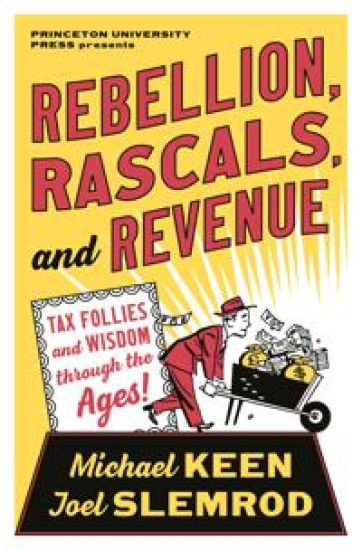
Rebellion, Rascals, and Revenue

Rebellion, Rascals, and Revenue

Michael Keen; Joel Slemrod

PRINCETON UNIVERSITY PRESS
2022
pokkari

Halvin toimitettuna 22,90 €

An engaging and enlightening account of taxation told through lively, dramatic, and sometimes ludicrous stories drawn from around the world and across the agesGovernments have always struggled to tax in ways that are effective and tolerably fair. Sometimes they fail grotesquely, as when, in 1898, the British ignited a rebellion in Sierra Leone by imposing a tax on huts—and, in repressing it, ended up burning the very huts they intended to tax. Sometimes they succeed astonishingly, as when, in eighteenth-century Britain, a cut in the tax on tea massively increased revenue. In this entertaining book, two leading authorities on taxation, Michael Keen and Joel Slemrod, provide a fascinating and informative tour through these and many other episodes in tax history, both preposterous and dramatic—from the plundering described by Herodotus and an Incan tax payable in lice to the (misremembered) Boston Tea Party and the scandals of the Panama Papers. Along the way, readers meet a colorful cast of tax rascals, and even a few tax heroes. While it is hard to fathom the inspiration behind such taxes as one on ships that tended to make them sink, Keen and Slemrod show that yesterday’s tax systems have more in common with ours than we may think. Georgian England’s window tax now seems quaint, but was an ingenious way of judging wealth unobtrusively. And Tsar Peter the Great’s tax on beards aimed to induce the nobility to shave, much like today’s carbon taxes aim to slow global warming. Rebellion, Rascals, and Revenue is a surprising and one-of-a-kind account of how history illuminates the perennial challenges and timeless principles of taxation—and how the past holds clues to solving the tax problems of today.
Rebellion, Rascals, and Revenue

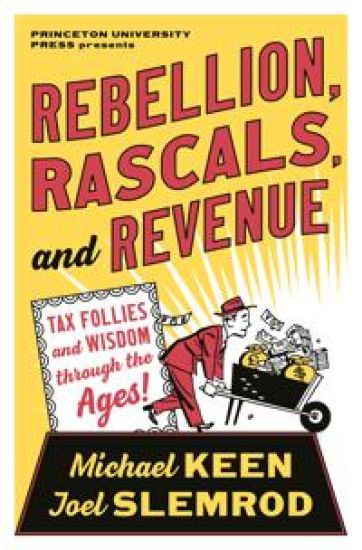
Rebellion, Rascals, and Revenue

Michael Keen; Joel Slemrod

PRINCETON UNIVERSITY PRESS
2021
sidottu
An engaging and enlightening account of taxation told through lively, dramatic, and sometimes ludicrous stories drawn from around the world and across the agesGovernments have always struggled to tax in ways that are effective and tolerably fair. Sometimes they fail grotesquely, as when, in 1898, the British ignited a rebellion in Sierra Leone by imposing a tax on huts—and, in repressing it, ended up burning the very huts they intended to tax. Sometimes they succeed astonishingly, as when, in eighteenth-century Britain, a cut in the tax on tea massively increased revenue. In this entertaining book, two leading authorities on taxation, Michael Keen and Joel Slemrod, provide a fascinating and informative tour through these and many other episodes in tax history, both preposterous and dramatic—from the plundering described by Herodotus and an Incan tax payable in lice to the (misremembered) Boston Tea Party and the scandals of the Panama Papers. Along the way, readers meet a colorful cast of tax rascals, and even a few tax heroes. While it is hard to fathom the inspiration behind such taxes as one on ships that tended to make them sink, Keen and Slemrod show that yesterday’s tax systems have more in common with ours than we may think. Georgian England’s window tax now seems quaint, but was an ingenious way of judging wealth unobtrusively. And Tsar Peter the Great’s tax on beards aimed to induce the nobility to shave, much like today’s carbon taxes aim to slow global warming. Rebellion, Rascals, and Revenue is a surprising and one-of-a-kind account of how history illuminates the perennial challenges and timeless principles of taxation—and how the past holds clues to solving the tax problems of today.
Taxes in America

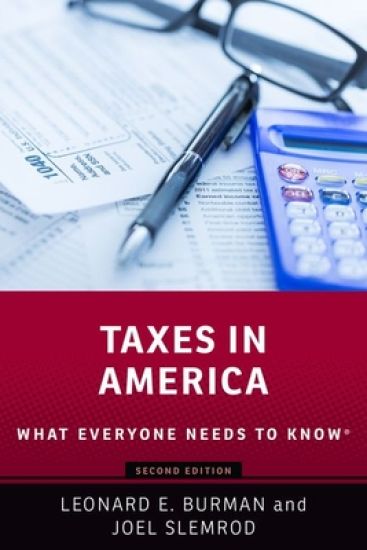
Taxes in America

Leonard E. Burman; Joel Slemrod

Oxford University Press Inc
2020
nidottu
Arguments about taxation are among the most heated- no other topic is as influential to the role of government and the distribution of costs and benefits in America. But while understanding of our tax system is of vital importance, the complexity can create confusion. Two of America's leading authorities on taxes, Leonard E. Burman and Joel Slemrod, bring clarity in this concise explanation of how our tax system works, how it affects people and businesses, and how it might be improved. The book explores what makes a tax system fair, simple, and efficient, why our system falls short, and whether the new tax law promises much, if any, improvement. Accessibly written and organized in a clear, question-and-answer format, the book describes the intricacies of the modern tax system in an easy-to-grasp manner. It has been revised and updated to both explain the Tax Cuts and Jobs Act (TCJA) in 2017, the most comprehensive reform of its income tax system since 1986, and to examine its likely effects on individuals, businesses, and society. Among the questions discussed are: How much more tax could the IRS collect with better enforcement? How do tax burdens vary around the world? Why do corporations pay so little tax, even though they earn trillions of dollars every year? What kind of tax system is most conducive to economic growth? And, can taxes be fair?
Taxes in America

Taxes in America

Leonard E. Burman; Joel Slemrod

Oxford University Press Inc
2020
sidottu
Arguments about taxation are among the most heated- no other topic is as influential to the role of government and the distribution of costs and benefits in America. But while understanding of our tax system is of vital importance, the complexity can create confusion. Two of America's leading authorities on taxes, Leonard E. Burman and Joel Slemrod, bring clarity in this concise explanation of how our tax system works, how it affects people and businesses, and how it might be improved. The book explores what makes a tax system fair, simple, and efficient, why our system falls short, and whether the new tax law promises much, if any, improvement. Accessibly written and organized in a clear, question-and-answer format, the book describes the intricacies of the modern tax system in an easy-to-grasp manner. It has been revised and updated to both explain the Tax Cuts and Jobs Act (TCJA) in 2017, the most comprehensive reform of its income tax system since 1986, and to examine its likely effects on individuals, businesses, and society. Among the questions discussed are: How much more tax could the IRS collect with better enforcement? How do tax burdens vary around the world? Why do corporations pay so little tax, even though they earn trillions of dollars every year? What kind of tax system is most conducive to economic growth? And, can taxes be fair?
Taxing Ourselves

Taxing Ourselves

Joel Slemrod; Jon Bakija

MIT Press
2017
pokkari
The new edition of a popular guide to the key issues in tax reform, presented in a clear, nontechnical, and unbiased way. To follow the debate over tax reform, the interested citizen is often forced to choose between misleading sound bites and academic treatises. Taxing Ourselves bridges the gap between the oversimplified and the arcane, presenting the key issues clearly and without a political agenda. Tax policy experts Joel Slemrod and Jon Bakija lay out in accessible language what is known and not known about how taxes affect the economy and offer guidelines for evaluating tax systems-both the current tax system and proposals to reform it. This fifth edition has been extensively revised to incorporate the latest data, empirical evidence, and tax law. It offers new material on recent tax reform proposals, expanded coverage of international tax issues, and the latest enforcement initiatives. Offering historical perspectives, outlining the basic criteria by which tax policy should be judged (fairness, economic impact, enforceability), examining proposals for both radical change (replacement of the income tax with a flat tax or consumption tax) and incremental changes to the current system, and concluding with a voter's guide, the book provides readers with enough background to make informed judgments about how we should tax ourselves. Praise for earlier editions"An excellent book."-Jeff Medrick, New York Times"A fair-minded exposition of a politically loaded subject."-Kirkus Reviews
Tax Progressivity and Income Inequality

Tax Progressivity and Income Inequality

Joel Slemrod

Cambridge University Press
1996
pokkari
This book assembles nine papers on tax progressivity and its relationship to income inequality, written by leading public finance economists. The papers document the changes during the 1980s in progressivity at the federal, state, and local level in the US. One chapter investigates the extent to which the declining progressivity contributed to the well-documented increase in income inequality over the past two decades, while others investigate the economic impact and cost of progressive tax systems. Special attention is given to the behavioral response to taxation of high-income individuals, portfolio behavior, and the taxation of capital gains. The concluding set of essays addresses the contentious issue of what constitutes a 'fair' tax system, contrasting public attitudes towards alternative tax systems to economists' notions of fairness. Each essay is followed by remarks of a commentator plus a summary of the discussion among contributors.
Tax Progressivity and Income Inequality

Tax Progressivity and Income Inequality

Joel Slemrod

Cambridge University Press
1994
sidottu
This book assembles nine papers on tax progressivity and its relationship to income inequality, written by leading public finance economists. The papers document the changes during the 1980s in progressivity at the federal, state, and local level in the US. One chapter investigates the extent to which the declining progressivity contributed to the well-documented increase in income inequality over the past two decades, while others investigate the economic impact and cost of progressive tax systems. Special attention is given to the behavioral response to taxation of high-income individuals, portfolio behavior, and the taxation of capital gains. The concluding set of essays addresses the contentious issue of what constitutes a ‘fair’ tax system, contrasting public attitudes towards alternative tax systems to economists’ notions of fairness. Each essay is followed by remarks of a commentator plus a summary of the discussion among contributors.