Kirjojen hintavertailu – 12 859 827 kirjaa ja 27 kauppaa
Kirjailija
Joel Vos
Kirjat ja teokset yhdessä paikassa: 10 kirjaa, julkaisuja vuosilta 2017–2025, suosituimpiin kuuluu Mental Health in Crisis. Vertaile teosten hintoja ja tarkista saatavuus suomalaisista kirjakaupoista.
At a time of huge pressures on mental health services, this highly topical, broad-ranging and thought-provoking analysis of the mental health crisis examines the current challenges in mental health service delivery and access using a range of perspectives (political, economic, and cultural, organisational issues). It then puts forward a number of alternatives, reviewing both current and alternative initiatives, and exploring what is needed for a mentally healthy society.
This book is a comprehensive introduction to Transactional Analysis theory, evidence-base and practice. It provides a step by step manual to the competencies and skills needed across the therapy process, and a guide to working with a variety of client issues. Supported by case studies, reflective questions, boxed summaries, and process questionnaires, this is the ideal book to support you in your training and practice. It is an essential companion whether you’re studying on a specialist TA courses, studying TA as part of a wider training or integrating TA into your practice.
This book is a comprehensive introduction to Transactional Analysis theory, evidence-base and practice. It provides a step by step manual to the competencies and skills needed across the therapy process, and a guide to working with a variety of client issues. Supported by case studies, reflective questions, boxed summaries, and process questionnaires, this is the ideal book to support you in your training and practice. It is an essential companion whether you’re studying on a specialist TA courses, studying TA as part of a wider training or integrating TA into your practice.
This comprehensive and highly practical ‘how to’ book guides researchers from start to finish through the research process. The easy-to-follow consecutive steps cover: basic academic skills, literature reviews, research aims, selection of quantitative, qualitative or mixed methods, research and ethics proposals, data collection and analysis, and final thesis or report. Supported by decision-making flowcharts, further reading, reflective questions, state-of-the-art trends and templates, this book ensures you produce a sound and coherent research project that fulfils your training and publication requirements. It is the go-to guide for beginning and advanced researchers in counselling, psychotherapy, counselling and clinical psychology, psychiatry and related disciplines.
This comprehensive and highly practical ‘how to’ book guides researchers from start to finish through the research process. The easy-to-follow consecutive steps cover: basic academic skills, literature reviews, research aims, selection of quantitative, qualitative or mixed methods, research and ethics proposals, data collection and analysis, and final thesis or report. Supported by decision-making flowcharts, further reading, reflective questions, state-of-the-art trends and templates, this book ensures you produce a sound and coherent research project that fulfils your training and publication requirements. It is the go-to guide for beginning and advanced researchers in counselling, psychotherapy, counselling and clinical psychology, psychiatry and related disciplines.
The Psychology of Covid-19 explores how the coronavirus is giving rise to a new order in our personal lives, societies and politics. Rooted in systematic research on Covid-19 and previous pandemics, including SARS, Ebola, HIV and the Spanish Flu, this book describes how Covid-19 has impacted a broad range of domains, including self-perception, lifestyle, politics, mental health, media, and meaning in life. Building on this, the book then sets out how we can improve our psychological and social resilience, to safeguard ourselves against the psychological effects of future pandemics.
There is not such a thing as value-free economics. All economic theories prescribe a unique meaning in life. What meanings are hidden in economic theories? How can we live a meaningful life despite the meanings that economists and politicians promote? The Economics of Meaning in Life offers a unique multidisciplinary study that systematically examines the meanings that are often hidden in economic and political debates. This book starts with a brief world history of how people have experienced meaning in different economic systems. For example, authors on capitalism often have a rational focus on materialistic and self-oriented types of meaning in life. Subsequently, the book describes research showing that many individuals feel taken hostage by this capitalist perspective, but simultaneously defend its meanings. This is the Capitalist Life Syndrome, named after the Stockholm Syndrome where hostages like their hostage-takers and develop a psychological alliance with them. Similar to the Communist Life Syndrome, individuals take over this capitalist approach to meaning even though these syndromes may not be good for their mental health. In response to the Capitalist Life Syndrome, increasing numbers of people want personal and societal change. A review of research discussed in the book shows that increasing numbers of people have started to focus on social and larger types of meaning since the 2007/2008 market crash: the meaning-oriented economy. Many aspects of the economy are transforming, from personal job-motivation to organisation structures, human resource management, and production. People search for new meaning within, outside, against, and beyond capitalism. This meaning-oriented trend is the future of economics, according to leaders in for example the World Economic Forum. This is the first book to integrate systematic empirical studies on meaning in life with economic theory, written by a leading researcher on meaning. The author makes his insights accessible with examples ranging from conversations with London CEO's and Ugandan orphans to political uprisings in Latin America, environmentalist campaigns, and COVID-19. The author defends the human right to a meaningful life and recommends practical meaning-oriented steps for political campaigners. The Economics of Meaning in Life is for all readers who are interested in the real life-world hiding behind the veils of traditional economics and politics. This book should be required reading for all students of economics, psychology, sociology, and philosophy. Because everyone deserves a meaningful life.
There is not such a thing as value-free economics. All economic theories prescribe a unique meaning in life. What meanings are hidden in economic theories? How can we live a meaningful life despite the meanings that economists and politicians promote? The Economics of Meaning in Life offers a unique multidisciplinary study that systematically examines the meanings that are often hidden in economic and political debates. This book starts with a brief world history of how people have experienced meaning in different economic systems. For example, authors on capitalism often have a rational focus on materialistic and self-oriented types of meaning in life. Subsequently, the book describes research showing that many individuals feel taken hostage by this capitalist perspective, but simultaneously defend its meanings. This is the Capitalist Life Syndrome, named after the Stockholm Syndrome where hostages like their hostage-takers and develop a psychological alliance with them. Similar to the Communist Life Syndrome, individuals take over this capitalist approach to meaning even though these syndromes may not be good for their mental health. In response to the Capitalist Life Syndrome, increasing numbers of people want personal and societal change. A review of research discussed in the book shows that increasing numbers of people have started to focus on social and larger types of meaning since the 2007/2008 market crash: the meaning-oriented economy. Many aspects of the economy are transforming, from personal job-motivation to organisation structures, human resource management, and production. People search for new meaning within, outside, against, and beyond capitalism. This meaning-oriented trend is the future of economics, according to leaders in for example the World Economic Forum. This is the first book to integrate systematic empirical studies on meaning in life with economic theory, written by a leading researcher on meaning. The author makes his insights accessible with examples ranging from conversations with London CEO's and Ugandan orphans to political uprisings in Latin America, environmentalist campaigns, and COVID-19. The author defends the human right to a meaningful life and recommends practical meaning-oriented steps for political campaigners. The Economics of Meaning in Life is for all readers who are interested in the real life-world hiding behind the veils of traditional economics and politics. This book should be required reading for all students of economics, psychology, sociology, and philosophy. Because everyone deserves a meaningful life.
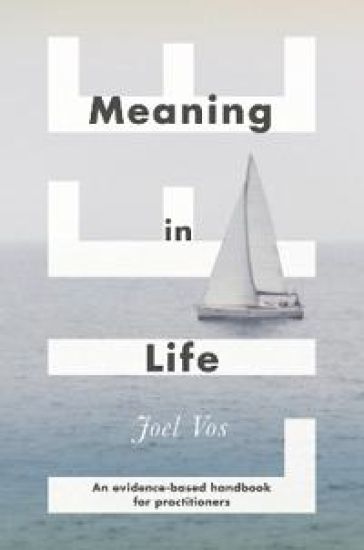
This inspiring, insightful new text provides a practical guide to helping clients live a meaningful and satisfying life despite the challenges they may be facing. Divided into three parts, it starts by drawing on empirical research to demonstrate the effectiveness of meaning-oriented practice and reviews a large body of literature on meaning in a wide-range of psychological and philosophical approaches, translating this into specific recommendations for practitioners. It continues by exploring the basic skill set required for working effectively in this area – from how to assess clients’ needs and address issues of meaning, to specific existential, phenomenological and mindfulness skills. Finally, it provides a step guide to applying the skills to clinical practice with the support of examples and case studies from a range of professions. In what is still an emerging area of practice, this text stands alone as a comprehensive source of reference for both students and practitioners across the full range of people professions.