Kirjojen hintavertailu – 12 903 737 kirjaa ja 27 kauppaa
Kirjailija
Joerg Rieger
Kirjat ja teokset yhdessä paikassa: 17 kirjaa, julkaisuja vuosilta 1998–2024, suosituimpiin kuuluu Empire and the Christian Tradition. Vertaile teosten hintoja ja tarkista saatavuus suomalaisista kirjakaupoista.
Distinguished theologians assess the achievements and legacies of thirty-one theological giants in light of Christianity's engagement with imperial power, conquest, colonization, and post colonial themes. This is a textbook anthology suitable for classroom use.
There is growing consensus that life on the planet is in peril if climate change continues at its current pace. At stake is not only the future of many species but of humanity itself. As an increasing number of ecological economists have emphasized, these problems will only be adequately addressed by re-examining economic systems from an ecological perspective, fundamentally calling into question assumptions of unlimited growth and the maximization of shareholder profit foundational to neoliberal capitalism. Religion and ecology scholars have also increasingly emphasized the ways climate change challenges assumed divides between nature and culture, religion and labor, economy and ecology, and calls for critical and constructive engagement with the religion, economy, and ecology nexus. Often, though, religious engagements with economy and ecology have placed emphasis on individual morality, action, and agency at the level of consumption patterns or have suggested mere modifications within existing economic paradigms. Contributors to this volume call into question the adequacy of this approach in light of the urgency of climate change which is always ever entwined with ongoing patterns of exploitation, oppression, and colonialism in current economic systems. Rather than tweaking a system of exploitation, for instance by emphasizing individual consumption or care for human and non-human victims, these authors articulate important opportunities for religious engagement, activism, resistance, and solidarity around issues of production and labor. Recalling that Marx linked agencies and labor of people as well as the other-than-human world, these authors aim to articulate a sense in which liberation of people and the planet are intertwined and can be accomplished only through collaboration for their common good. The basic intuition driving this volume is that while Christianity has by and large become the handmaiden of exploitative capitalism and empire, it might also reclaim latent theologies and religious practices that call into question the fundamental valuation of labor without recognition or rest, of extractive exploitation, and a “winner take all” praxis. In the process, Christianity might reclaim and reinvest in tenuous historical materializations of transformed ecological and economic relationships while economics might be re-informed by a valuation of the shared oikos as well as a just accounting of and renumeration for labor. Together they might serve the aim of the flourishing of all people and the planet.
There is growing consensus that life on the planet is in peril if climate change continues at its current pace. At stake is not only the future of many species but of humanity itself. As an increasing number of ecological economists have emphasized, these problems will only be adequately addressed by re-examining economic systems from an ecological perspective, fundamentally calling into question assumptions of unlimited growth and the maximization of shareholder profit foundational to neoliberal capitalism. Religion and ecology scholars have also increasingly emphasized the ways climate change challenges assumed divides between nature and culture, religion and labor, economy and ecology, and calls for critical and constructive engagement with the religion, economy, and ecology nexus. Often, though, religious engagements with economy and ecology have placed emphasis on individual morality, action, and agency at the level of consumption patterns or have suggested mere modifications within existing economic paradigms. Contributors to this volume call into question the adequacy of this approach in light of the urgency of climate change which is always ever entwined with ongoing patterns of exploitation, oppression, and colonialism in current economic systems. Rather than tweaking a system of exploitation, for instance by emphasizing individual consumption or care for human and non-human victims, these authors articulate important opportunities for religious engagement, activism, resistance, and solidarity around issues of production and labor. Recalling that Marx linked agencies and labor of people as well as the other-than-human world, these authors aim to articulate a sense in which liberation of people and the planet are intertwined and can be accomplished only through collaboration for their common good. The basic intuition driving this volume is that while Christianity has by and large become the handmaiden of exploitative capitalism and empire, it might also reclaim latent theologies and religious practices that call into question the fundamental valuation of labor without recognition or rest, of extractive exploitation, and a “winner take all” praxis. In the process, Christianity might reclaim and reinvest in tenuous historical materializations of transformed ecological and economic relationships while economics might be re-informed by a valuation of the shared oikos as well as a just accounting of and renumeration for labor. Together they might serve the aim of the flourishing of all people and the planet.
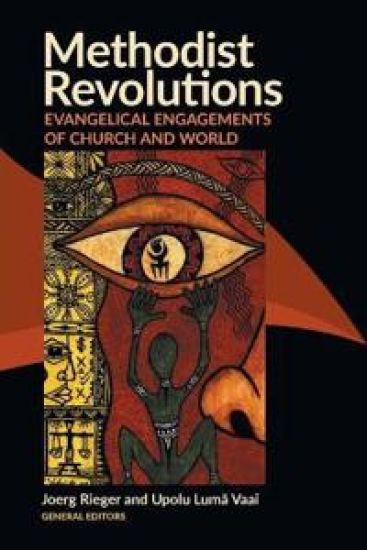
Within the pages of this book, an international group of Methodist scholars are united in the belief that another church and another world are not only necessary but possible. Holiness traditions, even though at times addressing matters too narrowly and at other times to triumphantly, are in agreement that the status quo in both church and world can be improved upon significantly. The question is not whether but how does this happen and how far does it go. Amidst ongoing discussions of reforms, reformations, and revolutions, this volume argues that comprehensive transformations are afoot. Our expectations are not built on shallow optimism or wide-spread beliefs in progress; they are built on evangelical expectations and holiness histories as they have shaped up since the beginnings of evangelical holiness movements. Recent decades, in particular, have rekindled broader perspectives that push beyond reductionistic focuses on individuals, closed communities, or particular church bodies. The hope of the gospel that is at the heart of the Methodist evangelical holiness traditions needs to be tested and verified in concrete transformations, which will be spelled out in the chapters of this book.
Globalizaci n es la palabra clave de nuestro tiempo, la cual refiere a la interdependencia que nos afecta a todos. Pero a menudo nos enfrentamos a la globalizaci n con una ambivalencia extrema, con sus consecuencias tanto positivas como negativas para la econom a, la pol tica y la cultura. Joerg Rieger se ala que incluso la propia teolog a puede ser una manifestaci n de la globalizaci n. En el peor de los casos, la teolog a puede ser un reflejo del imperialismo intelectual occidental, y en el mejor de los casos, fomentar una visi n convincente de la diversidad dentro de la unidad. El autor articula una teolog a de la globalizaci n como un fen meno diverso que respeta las diferentes formas de ver y conocer, fomentando as el sentido de armon a en lugar de la homogeneidad. Traducido por Marisa Strizzi. Publicado por JUANUNO1 Ediciones, en acuerdo con GEMRIP www.gemrip.org
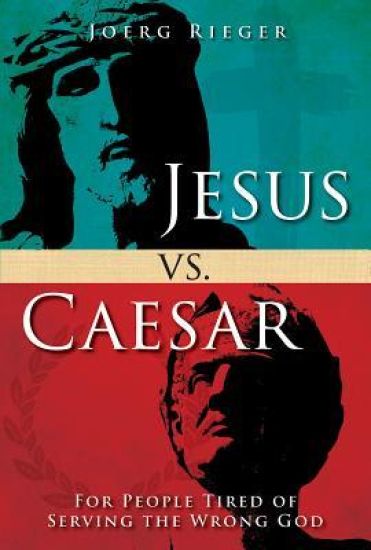
When we observe a tension between Jesus and Caesar, we acknowledge that a fundamental tension remains at the heart of Christianity. The tension is not between religion and atheism or secularism. Nor is it between organized religion and personal spirituality or between Christianity and other religions. The tension is located within the heart of Christianity itself because it is a radical conflict between faith that is life-giving for all and faith that is damaging and destructive of people and the earth. This tension between life-giving and malignant forms of religion is also deeply rooted in the Jewish traditions. The Hebrew prophets were gravely concerned about established forms of religion that appear to be respectable but result in oppression. The prophet Isaiah hears the voice of God pronouncing judgment on malignant religion: "You serve your own interest on your fast day, and oppress all your workers" (Isaiah 58:3). Life-giving religion, by contrast, loosens "the bonds of injustice" (Isa 58:6). This book serves as an indictment of the pieties of empire and their push for political, economic, cultural, and religious domination. Some forms of Christian faith (Jesus) versus other forms of Christian faith (Caesar). Whom and what will we trust and serve? Jesus embodies and exposes this tension in ways that transform destructive images of God, engender political and economic resilience, and model solidarity with others who are radically different, including other religions. This tension between life-giving and malignant religion is a critical opportunity for those who seek to follow Jesus instead of "Caesar."
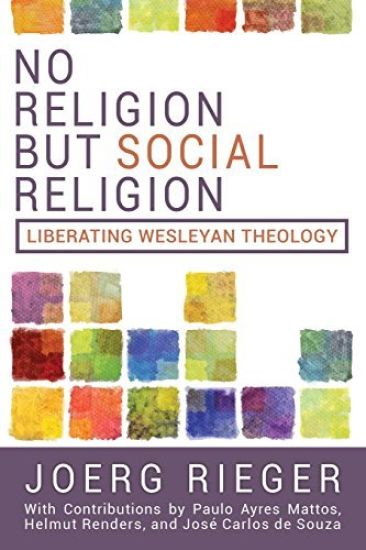
With contributions by Paulo Ayres Mattos, Helmut Renders, and Jos Carlos de Souza, this book invites you to rethink core concepts of the Christian faith in the invigorating, life-giving light of grace that has the power to change everything. We all live with the pressures of life; but those at the margins, at the edges, the fringes of society struggle mightily. Our thinking about God, our theology, is rooted in the bloody tooth and claw of gritty existence. Those of us who enjoy the privileges of life are too easily preoccupied with ourselves, our problems, our idiosyncratic view of self and other. Without grace, we cannot formulate hopes and dreams for the future; and the church, as the community of faith, cannot make a difference and transform the world. Without re-envisioning our self-serving images of God, we exist as a people without a vision and many are already perishing. This book is not about religion or morality. It is about grace, grace that works in the midst of pressure to liberate us in sync with the struggles of others around the world for liberation. Thus we can authentically experience God and others in the midst of the everyday not just on the mountaintop.
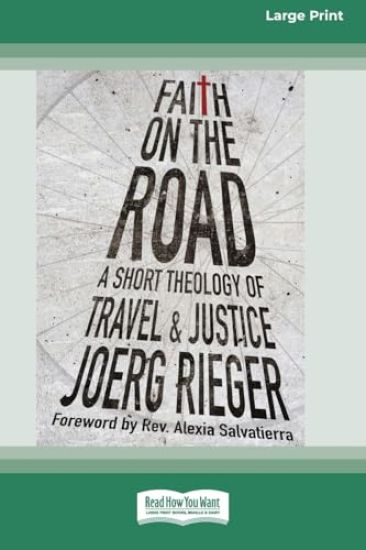
The Bible is a story about people on the road, and Christianity is a faith always on the move, seeking to follow the Jesus who kept traveling from town to town proclaiming God's reign. In this short but profound book, Joerg Rieger reflects on how Christian faith reorients how we think about and practice traveling.
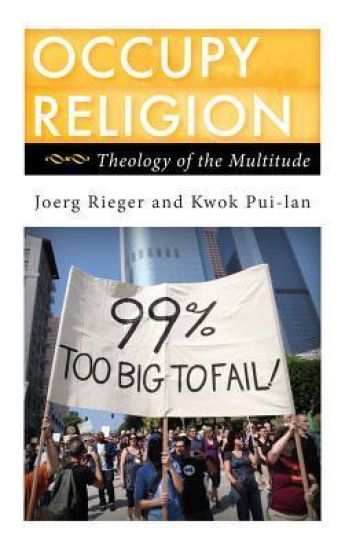
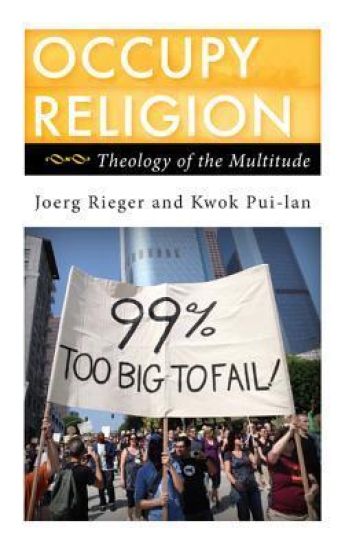
Occupy Religion introduces readers to the growing role of religion in the Occupy Movement and asks provocative questions about how people of faith can work for social justice. From the temperance movement to the Civil Rights movement, churches have played key roles in important social movements, and Occupy Religion shows this role is no less critical today.
Occupy Religion introduces readers to the growing role of religion in the Occupy Movement and asks provocative questions about how people of faith can work for social justice. From the temperance movement to the Civil Rights movement, churches have played key roles in important social movements, and Occupy Religion shows this role is no less critical today.
In Beyond the Spirit of Empire, the authors analyze the global empire not only in its political and economic dimensions, but also in its symbolic constructions of power and in its general assumptions often taken for granted. How does empire mould human subjectivity, for instance, and how does it affect the understanding of humans within the whole of creation? What are the religious dimensions of empire, its claims to divine attributes like omniscience, omnipresence, omnipotence, eternity, and what about its alleged exclusiveness and pervasiveness that destroys human life and freedom, which turns politics into a banal matter? The authors propose to look beyond empire to the possibility of politics and freedom, to the recovery of the notion of people, to the importance of ongoing concern for the oppressed and excluded, and to a messianic faith that allows us to live in anticipation, though ambiguously, of the promise of new times to come.
Even though economic downturns are still followed by upturns, fewer people benefit from them. As a result, economic crisis is an everyday reality that permanently affects all levels of our lives. The logic of downturn, developed in this book, helps make sense of what is going on, as the economy shapes us more deeply than we had ever realized, not only our finances and our work, but also our relationships, our thinking, and even our hopes and desires. Religion is one arena shaped by economics and thus part of the problem but, as Joerg Rieger shows, it might also hold one of the keys for providing alternatives, since it points to energies for transformation and justice. Rieger's hopeful perspective unfolds in stark contrast to an economy and a religion that thrive on mounting inequality and differences of class.
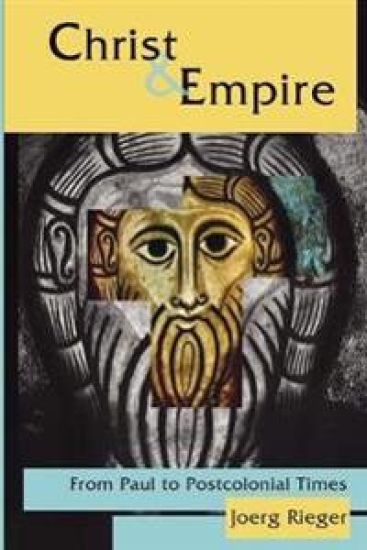
Rieger's ambitious and faith-filled project chips away at the colonial legacy of Christology to find the authentic Christ - or rather the many authentic depictions of Christ in history and theology that survive our self-serving domestications. Against the seeming inevitability of globalized unfairness, Rieger holds up a "stumbling block" that confounds even empire.
Theology is fracturing along tension lines once hidden by the great modern consensus that reigned from Schleiermacher's day till our own. Now, all of it is in dispute: its starting point, its self-awareness, its claim to truth, its method and interaction with other disciplines and institutions in church, academy, and society. Rieger offers an enlightening way to understand the chief strands or options in theology today and a valuable proposal for resituating theology around the crucial issue of inclusion. He sees four competing vectors at work in today's Christian theology: Theology of Identity (liberal theology, represented by Schleiermacher and founded in the self), Theology of Difference (dialectical theology, represented by Barth and founded in the Wholly Other), Theology and the Postmodern (postcritical theology, represented by Lindbeck and founded on the text), and Theology and the Underside (liberation theology, represented by Gutierrez and others and founded in the interests of the other person). Further, Rieger goes on to propose that each of these is in some way exclusionary and elitist; the mass of humanity and the globe's most pressing problems do not invade this cathedral, and in some ways the market itself has replaced God. Religious thought can remain viable only when it is grounded in an openness that reaches beyond the global market and postmodern squabbles, critiques its own complicity in the situation, and resituates itself in express commitment to those left out of today's "gated community".
What are the prospects for liberation theology and the social change it espouses? What can liberation theologies learn from each other? Writing from a variety of social locations--the African American community, the feminist struggle, and tensions within Europe, North America, and Latin America--these exciting and enlightening thinkers reflect on the vastly changed context of and challenges to liberation. Yet they find common concerns and cause. They espouse religious reflection that attends closely to those pushed to the margins (even though on the surface things seem to be improving), to shifting structures of oppression, and especially to global economic structures as they affect specific locales. For all those interested in the survival and growth of justice-oriented religious commitment, this volume signals concrete and exciting new directions for thought and action. Participants include: John B. Cobb, Jr., Claremont School of Theology Gustavo Gutierrez, Instituto Bartalome de Las Casas, Rimac, Peru M. Douglas Meeks, Wesley Theological Seminary Jurgen Moltmann, University of Tubingen Joerg M. Rieger, Perkins School of Theology Susan Brooks Thistlethwaite, Chicago Theological Seminary Gayraud S. Wilmore, Interdenominational Theological Center, Atlanta