Kirjojen hintavertailu – 12 859 818 kirjaa ja 27 kauppaa

Kirjailija

Johan Berglund

Kirjat ja teokset yhdessä paikassa: 4 kirjaa, julkaisuja vuosilta 2007–2020, suosituimpiin kuuluu Autodidakten. Dialoger 83-84(2007). Vertaile teosten hintoja ja tarkista saatavuus suomalaisista kirjakaupoista.

4 kirjaa

Kirjojen julkaisuvuodet: 2007–2020.

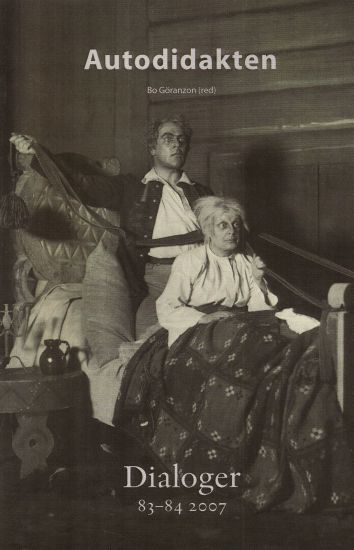
Autodidakten. Dialoger 83-84(2007)

Autodidakten. Dialoger 83-84(2007)

Bo Göranzon; Siri Meyer; Johan Svahn; Agneta Pleijel; Gunnar Bergendal; Nils Friberg; Henrik Åhsberg; Johan Berglund; Clas Pehrsson; Kjell Fagéus; Cristine Sarrimo

Dialoger
2007
lehtivihko, moniste
InnehållBo Göranzon "Redaktionell kommentar" Siri Meyer "Innovatörerna kommer" Johan Svahn "Skapandeprocesser - systemutveckling och litterära analogier" Agneta Pleijel "Om det ungefärliga i ingenjörsarbete Opposition vid Göran Backlunds doktorsavhandling" Gunnar Bergendal "Självlärd" Nils Friberg "Ingenjör K. - en av de grå och talanglösa" Henrik Åhsberg "Michelangelos kupol" Johan Berglund "Banal ondska och formaliserat vetande" Clas Pehrsson "Jag - en autodidakt" Kjell Fagéus "Autodidakt och olika lärstilar" Cristine Sarrimo "Samtal pågår på författarskolan om hantverk, kvalitet och etablering"
Why Safety Cultures Degenerate

Why Safety Cultures Degenerate

Johan Berglund

Routledge
2020
nidottu
From Chernobyl to Fukushima, have we come full circle, where formalisation has replaced ambiguity and a decadent style of management, to the point where it is becoming counter-productive? Safety culture is a contested concept and a complex phenomenon, which has been much debated in recent years. In some high-risk activities, like the operating of nuclear power plants, transparency, traceability and standardisation have become synonymous with issues of quality. Meanwhile, the experience-based knowledge that forms the basis of manuals and instructions is liable to decline. In the long-term, arguably, it is the cultural changes and its adverse impacts on co-operation, skill and ability of judgement that will pose the greater risks to the safety of nuclear plants and other high-risk facilities. Johan Berglund examines the background leading up to the Fukushima Daiichi accident in 2011 and highlights the function of practical proficiency in the quality and safety of high-risk activities. The accumulation of skill represents a more indirect and long-term approach to quality, oriented not towards short-term gains but (towards) delayed gratification. Risk management and quality professionals and academics will be interested in the links between skill, quality and safety-critical work as well as those interested in a unique insight into Japanese culture and working life as well as fresh perspectives on safety culture.
Why Safety Cultures Degenerate

Why Safety Cultures Degenerate

Johan Berglund

Routledge
2016
sidottu
From Chernobyl to Fukushima, have we come full circle, where formalisation has replaced ambiguity and a decadent style of management, to the point where it is becoming counter-productive? Safety culture is a contested concept and a complex phenomenon, which has been much debated in recent years. In some high-risk activities, like the operating of nuclear power plants, transparency, traceability and standardisation have become synonymous with issues of quality. Meanwhile, the experience-based knowledge that forms the basis of manuals and instructions is liable to decline. In the long-term, arguably, it is the cultural changes and its adverse impacts on co-operation, skill and ability of judgement that will pose the greater risks to the safety of nuclear plants and other high-risk facilities. Johan Berglund examines the background leading up to the Fukushima Daiichi accident in 2011 and highlights the function of practical proficiency in the quality and safety of high-risk activities. The accumulation of skill represents a more indirect and long-term approach to quality, oriented not towards short-term gains but (towards) delayed gratification. Risk management and quality professionals and academics will be interested in the links between skill, quality and safety-critical work as well as those interested in a unique insight into Japanese culture and working life as well as fresh perspectives on safety culture.
Den nya taylorismen: Om säkerhetskulturen inom kärnkraftsindustrin
Uttrycket "den mänskliga faktorn" har en negativ klang i vårt moderna samhälle. Uttrycket antyder att människan och mänskliga handlingar är nyckfulla och till och med olycksbådande. Därför har det inom många verksamheter smugit sig in ett slags osynlig taylorism, effektiviseringar som detaljstyr eller på annat sätt reducerar yrkesutövarnas handlingsutrymme och möjligheter till reflektion. Genom denna nya taylorism riskerar verksamheter, inte minst långsiktigt, sin kvalitet på många olika plan. Johan Berglund är fil. dr i Industriell ekonomi och organisation.