Kirjojen hintavertailu – 12 903 724 kirjaa ja 27 kauppaa
Kirjailija
Johan Galtung
Kirjat ja teokset yhdessä paikassa: 24 kirjaa, julkaisuja vuosilta 1967–2022, suosituimpiin kuuluu Det hållbara samhället : kan det byggas underifrån?. Vertaile teosten hintoja ja tarkista saatavuus suomalaisista kirjakaupoista.
Erling Bjurström; Eva Björkander-Mannheimer; Hans Eek; Björn Forsberg; Johan Galtung; Hillevi Helmfrid; Lars Ingelstam; Hildur Jackson; Ross Jackson; Lena Jarlöv; Johan Lindgren; Marianne Påsse; Peter Rundkvist; Ronny Svensson; Marie Thynell; Stellan Vinthagen; Joachim Vogel; Magnus Wennerhag
Boken redogör för grunderna för sociala rörelser som en samhällsförändrande kraft. Det handlar om människor som går samman och utför ett ideellt arbete för förbättrade villkor på olika områden. Världens utveckling är inte ekologiskt hållbar, främst beroende av överanvändningen av fossila bränslen. Därav risken för en framtida klimatkatastrof och en energichock när oljan sinar. Men som visas i denna bok är utvecklingen inte heller hållbar i ekonomiskt, socialt och kulturellt hänseende. Finansindustrin och den ekonomiska tillväxtmodellen behöver reformeras och de farliga sociala klyftorna utjämnas. Om så inte sker kommer våra barn och barnbarn att få betala ett högt pris, kanske också vi som lever nu. Är världens styrande eliter villiga och kapabla att leda den stora omställningen till ett hållbart samhälle på egen hand? Många tvivlar och en del rentav förtvivlar. Men det finns också medborgare som inte ger upp utan tar saken i egna händer och tillsammans med likasinnade börjar bygga det hållbara samhället underifrån. Bokens första del handlar om utmaningarna, den andra delen om vår tids konstruktiva gräsrotsrörelser och den tredje visar vad gräsrötterna kan åstadkomma när de bygger ekosamhällen på eget initiativ. Detta är en lättillgänglig och engagerande antologi grundad i aktuell forskning. Den riktar sig till studenter på grund- och avancerad nivå med ett hållbarhetsintresse och till dem som är engagerade i olika gröna rörelser samt till en upplyst allmänhet. Om författarnaMats Friberg (red), emeritus docent i sociologi samt freds- och utvecklingsforskningErling Bjurström, professor i medierad kulturEva Björkander-Mannheimer, fil.lic., socialfilosof och universitetslärareHans Eek, arkitektBjörn Forsberg, miljöforskare och författareJohan Galtung, professor i fredsstudierHillevi Helmfrid, konsult inom hållbar utveckling och författareLars Ingelstam, civilingenjör i teknisk fysik och laborator (professor) i matematikHildur Jackson, jurist, kultursociolog och permakulturdesignerRoss Jackson, ekonom och expert på internationell finansLena Jarlöv, arkitekt, docentJohan Lindgren, förläggareMarianne Påsse, grundskollärare och föreläsarePeter Rundkvist, kulturproducent, copywriter och marknadsföringskonsultRonny Svensson, fil.lic. i kulturgeografiMarie Thynell, docent i freds- och utvecklingsforskningStellan Vinthagen, docent i sociologiJoachim Vogel, professor i sociologiMagnus Wennerhag, fil. dr i sociologi
This book, first published in 1973, analyses the European Community in a global perspective. It asks and answers two main questions: what does the European Community mean to the masses of the world, and what does it mean to the world community in general? Most critical studies of the EC were made from an internal point of view, and this book is rare in having an external perspective. The author discussed the EC with diverse audiences in 16 countries, and his analyses are invaluable in putting the European project in an international context.
Dr. Michael Haas’ book, United States Diplomacy with North Korea and Vietnam: Explaining Failure and Success, aims to explain a significant, beguiling discrepancy in U. S. foreign relations: How has American diplomacy with Vietnam proved so successful when compared with its efforts to negotiate with North Korea? Haas undertakes a comparative analysis of foreign policy decisions to determine how relationships between the U. S. and each country have diverged drastically, in spite of a legacy of U. S. occupation in both regions. By tracing diplomatic interactions historically, comparatively quantifying diplomatic missteps on the part of the U. S., and cross-testing four paradigms of international relations, Haas presents a case for why the U. S. has succeeded in developing good relations with Vietnam while failing to achieve them with North Korea. Nuclear war haunts the world today because the U. S. has refused to negotiate a peace agreement with North Korea for more than six decades, yet the U. S. is on friendly terms today with Vietnam, a former enemy. This book answers why, finding that Washington’s diplomacy with both countries explains the dramatic difference. Among four theories posed, power politics and presidential politics are refuted as explanations. Mass society theory, which focuses on civil society, finds that negotiations regarding American soldiers missing in action paved the way for success with Vietnam but not with North Korea. But diplomacy theory—tracing moves and countermoves during diplomatic interactions—reveals the real source of the problem: The United States provided reciprocated unilateral positive gestures to Vietnam while repeatedly double crossing North Korea. Although Pyongyang repeatedly offered to give up nuclear developments, Washington offered no alternative to Pyongyang but to develop a nuclear deterrent to safeguard the country against a devious and hostile U. S. The book, in short, serves as a serious corrective to false narratives and options being disseminated about the situation that fail to appreciate North Korea perspectives. Now that North Korea has a nuclear deterrent, diplomacy is the only route toward a de-escalation of tensions so that the United States can live peacefully with North Korea in a manner similar to its relations with nuclear China and nuclear Russia. More broadly, United States Diplomacy with North Korea and Vietnam demonstrates what happens when Washington plays the role of global bully, whereas more resources are needed for developing diplomatic talent in a world that will otherwise become more dangerous.
This is the first ever anthology of key articles by Johan Galtung, widely regarded as the founder of the academic discipline of peace studies. It covers such concepts as direct, structural and cultural violence; theories of conflict, development, civilization and peace; peaceful conflict transformation; peace education; mediation; reconciliation; a life-sustaining economy; macro-history; deep culture and deep structure; and social science methodology. Galtung has contributed original research, concepts and theories to more than 20 social science disciplines, including sociology, international relations and future studies, and has also applied his new insights in practice. The book is a valuable resource for researchers and practitioners, and can serve as a supplemental textbook for graduate and upper undergraduate courses in peace studies and related fields.
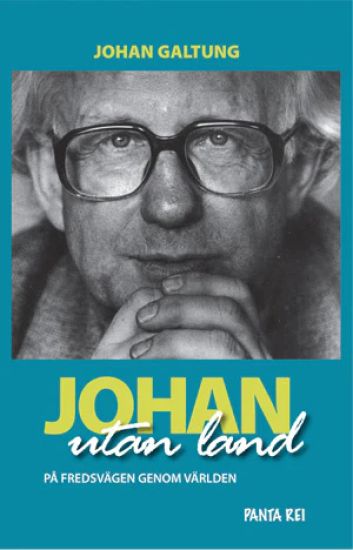
Johan Galtungs självbiografi - JOHAN UTAN LAND - är en svindlande, ofta halsbrytande resa i fredens tjänst genom 1900-talets andra hälft tilsammans med den ofta hämningslöst provocerande, karismatiske och roande samhällsdebattören, aktivisten och professorn, som så småningom lämnade Norge och i stället valde världen som sin arbetsplats.
I ti bidrag, de fleste av dem fra det tyske uketidsskriftet "Der Spiegel", belyser forskere, politikere og journalister hovedtrekkene i 90-årenes globale situasjon og dens utfordringer. Med bibliografiske henvisninger.
Boka er en analyse av USAs utenrikspolitikk og forsøk på å opprette en Ny Verdensorden i kjølvannet av kommunismens fall. Galtung betegner denne politikken som teologi i praksis. Med eksempler fra storpolitikken viser han hvordan USAs handlemåte kan forstås på bakgrunn av en selvforståelse som Det Godes forvalter, i en verden der Det Ondes impuls regjerer i flere land.
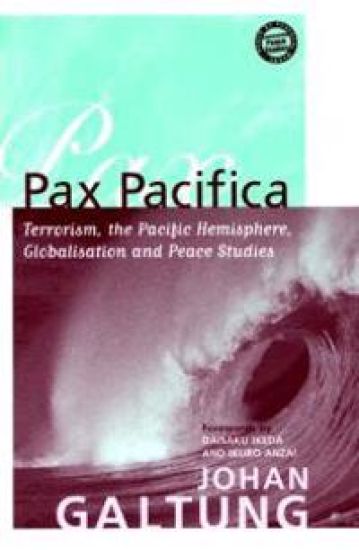
Johan Galtung is the world's foremost thinker in peace studies. This remarkable collection of essays represents his response to the events of September 11 2001. It is a philosophical collection on terror, war and peace which engages with the key issues and obstacles we face in attempting to create peace around the world. Focusing in particular on the Pacific region, he presents a grounded assessment of the history of the regional power dynamics, and present prospects for peace. Topics covered include the hegemony of the USA; the European perspective; the US relationship with Japan and Asia; decolonization; and peace movements in the age of globalization.
Johan Galtung is the world's foremost thinker in peace studies. This remarkable book is his response to the events of 9/11. It is a philosophical collection of essays on terror, war, and peace which engages with the key issues and obstacles we face in attempting to create peace around the world. Focusing in particular on the Pacific region, he presents a grounded assessment of the history of the regional power dynamics and present prospects for peace.
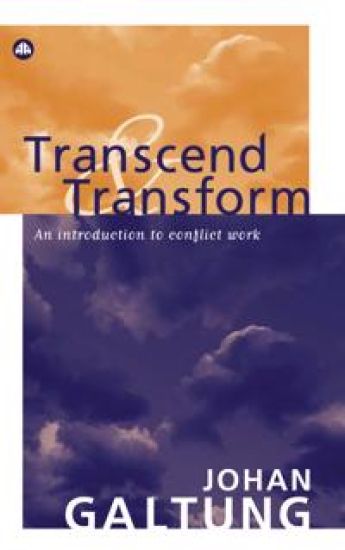
This is a practical handbook to conflict resolution, that shows how to overcome conflicts at all levels – from personal domestic conflicts, to issue-based struggles about race, class and gender, and finally to major international conflicts between nation states or international divides along economic and religious lines. Johan Galtung is the world's most experienced peace studies professor, and founder of the peace studies discipline. This book lays out the limitless variety of the uses to which conflict resolution theory can be applied. Revealing the interconnections between conflict at all levels of society, Galtung argues that an equal variety of solutions are available to us, if we are willing to explore them. The book will be of interest to anyone who deals with conflict on a daily basis – such as teachers, social workers, parents and couples – as well as students of peace studies. Offering handy tips and practical advice, with over 40 illustrative examples, Galtung shows how we can transcend the difficulties that lead to conflict at all levels.
This is a practical handbook to conflict resolution, that shows how to overcome conflicts at all levels - from personal domestic conflicts, to issue-based struggles about race, class and gender, and finally to major international conflicts between nation states or international divides along economic and religious lines. Johan Galtung is the world's most experienced peace studies professor, and founder of the peace studies discipline. This book lays out the limitless variety of the uses to which conflict resolution theory can be applied. Revealing the interconnections between conflict at all levels of society, Galtung argues that an equal variety of solutions are available to us, if we are willing to explore them. The book will be of interest to anyone who deals with conflict on a daily basis - such as teachers, social workers, parents and couples - as well as students of peace studies. Offering handy tips and practical advice, with over 40 illustrative examples, Galtung shows how we can transcend the difficulties that lead to conflict at all levels.
This is one of the first books to bridge the gap between peace and conflict studies, world order and globalisation. Revealing deep structures and deep cultures of violence and finding in them the reasons for increasing violence and peacekeeping failures, it presents the lessons that can be learned from the TRANSCEND approach, adopted as a UN training guide. A critical and piercing analysis of the shortcomings of conventional approaches to conflict resolution, realpolitik and worsening dynamics of global violence which, if not resolved, threaten even more catastrophic destruction in the future. The book maps the conditions and path to sustainable peace, and the challenge for peace by peaceful means.
This dazzlingly original collaboration between two international authors focuses on 20 macrohistorians—that is to say, historians who have helped shape our entire way of conceiving ourselves—from Ssu-Ma Ch'ien and Ibn Khaldun to Oswald Spengler and Marx and Piritim Sorokin and Arnold Toynbee. The authors move toward a general theory of grand social change based on the writings of these macrohistorians and provide a comparative view of macrohistory and sociology. The book brings a cross-cultural and transhistorical perspective to the study of social change, analyzing macrohistorians and macrohistory comparatively and synthetically, from the traditional linear-cyclical divide as well as including broader transcendental and feminist approaches. Like a road map par excellence for the study of civilizational change, the book captures the panoramic sweep of history and helps readers learn to appreciate, and henceforth include in the circle of greats, those non-Western thinkers whose work they may until now have neglected.^L ^L Johan Galtung, Sohail Inayatullah, and the other contributors to ^IMacrohistory and Macrohistorians^R demonstrate that each generation may give new perspectives to ideas that we thought we understood. The book covers the vital perspective out of which the 21st century emerges, and in the cases of Sorokin, Toynbee, and Eisler, deals with theories directly bearing on the potential shape of the next thousand years. It brings a cross-cultural and transhistorical perspective to the study of social change and will be of considerable interest to historians and sociologists as well as students of philosophy, historiography, and political science.
Johan Galtung, one of the founders of modern peace studies, provides a wide-ranging panorama of the ideas, theories and assumptions on which the study of peace is based. The book is organized in four parts, each examining the one of the four major theoretical approaches to peace. The first part covers peace theory, exploring the epistemological assumptions of peace. In Part Two conflict theory is examined with an exploration of nonviolent and creative handling of conflict. Developmental theory is discussed in Part Three, exploring structural violence, particularly in the economic field, together with a consideration of the ways of overcoming that violence. The fourth part is devoted to civilization theory. This involves an exploration of cultural violence focusing on the deeper aspects of cultures. Finally, the threads of these four approaches are drawn together with a focus on peace action - peace by peaceful means.
This is a refreshingly original analysis of human rights, past and present, which sets out major new terms of reference for political debate, it will become a standard text in the human rights field.