Kirjojen hintavertailu – 12 859 829 kirjaa ja 27 kauppaa

Kirjailija

Johan Ling

Kirjat ja teokset yhdessä paikassa: 4 kirjaa, julkaisuja vuodelta 2024, suosituimpiin kuuluu Bronze Age Rock Art in Iberia and Scandinavia. Vertaile teosten hintoja ja tarkista saatavuus suomalaisista kirjakaupoista.

4 kirjaa

Nordic Bronze Age Economies

Nordic Bronze Age Economies

Christian Horn; Knut Ivar Austvoll; Magnus Artursson; Johan Ling

Cambridge University Press
2024
sidottu
Provides a multi-scalar synthesis of Nordic Bronze Age economies (1800/1700–500 BCE) that is organized around six sections: an introduction to the Nordic Bronze Age, macro-economic perspectives, defining local communities, economic interaction, conflict and alliances, political formations, and encountering Europe. Despite a unifying material culture, the Bronze Age of Scandinavia was complex and multi- layered with constantly shifting and changing networks of competitors and partners. The social structure in this highly mobile and dynamic macroregional setting was affected by subsistence economies based on agropastoralism, maritime sectors, the production of elaborate metal wealth, trade in a wide range of goods, as well as raiding and warfare. For this reason, the focus of this book is on the integration and interaction of subsistence and political economies in a comparative analyses between different local constellations within the macro-economic setting of prehistoric Europe. This title is also available as Open Access on Cambridge Core

Nordic Bronze Age Economies

Nordic Bronze Age Economies

Christian Horn; Knut Ivar Austvoll; Magnus Artursson; Johan Ling

Cambridge University Press
2024
pokkari

Halvin toimitettuna 30,00 €

Provides a multi-scalar synthesis of Nordic Bronze Age economies (1800/1700–500 BCE) that is organized around six sections: an introduction to the Nordic Bronze Age, macro-economic perspectives, defining local communities, economic interaction, conflict and alliances, political formations, and encountering Europe. Despite a unifying material culture, the Bronze Age of Scandinavia was complex and multi- layered with constantly shifting and changing networks of competitors and partners. The social structure in this highly mobile and dynamic macroregional setting was affected by subsistence economies based on agropastoralism, maritime sectors, the production of elaborate metal wealth, trade in a wide range of goods, as well as raiding and warfare. For this reason, the focus of this book is on the integration and interaction of subsistence and political economies in a comparative analyses between different local constellations within the macro-economic setting of prehistoric Europe. This title is also available as Open Access on Cambridge Core

Bronze Age Rock Art in Iberia and Scandinavia

Bronze Age Rock Art in Iberia and Scandinavia

Johan Ling; Marta Díaz-Guardamino; Christian Horn; John Koch; Zofia Anna Stos-Gale

Casemate Publishers
2024
nidottu
Recent research has uncovered new evidence of long-distance interactions between Scandinavia and Iberia during the Late Bronze Age. Advances in various lines of inquiry, such as 3D recording of rock art, iconography, metals and amber sourcing, linguistics, and, to some extent, more indirect indications from human remains, as reflected by strontium and aDNA results, have made this possible. The main goal of this book is to cross reference Iberian Late Bronze Age warrior iconography with Scandinavian warrior iconography. However, we will also account for links based on archeometallurgical evidence, linguistics, and other lines of inquiry, such as Baltic Amber, and metal artifacts. The results have been produced within the framework of the RAW project, an international undertaking funded by the Swedish Research Council. The RAW project is motivated by the discovery of isotopic and chemical evidence for Nordic Bronze Age artifacts made of copper that originated in the Iberian Peninsula. These findings led to re-opening two long known, but poorly explained, phenomena: 1) numerous shared motifs and close formal parallels in the rock art of Scandinavia and Iberian ‘warrior’ stelae, and 2) a large body of inherited words shared by the Celtic and Germanic languages, but not the other Indo-European branches. An integrated explanation for the three phenomena (Iberian metal in Scandinavia, parallels in Bronze Age rock carvings, and Celto-Germanic vocabulary) could now be formulated as a testable hypothesis: an episode in the Bronze Age when materials and ideas were exchanged over long distances between Scandinavia and the Atlantic West, including the Iberian Peninsula.
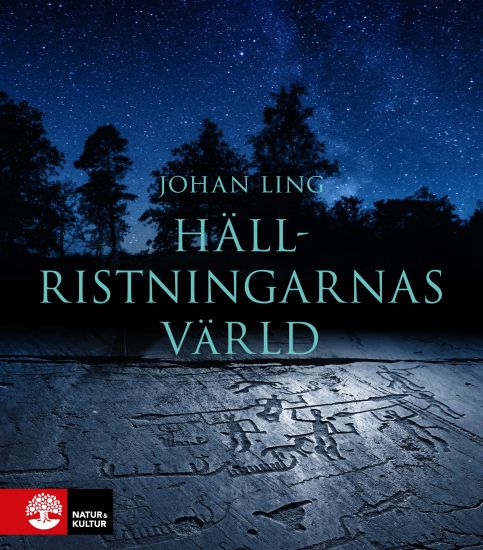
Hällristningarnas värld

Hällristningarnas värld

Johan Ling

Natur Kultur Allmänlitteratur
2024
sidottu
Finns det något svenskt kulturarv som väckt turisters och forskares fantasi på samma sätt som hällristningarna från bronsåldern? Fortfarande görs fynd i landskapet som väcker nya frågor och öppnar för fler perspektiv. Somligt vet vi, somligt har vi svårare att förstå, men frågorna väcker nyfikenhet oavsett: Vem eller vilka högg in bilderna på hällarna? Hur såg omgivningen ut? Hur daterar man hällristningar? Varför gjordes de flesta under bronsåldern? Vad betyder de båtar, krigare, fotsulor, skålgropar och människor med fågelhuvuden och de övriga 20 000 motiven vi ser? Johan Ling har ägnat sin forskningsgärning åt dessa gåtor. Hans bok är den första på trettio år som ger en samlad bild av vad vi vet och vad vi trott om ristningarna och ristarna. Här tar han också med läsaren på en resa från Ångermanland ned till Skåne och upp längs västkusten till världsarvet i Tanum och berättar om de viktiga fyndplatserna, hur vi hittar dit och vad vi kan se. Resultatet är ett äventyr i text och bild rakt in i en sällsamt främmande värld – hällristningarnas värld. Johan Lingär professor i arkeologi vid Göteborgs universitet och föreståndare för Svenskt hällristningsforsknings arkiv.