Kirjailija
Johannes Kepler
Kirjat ja teokset yhdessä paikassa: 32 kirjaa, julkaisuja vuosilta 1975–2025, suosituimpiin kuuluu Due Lettere Di Galileo Galilei Ed Una Del Keplero Inedite.... Vertaile teosten hintoja ja tarkista saatavuus suomalaisista kirjakaupoista.
32 kirjaa
Kirjojen julkaisuvuodet: 1975–2025.
Somnium, Seu Opus Posthumum de Astronomia Lunari, Divulgatum a M. Ludovico Kepplero (Éd.1634)
Johannes Kepler
Hachette Livre - BNF
2012
pokkari
Due Lettere Di Galileo Galilei Ed Una del Keplero Inedite...
Galileo Galilei; Johannes Kepler; Pietro Bigazzi
Nabu Press
2012
pokkari

Harmonies of the World
Johannes Kepler
Theophania Publishing
2011
nidottu
Halvin toimitettuna 31,30 €

"In 1611, Kepler wrote an essay wondering why snowflakes always had perfect, sixfold symmetry. It's a simple enough question, but one that no one had ever asked before and one that couldn't actually be answered for another three centuries. Still, in trying to work out an answer, Kepler raised some fascinating questions about physics, math, and biology, and now you can watch in wonder as a great scientific genius unleashes the full force of his intellect on a seemingly trivial question, complete with new illustrations and essays to put it all in perspective."io9, from their list "10 Amazing Science Books That Reveal The Wonders Of The Universe"When snow began to fall while he was walking across the Charles Bridge in Prague late in 1610, the eminent astronomer Johannes Kepler asked himself the following question: Why do snowflakes, when they first fall, and before they are entangled into larger clumps, always come down with six corners and with six radii tufted like feathers? In his effort to answer this charming and never-before-asked question about snowflakes, Kepler delves into the nature of beehives, peapods, pomegranates, five-petaled flowers, the spiral shape of the snail's shell, and the formative power of nature itself. While he did not answer his original questionit remained a mystery for another three hundred yearshe did find an occasion for deep and playful thought." A most suitable book for any and all during the winter and holiday seasons is a reissue of a holiday present by the great mathematician and astronomer Johannes KeplerEven the endnotes in this wonderful little book are interesting and educationally fun to read." Jay Pasachoff, "The Key Reporter""New English translation by Jacques BrombergLatin text on facing pagesAn essay, "The Delights of a Roving Mind" by Owen GingerichAn essay, "On"The Six-Cornered Snowflake"" by Guillermo BleichmarSnowflake illustrations by Capi Corrales RodriganezJohn Frederick Nims' poem "The Six-Cornered Snowflake"Notes by Jacques Bromberg and Guillermo Bleichmar"Johannes Kepler(1571-1631) was an important figure in the seventeenth century astronomical revolution. He is best known for his eponymous laws of planetary motion. Kepler wrote: "If there is anything that can bind the heavenly mind of man to this dusty exile of our earthly homethen it is verily the enjoyment of the mathematical sciences and astronomy.""
Tabulae Manuales Logarithmicae Ad Calculum Astronomicum, In Specie Tabb. Rudolphinarum (1700)
Johannes Kepler; Jacob Bartsch; Johann Caspar Eisenschmidt
KESSINGER PUBLISHING, LLC
2010
pokkari

Dioptrice Seu Demonstratio Eorum Quae Visui Et Visibilibus Propter Conspicillanon Ita Pridem Inventa Accidunt (1611)
Johannes Kepler
KESSINGER PUBLISHING, LLC
2009
nidottu
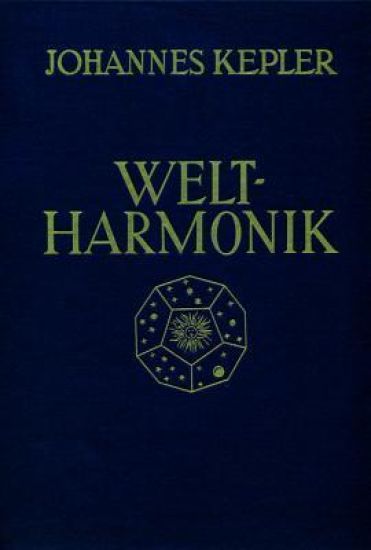
Das epochemachende Werk des großen deutschen Astronomen liegt nun in einem sorgfältig ausgestatteten Nachdruck vor. Kepler hat sich viele Jahre mit der Frage nach dem Zusammenhang zwischen Umlaufzeit und Abstand eines Planeten von der Sonne beschäftigt und vermutet, dass der Aufbau des Planetensystems mathematisch ausdrückbar sein müsse. Nach mühevollem Suchen verkündet er die Bestätigung seiner Vermutung in dem Gesetz, dass es für alle Planeten ein konstantes Verhältnis zwischen dem Quadrat der Umlaufzeit und der dritten Potenz des mittleren Abstandes gibt. Dieses 3. Planetengesetz Keplers bildet zusammen mit seinen beiden ersten, in der "Neuen Astronomie" mitgeteilten Gesetze, die Grundlage moderner Himmelsphysik. Seit Max Caspar die deutsche Übersetzung des in lateinischer Sprache verfassten Werkes "Harmonice Mundi" Keplers vorlegte, haben Wissenschaft und Forschung größten Gewinn daraus gezogen. Der Band enthält eine Betrachtung des in seinen einzelnen Teilen "harmonisch", d.h. mathematisch angelegten Kosmos. Der Leser gewinnt vor allem dank der ausführlichen Einleitung und des Kommentars von Max Caspars einen Zugang zu dem vielschichtigen Werk.
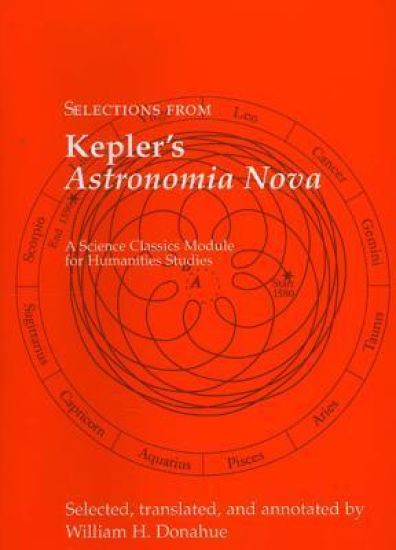
Johannes Kepler wrote "Astronomia Nova" (1609) in a single minded drive to sweep away the ancient and medieval clutter of spheres and orbs and to establish a new truth in astronomy, based on physical causality. This title includes Kepler's introduction as well as a selection of chapters that develop the physics of planetary motion.
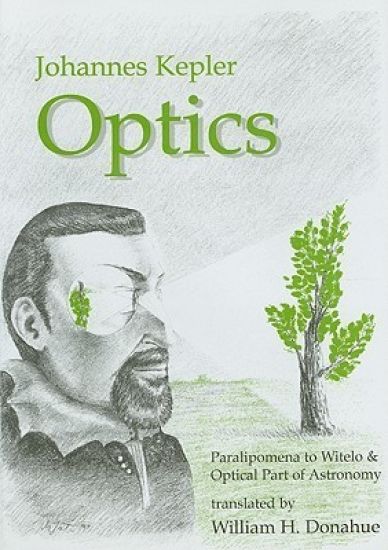
"The Optics" was a product of Kepler's most creative period. It began as an attempt to give astronomical optics a solid foundation, but soon transcended this narrow goal to become a complete reconstruction of the theory of light, the physiology of vision, and the mathematics of refraction. The result is a work of extraordinary breadth whose significance transcends most categories into which it might be placed. It gives us precious insight into Kepler's thought during this crucial period, an insight all the more valuable in that most of his working papers from that time have been lost. Second, it is the culmination of a long and rich tradition in the science of optics, in distinct contrast with the new optical thought represented by Descartes. And third, it presents discoveries in the physiology of vision, photometry, and the geometry of conic sections which have become part of our intellectual heritage. Especially notable are Kepler's discovery of the inverted retinal image, his theoretical grounding of the inverse-square photometric law, and his insights into the relations between the various conic sections.
Epitome of Copernican Astronomy and Harmonies of the World
Johannes Kepler
Prometheus Books
1995
pokkari
The brilliant German mathematician Johannes Kepler (1571-1630), one of the founders of modern astronomy, revolutionized the Copernican heliocentric theory of the universe with his three laws of motion: that the planets move not in circular but elliptical orbits, that their speed is greatest when nearest the sun, and that the sun and planets form an integrated system. This volume contains two of his most important works: The Epitome of Copernican Astronomy (books 4 and 5 of which are translated here) is a textbook of Copernican science, remarkable for the prominence given to physical astronomy and for the extension to the Jovian system of the laws recently discovered to regulate the motions of the Planets. Harmonies of the World (book 5 of which is translated here) expounds an elaborate system of celestial harmonies depending on the varying velocities of the planets.