
Kirjailija
John A. Andrew
Kirjat ja teokset yhdessä paikassa: 14 kirjaa, julkaisuja vuosilta 1998–2025, suosituimpiin kuuluu Sketch of the Official Life of John A. Andrew. Vertaile teosten hintoja ja tarkista saatavuus suomalaisista kirjakaupoista.
Nimi esiintyy myös muodoissa: John a Andrew
14 kirjaa
Kirjojen julkaisuvuodet: 1998–2025.
Sketch of the Official Life of John A. Andrew
John a Andrew; Albert G Browne
Hansebooks
2019
pokkari
Sketch of the Official Life of John A. Andrew - as Governor of Massachusetts - to which is added the valedictory address of Governor Andrew, delivered upon retiring from office, January 5, 1866 is an unchanged, high-quality reprint of the original edition of 1868. Hansebooks is editor of the literature on different topic areas such as research and science, travel and expeditions, cooking and nutrition, medicine, and other genres. As a publisher we focus on the preservation of historical literature. Many works of historical writers and scientists are available today as antiques only. Hansebooks newly publishes these books and contributes to the preservation of literature which has become rare and historical knowledge for the future.


Correspondence between Governor Andrew and Maj.-Gen. Butler
John a Andrew; Benjamin F Butler
Hansebooks
2016
pokkari
Addresses At The Inauguration Of Thomas Hill, As President Of Harvard, Wednesday, March 4, 1863 (1863)
John A. Andrew; Thomas Hill
KESSINGER PUBLISHING, LLC
2010
sidottu
Addresses Of His Excellency John A. Andrew V2 (1864)
John A. Andrew
KESSINGER PUBLISHING, LLC
2010
pokkari
Addresses Of His Excellency John A. Andrew V1 (1864)
John A. Andrew
KESSINGER PUBLISHING, LLC
2010
pokkari
Special Message Of His Excellency John A. Andrew, To The Two Branches Of The Legislature Of Massachusetts, January 3, 1866 (1866)
John A. Andrew
KESSINGER PUBLISHING, LLC
2009
pokkari
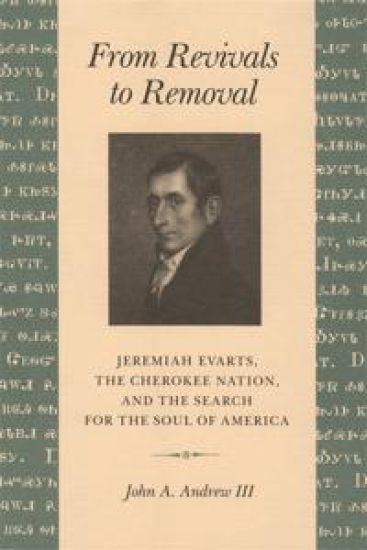
Between the end of the Revolutionary War in 1781 and Andrew Jackson's retirement from the presidency in 1837, a generation of Americans acted out a great debate over the nature of the national character and the future political, economic, and religious course of the country. Jeremiah Evarts (1781-1831) and many others saw the debate as a battle over the soul of America. Alarmed and disturbed by the brashness of Jacksonian democracy, they feared that the still-young ideal of a stable, cohesive, deeply principled republic was under attack by the forces of individualism, liberal capitalism, expansionism, and a zealous blend of virtue and religiosity. A missionary, reformer, and activist, Jeremiah Evarts (1781-1831) was a central figure of neo-Calvinism in the early American republic. An intellectual and spiritual heir to the founding fathers and a forebear of American Victorianism, Evarts is best remembered today as the stalwart opponent of Andrew Jackson's Indian policies—specifically the removal of Cherokees from the Southeast. John A. Andrew's study of Evarts is the most comprehensive ever written. Based predominantly on readings of Evart's personal and family papers, religious periodicals, records of missionary and benevolent organizations, and government documents related to Indian affairs, it is also a portrait of the society that shaped-and was shaped by-Evart's beliefs and principles. Evarts failed to tame the powerful forces of change at work in the early republic, Evarts did manage to shape broad responses to many of them. Perhaps the truest measure of his influence is that his dream of a government based on Christian principles became a rallying cry for another generation and another cause: abolitionism.
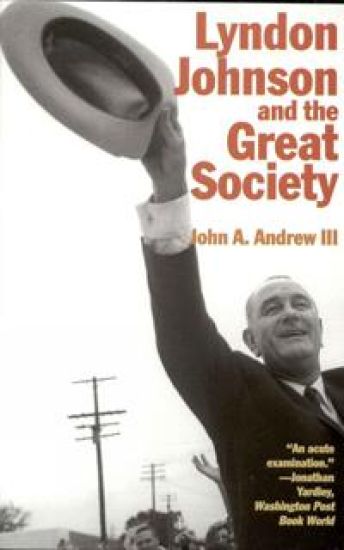
Lyndon Johnson’s Great Society was the most ambitious and controversial American reform effort since the New Deal of Franklin Roosevelt. Conceived in a time of prosperity rather than devastating depression, it sought to forge a consensus that rested on ideals rather than harsh economic realities. In this narrative analysis, John Andrew examines the underlying ideas and principal objectives of Great Society legislation in the areas of civil rights, poverty, health, education, urban life, and consumer issues—legislation that addressed some of the most important and complex problems facing American society in the mid-1960s. These efforts in some way touched the lives of most Americans. But, as Mr. Andrew points out, LBJ’s consensus could persist only by avoiding divisive issues. As times changed and the economy deteriorated, the mood of the nation shifted, and the ideals of the mid-sixties collapsed in the face of ideological and political polarization. In the end, as Mr. Andrew shows, much of the Great Society failed along with the idealism that had sparked it. Yet the issues it addressed proved so intractable that the search for solutions continues to generate political controversy even today.
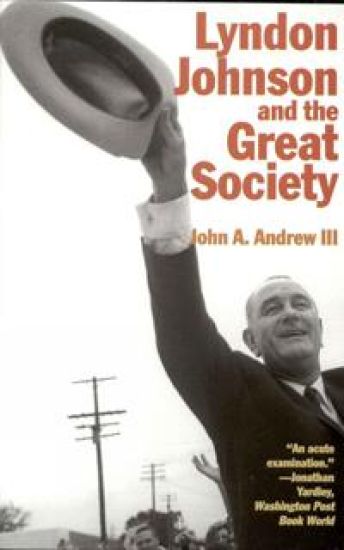
In this narrative analysis, Mr. Andrew examines the underlying ideas and principal objectives of the most ambitious and controversial American reform effort since the New Deal. An acute examination. —Jonathan Yardley, Washington Post. American Ways Series.