Kirjojen hintavertailu – 12 859 829 kirjaa ja 27 kauppaa

Kirjailija

John A. Nagl

Kirjat ja teokset yhdessä paikassa: 11 kirjaa, julkaisuja vuosilta 2005–2025, suosituimpiin kuuluu The Defense of Jisr al-Doreaa. Vertaile teosten hintoja ja tarkista saatavuus suomalaisista kirjakaupoista.

Nimi esiintyy myös muodoissa: John A Nagl

11 kirjaa

Kirjojen julkaisuvuodet: 2005–2025.

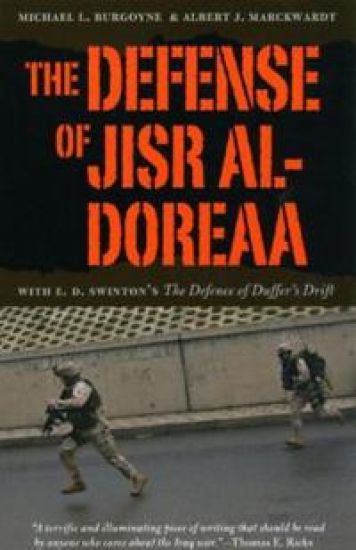
The Defense of Jisr al-Doreaa

The Defense of Jisr al-Doreaa

Michael L. Burgoyne; Albert J. Marckwardt; John A. Nagl

University of Chicago Press
2009
sidottu
Following the invasion of Iraq in 2003, the U. S. military found itself in a battle with a lethal and adaptive insurgency, where the divisions between enemy and ally were ambiguous at best, and working with the local population was essential for day-to-day survival. From the lessons they learned during multiple tours of duty in Iraq, two American veterans have penned "The Defense of Jisr al-Doreaa", an instructional parable of counterinsurgency that addresses the difficulties of war in the postmodern era. In this tactical primer based on the military classic "The Defence of Duffer's Drift", a young officer deployed for the first time in Iraq receives ground-level lessons about urban combat, communications technology, and high-powered weaponry in an environment where policy meets reality. Over the course of six dreams, the inexperienced soldier fights the same battle again and again, learning each time - the hard way - which false assumptions and misconceptions he needs to discard in order to help his men avoid being killed or captured. As the protagonist grapples with the consequences of his mistakes, he develops a keen understanding of counterinsurgency fundamentals and the potential pitfalls of working with the native population. Accompanied here by the original novella that inspired it, "The Defense of Jisr al-Doreaa" offers an invaluable resource for cadets and junior military leaders - as well as general readers seeking a deeper understanding of the wars in Iraq and Afghanistan. Just as Swinton's classic has been a hallmark of military instruction, "The Defense of Jisr al-Doreaa" will help draw the road map for counterinsurgency in the postmodern world.
The Defense of Jisr al-Doreaa

The Defense of Jisr al-Doreaa

Michael L. Burgoyne; Albert J. Marckwardt; John A. Nagl

University of Chicago Press
2009
nidottu
Following the invasion of Iraq in 2003, the U. S. military found itself in a battle with a lethal and adaptive insurgency, where the divisions between enemy and ally were ambiguous at best, and working with the local population was essential for day-to-day survival. From the lessons they learned during multiple tours of duty in Iraq, two American veterans have penned "The Defense of Jisr al-Doreaa", an instructional parable of counterinsurgency that addresses the difficulties of war in the postmodern era. In this tactical primer based on the military classic "The Defence of Duffer's Drift", a young officer deployed for the first time in Iraq receives ground-level lessons about urban combat, communications technology, and high-powered weaponry in an environment where policy meets reality. Over the course of six dreams, the inexperienced soldier fights the same battle again and again, learning each time - the hard way - which false assumptions and misconceptions he needs to discard in order to help his men avoid being killed or captured. As the protagonist grapples with the consequences of his mistakes, he develops a keen understanding of counterinsurgency fundamentals and the potential pitfalls of working with the native population. Accompanied here by the original novella that inspired it, "The Defense of Jisr al-Doreaa" offers an invaluable resource for cadets and junior military leaders - as well as general readers seeking a deeper understanding of the wars in Iraq and Afghanistan. Just as Swinton's classic has been a hallmark of military instruction, "The Defense of Jisr al-Doreaa" will help draw the road map for counterinsurgency in the postmodern world.
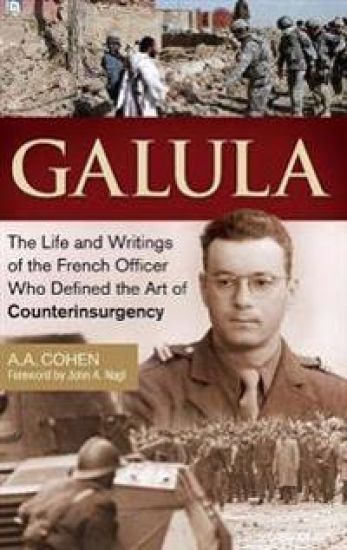
Galula

Galula

A A. Cohen; John A. Nagl

Praeger Publishers Inc
2012
sidottu
This comprehensive analytical biography is the definitive work on the life and writings of history's most significant counterinsurgency doctrinaire, David Galula, elucidating the context for his reflections and examining the present and future applicability of his treatise for scholars and practitioners alike. The product of years of extensive research made possible by exclusive access to Galula's personal papers as well as first-hand accounts from colleagues, family members, and friends, this book traces Galula's life from early childhood until death, describing his upbringing, education, and military career in the tumultuous historical context of his era. The author—a former counterinsurgency practitioner himself—pays particular attention to how the Chinese Revolution and the Algerian War affected Galula's views, and identifies Galula's mentors and the schools of thought within the French military that greatly influenced his writings. A conclusion illuminates the contemporary and likely future validity of his works. In the epilogue, the author speaks to Galula's influence over modern military thought and U. S. counterinsurgency doctrine. This book is essential reading for individuals with an interest in counterinsurgency, Galula's writings, or Galula himself, such as military officers and civilian administrators undertaking counterinsurgency courses and training.
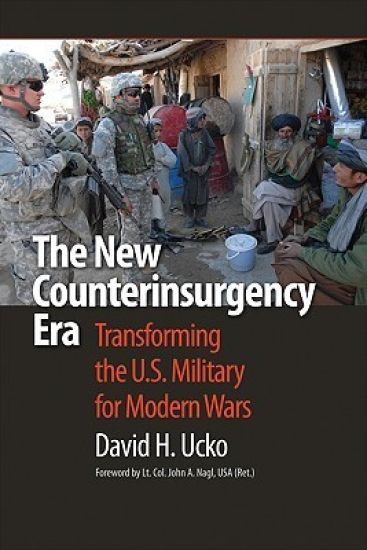
The New Counterinsurgency Era

The New Counterinsurgency Era

David H. Ucko; John A. Nagl

Georgetown University Press
2009
pokkari
Confronting insurgent violence in Iraq and Afghanistan, the U. S. military has recognized the need to "re-learn" counterinsurgency. But how has the Department of Defense with its mixed efforts responded to this new strategic environment? Has it learned anything from past failures? In "The New Counterinsurgency Era", David Ucko examines DoD's institutional obstacles and initially slow response to a changing strategic reality. Ucko also suggests how the military can better prepare for the unique challenges of modern warfare, where it is charged with everything from providing security to supporting reconstruction to establishing basic governance - all while stabilizing conquered territory and engaging with local populations. After briefly surveying the history of American counterinsurgency operations, Ucko focuses on measures the military has taken since 2001 to relearn old lessons about counterinsurgency, to improve its ability to conduct stability operations, to change the institutional bias against counterinsurgency, and to account for successes gained from the learning process. Given the effectiveness of insurgent tactics, the frequency of operations aimed at building local capacity, and the danger of ungoverned spaces acting as havens for hostile groups, the military must acquire new skills to confront irregular threats in future wars. Ucko clearly shows that the opportunity to come to grips with counterinsurgency is matched in magnitude only by the cost of failing to do so.
The U.S. Army/Marine Corps Counterinsurgency Field Manual

The U.S. Army/Marine Corps Counterinsurgency Field Manual

United States Army; John A. Nagl; James F. Amos; David H. Petraeus

University of Chicago Press
2007
nidottu

Halvin toimitettuna 27,60 €

When the U. S. military invaded Iraq, it lacked a common understanding of the problems inherent in counterinsurgency campaigns. It had neither studied them, nor developed doctrine and tactics to deal with them. It is fair to say that in 2003, most Army officers knew more about the U. S. Civil War than about counterinsurgency. This volume was written to fill that void. The result of unprecedented collaboration among top U. S. military experts, scholars, and practitioners in the field, the manual espouses an approach to combat that emphasizes constant adaptation and learning, the importance of decentralized decision making, the need to understand local politics and customs, and the key role of intelligence in winning the support of the population. The manual also emphasizes the paradoxical and often counterintuitive nature of counterinsurgency operations: sometimes the more you protect your forces, the less secure you are; sometimes the more force you use, the less effective it is; sometimes doing nothing is the best reaction. A new introduction by Sarah Sewall, director of the Carr Center for Human Rights Policy at Harvard's Kennedy School of Government, places the manual in critical and historical perspective, explaining the significance and potential impact of this revolutionary challenge to conventional U. S. military doctrine. An attempt by our military to redefine itself in the aftermath of 9/11 and the new world of international terrorism, "The U. S. Army/Marine Corps Counterinsurgency Field Manual" will play a vital role in American military campaigns for years to come.
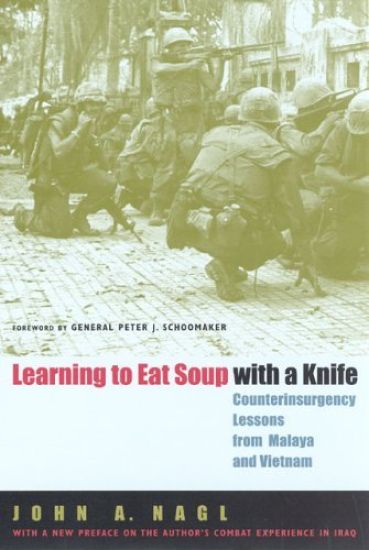
Learning to Eat Soup with a Knife

Learning to Eat Soup with a Knife

John A. Nagl; General Peter J. Schoomaker

University of Chicago Press
2005
nidottu

Halvin toimitettuna 24,70 €

Invariably, armies are accused of preparing to fight the previous war. In "Learning to Eat Soup with a Knife", Lieutenant Colonel John A. Nagl - a veteran of both Operation Desert Storm and the current conflict in Iraq - considers the now-crucial question of how armies adapt to changing circumstances during the course of conflicts for which they are initially unprepared. Through the use of archival sources and interviews with participants in both engagements, Nagl compares the development of counterinsurgency doctrine and practice in the Malayan Emergency from 1948 to 1960 with what developed in the Vietnam War from 1950 to 1975. In examining these two events, Nagl - the subject of a recent New York Times Magazine cover story by Peter Maass - argues that organizational culture is key to the ability to learn from unanticipated conditions, a variable which explains why the British army successfully conducted counterinsurgency in Malaya but why the American army failed to do so in Vietnam, treating the war instead as a conventional conflict. Nagl concludes that the British army, because of its role as a colonial police force and the organizational characteristics created by its history and national culture, was better able to quickly learn and apply the lessons of counterinsurgency during the course of the Malayan Emergency. With a new preface reflecting on the author's combat experience in Iraq, "Learning to Eat Soup with a Knife" is a timely examination of the lessons of previous counterinsurgency campaigns that will be hailed by both military leaders and interested civilians.