Kirjojen hintavertailu – 12 903 735 kirjaa ja 27 kauppaa
Kirjailija
John Allman
Kirjat ja teokset yhdessä paikassa: 11 kirjaa, julkaisuja vuosilta 1985–2016, suosituimpiin kuuluu Algorithms. Vertaile teosten hintoja ja tarkista saatavuus suomalaisista kirjakaupoista.
Fiction. A FINE ROMANCE & OTHER STORIES focuses on love relationships of one kind or another and involves a variety of intertextuality or implied texts within texts. For example, one story interacts with Kafka's Metamorphosis. Another with the myth of Orpheus and Eurydice. Another with three films by Jean-Luc Godard. The title story, about a romance novelist, has the text of the novel being written interacting with the real time text the narrating novelist is living in. There's a touch of epistolary text in a story about a woman writing a letter from jail to her sister. There's a story about a man reading the novel his wife has been writing about her marriage to that man now reading the narrative in secret and on the computer. And in the final story, there is the text of a woman writing postcards to her husband, while she does a world tour all by herself--the husband worrying if those postcard texts will cease and his wife never come back. These stories are vivid and varied in their lyric realism or, at times, urgent fantasy.
Describing this collection of his poems, John Allman writes, "It is a book about the inner and outer worlds, a collection of multiple voices and relationships. In one sense it is about suffering, family, and survival. However, it is also about a world beyond such things, where identity burns by itself, where the self-changes but never dies. The book says that only change happens, but that survival without will and compassion is meaningless. The title, taken from a line in one of the book's ritual lyrics, suggests the four dimensions of human consciousness and effort, and the book strives to name or embody as many landscapes as possible--though it is the 'vertical' one given to religion and death that remains an abiding puzzle." Originally published in 1979. The Princeton Legacy Library uses the latest print-on-demand technology to again make available previously out-of-print books from the distinguished backlist of Princeton University Press. These editions preserve the original texts of these important books while presenting them in durable paperback and hardcover editions. The goal of the Princeton Legacy Library is to vastly increase access to the rich scholarly heritage found in the thousands of books published by Princeton University Press since its founding in 1905.
Describing this collection of his poems, John Allman writes, "It is a book about the inner and outer worlds, a collection of multiple voices and relationships. In one sense it is about suffering, family, and survival. However, it is also about a world beyond such things, where identity burns by itself, where the self-changes but never dies. The book says that only change happens, but that survival without will and compassion is meaningless. The title, taken from a line in one of the book's ritual lyrics, suggests the four dimensions of human consciousness and effort, and the book strives to name or embody as many landscapes as possible--though it is the 'vertical' one given to religion and death that remains an abiding puzzle." Originally published in 1979. The Princeton Legacy Library uses the latest print-on-demand technology to again make available previously out-of-print books from the distinguished backlist of Princeton University Press. These editions preserve the original texts of these important books while presenting them in durable paperback and hardcover editions. The goal of the Princeton Legacy Library is to vastly increase access to the rich scholarly heritage found in the thousands of books published by Princeton University Press since its founding in 1905.
John Allman's prose poems in Algorithms go forth in a kind of wanderjahr to discover or be discovered. These prose poems possess a different kind of urgency, a vitality that almost defies boundaries, a freedom to span discourses and leap across vocabularies. Allman is free to follow his mindful wanderings, landing us in Croatia in 1991, navigating with Columbus in 1492, witnessing a drug bust, watching his wife's root canal, and examining the frozen remains of princess in Siberia. At the same time, the notion of an algorithm, the idea that, given a certain origin, a thing in process must become x or y, provides a way of understanding that each poem encompasses a fate, destined to become only itself-in essence, that boundaries are inherent in being. Ultimately, this points to Allman's unresolved conundrum: the desire to be something beyond one's self, but one can never escape one's own being, and its limits-for what then would I and Not-I be?
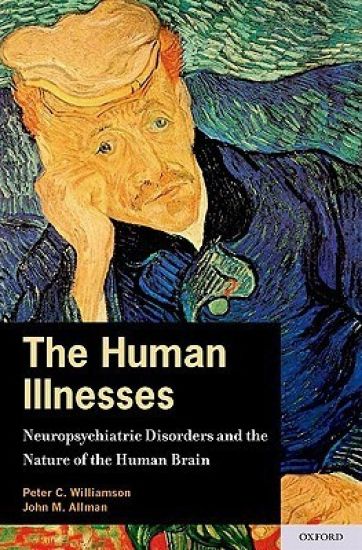
The genetic correlates of neuropsychiatric disorders are now known, but none have come close to explaining the great variety of human psychiatric illnesses. This volume, written by a neuropsychiatrist and an evolutionary biologist, offers a new paradigm for understanding these disorders. Proposing that neuronal pathways which underlie neuropsychiatric conditions mirror unique human capabilities, the authors iterate a new paradigm by which to understand human psychiatric illnesses. Human capabilities such as theory of mind, language, and complex social behaviors are explored through their histological, neuroanatomical and functional brain imaging correlates. The capacity for representation, the authors suggest, is central to the understanding of the human brain. Brain structures such as the frontal pole, temporal pole, and fronto-insular cortex are highly developed in humans and are associated with representation. Other brain regions, including the dorsal anterior cingulate cortex, auditory cortex, and hippocampus, are linked with directed effort while the ventral anterior cingulate cortex, orbital frontal cortex, and amygdala are related to emotional encoding. Both networks interact with representional regions and the dorsolateral prefrontal cortex. Conditions like schizophrenia may result, in part, from a failure of the networks associated with directed effort while bipolar disorders may arise from a failure of networks associated with emotional encoding. Similarly, autism may result from a failure of representational brain regions; frontotemporal dementia may be associated with failure of several discrete networks in later life. From this perspective, neuropsychiatric disorders are selective failures of brain networks involved in the integration of cognition, affect and perception. A better understanding of these brain networks will assist psychiatric and mental health researchers in the search for environmental factors and genetic correlates of disorders as well as aid in the development of more effective treatments for these diseases. This volume will be of interest to psychiatrists, neurologists, psychologists, biologists, and imaging scientists--anyone who has ever wondered what makes the human brain human.
Jon Allman's new collection Lowcountry is a hymn to nature, as experience during his winter stays in the rich and verdant Southern coastal region known as the Low Country, stretching from Charleston to Savannah. These poems celebrate the flora and fauna of that area, involving its art and history, as the poet also explores meanings arising from his own past and present. Lowcountry presents a surging array at once narrative and lyric—meditations on the heraldic great blue heron, a trio of works focused on the Civil War, hymns to married love, poems about his daughter's pregnancy and the birth of her twin girls, as well as poems relating to the events of 9/11. The motifs of journey and return are everywhere in evidence.
An evocative, often mischievous remembrance and reinvention by the poet of his youth in the New York City of the '40s and '50s. In Loew's Triboro, John Allman's fourth collection of poems with New Directions, the poet recalls the movie palace in Astoria, Queensone of the five boroughs of New York Cityand its centrality to the lives and fantasies of the people in the neighborhood. In a combination of prose poems and free verse, sometimes darkly funny, Allman juxtaposes vignettes from the streets of Astoria with the movies of the period, revisioning such film noir classics as The Postman Always Rings Twice, Double Indemnity, and The Asphalt Jungle. The book itself becomes a narrative place where real and cinematic lives interact, where movies are the engines of history and myth and the motif of journey is implicit from the first poem to the last.
The author describes his characters as people who, though they earn little money, are not quite working poor—nor can they work without working hard. They do not know quite how to betray or abandon each other. Mostly, they try to love and do not readily shy from duty. Though Allman’s narratives run from stark naturalism to the near magical and the out-and-out futuristic, his imagination holds to the everyday—as if to say to his readers: Yes, life is grim, but it is precisely the unbearable that becomes the ground for healing.
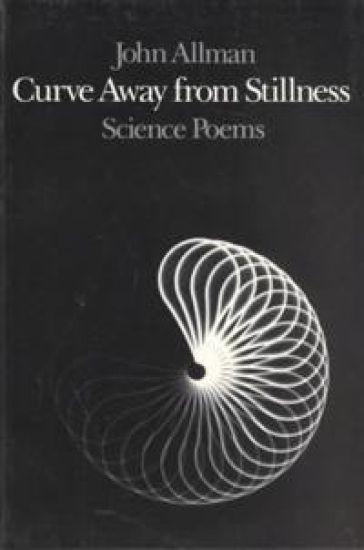
In Curve Away from Stillness, John Allman affirms the connections between poetry and science. They are, he says, as "old as the ones between poetry and cosmology, beauty and knowledge, pleasure and speculation." In reading this collection of "Science Poems," we are reminded of a philosophical tradition in literature that, with Lucretius, sees in the power of love the binding force of the universe. Allman's poems, however—meditations on "Physics," "Chemistry," "Biology," essential "Principles," the "Planets"—are grounded in the science of our time, in all its elegance and awesomeness. Curve Away from Stillness is Allman's fourth book of poetry, his third with New Directions. His previous publications include Scenarios for a Mixed Landscape (1986), speculative reflections on art and nature; the "historical epiphanies" of Clio's Children (1985); and Walking Four Ways in the Wind (Princeton University Press, 1979).
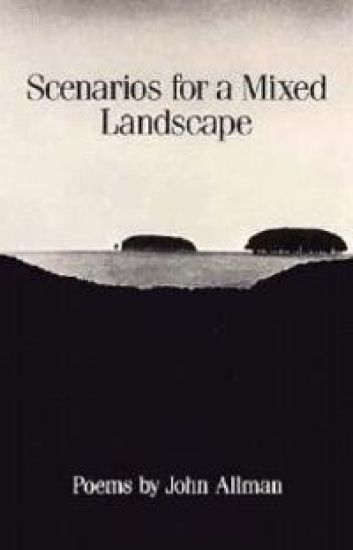
Scenarios for a Mixed Landscape, John Allman's third collection of poems, is a book as remarkable for its lyricism as it is for its capaciousness, for there seems to be no area of thought, no branch of learning, no dark region of the mind into which the poet is unwilling to delve. His recent Clio's Children: Dostoevsky at Semyonov Square and Other Poems is a reminder, as the title implies, that history is a narrative art. In his newest book, Allman reflects on art and nature, love and death—the dualities that animate our common humanity. The poems in Scenarios for a Mixed Landscape look back, at one level, to the mutable, mythic cosmos of Ovid as well as Lucretius' universe of benign random change. But to these ancient considerations Allman brings the insights, indeed the language of modern science and evolution, creating a speculative aesthetic appropriate to the awesome possibilities of the atomic age. "I would say," Allman observes, "that Scenarios for a Mixed Landscape is about nature; that the poems speak in the complementary idioms of art and science in an attempt to comprehend nature; that love recapitulates all life forms; and that love, finally, is the only ground we stand on, the only steadiness beneath us, earned by us, yet strangely given, as we sing of glory and grief." John Allman's previous books of poems are Walking Four Ways in the Wind (Princeton University Press, 1979) and Clio's Children (New Directions, 1985). He is a professor of English at Rockland Community College, State University of New York.
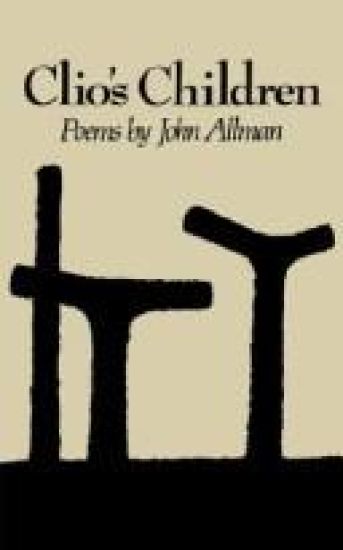
John Allman’s Clio’s Children is a book of twenty-three narrative poems that, taken together, form a compelling history of modern times, seen through the eyes of exceptional people at key moments of their lives––moments of “historical epiphany” that serve to define an era. Fyodor Dostoevsky, in 1849, standing helpless and hopeless before the firing squad of Tzar Nicholas I; J. Robert Oppenheimer at Alamogordo, New Mexico, in 1945, about to witness the first nuclear explosion––these two turning points in personal consciousness are chosen by the poet to mark the century that preceded, and prefigured, our troubled postindustrial world. In all the poems, Allman’s dramatic settings point to the tension between the strength of the individual and the ever-encroaching power of the state. The personae he uses––from Dostoevsky to Oppenheimer, Frederick Douglass to Marcus Garvey, George Sand to Emma Goldman, to name just a few––are men and women of amazing gifts, whose greatness challenges our obsessions with the small and trivial, and whose human character is the reality of our history made flesh. These are the children of Clio, the muse of history, goddess of renown.