Kirjojen hintavertailu – 12 859 818 kirjaa ja 27 kauppaa

Kirjailija

John Ashbery

Kirjat ja teokset yhdessä paikassa: 47 kirjaa, julkaisuja vuosilta 1977–2025, suosituimpiin kuuluu Lunch Poems. Vertaile teosten hintoja ja tarkista saatavuus suomalaisista kirjakaupoista.

47 kirjaa

Kirjojen julkaisuvuodet: 1977–2025.

The Mooring of Starting Out

The Mooring of Starting Out

John Ashbery

Carcanet Press Ltd
1997
nidottu
To mark John Ashbery's seventieth birthday, Carcanet publish his first five books of poems in a single volume. Much of this work has never been published in full in Britain, most of it -- apart from poems included in his 1985 Selected Poems -- has been unavailable for years. To have the full text of The Tennis Court Oath (1962) alongside Some Trees (1956, selected by W. H. Auden for the Yale Younger Poets series, described by Frank O'Hara as `the most beautiful first book to appear in America since Wallace Stevens' Harmonium), shows just how rapidly, and with what authority, Ashbery found his own way. Rivers and Mountains (1966), The Double Dream of Spring (1970, with which British readers first made his acquaintance a couple of years later) and Three Poems (1972), one of his most innovative works, complete what is in effect the Collected Early Poems.
Can You Hear, Bird

Can You Hear, Bird

John Ashbery

Carcanet Press Ltd
1996
nidottu
After John Ashbery's 216-page poem Flow Chart (1991) and the munificence of Hotel Lautréamont (1992) and And the Stars were Shining (1994), Can You Hear, Bird provides an A to Y of poems, moments in which voices, images and tones come in for Ashbery's wily attentions. The poems are generally short. But when we get to T, 'Tuesday Evening' occurs. Tuesday evenings are long in Ashbery's America. This Tuesday begins in tight rhymed quatrains; as the evening extends, the verse relaxes to elicit and swallow up more and more, until only rhyme pins together the abundance of impulse and reflection. An ars poetica seems to emerge: An alphabet is forming words. We who watch them never imagine pronouncing them, and another opportunity is missed. You must be awake to catch them — them, and the scent they give off with impunity. We all tagged along, and in the end there was nothing to see — nothing and a lot. A lot in terms of contour, texture, world. That sort of thing. The real fun and its clothing
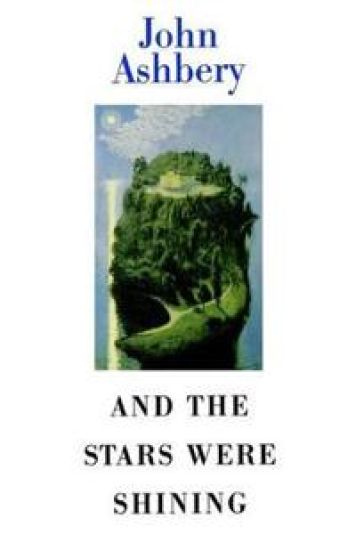
And the Stars Were Shining

And the Stars Were Shining

John Ashbery

Carcanet Press Ltd
1994
nidottu
After the `monstrous, magnificent sprawl' of John Ashbery's 216-page poem Flow Chart (1991) and the further munificence of Hotel Lautreamont (1992), his sixteenth collection, And the Stars were Shining, includes a thirteen-part title poem which is a major achievement in American poetry, with the wise wit and heartbreak of Ashbery's urbane, unsettle imagination, subject to time's encroachments and the vagaries of the human heart. `He is quite simply,' The Times said, `the finest poet in English of his generation,' a generation that includes his friends Frank O'Hara, James Schuyler and Kenneth Koch, as well as Sylvia Plath and Anne Sexton. He moves tradition forward with a deceptively casual style. Language is `a landscape sweeping out from us to disappear on the horizon', into which he moves with assurance, without fixed direction, finding a way. And the Stars were Shining includes fifty-nine poems marked by the valiant comedy and lyric intensity we have come to expect of Ashbery.
A Wave

A Wave

John Ashbery

Carcanet Press Ltd
1994
nidottu
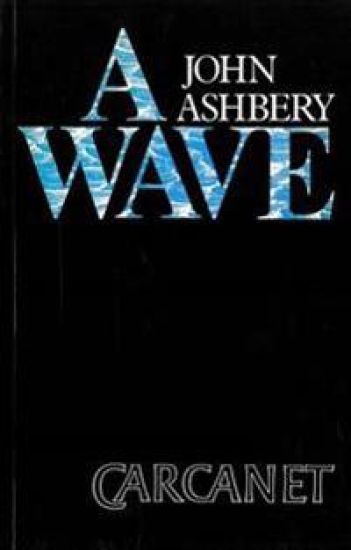
Over forty new poems in verse and prose make up A Wave, John Ashbery's tenth collection. The title poem is a twenty-page meditation on change, loss and adjustment; it is a major poem that takes place alongside 'Self-Portrait in a Convex Mirror'and 'Litany' as a challenging masterwork of modern American poetry. John Ashbery describes the way in which the rhythm of childhood memories permeates the verse of his long poem,'A Wave': 'Waves have always been somehow embedded in my mind because I spent a great deal of my childhood on the edge of one of the great lakes, Lake Ontario, where my grandparents lived. They're not as big as the ones on the ocean but they do get to be pretty big and you hear them all day long, and their rhythm is something that has always been with me and keeps erupting in the poetry.' (talking to David Sexton, The Sunday Times, 16th June 1983)
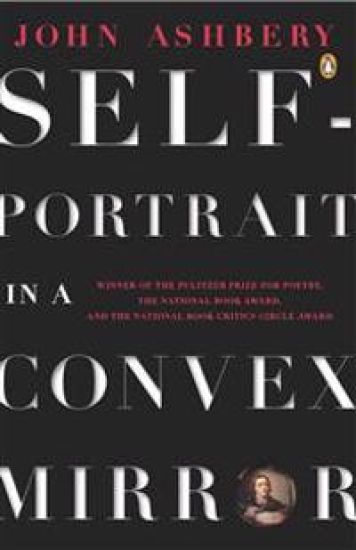
Self-Portrait in a Convex Mirror: Poems (Pulitzer Prize, National Book Award, and National Book Critics Circle Award Winner)
John Ashbery's most renowned collection of poetry -- Winner of The Pulitzer Prize, the National Book Award, and the National Book Critics Circle Award First released in 1975, Self-Portrait in a Convex Mirror is today regarded as one of the most important collections of poetry published in the last fifty years. Not only in the title poem, which the critic John Russell called "one of the finest long poems of our period," but throughout the entire volume, Ashbery reaffirms the poetic power that made him an outstanding figure in contemporary literature. These are poems "of breathtaking freshness and adventure in which dazzling orchestrations of language open up whole areas of consciousness no other American poet as ever begun to explore" (The New York Times).
Selected Poems

Selected Poems

John Ashbery

PENGUIN BOOKS
1986
nidottu
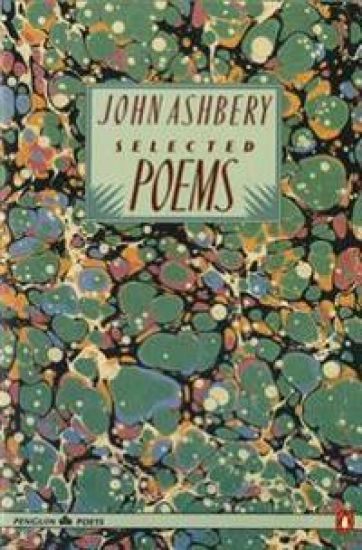
Selections from the first three decades of the poetry of John Ashbery, author of Self-Portrait in a Convex Mirror, winner of the Pulitzer Prize and the National Book Award The late John Ashbery was a poet whose "teasing, delicate, soulful lines made him one of the most influential figures of late-20th and early 21st century American literature." (The New York Times) This important volume gathers work from his first ten collections of poetry, from Some Trees, which was chosen by W. H. Auden for the Yale Younger Poets Series (1956), to A Wave (1984). The 138 poems in this volume include short lyrics, haikus, prose poems, and many of Ashbery's major long poems, including "Self-Portrait in a Convex Mirror," offering a beautiful distillation of the first thirty years of his remarkable, groundbreaking work.
The Tennis Court Oath

The Tennis Court Oath

John Ashbery

Wesleyan University Press
1977
nidottu
John Ashbery writes like no one else among contemporary American poets. In the construction of his intricate patterns, he uses words much as the contemporary painter uses form and color- words painstakingly chosen as conveyors of precise meaning, not as representations of sound. These linked in unexpected juxtapositions, at first glance unrelated and even anarchic, in the end create by their clashing interplay a structure of dazzling brilliance and strong emotional impact. From this preoccupation arises a poetry that passes beyond conventional limits into a highly individual realm of effectiveness, one that may be roughly likened to the visual world of Surrealist painting. Some will find Mr. Ashbery's work difficult, even forbidding; but those who are sensitive to new directions in ideas and the arts will discover here much to quicken and delight them. A 35th anniversary edition of classic work from a celebrated American poet who has received the Pulitzer Prize, the national Book Award, and the national Book Critics Circle Award. John Ashbery's second book, The Tennis Court Oaths, first published by Wesleyan in 1962, remains a touchstone of contemporary avant-garde poetry.