Kirjailija
John Banville
Kirjat ja teokset yhdessä paikassa: 117 kirjaa, julkaisuja vuosilta 1991–2027, suosituimpiin kuuluu Roger's Version. Vertaile teosten hintoja ja tarkista saatavuus suomalaisista kirjakaupoista.
117 kirjaa
Kirjojen julkaisuvuodet: 1991–2027.
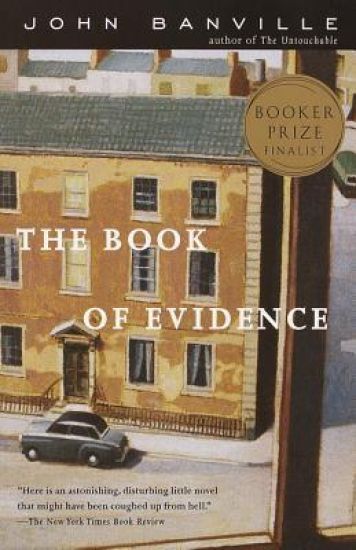
Inspired by the crimes of Malcolm Macarthur in Ireland, 1982, The Book of Evidence by John Banville is a gripping portrait of a cold, deceptive and utterly unprecedented killer, shortlisted for the Booker Prize.'Banville writes a dangerous and clear-running prose and has a grim gift of seeing people's souls' – Don DeLillo, author of White Noise and LibraFreddie Montgomery has committed two crimes. He stole a small Dutch master – an unattributed painting of a middle-aged woman – from a wealthy family friend. And he murdered a chambermaid who caught him in the act, bludgeoning her to death with a hammer. An eccentric narcissist, he has little to say about the woman he killed. He travels through life without any apparent remorse. He killed her, he says, because he was physically capable of it. It made sense to him. However, as he narrates his testimony, there is one thing he cannot understand. One thing he would desperately like to know. Why did he want to steal the painting?'Remarkable' – Ruth Rendell, author of the Inspector Wexford novelsThe Book of Evidence is the first in John Banville's acclaimed Frames Trilogy. It is followed by Ghosts and Athena.

‘A beautiful, beguiling book full of resonances that continue to sound long after you’ve turned the final page. Its imagining is magical, its execution dazzlingly skilful.’ Sunday Tribune Ghosts opens with a shipwreck, leaving a party of sightseers temporarily marooned on an island. The stranded castaways make their way towards the big isolated house which is home to the reclusive Professor Silas Kreutznaer and his laconic assistant, Licht, but it is also home to another, unnamed presence . . . Onto this seemingly haunted island, where a strange singing hangs in the air, John Banville drops an intriguing cast of characters – including a murderer – and weaves a tale where the details are clear but the conclusion polymorphous – shifting appearances, transformations and thwarted assumptions make this world of uneasy calm utterly enthralling.
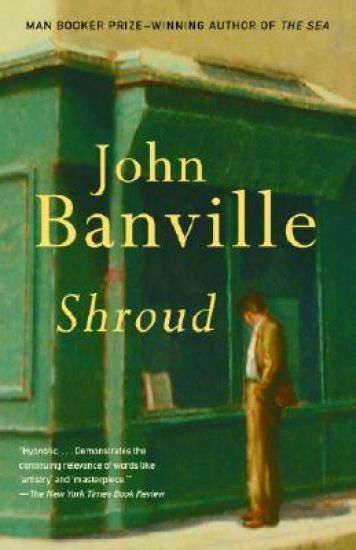
‘Shroud will not be easily surpassed for its combination of wit, moral complexity and compassion. It is hard to see what more a novel could do’ Irish TimesDark secrets and reality unravel in Shroud, the second of John Banville's three novels to feature Cass Cleave, alongside Eclipse and Ancient Light. Axel Vander, distinguished intellectual and elderly academic, is not the man he seems. When a letter arrives out of the blue, threatening to unveil his secrets – and carefully concealed identity – Vander travels to Turin to meet its author. There, muddled by age and alcohol, unable always to distinguish fact from fiction, Vander comes face to face with the woman who has the knowledge to unmask him, Cass Cleave. However, her sense of reality is as unreliable as his, and the two are quickly drawn together, their relationship dark, disturbed and doomed to disaster from its very start.
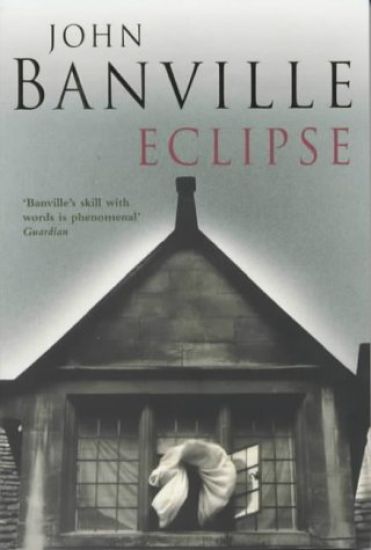
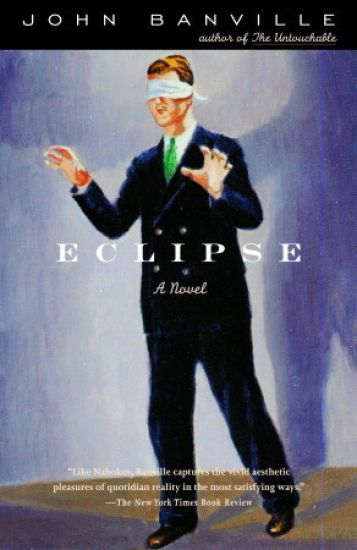
The first of John Banville's novels concerning father and daughter Alexander and Cass Cleave, Eclipse is a lyrical exploration of memory, family and identity. Alexander Cleave, actor, has left his career and his family behind and banished himself to his childhood home. He wants to retire from life, but finds this impossible in a house brimming with presences, some ghostly, some undeniably human. Memories, anxiety for the future and more particularly for his beloved but troubled daughter, conspire to distract him from his dreaming retirement. This humane and beautifully written story tells the tragic tale of a man, intelligent, preposterous and vulnerable, who in attempting to bring the performance to a close finds himself travelling inevitably towards a devastating denouement.
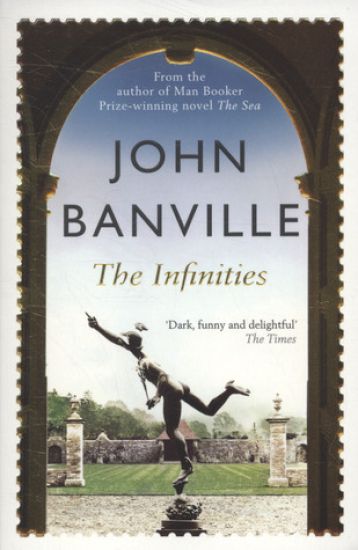
‘This is unequivocally a work of brilliance.’ Justin Cartwright, Spectator Old Adam Godley’s time on earth is drawing to an end, and as his wife and children gather at the family home, little do they realize that they are not the only ones who have come to observe the spectacle. The mischievous Greek gods, too, have come; as tensions fray and desire bubbles over, their spying soon becomes intrusion becomes intervention, until the mortals’ lives – right before their eyes – seem to be changing faster than they can cope with. Overflowing with bawdy humour, John Banville has allowed his twinkling eye to rove through memories of the past and relationships of the present in this moving family drama. The Infinities is both a salacious delight and a penetrating exploration of the terrifying, wonderful, immutable plight of being human.
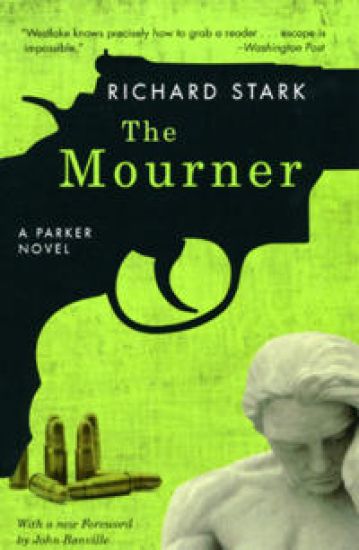
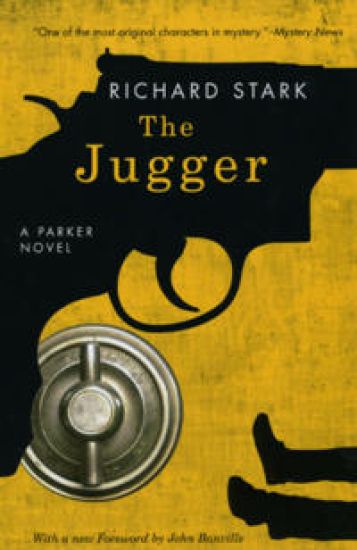
You probably haven't ever noticed them. But they've noticed you. They notice everything. That's their job. Sitting quietly in a nondescript car outside a bank making note of the tellers' work habits, the positions of the security guards. Lagging a few car lengths behind the Brink's truck on its daily rounds. Surreptitiously jiggling the handle of an unmarked service door at the racetrack. They're thieves. Heisters, to be precise. They're pros, and Parker is far and away the best of them. If you're planning a job, you want him in. Tough, smart, hardworking, and relentlessly focused on his trade, he is the heister's heister, the robber's robber, the heavy's heavy. You don't want to cross him, and you don't want to get in his way, because he'll stop at nothing to get what he's after. Parker, the ruthless antihero of Richard Stark's mystery novels, is one of the most unforgettable characters in hardboiled noir. Lauded by critics for his taut realism, unapologetic amorality, and razor-sharp prose style - and adored by fans who turn each intoxicating page with increasing urgency - Stark is a master of crime writing, his books as influential as any in the genre. The University of Chicago Press has embarked on a project to return the early volumes of this series to print for a new generation of readers to discover - and become addicted to. This season's offerings include volumes 4-6 in the series: "The Mourner", "The Score", and "The Jugger". "The Mourner" is a story of convergence - of cultures and of guys with guns. Hot on the trail of a statue stolen from a fifteenth-century French tomb, Parker enters a world of eccentric art collectors, greedy foreign officials, and shady KGB agents.
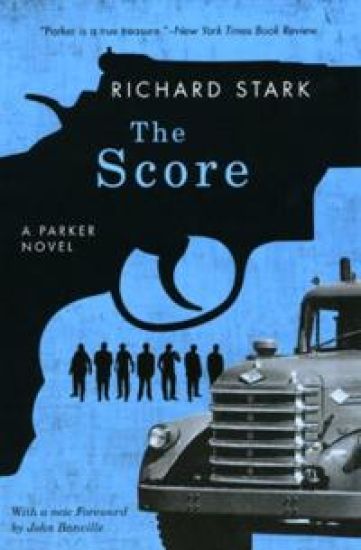
You probably haven't ever noticed them. But they've noticed you. They notice everything. That's their job. Sitting quietly in a nondescript car outside a bank making note of the tellers' work habits, the positions of the security guards. Lagging a few car lengths behind the Brink's truck on its daily rounds. Surreptitiously jiggling the handle of an unmarked service door at the racetrack. They're thieves. Heisters, to be precise. They're pros, and Parker is far and away the best of them. If you're planning a job, you want him in. Tough, smart, hardworking, and relentlessly focused on his trade, he is the heister's heister, the robber's robber, the heavy's heavy. You don't want to cross him, and you don't want to get in his way, because he'll stop at nothing to get what he's after. Parker, the ruthless antihero of Richard Stark's mystery novels, is one of the most unforgettable characters in hardboiled noir. Lauded by critics for his taut realism, unapologetic amorality, and razor-sharp prose style - and adored by fans who turn each intoxicating page with increasing urgency - Stark is a master of crime writing, his books as influential as any in the genre. The University of Chicago Press has embarked on a project to return the early volumes of this series to print for a new generation of readers to discover - and become addicted to. This season's offerings include volumes 4-6 in the series: "The Mourner", "The Score", and "The Jugger". Parker works with a group of professional con men in "The Score" on his biggest job yet - robbing an entire town in North Dakota.
The Jugger
Richard Stark; John Banville
University of Chicago Press
2009
nidottu
Halvin toimitettuna 21,70 €
You probably haven't ever noticed them. But they've noticed you. They notice everything. That's their job. Sitting quietly in a nondescript car outside a bank making note of the tellers' work habits, the positions of the security guards. Lagging a few car lengths behind the Brink's truck on its daily rounds. Surreptitiously jiggling the handle of an unmarked service door at the racetrack. They're thieves. Heisters, to be precise. They're pros, and Parker is far and away the best of them. If you're planning a job, you want him in. Tough, smart, hardworking, and relentlessly focused on his trade, he is the heister's heister, the robber's robber, the heavy's heavy. You don't want to cross him, and you don't want to get in his way, because he'll stop at nothing to get what he's after. Parker, the ruthless antihero of Richard Stark's mystery novels, is one of the most unforgettable characters in hardboiled noir. Lauded by critics for his taut realism, unapologetic amorality, and razor-sharp prose style - and adored by fans who turn each intoxicating page with increasing urgency - Stark is a master of crime writing, his books as influential as any in the genre. The University of Chicago Press has embarked on a project to return the early volumes of this series to print for a new generation of readers to discover - and become addicted to. This season's offerings include volumes 4-6 in the series: "The Mourner", "The Score", and "The Jugger". In "The Jugger", Parker travels to Nebraska to help out a geriatric safecracker who knows too many of his criminal secrets. By the time he arrives, the safecracker is dead and Parker's skeletons are on the verge of escaping from their closet - unless Parker resorts to lethal measures.
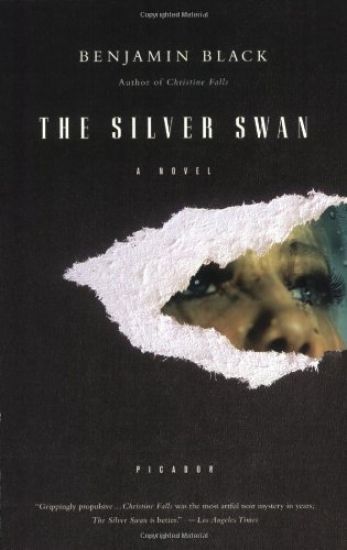
It has been two years since the events of Christine Falls, the bestselling novel that introduced the world to an irascible Dublin pathologist named Quirke. Quirke's beloved Sarah has died, his surrogate father lies paralyzed by a stroke, and he's been sober for half a year. When a near-forgotten acquaintance asks him to cover up his beautiful young wife's apparent suicide, Quirke knows he should stay clear, for the sake of his sobriety and his peace of mind. But his old itch is irresistible, and before long he is probing further into the circumstances of Deidre Hunt's death, into a web of drugs and illicit sex that may have snared his own daughter, Phoebe. With its vivid, intense evocation of 1950s Dublin, and intricate, psychologically complex storyline, The Silver Swan is "even more engrossing than last year's Christine Falls" (Entertainment Weekly).
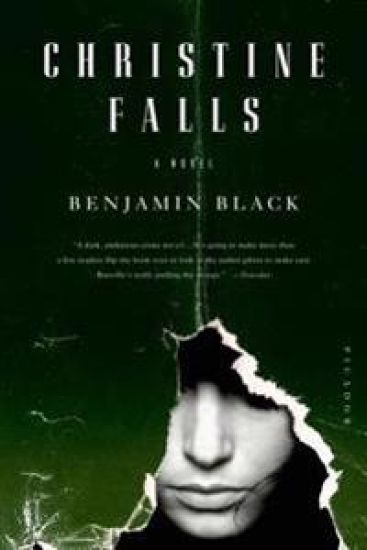
The hero of Christine Falls, Quirke, is a surly pathologist living in 1950s Dublin. One night, after having a few drinks at a party, he returns to the morgue to find his brother-in-law tampering with the records on a young woman's corpse. The next morning, when his hangover has worn off, Quirke reluctantly begins looking into the woman's history. He discovers a plot that spans two continents, implicates the Catholic Church, and may just involve members of his own family. He is warned--first subtly, then with violence--to lay off, but Quirke is a stubborn man. The first novel in the Quirke series brings all the vividness and psychological insight of John Banville's writing to the dark, menacing atmosphere of a first-class thriller.
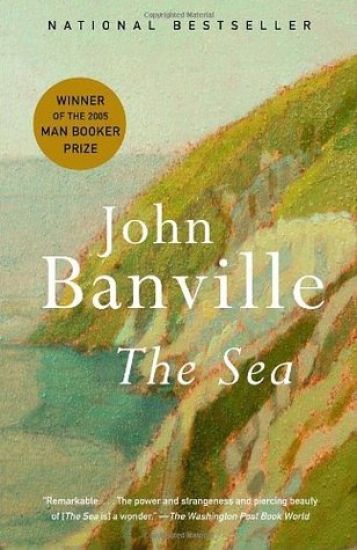
Struggling to cope with grief, anger, and loss following the death of his wife, Max, a middle-aged man, returns to his childhood seaside home, where he deals with his memories of his first encounter with the Graces, a wealthy vacationing family, his recollections of his wife, and the emotional upheaval of the present as he comes to an understanding of the profound influence of the past on the his life. Reader's Guide available. Reprint.
From the Booker Prize-winning author of The Sea comes a splendidly moving, "hypnotic" exploration (The New York Times) of identity, duplicity, and desire, starring a very old, recently widowed man with secrets and the mysterious young woman destined to either destroy or save him. One part Nietzsche, one part Humbert Humbert, and a soupcon of Milton's Lucifer, Axel Vander, the dizzyingly unreliable narrator of John Banville's masterful new novel, is the bearer of a fearsome reputation as a literary dandy and bully. A product of the Old World, he is also an escapee from its conflagrations, with the wounds to prove it. And everything about him is a lie. Now those lies have been unraveled by a mysterious young woman whom Vander calls "Miss Nemesis." They are to meet in Turin, a city best known for its enigmatic shroud. Is her purpose to destroy Vander or to save him--or simply to show him what lies beneath the shroud in which he has wrapped his life?
In this deeply moving and original book, John Banville alloys mystery, fable, and ghost story with poignant psychological acuity to forge the riveting story of a man wary of the future, plagued by the past, and so uncertain in the present that he cannot discern the spectral from the real. When renowned actor Alexander Cleave was a boy living in a large house with his widowed mother and various itinerant lodgers, he encountered a strikingly vivid ghost of his father. Now that he's fifty and has returned to his boyhood home to recover from a nervous breakdown on stage, he is not surprised to find the place still haunted. He is surprised, however, at the presence of two new lodgers who have covertly settled into his old roost. And he is soon overwhelmed by how they, coupled with an onslaught of disturbing memories, compel him to confront the clutter that has become his life: ruined career, tenuous marriage, and troubled relationship with an estranged daughter destined for doom.
MAN BOOKER PRIZE FINALIST - From the Booker Prize winner of The Sea comes "an astonishing, disturbing little novel that might have been coughed up from hell" (The New York Times Book Review) about the dark confession of an improbable murderer. "Ireland's finest contemporary novelist." --The Economist Freddie Montgomery is a highly cultured man, a husband and father living the life of a dissolute exile on a Mediterranean island. When a debt comes due and his wife and child are held as collateral, he returns to Ireland to secure funds. That pursuit leads to murder. And here is his attempt to present evidence, not of his innocence, but of his life, of the events that lead to the murder he committed because he could. Like a hero out of Nabokov or Camus, Montgomery is a chillingly articulate, self-aware, and amoral being, whose humanity is painfully on display.
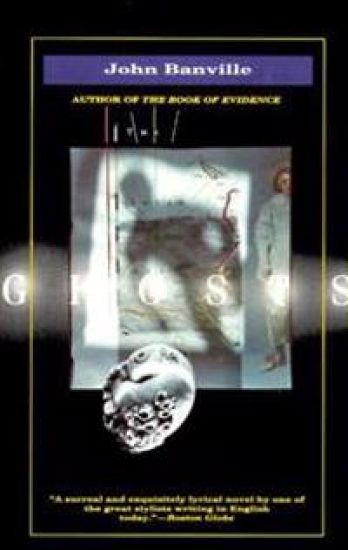
In this brilliantly haunting new novel, John Banville forges an unforgettable amalgam of enchantment and menace that suggests both The Tempest and his own acclaimed The Book of Evidence. "A surreal and exquisitely lyrical new novel by one of the great stylists writing in English today."--Boston Globe.
A Novel
Palkittu irlantilaisromaani, hypnoottisen kiehtova jännitystarina miehestä, josta tulee murhaaja vastoin tahtoaan Todistajan kirja piirtää kuvaa jokamiehestä syyllisyyden ja sovituksen syöverissä. Päähenkilö ja kertoja on tehnyt rikoksen sattumalta, hänestä on tullut murhaaja olosuhteiden oikusta. Hän on mies, jonka sisimmästä paljastuva demoninen Mr. Hyde pakottaa ottamaan mittaa sovinnaisista rikoskäsityksistä ja luotaamaan inhimillisen käyttäytymisen taustalla piileviä kahlitsemattomia voimia. Freddie Montgomery on entinen tiedemies, joka on ryhtynyt viettämään kiertelevää elämää Välimeren saarilla. Velkojien ruuvipenkkiin jouduttuaan hän palaa Irlantiin – vain päätyäkseen karmeiden kommellusten verkkoon. Ikään kuin keskiaikaisen taideaarteen varastaminen miltei turistiryhmän silmien alta ei olisi tarpeeksi järjetöntä, hän kidnappaa silminnäkijäksi osuneen palvelustytön ja surmaa tämän raa’asti. Odotellessaan oikeudenkäyntiä vankilasellin yksinäisyydessä Freddie käy läpi outoja tekojaan, motiivejaan ja syyllisyydentuntojaan asettaen lukijansa tavallaan tuomarin ja valamiehistön asemaan. Villisti assosioiva, tuoksuja, ääni- ja näköaistimuksia tulvehtiva kerronta viettelee mukaansa tummiin syvyyksiin, mistä tekstin yllättäen leimahteleva itseironia ja komiikka puolestaan vapauttavat. Makaaberi musta nauru tuo oman voimallisen ulottuvuutensa tähän monitasoiseen, lukijansa vangitsevaan ”rikosromaaniin”, joka on rinnastettu Camusin Sivulliseen ja Dostojevskin Rikokseen ja rangaistukseen.