Kirjojen hintavertailu – 12 903 725 kirjaa ja 27 kauppaa

Kirjailija

John Barratt

Kirjat ja teokset yhdessä paikassa: 15 kirjaa, julkaisuja vuosilta 1976–2021, suosituimpiin kuuluu Better Begging Than Fighting. Vertaile teosten hintoja ja tarkista saatavuus suomalaisista kirjakaupoista.

15 kirjaa

Kirjojen julkaisuvuodet: 1976–2021.

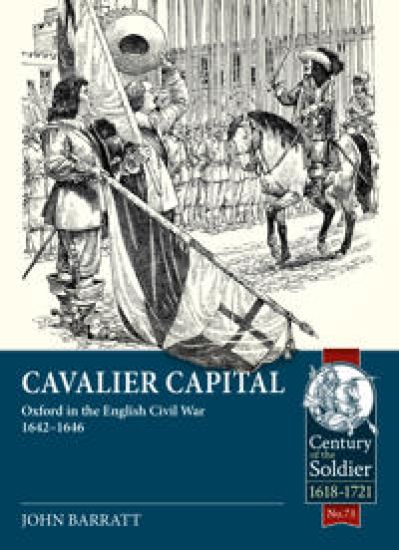
Cavalier Capital

Cavalier Capital

John Barratt

Helion Company
2021
nidottu
"Cavalier Capital", the first detailed account of Oxford's role as "Royalist capital" to appear for almost three-quarters of a century, examines all aspects of Oxford's experience in the English Civil War. As well as the effects on the town and university, special emphasis is placed on the various aspects of the Royalist occupation, including its role as a major manufacturing centre of munitions and armoury. The King's court and the operation of Royalist government and administration are examined, as are the organisation and life of the soldiers of the garrison. Leading personalities are described, as well as the military campaigns which were focused on Oxford during the war. The final siege leading to the fall of Oxford is also described. The book makes full use of both contemporary and modern accounts, and research, and is copiously illustrated with contemporary and modern illustrations.
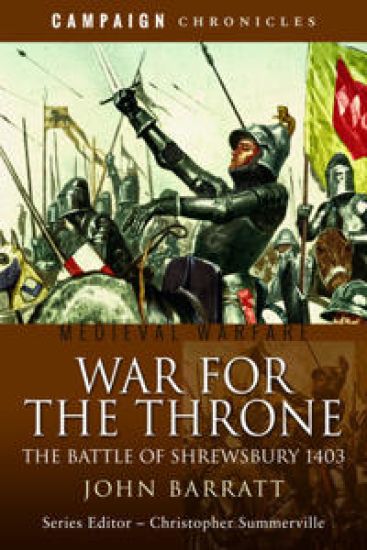
War for the Throne

War for the Throne

John Barratt

PEN SWORD BOOKS LTD
2020
nidottu
The opening years of the fifteenth century saw one of the most bitterly contested political and military convulsions in the history of the British Isles, a conflict that is too-often overlooked by military historians. Henry IV, who had overthrown and probably murdered his predecessor Richard II, fought a protracted and bloody campaign against the most powerful nobles in the land. This war is the subject of John Barratts gripping study. The Percy family, the Kings of the North, and their most famous leader Sir Henry Percy Hotspur,whose fiery nature and military prowess were immortalized by Shakespeare stood out against Henrys rule. And the beleagured king also had to contend with a range of other unrelenting opponents, among them Owain Glyn Dwr, who led the Welsh revolt against English supremacy. In this graphic account of the first, deeply troubled years of Henry IVs reign, John Barratt concentrates on the warfare, in particular on the setpiece pitched battles fought at Homildon Hill, Pilleth and Shrewsbury.
The King's Irish

The King's Irish

John Barratt

Helion Company
2020
nidottu
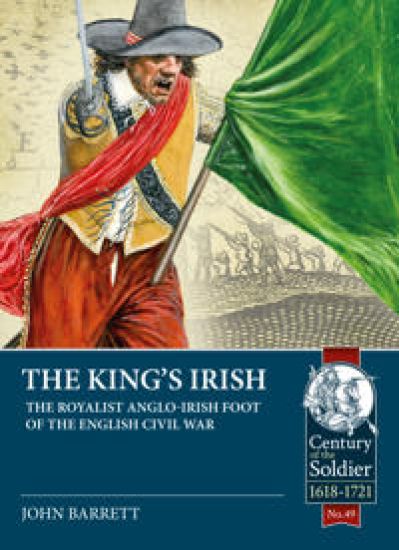
The English troops serving in Ireland were vital source of experienced and possibly war-winning manpower sought after by both King and Parliament in the Civil War. The “cessation” or truce which King Charles reached with the Irish Confederates in September 1643 enabled him to begin shipping over troops fro Ireland to reinforce the Royalist armies. During the following year the “Irish”, as they were frequently if inaccurately known by both sides were an important factor in the war. The Nantwich campaign (December 1643-January 1644), the consolidation of Royalist control in the Welsh Marches during the spring of 1644, the Marston Moor campaign, and the Battle of Montgomery (September 1644) all received major contributions from the troops from Ireland. Other troops from Ireland, mainly from the province of Munster, provided important reinforcements for the Western and Oxford Royalist armies during the 1644 campaigns in western and southern England. The “Irish” were still a significant part of the Royalist army during the Naseby campaign of 1645, and elements remained in action until the end of the war. The book will look at the Irish campaign and its influence on the experience and behaviour of the troops when they reached England. It will examine their equipment, logistical care, and experience following their return. It will look at the performance of some of the troops, such as the “firelocks” who changed sides and became valuable additions to the Parliamentarian forces. Also examined is the controversial topic of “native Irish“ troops who were involved, and a number of prominent indiduals who also srved in the war. Full use is made of extensive contemporary primary sources and also later research.
The Last Army

The Last Army

John Barratt

Helion Company
2018
nidottu
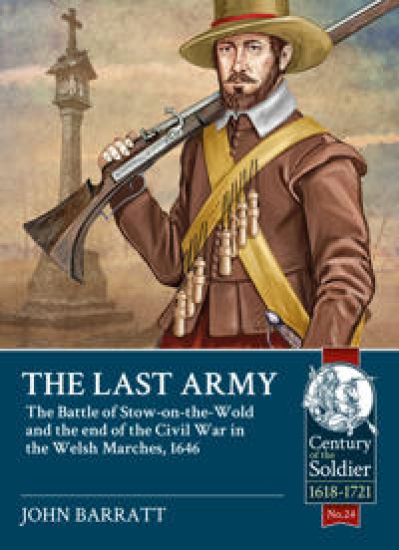
Although the Battle of Naseby (14 June 1645) is generally regarded as the decisive action of the First Civil War, dooming the Royalist cause to inevitable defeat, fierce fighting continued for over a year, including several pitched battles and numerous sieges. By the end of 1645, with his forces crumbling and his territory shrinking, King Charles' hopes were increasingly dependent on the Royalist heartland of the Welsh Marches and the tiny field army which Jacob Lord Astley was struggling to muster there. This book describes the often dramatic preliminaries to this and sets in context Astley's campaign which ended on 21 March 1646 with his defeat at Stow-on-the-Wold – the last pitched battle of the First Civil War, together with the last stand of the royalist garrisons in the Marches. This book, making comprehensive use of both Royalist and Parliamentarian sources, will be the first complete detailed study of these events which finally doomed Royalist hopes in the First Civil War. It will be of interest to military and local historians, the general reader, re-enactors, wargamers and modellers.
'A Rabble of Gentility'

'A Rabble of Gentility'

John Barratt

Helion Company
2017
nidottu
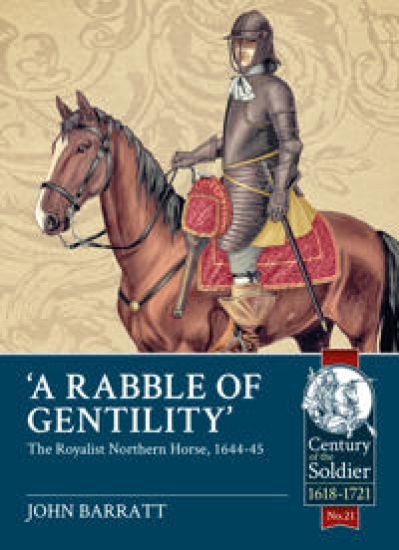
General George Monck once described the Royalist horse as “a rabble of gentility”. Modern research has largely dispelled this image of the King's cavalry. However the description seems at first sight appropriate to the body of cavalry known as the “Northern Horse”. Formed from those elements of the Marquis of Newcastle's Northern Royalist Army which elected to continue to fight after the crushing defeat at Marston Moor (2 July 1644) during the next 15 months the Northern Horse swept across much of England and Wales , becoming increasingly notorious in the process. United and reorganised by their commander, the formidable Sir Marmaduke Langdale, the Northern Horse, whilst professing loyalty to the King, increasingly followed their own agenda, of renewing the war in the North, sometimes at the expense of the wider Royalist cause. This book looks at the origins and composition of the Northern Horse, the characteristics of its officers and men, their motivation and behaviour, and their impact on those they encountered. It examines their chequered fighting record, a subject of debate even among contemporaries. It will deal with their victories, notably their epic relief of Pontefract in March 1645, and their controversial role at such encounters as Naseby and Rowton Heath. The book makes extensive use of contemporary sources, some used here for the first time. Extensively illustrated, including specially commissioned artwork and maps, 'Rabble of Gentility?' will be welcomed by readers interested in the history of the British Civil Wars, living history enthusiasts, wargamers and model makers, and those interested in the history of Northern England in the 17th century.
Better Begging Than Fighting

Better Begging Than Fighting

John Barratt

Helion Company
2016
nidottu

Halvin toimitettuna 29,20 €

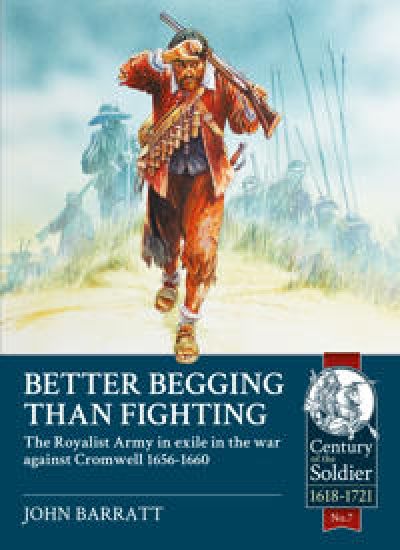
Cromwell’s alliance with France in 1657 opened for the English Republic and Charles II’s army in exile a new theatre of war in Flanders - in addition to England’s ongoing war with Spain. It resulted in the old opponents of the Civil Wars in Britain meeting in combat once again. This book tells the story of the two armies: Charles II’s polyglot army of Irish, Scottish and English soldiers - fighting for the Stuarts for a variety of reasons - and the expeditionary force despatched by Cromwell to assist his French allies, with the objective of securing Dunkirk as an English possession. The book, the first detailed study in English, will relate how the two armies were raised and equipped; the commanders and their colourful personalities; and the lives of the soldiers and their campaigns - climaxing with the Battle of the Dunes and the siege of Dunkirk. It will examine the English garrison, and the later history of this and of Charles II’s 'forgotten army'. It will also look at the Spanish and French armies, with which Royalists and Republicans were allied. Full use will be made of contemporary and more modern sources - including the letters, journals and memoirs of participants on both sides. The book will be of interest to historians and students of the period, re-enactors and wargamers, and to all interested in a little-known conflict fought across an area much more familiar to English readers for its later wars.
The Battle of Marston Moor 1644

The Battle of Marston Moor 1644

John Barratt

The History Press Ltd
2008
nidottu
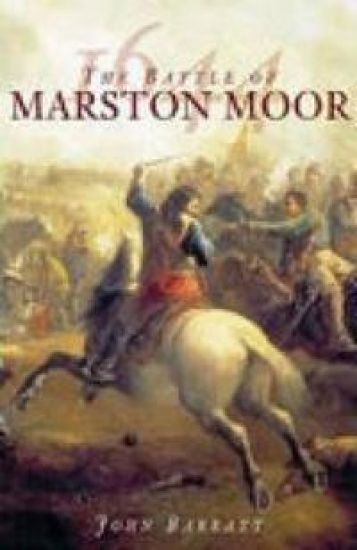
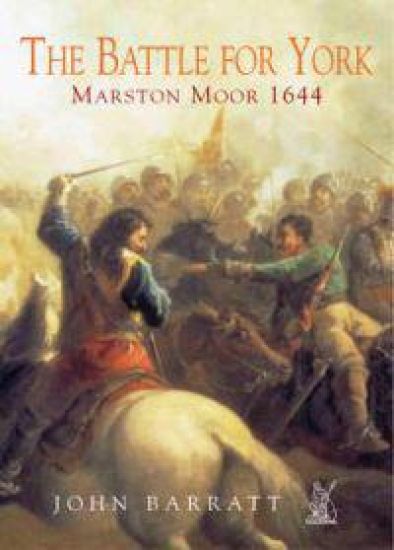
On 2 July 1644, six miles from York, 18,000 Royalists led by Prince Rupert, the nephew of King Charles I, fought 27,000 Parliamentarians in an attempt to relieve the Royalist force besieged at York. He failed. The defeat was catastrophic and the North was lost to Parliamentarian troops. John Barratt looks afresh at the battle and explores the disagreements among the Royalist leaders that had a devastating effect on the outcome of the battle.
Battles for the Three Kingdoms

Battles for the Three Kingdoms

John Barratt

The History Press Ltd
2007
sidottu
The Battle of the Boyne in 1690 was the culmination of the ferocious struggle between two kings, James II and William III. This book makes use of research and sources, including eyewitness accounts, to analyse the opposing forces, their strategy, tactics and conduct of the war and the reasons for its eventual outcome.
The First Battle of Newbury 1643

The First Battle of Newbury 1643

John Barratt

The History Press Ltd
2005
nidottu
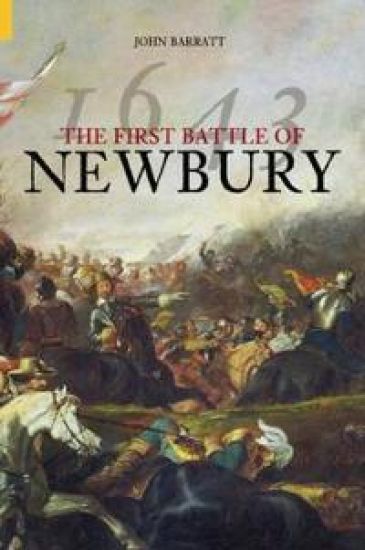
Late summer 1643 saw the Royalists in the English Civil War at the height of their military success. After three months of almost unbroken victories, the king's forces had gained control of much of the north and west of England, whilst Prince Rupert's seemingly invincible cavalry raided out from Oxford to the outskirts of London, Parliament's stronghold. In July the wave of Royalist successes climaxed with the storming of Bristol. It seemed that one more success might be sufficient to topple the Parliamentarian leadership and lead to peace. In a move to consolidate their position prior to a final advance on London, in August the Royalists laid siege to Gloucester. However, an anticipated easy success met with stern resistance until the garrison was eventually relieved by Parliament's principal remaining field army, under the Earl of Essex. But Essex, now deep in hostile territory, faced the difficult task of getting back safely to London. A race with the king's forces ensued, culminating in Essex's road being barred at Newbury. Cut off from his base, Essex had to stand and fight in a battle whose loss would mean the destruction of his army and in all probability total defeat for the Parliamentarian cause. On September 20 1643 some 30,000 men met outside Newbury in one of the largest battles of the English Civil War. John Barratt's history, the first detailed study of the battle of Newbury for over a century, reveals a new interpretation of the battle and discovers the real reason why the Royalists lost.
Cavaliers

Cavaliers

John Barratt

The History Press Ltd
2004
nidottu
An examination of the Royalist armies and their role in the English Civil War. It describes and analyses the organization, recruitment, training, arms, equipment, tactics and performance of the Royalist armies and compares them to their Parliamentarian or Roundhead counterparts.
The Great Siege of Chester

The Great Siege of Chester

John Barratt

The History Press Ltd
2003
nidottu
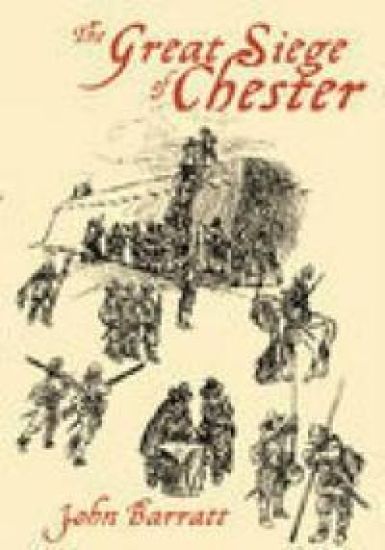
The appalling effects of civil war are often suffered most horrifically by the ordinary men, women and children involuntarily caught up in it, as it tears asunder the very fabric of their lives. Such was the fate of the citizens of Chester, who for almost four years found themselves at the centre of the battle between King and Parliament. Chester's inhabitants withstood the terrors of bombardment and the rigours of starvation, in one of the most fiercely contested sieges of the Civil War. Using myriad contemporary sources it is possible for the first time to present a detailed picture of the part played in the siege by the 'common sort', the 'forgotten voices' of Chester: ordinary citizens forced by their employers to enlist in the City Regiment, their brutal introduction to the realities of war and their gallant defence of Chester.
The Battle of Marston Moor

The Battle of Marston Moor

John Barratt

NPI Media Group
2002
nidottu
Fought a mere 6 miles from the center of York, Marston Moor was the largest and bloodiest battle of the English Civil War. On July 2, 1644, 18,000 Royalists led by Prince Rupert, Charles I's nephew, fought 27,000 Parliamentarians in an attempt to relieve the Royalist force besieged at York. He failed. The defeat was catastrophic and the north was lost to the Royalists.
South Africa's Foreign Policy

South Africa's Foreign Policy

James Barber; John Barratt

Cambridge University Press
1990
pokkari
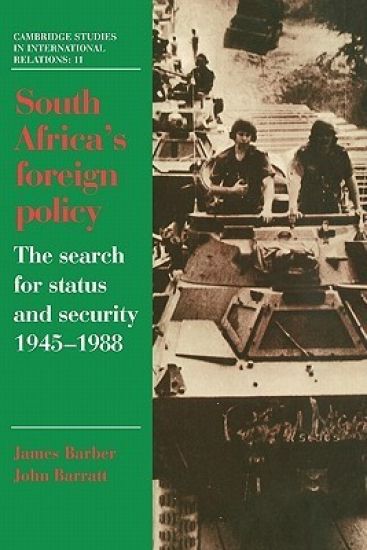
This book was originally published in 1990, as part of the Cambridge Studies in International Relations series, a joint initiative of Cambridge University Press and the British International Studies Association (BISA). In a far-reaching and fascinating study of foreign policy in South Africa, Barber and Barratt begin by looking at the post-war challenges faced by the government of South Africa, and the effect that the establishment of apartheid also had on foreign policy. Their study then goes on to explore the effects that Sharpeville, and the repercussions of various periods of success and upheaval, had on South African international relations up until the late 1980s. This exceptionally thorough study of South African foreign policy and the factors influencing its formation will be of interest to scholars of South Africa in particular, and international relations and policy making in general.