Kirjojen hintavertailu – 12 903 741 kirjaa ja 27 kauppaa

Kirjailija

John Barry Ryan

Kirjat ja teokset yhdessä paikassa: 7 kirjaa, julkaisuja vuosilta 2014–2024, suosituimpiin kuuluu Partisan Hostility and American Democracy. Vertaile teosten hintoja ja tarkista saatavuus suomalaisista kirjakaupoista.

7 kirjaa

Kirjojen julkaisuvuodet: 2014–2024.

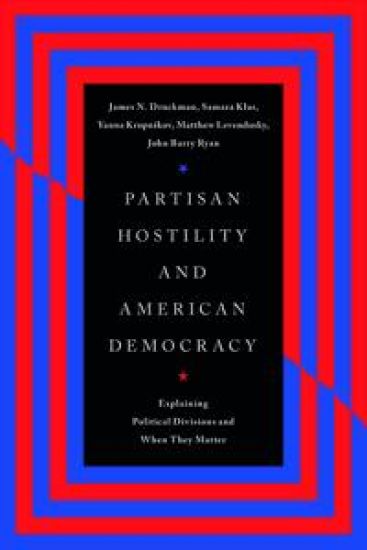
Partisan Hostility and American Democracy

Partisan Hostility and American Democracy

James N. Druckman; Samara Klar; Yanna Krupnikov; Matthew Levendusky; John Barry Ryan

THE UNIVERSITY OF CHICAGO PRESS
2024
sidottu
An unflinching examination of the effects and boundaries of partisan animosity. For generations, experts argued that American politics needed cohesive parties to function effectively. Now many fear that strong partisan views, particularly hostility to the opposing party, are damaging democracy. Is partisanship as dangerous as we fear it is? To provide an answer, this book offers a nuanced evaluation of when and how partisan animosity matters in today’s highly charged, dynamic political environment, drawing on panel data from some of the most tumultuous years in recent American history, 2019 through 2021. The authors show that partisanship powerfully shapes political behaviors, but its effects are conditional, not constant. Instead, it is most powerful when politicians send clear signals and when an issue is unlikely to bring direct personal consequences. In the absence of these conditions, other factors often dominate decision-making. The authors argue that while partisan hostility has degraded US politics—for example, politicizing previously non-political issues and undermining compromise—it is not in itself an existential threat. As their research shows, the future of American democracy depends on how politicians, more than ordinary voters, behave.
Partisan Hostility and American Democracy

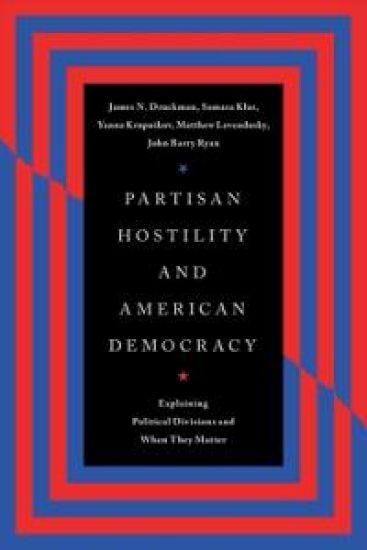
Partisan Hostility and American Democracy

James N. Druckman; Samara Klar; Yanna Krupnikov; Matthew Levendusky; John Barry Ryan

THE UNIVERSITY OF CHICAGO PRESS
2024
nidottu
An unflinching examination of the effects and boundaries of partisan animosity. For generations, experts argued that American politics needed cohesive parties to function effectively. Now many fear that strong partisan views, particularly hostility to the opposing party, are damaging democracy. Is partisanship as dangerous as we fear it is? To provide an answer, this book offers a nuanced evaluation of when and how partisan animosity matters in today’s highly charged, dynamic political environment, drawing on panel data from some of the most tumultuous years in recent American history, 2019 through 2021. The authors show that partisanship powerfully shapes political behaviors, but its effects are conditional, not constant. Instead, it is most powerful when politicians send clear signals and when an issue is unlikely to bring direct personal consequences. In the absence of these conditions, other factors often dominate decision-making. The authors argue that while partisan hostility has degraded US politics—for example, politicizing previously non-political issues and undermining compromise—it is not in itself an existential threat. As their research shows, the future of American democracy depends on how politicians, more than ordinary voters, behave.
Constructing Political Expertise in the News

Constructing Political Expertise in the News

Kathleen Searles; Yanna Krupnikov; John Barry Ryan; Hillary Style

Cambridge University Press
2023
pokkari
Expert news sources offer context and act as translators, communicating complex policy issues to the public. Therefore, these sources have implications for who, and what is elevated and legitimized by news coverage. This element considers patterns in expert sources, focusing on a particular area of expertise: politics. As a starting point, it conducts a content analysis tracking which types of political experts are most likely to be interviewed, using this analysis to explain patterns in expert sourcing. Building on the source data, it next conducts experiments and surveys of journalists to consider demand for expert sources. Finally, shifting the analysis to the supply of expert sources, it turns to a survey of faculty to track expert experiences with journalists. Jointly, the results suggest underlying patterns in expert sourcing is a tension between journalists' preferences, the time constraints of producing news, and the preferences of the experts themselves.
Examining Motivations in Interpersonal Communication Experiments

Examining Motivations in Interpersonal Communication Experiments

Elizabeth C. Connors; Matthew T. Pietryka; John Barry Ryan

Cambridge University Press
2022
pokkari
Does interpersonal political communication improve the quality of individual decision making? While deliberative theorists offer reasons for hope, experimental researchers have demonstrated that biased messages can travel via interpersonal social networks. We argue that the value of interpersonal political communication depends on the motivations of the people involved, which can be shifted by different contexts. Using small-group experiments that randomly assign participants' motivations to seek or share information with others as well as their motivations for evaluating the information they receive, we demonstrate the importance of accounting for motivations in communication. We find that when individuals with more extreme preferences are motivated to acquire and share information, collective civic capacity is diminished. But if we can stimulate the exchange of information among individuals with stronger prosocial motivations, such communication can enhance collective civic capacity. We also provide advice for other researchers about conducting similar group-based experiments to study political communication.
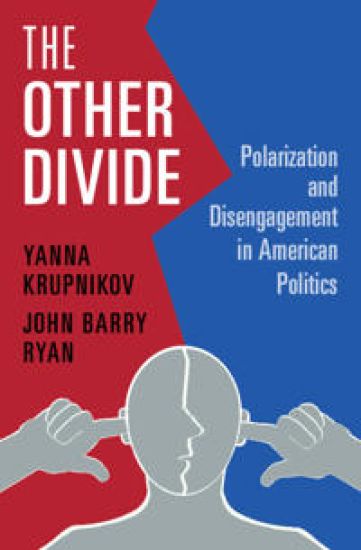
The Other Divide

The Other Divide

Yanna Krupnikov; John Barry Ryan

Cambridge University Press
2022
pokkari
There is little doubt that increasing polarization over the last decade has transformed the American political landscape. In The Other Divide, Yanna Krupnikov and John Barry Ryan challenge the nature and extent of that polarization. They find that more than party, Americans are divided by involvement in politics. On one side is a group of Americans who are deeply involved in politics and very expressive about their political views; on the other side is a group much less involved in day-to-day political outcomes. While scholars and journalists have assumed that those who are most vocal about their political views are representative of America at large, they are in fact a relatively small group whose voices are amplified by the media. By considering the political differences between the deeply involved and the rest of the American public, Krupnikov and Ryan present a broader picture of the American electorate than the one that often appears in the news.
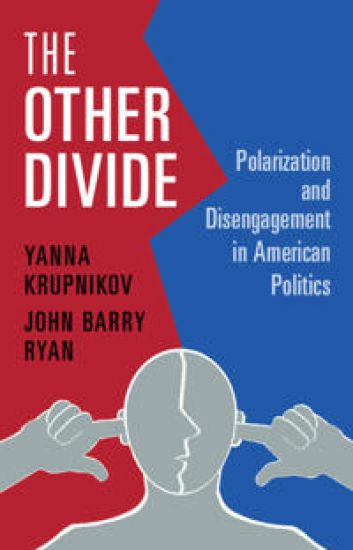
The Other Divide

The Other Divide

Yanna Krupnikov; John Barry Ryan

Cambridge University Press
2022
sidottu
There is little doubt that increasing polarization over the last decade has transformed the American political landscape. In The Other Divide, Yanna Krupnikov and John Barry Ryan challenge the nature and extent of that polarization. They find that more than party, Americans are divided by involvement in politics. On one side is a group of Americans who are deeply involved in politics and very expressive about their political views; on the other side is a group much less involved in day-to-day political outcomes. While scholars and journalists have assumed that those who are most vocal about their political views are representative of America at large, they are in fact a relatively small group whose voices are amplified by the media. By considering the political differences between the deeply involved and the rest of the American public, Krupnikov and Ryan present a broader picture of the American electorate than the one that often appears in the news.
Experts, Activists, and Democratic Politics

Experts, Activists, and Democratic Politics

T. K. Ahn; Robert Huckfeldt; John Barry Ryan

Cambridge University Press
2014
sidottu
This book addresses opinion leadership in democratic politics as a process whereby individuals send and receive information through their informally based networks of political communication. The analyses are based on a series of small group experiments, conducted by the authors, which build on accumulated evidence from more than seventy years of survey data regarding political communication among interdependent actors. The various experimental designs provide an opportunity to assess the nature of the communication process, both in terms of increasing citizen expertise as well as in terms of communicating political biases.