
Kirjailija
John Behr
Kirjat ja teokset yhdessä paikassa: 15 kirjaa, julkaisuja vuosilta 2000–2023, suosituimpiin kuuluu On the Tree of the Cross. Vertaile teosten hintoja ja tarkista saatavuus suomalaisista kirjakaupoista.
15 kirjaa
Kirjojen julkaisuvuodet: 2000–2023.
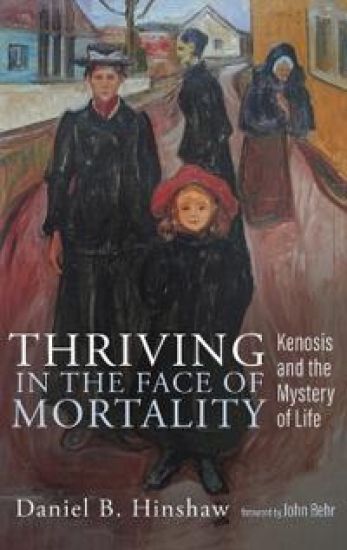
Kenosis, a Greek word meaning "depletion" or "emptying" and a concept borrowed from Christian theology, has deeply profound implications for understanding and ordering life in a world marked by suffering and death. Whereas the divine kenosis was voluntary, human beings experience an involuntary kenosis which is characterized by the inevitable losses experienced during the lives of mortal creatures. How one chooses voluntarily to respond to this involuntary kenosis, regardless of faith commitments, in effect defines us, both in our relationships with other suffering creatures and with the entire cosmos. This book offers a unique perspective on how the losses of involuntary kenosis choreograph the suffering which is such a defining aspect of the lives of persons, communities, and the environment in which they live, and how the kenotic process, rather than being a source of despair, can be a source of hope presenting opportunities for extraordinary personal growth.
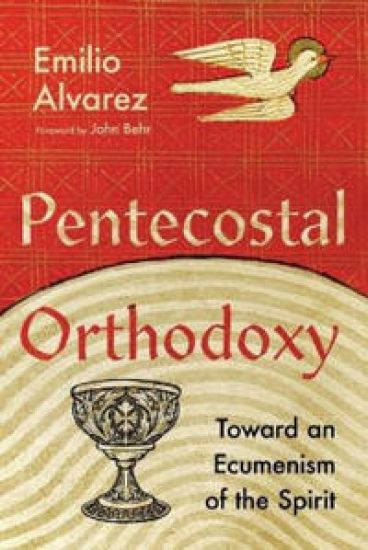
Pentecostal Orthodoxy – Toward an Ecumenism of the Spirit
Emilio Alvarez; John Behr
IVP Academic
2022
nidottu
“Can anything orthodox come from Pentecostalism?” This recasting of Nathaniel's familiar question from the Gospel is a fair summary of many modern Christians' assessment of the Pentecostal tradition. Yet in recent years, a growing number of Pentecostals have been turning afresh to the ancient, creedal Christian faith. Bishop Emilio Alvarez has himself been at the forefront of this movement. In Pentecostal Orthodoxy he introduces the phenomenon, and extends the project of paleo-orthodox ressourcement (associated with scholars such as Thomas Oden and Robert Webber) to include orthodox expressions within Pentecostalism, particularly his own Afro-Latino Pentecostal movement. This book is a manifesto of sorts, promising not only to open up the possibility of a genuinely orthodox Pentecostalism, but to reframe modern ecumenical dialogue as well.
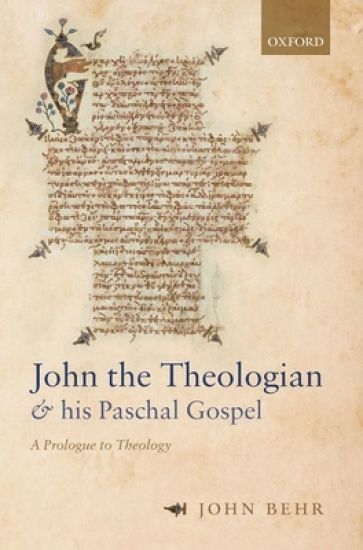
This study brings three different kinds of readers of the Gospel of John together with the theological goal of understanding what is meant by Incarnation and how it relates to Pascha, the Passion of Christ, how this is conceived of as revelation, and how we speak of it. The first group of readers are the Christian writers from the early centuries, some of whom (such as Irenaeus of Lyons) stood in direct continuity, through Polycarp of Smyrna, with John himself. In exploring these writers, John Behr offers a glimpse of the figure of John and the celebration of Pascha, which held to have started with him. The second group of readers are modern scriptural scholars, from whom we learn of the apocalyptic dimensions of John's Gospel and the way in which it presents the life of Christ in terms of the Temple and its feasts. With Christ's own body, finally erected on the Cross, being the true Temple in an offering of love rather than a sacrifice for sin. An offering in which Jesus becomes the flesh he offers for consumption, the bread which descends from heaven, so that 'incarnation' is not an event now in the past, but the embodiment of God in those who follow Christ in the present. The third reader is Michel Henry, a French Phenomenologist, whose reading of John opens up further surprising dimensions of this Gospel, which yet align with those uncovered in the first parts of this work. This thought-provoking work brings these threads together to reflect on the nature and task of Christian theology.
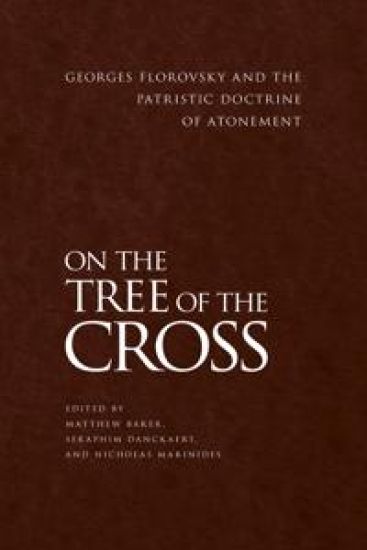
"Thou hast redeemed us from the curse of the Law by Thy precious Blood. By being nailed to the Cross and pierced with the Spear, Thou hast poured immortality on mankind. O our Saviour, glory to Thee." - Troparion for Holy FridayAtonement is a contested but inescapable term in contemporary English-language theological discussion. The doctrine of atonement has received little attention in Orthodox Christian circles since the work of Fr Georges Florovsky, who labored to clarify and promulgate the Orthodox teaching on atonement on the basis of his theological leitmotifs of neo-patristic synthesis and encounter with the West. Florovsky saw the doctrine of the person of Christ as the key to apprehending the pattern and the unity of God’s redemptive work. Hence he always sought to follow the Church Fathers in weaving together the themes of creation and fall, incarnation and atonement, deification and redemption, liturgy and asceticism, in the variegated yet seamless robe of true theology. The present volume is inspired by Florovsky’s legacy. It is composed of two parts. The first is a collection of papers on atonement by contemporary scholars from a patristic symposium in honor of Florovsky held at Princeton Theological Seminary and Princeton University in 2011. The second part is a collection of writings on atonement by Florovsky himself, including previously unpublished manuscripts and other works otherwise hard to access. This book offers incisive and informed neo-patristic voices to any contemporary discussion of atonement, thus responding to the perennial legacy and task to which Fr Georges Florovsky exhorted Orthodox theological reflection.
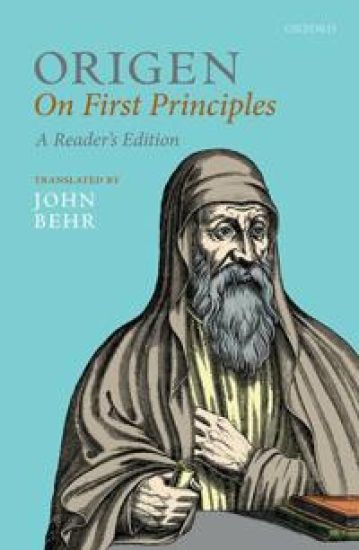
On First Principles by Origen of Alexandria, written around 220-230 AD, is one of the most important and contentious works of early Christianity. It provoked controversy when written, provoked further debate when translated into Latin by Rufinus in the fourth century, and was the subject, together with its author, of condemnation in the sixth century. As a result, the work no longer survives intact in the original Greek. We only have the complete work in the Latin translation of Rufinus,
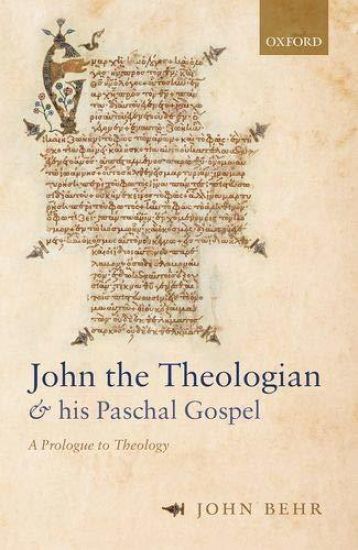
This study brings three different kinds of readers of the Gospel of John together with the theological goal of understanding what is meant by Incarnation and how it relates to Pascha, the Passion of Christ, how this is conceived of as revelation, and how we speak of it. The first group of readers are the Christian writers from the early centuries, some of whom (such as Irenaeus of Lyons) stood in direct continuity, through Polycarp of Smyrna, with John himself. In exploring these writers, John Behr offers a glimpse of the figure of John and the celebration of Pascha, which held to have started with him. The second group of readers are modern scriptural scholars, from whom we learn of the apocalyptic dimensions of John's Gospel and the way in which it presents the life of Christ in terms of the Temple and its feasts. With Christ's own body, finally erected on the Cross, being the true Temple in an offering of love rather than a sacrifice for sin. An offering in which Jesus becomes the flesh he offers for consumption, the bread which descends from heaven, so that 'incarnation' is not an event now in the past, but the embodiment of God in those who follow Christ in the present. The third reader is Michel Henry, a French Phenomenologist, whose reading of John opens up further surprising dimensions of this Gospel, which yet align with those uncovered in the first parts of this work. This thought-provoking work brings these threads together to reflect on the nature and task of Christian theology.
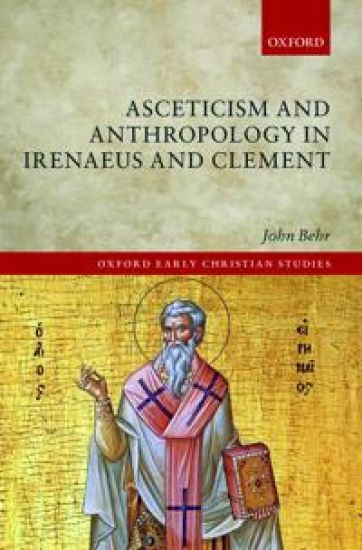
Asceticism and Anthropology in Irenaeus and Clement examines the ways in which Irenaeus and Clement understood what it means to be human. By exploring these writings from within their own theological perspectives, John Behr also offers a theological critique of the prevailing approach to the asceticism of Late Antiquity. Writing before monasticism became the dominant paradigm of Christian asceticism, Irenaeus and Clement afford fascinating glimpses of alternative approaches. For Irenaeus, asceticism is the expression of man living the life of God in all dimensions of the body, that which is most characteristically human and in the image of God. Human existence as a physical being includes sexuality as a permanent part of the framework within which males and females grow towards God. In contrast, Clement depicts asceticism as man's attempt at a godlike life to protect the rational element, that which is distinctively human and in the image of God, from any possible disturbance and threat, or from the vulnerability of dependency, especially of a physical or sexual nature. Here human sexuality is strictly limited by the finality of procreation and abandoned in the resurrection. By paying careful attention to these two writers, Behr offers challenging material for the continuing task of understanding ourselves as human beings.
This book provides a full, contextual study of St Irenaeus of Lyons, the first great theologian of the Christian tradition. John Behr sets Irenaeus both within his own context of the second century, a fundamental period for the formation of Christian identity, elaborating the distinction between orthodoxy and heresy and expounding a comprehensive theological vision, and also within our own contemporary context, in which these issues are very much alive again. Against the commonly-held position that 'orthodoxy' was established by excluding others, the 'heretics', Behr argues that it was the self-chosen separation of the heretics that provided the occasion for those who remained together to clarify the lineaments of their faith in a church that was catholic by virtue of embracing different voices in a symphony of many voices and whose chief architect was Irenaeus, who, as befits his name, urged peace and toleration. The first chapter explores Irenaeus' background in Asia Minor, as a disciple of Polycarp of Smyrna, his activity in Gaul, and his involvement with the Christian communities in Rome. The theological and institutional significance of his interventions is made clear by tracing the coalescence of the initially fractionated communities in Rome into a united body over the first two centuries. The second chapter provides a full examination of Irenaeus' surviving writings, concentrating especially on the literary and rhetorical structure of his five books Against the Heresies, his 'refutation and overthrowal' of his opponents in the first two books, and his establishing a framework for articulating orthodoxy. The final chapter explores the theological vision of Irenaeus itself, on its own terms rather than the categories of later dogmatic theology, grounded in an apostolic reading of Scripture and presenting a vibrant and vigorous account of the diachronic and synchronic economy or plan of God, seen through the work of Christ which reveals how the Hands of God have been at work from the beginning, fashioning the creature, made from mud and animated with a breath of life, into his own image and likeness, vivified by the Holy Spirit, to become a 'living human being, the glory of God'.
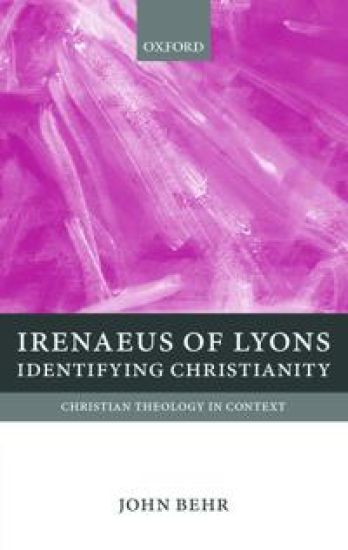
This book provides a full, contextual study of St Irenaeus of Lyons, the first great theologian of the Christian tradition. John Behr sets Irenaeus both within his own context of the second century, a fundamental period for the formation of Christian identity, elaborating the distinction between orthodoxy and heresy and expounding a comprehensive theological vision, and also within our own contemporary context, in which these issues are very much alive again. Against the commonly-held position that 'orthodoxy' was established by excluding others, the 'heretics', Behr argues that it was the self-chosen separation of the heretics that provided the occasion for those who remained together to clarify the lineaments of their faith in a church that was catholic by virtue of embracing different voices in a symphony of many voices and whose chief architect was Irenaeus, who, as befits his name, urged peace and toleration. The first chapter explores Irenaeus' background in Asia Minor, as a disciple of Polycarp of Smyrna, his activity in Gaul, and his involvement with the Christian communities in Rome. The theological and institutional significance of his interventions is made clear by tracing the coalescence of the initially fractionated communities in Rome into a united body over the first two centuries. The second chapter provides a full examination of Irenaeus' surviving writings, concentrating especially on the literary and rhetorical structure of his five books Against the Heresies, his 'refutation and overthrowal' of his opponents in the first two books, and his establishing a framework for articulating orthodoxy. The final chapter explores the theological vision of Irenaeus itself, on its own terms rather than the categories of later dogmatic theology, grounded in an apostolic reading of Scripture and presenting a vibrant and vigorous account of the diachronic and synchronic economy or plan of God, seen through the work of Christ which reveals how the Hands of God have been at work from the beginning, fashioning the creature, made from mud and animated with a breath of life, into his own image and likeness, vivified by the Holy Spirit, to become a 'living human being, the glory of God'.
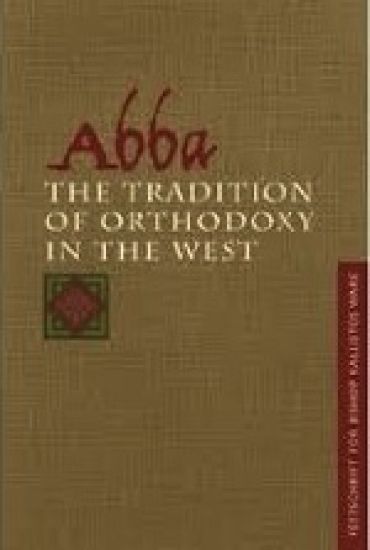
Abba: the Tradition of Orthodoxy in the West
John Behr; Andrew Louth; Dimitri Conomos
St Vladimir's Seminary Press,U.S.
2003
nidottu
This Festschrift celebrates the joyful heart and retirement from thirty-five years of university teaching of Bishop Kallistos Ware, a person who has found his monastic "desert" among the "dreaming spires" of academia, and his "cell" in the lecture room. The Festschrift contains articles by renowned academics, which are based on historical, theological, and spiritual themes.
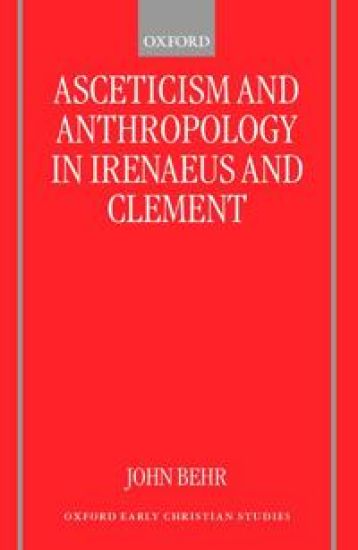
This book examines the ways in which Irenaeus and Clement understood what it means to be human. By exploring these writings from within their own theological perspectives, Dr Behr also offers a theological critique of the prevailing approach to the asceticism of Late Antiquity. Writing before monasticism became the dominant paradigm of Christian asceticism, Irenaeus and Clement afford fascinating glimpses of alternative approaches. For Irenaeus, asceticism is the expression of man living the life of God in all dimensions of the body, that which is most characteristically human and in the image of God. Human existence as a physical being includes sexuality as a permanent part of the framework within which males and females grow towards God. In contrast, Clement depicts asceticism as man's attempt at a godlike life to protect the rational element, that which is distinctively human and in the image of God, from any possible disturbance and threat, or from the vulnerability of dependency, especially of a physical or sexual nature. Here human sexuality is strictly limited by the finality of procreation and abandoned in the resurrection. By paying careful attention to these two writers, Dr Behr offers challenging material for the continuing task of understanding ourselves as human beings.