Kirjailija
John Bellamy Foster
Kirjat ja teokset yhdessä paikassa: 36 kirjaa, julkaisuja vuosilta 1984–2026, suosituimpiin kuuluu Theory & Struggle. Vertaile teosten hintoja ja tarkista saatavuus suomalaisista kirjakaupoista.
36 kirjaa
Kirjojen julkaisuvuodet: 1984–2026.
The days of boom and bubble are over, and the time has come to understand the long-term economic reality. Although the Great Recession officially ended in June 2009, hopes for a new phase of rapid economic expansion were quickly dashed. Instead, growth has been slow, unemployment has remained high, wages and benefits have seen little improvement, poverty has increased, and the trend toward more inequality of incomes and wealth has continued. It appears that the Great Recession has given way to a period of long-term anemic growth, which Foster and McChesney aptly term the Great Stagnation. This incisive and timely book traces the origins of economic stagnation and explains what it means for a clear understanding of our current situation. The authors point out that increasing monopolization of the economy--when a handful of large firms dominate one or several industries--leads to an over-abundance of capital and too few profitable investment opportunities, with economic stagnation as the result. Absent powerful stimuli to investment, such as historic innovations like the automobile or major government spending, modern capitalist economies have become increasingly dependent on the financial sector to realize profits. And while financialization may have provided a temporary respite from stagnation, it is a solution that cannot last indefinitely, as instability in financial markets over the last half-decade has made clear.
What Every Environmentalist Needs to Know About Capitalism
John Bellamy Foster; Fred Magdoff
Monthly Review Press,U.S.
2011
sidottu
Praise for Foster and Magdoff's The Great Financial Crisis: In this timely and thorough analysis of the current financial crisis, Foster and Magdoff explore its roots and the radical changes that might be undertaken in response. . . . This book makes a valuable contribution to the ongoing examination of our current debt crisis, one that deserves our full attention.--Publishers WeeklyThere is a growing consensus that the planet is heading toward environmental catastrophe: climate change, ocean acidification, ozone depletion, global freshwater use, loss of biodiversity, and chemical pollution all threaten our future unless we act. What is less clear is how humanity should respond. The contemporary environmental movement is the site of many competing plans and prescriptions, and composed of a diverse set of actors, from militant activists to corporate chief executives. This short, readable book is a sharply argued manifesto for those environmentalists who reject schemes of "green capitalism" or piecemeal reform. Environmental and economic scholars Magdoff and Foster contend that the struggle to reverse ecological degradation requires a firm grasp of economic reality. Going further, they argue that efforts to reform capitalism along environmental lines or rely solely on new technology to avert catastrophe misses the point. The main cause of the looming environmental disaster is the driving logic of the system itself, and those in power--no matter how "green"--are incapable of making the changes that are necessary. What Every Environmentalist Needs To Know about Capitalism tackles the two largest issues of our time, the ecological crisis and the faltering capitalist economy, in a way that is thorough, accessible, and sure to provoke debate in the environmental movement.
The Ecological Rift
John Bellamy Foster
Monthly Review Press,U.S.
2011
nidottu
Halvin toimitettuna 24,50 €
Humanity in the twenty-first century is facing what might be described as its ultimate environmental catastrophe: the destruction of the climate that has nurtured human civilization and with it the basis of life on earth as we know it. All ecosystems on the planet are now in decline. Enormous rifts have been driven through the delicate fabric of the biosphere. The economy and the earth are headed for a fateful collision--if we don't alter course. In The Ecological Rift: Capitalism's War on the Earth environmental sociologists John Bellamy Foster, Brett Clark, and Richard York offer a radical assessment of both the problem and the solution. They argue that the source of our ecological crisis lies in the paradox of wealth in capitalist society, which expands individual riches at the expense of public wealth, including the wealth of nature. In the process, a huge ecological rift is driven between human beings and nature, undermining the conditions of sustainable existence: a rift in the metabolic relation between humanity and nature that is irreparable within capitalist society, since integral to its very laws of motion. Critically examining the sanguine arguments of mainstream economists and technologists, Foster, Clark, and York insist instead that fundamental changes in social relations must occur if the ecological (and social) problems presently facing us are to be transcended. Their analysis relies on the development of a deep dialectical naturalism concerned with issues of ecology and evolution and their interaction with the economy. Importantly, they offer reasons for revolutionary hope in moving beyond the regime of capital and toward a society of sustainable human development.
The Ecological Rift
John Bellamy Foster; Brett Clark; Richard York
Monthly Review Press,U.S.
2010
sidottu
Humanity in the twenty-first century is facing what might be described as its ultimate environmental catastrophe: the destruction of the climate that has nurtured human civilization and with it the basis of life on earth as we know it. All ecosystems on the planet are now in decline. Enormous rifts have been driven through the delicate fabric of the biosphere. The economy and the earth are headed for a fateful collision--if we don't alter course. In The Ecological Rift: Capitalism's War on the Earth environmental sociologists John Bellamy Foster, Brett Clark, and Richard York offer a radical assessment of both the problem and the solution. They argue that the source of our ecological crisis lies in the paradox of wealth in capitalist society, which expands individual riches at the expense of public wealth, including the wealth of nature. In the process, a huge ecological rift is driven between human beings and nature, undermining the conditions of sustainable existence: a rift in the metabolic relation between humanity and nature that is irreparable within capitalist society, since integral to its very laws of motion. Critically examining the sanguine arguments of mainstream economists and technologists, Foster, Clark, and York insist instead that fundamental changes in social relations must occur if the ecological (and social) problems presently facing us are to be transcended. Their analysis relies on the development of a deep dialectical naturalism concerned with issues of ecology and evolution and their interaction with the economy. Importantly, they offer reasons for revolutionary hope in moving beyond the regime of capital and toward a society of sustainable human development.
Since the atomic bomb made its first appearance on the world stage in 1945, it has been clear that we possess the power to destroy our own planet. What nuclear weapons made possible, global environmental crisis, marked especially by global warming, has now made inevitable--if business as usual continues. The roots of the present ecological crisis, John Bellamy Foster argues in The Ecological Revolution, lie in capital's rapacious expansion, which has now achieved unprecedented heights of irrationality across the globe. Foster compellingly demonstrates that the only possible answer for humanity is an ecological revolution: a struggle to make peace with the planet. Foster details the beginnings of such a revolution in human relations with the environment which can now be found throughout the globe, especially in the periphery of the world system, where the most ambitious experiments are taking place. This bold new work addresses the central issues of the present crisis: global warming, peak oil, species extinction, world water shortages, global hunger, alternative energy sources, sustainable development, and environmental justice. Foster draws on a unique range of thinkers, including Karl Marx, Thomas Malthus, William Morris, Albert Einstein, Hannah Arendt, Rachel Carson, Vandana Shiva, and Istvan Meszaros. The result is a startlingly radical synthesis, which offers new hope for grappling with the greatest challenge of our age: what must be done to save the earth for humanity and all living species.
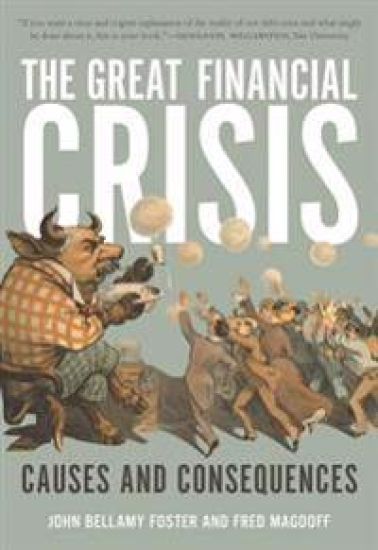
In the fall of 2008, the United States was plunged into a financial crisis more severe than any since the Great Depression. As banks collapsed and the state scrambled to organize one of the largest transfers of wealth in history, many--including economists and financial experts--were shocked by the speed at which events unfolded. In this new book, John Bellamy Foster and Fred Magdoff offer a bold analysis of the financial meltdown, how it developed, and the implications for the future. They examine the specifics of the housing bubble and the credit crunch as well as situate current events within a broader crisis of monopoly-finance capitalism--one that has been gestating for several decades. It is the "real" productive economy's tendency toward stagnation, they argue, that creates a need for capital to find ways to profitably invest its surplus. But rather than invest in socially useful projects that would benefit the vast majority, capital has constructed a financialized "casino" economy that neglects social needs and, as has become increasingly clear, is fatally unstable. Written over a two-year period immediately prior to the onset of the crisis, this timely and illuminating book is necessary reading for all those who wish to understand the current situation, how we got here, and where we are heading.
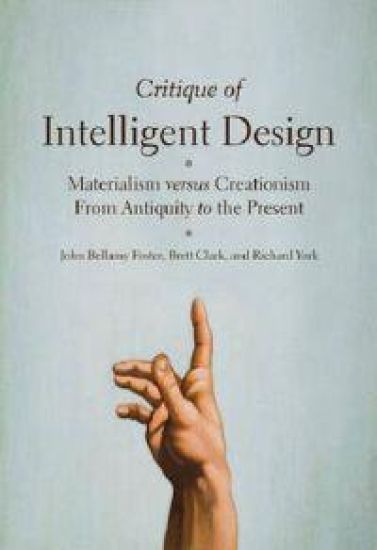
Critique of Intelligent Design
John Bellamy Foster; Brett W. Clark; Richard York
Monthly Review Press,U.S.
2008
nidottu
A critique of religious dogma historically provides the basis for rational inquiry into the physical and social world. "Critique of Intelligent Design" is a key to understanding the forces of irrationalism that seek to undermine the natural and social sciences. This book illuminates the historical evolution of the materialist critique - that is, explaining the world in terms of itself - from antiquity to the present through engaging the work of Plato, Aristotle, Epicurus, Lucretius, Francis Bacon, Isaac Newton, David Hume, Charles Darwin, Karl Marx, Sigmund Freud, and Stephen Jay Gould, among others. Proponents of "intelligent design" - creationism in its contemporary guise - have reignited an age-old war in which they claim to elevate their doctrine to empirical truth and thus incorporate it into science curricula. They attack the modern scientific view elevating both a pseudo-scientific and -cultural renewal in line with their theological orientation and what they perceive as a knowable moral order." Critique of Intelligent Design" is a compelling account of the debate between materialism and religion as well as an overview of the contemporary fight concerning nature, science, history, morality, and knowledge. The authors demonstrate how historical materialism is a crucial social foundation from which to confront intelligent design. They provide a fascinating account of the development of science in opposition to the proponents of "received wisdom." "Critique of Intelligent Design" offers empowering tools to understand and defend critical and scientific reasoning.
Critique of Intelligent Design
John Bellamy Foster; Brett W. Clark; Richard York
Monthly Review Press,U.S.
2008
sidottu
A critique of religious dogma historically provides the basis for rational inquiry into the physical and social world. "Critique of Intelligent Design" is a key to understanding the forces of irrationalism that seek to undermine the natural and social sciences. This book illuminates the historical evolution of the materialist critique - that is, explaining the world in terms of itself - from antiquity to the present through engaging the work of Plato, Aristotle, Epicurus, Lucretius, Francis Bacon, Isaac Newton, David Hume, Charles Darwin, Karl Marx, Sigmund Freud, and Stephen Jay Gould among others. Proponents of "intelligent design" - creationism in its contemporary guise - have reignited an age-old war in which they claim to elevate their doctrine to empirical truth and thus incorporate it into science curricula. They attack the modern scientific view elevating both a pseudo-scientific and -cultural renewal in line with their theological orientation and what they perceive as a knowable moral order." Critique of Intelligent Design" is a compelling account of the debate between materialism and religion as well as an overview of the contemporary fight concerning nature, science, history, morality, and knowledge. The authors demonstrate how historical materialism is a crucial social foundation from which to confront intelligent design. They provide a fascinating account of the development of science in opposition to the proponents of "received wisdom." "Critique of Intelligent Design" offers empowering tools to understand and defend critical and scientific reasoning.
The Challenge and Burden of Historical Time
Istvan Meszaros; John Bellamy Foster
Monthly Review Press,U.S.
2008
sidottu
An extraordinary new work by the leading Marxian philosopher of the late twentieth and early twenty-first century, "The Challenge and Burden of Historical Time" represents a breakthrough in the development of socialist thought. It can be seen both as a companion volume to his earlier pathbreaking "Beyond Capital" and a major theoretical contribution in its own right. Its focus is on the "decapitation of historical time" in today's capitalism and the necessity of a new "socialist time accountancy" as a revolutionary response to the debilitating present. Extending Meszaros' earlier analysis of capitalism as a social-metabolic system caught in an irreversible structural crisis, it represents a crushing refutation of the view that "there is no alternative" to the current social order. Meszaros' wide-ranging analysis explores the forces behind the expansion of world inequality, the return of imperial interventionism, the growing structural crisis of the capitalist state, and the widening planetary ecological crisis - along with the new hope offered by the reemergence of concrete socialist alternatives. At the heart of his book is an examination of the preconditions of Latin America's historic Bolivarian journey, which is producing new revolutionary transformations in Venezuela, Bolivia, and elsewhere. "The Challenge and Burden of Historical Time" is a work of great political and philosophical importance, one that defines the challenges and burdens facing all those who are committed to a more rational, more egalitarian future.
During the Cold War years, mainstream commentators were quick to dismiss the idea that the United States was an imperialist power. Even when U. S. interventions led to the overthrow of popular governments, as in Iran, Guatemala, or the Congo, or wholesale war, as in Vietnam, this fiction remained intact. During the 1990s and especially since September 11, 2001, however, it has crumbled. Today, the need for American empire is openly proclaimed and defended by mainstream analysts and commentators. John Bellamy Foster's Naked Imperialism examines this important transformation in U. S. global policy and ideology, showing the political and economic roots of the new militarism and its consequences both in the global and local context. Foster shows how U. S.-led global capitalism is preparing the way for a new age of barbarism and demonstrates the necessity for resistance and solidarity on a global scale.
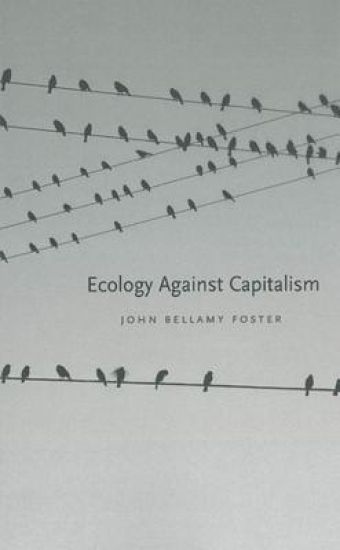
In recent years John Bellamy Foster has emerged as a leading theorist of the Marxist perspective on ecology. His seminal book Marx's Ecology (Monthly Review Press, 2000) discusses the place of ecological issues within the intellectual history of Marxism and on the philosophical foundations of a Marxist ecology, and has become a major point of reference in ecological debates. This historical and philosophical focus is now supplemented by more directly political engagement in his new book, Ecology against Capitalism. In a broad-ranging treatment of contemporary ecological politics, Foster deals with such issues as pollution, sustainable development, technological responses to environmental crisis, population growth, soil fertility, the preservation of ancient forests, and the "new economy" of the Internet age. Foster's introduction sets out the unifying themes of these essays enabling the reader to draw from them a consolidated approach to a rapidly-expanding field of debate which is of critical importance in our times. Within these debates on the politics of ecology, Foster's work develops an important and distinctive perspective. Where many of these debates assume a basic divergence of "red" and "green" issues, and are concerned with the exact terms of a trade-off between them, Foster argues that Marxismproperly understoodalready provides the framework within which ecological questions are best approached. This perspective is advanced here in accessible and concrete form, taking account of the major positions in contemporary ecological debate.
By reconstructing a materialist conception of nature and society, this book challenges the spiritualism prevalent in the modern Green movement, pointing toward a method that offers more lasting sustainable solutions to the ecological crisis. Marx's neglected writings on agriculture, soil ecology, philosophical naturalism and evolutionary theory are outlined.
Progress requires the conquest of nature. Or does it? This startling new account overturns conventional interpretations of Marx and in the process outlines a more rational approach to the current environmental crisis. Marx, it is often assumed, cared only about industrial growth and the development of economic forces. John Bellamy Foster examines Marx's neglected writings on capitalist agriculture and soil ecology, philosophical naturalism, and evolutionary theory. He shows that Marx, known as a powerful critic of capitalist society, was also deeply concerned with the changing human relationship to nature. Marx's Ecology covers many other thinkers, including Epicurus, Charles Darwin, Thomas Malthus, Ludwig Feuerbach, P. J. Proudhon, and William Paley. By reconstructing a materialist conception of nature and society, Marx's Ecology challenges the spiritualism prevalent in the modern Green movement, pointing toward a method that offers more lasting and sustainable solutions to the ecological crisis.
With historical and economic detail, this book explores the reasons why a global economic system, geared toward private profit, has spelled vulnerability for the earth's fragile natural environment. It sets out to take the case for saving the planet beyond visions of doom, arguments about sustainability, and individual solutions.