Kirjojen hintavertailu – 12 903 725 kirjaa ja 27 kauppaa

Kirjailija

John Binns

Kirjat ja teokset yhdessä paikassa: 18 kirjaa, julkaisuja vuosilta 1996–2026, suosituimpiin kuuluu The Orthodox Church of Ethiopia. Vertaile teosten hintoja ja tarkista saatavuus suomalaisista kirjakaupoista.

18 kirjaa

Kirjojen julkaisuvuodet: 1996–2026.

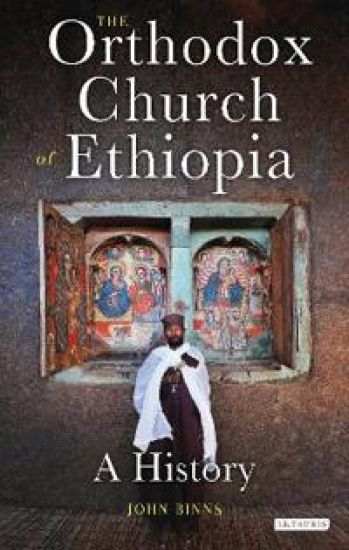
The Orthodox Church of Ethiopia

The Orthodox Church of Ethiopia

John Binns

BLOOMSBURY PUBLISHING PLC
2026
sidottu
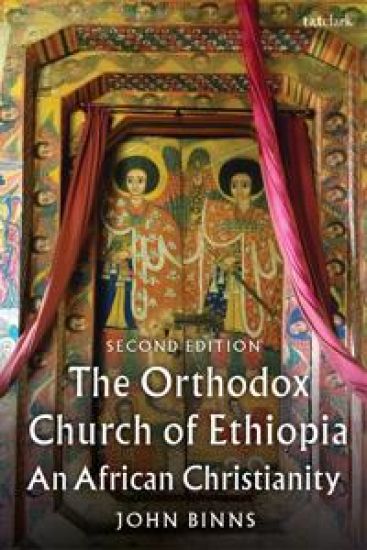
This book is a long awaited update to the first major study of a community which has developed a distinctive approach different from all other churches. Surrounded by steep escarpments to the north, south and east, Ethiopia has always been geographically and culturally set apart. It has the longest archaeological record of any country in the world: indeed, this precipitous mountain land was where the human race began. It is also home to an ancient church with a remarkable legacy. This new edition is updated throughout and it engages more deeply with important works on Christological controversies, as well as providing a critical analysis of the role of Ethiopian religions played in the recent civil war; that brought substantial changes within the church (2 schisms). These updates also include a new introduction and additions to bibliography, as well as a brand new chapter on the tragic wars and violence since 1974.
The Orthodox Church of Ethiopia

The Orthodox Church of Ethiopia

John Binns

BLOOMSBURY PUBLISHING PLC
2026
nidottu
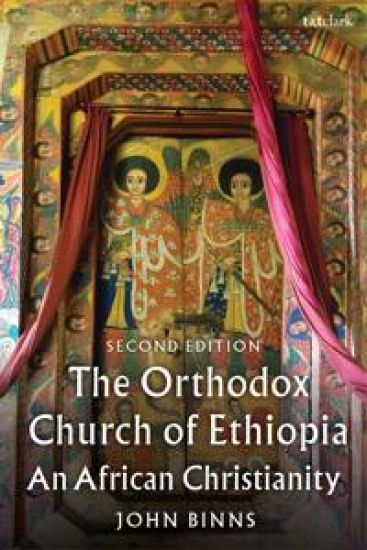
This book is a long awaited update to the first major study of a community which has developed a distinctive approach different from all other churches. Surrounded by steep escarpments to the north, south and east, Ethiopia has always been geographically and culturally set apart. It has the longest archaeological record of any country in the world: indeed, this precipitous mountain land was where the human race began. It is also home to an ancient church with a remarkable legacy. This new edition is updated throughout and it engages more deeply with important works on Christological controversies, as well as providing a critical analysis of the role of Ethiopian religions played in the recent civil war; that brought substantial changes within the church (2 schisms). These updates also include a new introduction and additions to bibliography, as well as a brand new chapter on the tragic wars and violence since 1974.
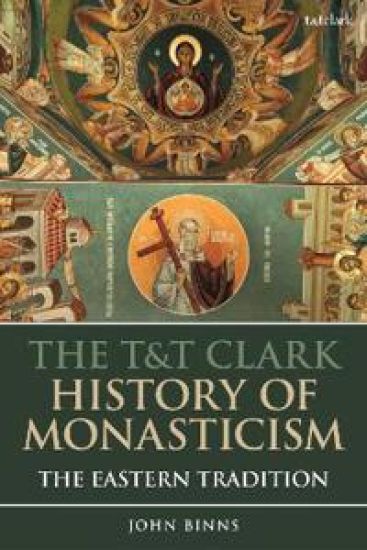
The T&T Clark History of Monasticism

The T&T Clark History of Monasticism

John Binns

T. T.Clark Ltd
2021
nidottu
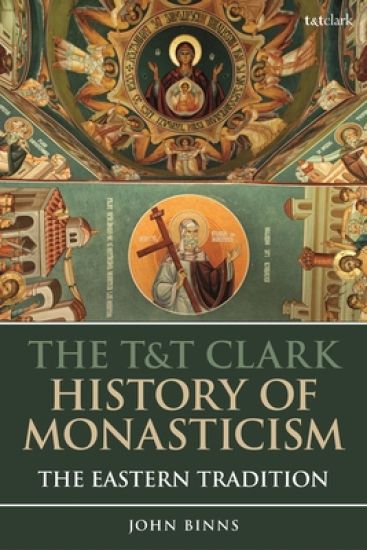
Despite its rich history in the Latin tradition, Christian monasticism began in the east; the wellsprings of monastic culture and spirituality can be directly sourced from the third-century Egyptian wilderness. In this volume, John Binns creates a vivid, authoritative account that traces the four main branches of eastern Christianity, up to and beyond the Great Schism of 1054 and the break between the Catholic and Orthodox churches. Binns begins by exploring asceticism in the early church and the establishment of monastic life in Egypt, led by St Anthony and Pachomius. He chronicles the expansion, influence and later separation of the various Orthodox branches, examining monastic traditions and histories ranging from Syria to Russia and Ethiopia to Asia Minor. Culminating with both the persecution and the revival of monastic life, Binns concludes with an argument for both the diversity and the shared set of practices and ideals between the Orthodox churches, creating a resource for both cross-disciplinary specialist and students of religion, history, and spirituality.
Recollections Of The Life Of John Binns; Twenty-Nine Years In Europe And Fifty-Three In The United States
Recollections Of The Life Of John Binns; Twenty-Nine Years In Europe And Fifty-Three In The United States has been considered by academicians and scholars of great significance and value to literature. This forms a part of the knowledge base for future generations. So that the book is never forgotten we have represented this book in a print format as the same form as it was originally first published. Hence any marks or annotations seen are left intentionally to preserve its true nature.
The Orthodox Church of Ethiopia

The Orthodox Church of Ethiopia

John Binns

T. T.Clark Ltd
2020
nidottu

Halvin toimitettuna 43,80 €

Surrounded by steep escarpments to the north, south and east, Ethiopia has always been geographically and culturally set apart. It has the longest archaeological record of any country in the world: indeed, this precipitous mountain land was where the human race began. It is also home to an ancient church with a remarkable legacy. The Church of Ethiopia is the only pre-colonial church in sub-Saharan Africa; today it has a membership of around forty million and is rapidly growing. This book is the first major study of a community which has developed a distinctive approach different from all other churches. John Binns explains how its special features have shaped the life of the Ethiopian people, and how political changes since the overthrow of Haile Selassie have forced the Church to rethink its identity and mission. He discusses the famous rock-hewn churches; the Ark of the Covenant (claimed by the Church and housed in Aksum); medieval monasticism; relations with the Coptic Church; centuries of co-existence with Islam; missionary activity; and the Church's venerable oral traditions of poetic allegorical reflection.
The T&T Clark History of Monasticism
Despite its rich history in the Latin tradition, Christian monasticism began in the east; the wellsprings of monastic culture and spirituality can be directly sourced from the third-century Egyptian wilderness. In this volume, John Binns creates a vivid, authoritative account that traces the four main branches of eastern Christianity, up to and beyond the Great Schism of 1054 and the break between the Catholic and Orthodox churches. Binns begins by exploring asceticism in the early church and the establishment of monastic life in Egypt, led by St Anthony and Pachomius. He chronicles the expansion, influence and later separation of the various Orthodox branches, examining monastic traditions and histories ranging from Syria to Russia and Ethiopia to Asia Minor. Culminating with both the persecution and the revival of monastic life, Binns concludes with an argument for both the diversity and the shared set of practices and ideals between the Orthodox churches, creating a resource for both cross-disciplinary specialist and students of religion, history, and spirituality.
The Orthodox Church of Ethiopia

The Orthodox Church of Ethiopia

John Binns

I.B. Tauris
2016
sidottu
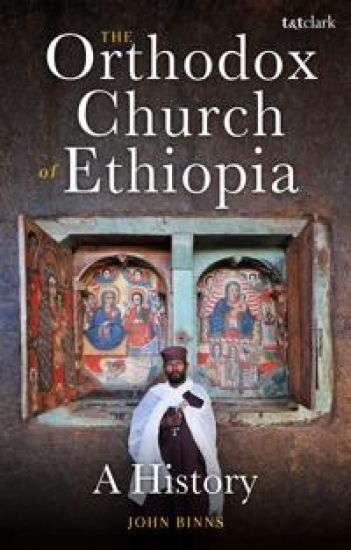
Surrounded by steep escarpments to the north, south and east, Ethiopia has always been geographically and culturally set apart. It has the longest archaeological record of any country in the world. Indeed, this precipitous mountain land was where the human race began. It is also home to an ancient church with a remarkable legacy. The Ethiopian Church forms the southern branch of historic Christianity. It is the only pre-colonial church in sub-Saharan Africa, originating in one of the earliest Christian kingdoms-with its king Ezana (supposedly descended from the biblical Solomon) converting around 340 CE. Since then it has maintained its long Christian witness in a region dominated by Islam; today it has a membership of around forty million and is rapidly growing. Yet despite its importance, there has been no comprehensive study available in English of its theology and history. This is a large gap which this authoritative and engagingly written book seeks to fill. The Church of Ethiopia (or formally, the Ethiopian Orthodox Tewahedo Church) has a recognized place in worldwide Christianity as one of five non-Chalcedonian Orthodox Churches. As Dr Binns shows, it has developed a distinctive approach which makes it different from all other churches. His book explains why this happened and how these special features have shaped the life of the Christian people of Ethiopia. He discusses the famous rock-hewn churches; the Ark of the Covenant (claimed by the Church and housed in Aksum); the medieval monastic tradition; relations with the Coptic Church; co-existence with Islam; missionary activity; and the Church's venerable oral traditions, especially the discipline of qene-a kind of theological reflection couched in a unique style of improvised allegorical poetry. There is also a sustained exploration of how the Church has been forced to re-think its identity and mission as a result of political changes and upheaval following the overthrow of Haile Selassie (who ruled as Regent, 1916-1930, and then as Emperor, 1930-74) and beyond.

An Introduction to the Christian Orthodox Churches

An Introduction to the Christian Orthodox Churches

John Binns

Cambridge University Press
2002
sidottu
This clear and accessible introduction describes the life of the Orthodox Churches of the Christian East from the accession of the Emperor Constantine in 312 up to the year 2000. It explores the nature of the various churches of the Christian East, both Chalcedonian and non-Chalcedonian Orthodox, the Church of the East, and Greek Catholic Churches. It explains both the common traditions and the different and sometimes divisive local characteristics. The distinctive Orthodox approaches to the themes of liturgy, theology, monastic life and spirituality, iconography, popular religion, mission, politics and the schism between East and West are discussed in turn. A final chapter examines the response of the Churches to their new freedom following the collapse of communism and the prospects for the future. For Christians of the West, a knowledge of Orthodoxy can open up fresh ways of looking at the Christian faith.
An Introduction to the Christian Orthodox Churches

An Introduction to the Christian Orthodox Churches

John Binns

Cambridge University Press
2002
pokkari
This clear and accessible introduction describes the life of the Orthodox Churches of the Christian East from the accession of the Emperor Constantine in 312 up to the year 2000. It explores the nature of the various churches of the Christian East, both Chalcedonian and non-Chalcedonian Orthodox, the Church of the East, and Greek Catholic Churches. It explains both the common traditions and the different and sometimes divisive local characteristics. The distinctive Orthodox approaches to the themes of liturgy, theology, monastic life and spirituality, iconography, popular religion, mission, politics and the schism between East and West are discussed in turn. A final chapter examines the response of the Churches to their new freedom following the collapse of communism and the prospects for the future. For Christians of the West, a knowledge of Orthodoxy can open up fresh ways of looking at the Christian faith.
Ascetics and Ambassadors of Christ

Ascetics and Ambassadors of Christ

John Binns

Clarendon Press
1996
nidottu
The monasteries of the Jerusalem desert were famous throughout the Byzantine Christian world. Yet whilst much has been written about their counterparts in Egypt and Syria, this book is the first to provide a comprehensive study of the monastic movement in Palestine during the Byzantine period, from the accession of Constantine to the fall of Jerusalem to the Persians in 614. The book is divided into three parts. The first examines the lives of the holy men of the desert, using contemporary source material, and looks at the culture which produced them. The second describes the environment, including chapters on Jerusalem and the expansion of monasticism into other urban centres. The third section presents some of the main themes of the saints' lives, with chapters on the historical development, doctrinal debate, and spirituality. This is an important and valuable contribution to the study of ancient spirituality and desert monasticism, and should be of interest both to historians and scholars of patristics and theology.