Kirjojen hintavertailu – 12 903 725 kirjaa ja 27 kauppaa

Kirjailija

John Bishop

Kirjat ja teokset yhdessä paikassa: 43 kirjaa, julkaisuja vuosilta 1990–2026, suosituimpiin kuuluu Act of Aggression. Vertaile teosten hintoja ja tarkista saatavuus suomalaisista kirjakaupoista.

43 kirjaa

Kirjojen julkaisuvuodet: 1990–2026.

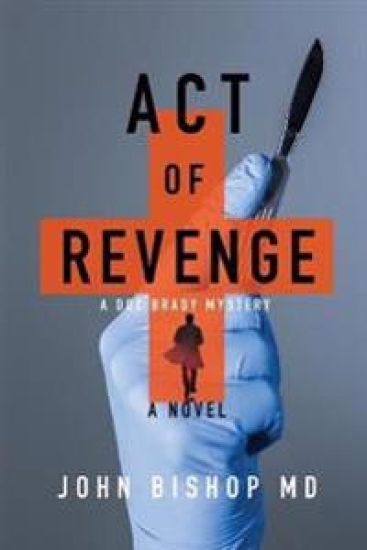
Act of Revenge

Act of Revenge

John Bishop

Mantid Press
2020
pokkari
Plastic surgeon Lou Edwards's life is complicated by two major issues. One, his wife has lupus, possibly due to leaking silicone from breast implants Edwards himself inserted. And two, his malpractice insurance has been canceled, as it has been for many other plastic surgeons, due to the burgeoning breast implant problem. But it gets worse. Shortly after Edwards threatens an insurance company president on national TV, the president is found murdered in his penthouse. Dr. Jim Bob Brady once again finds himself doing a bit of investigating, this time on behalf of a colleague. But how well does he know this colleague? Is the investigation worth the threat to Jim Bob's own life? Will he discover that it was a burglary gone bad? A lover's quarrel? Or is this an act of revenge?
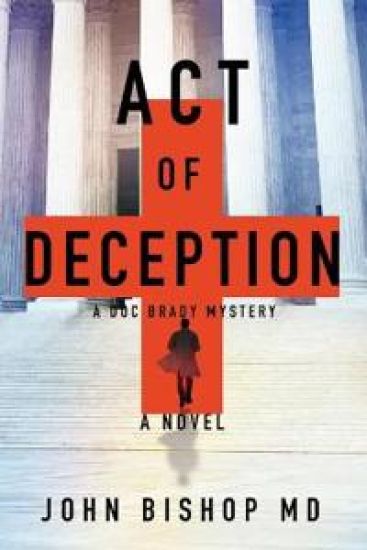
Act of Deception

Act of Deception

John Bishop

Mantid Press
2020
pokkari
Is it medical malpractice, or is the attorney just another ambulance chaser? It's 1995, and Houston orthopedic surgeon Dr. Jim Bob Brady has been sued for medical malpractice; a mysterious infection caused a knee replacement to end up as an amputation. Donovan Shaw, a ruthless plaintiff's attorney, has taken the case and doesn't seem bothered by the fact that he and Brady share a number of friends. "It's not personal " Shaw says. But it feels personal--especially when Shaw threatens, "I will do anything, and I mean anything, to win the case, even if I have to destroy you and that pretty wife of yours. I will stop at nothing. You remember that "And Brady isn't the only one in his practice being sued. How is Shaw getting his inside information? Can the patients afford to say no to filing lawsuits, even if the claims aren't valid? Through a series of twists and turns, and with the support of his wife Mary Louise and their professional investigator son J. J, Brady once again doggedly goes into "sleuth mode" to get to the truth of the matter--even after his life is put in jeopardy. Will he survive, only to find himself at the mercy of the wild and wooly Houston court system? Is this whole mess his fault? Or is there an act of deception involved?
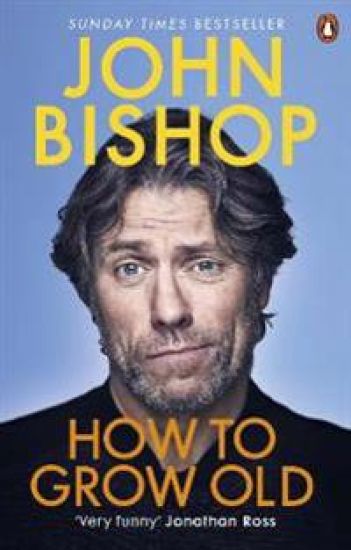
How to Grow Old

How to Grow Old

John Bishop

Ebury Press
2020
pokkari
SUNDAY TIMES BESTSELLERWhether he likes it or not, John is getting older. His hair is greying, it’s getting that much harder to stay fit, and the potential to become something of an embarrassment is ever increasing. But hope is not lost. How to Grow Old is John’s offering to the world. With sage advice on how to avoid the common pitfalls of age, intimate confessions and spit-your-dentures-out hilarious commentary on his own advancing years, this is his observational comic writing at its very best. If you were concerned about how not to be boring or how to get rid of your should-be-old-enough-to-manage kids, this the book has the answers.
Act of Murder

Act of Murder

John Bishop

Mantid Press
2020
pokkari
Doc Brady became an orthopedic surgeon to avoid being surrounded by death. But now it's everywhere around him. One spring day in 1994 Houston, Dr. Jim Bob Brady witnesses his neighbor's ten-year-old son killed by a hit-and-run driver. An accident, or an act of murder? After the death, Brady enlists the help of his twenty-year-old son J. J. and his wife Mary Louise in chasing down clues that take them deeper and deeper into a Houston he never imagined existed. In the process, they discover a macabre conspiracy stretching from the ivory towers of the largest teaching hospital in Texas, to the upper reaches of Houston's legal community, to the shores of Galveston. Doc Brady soon realizes that the old adage remains true: The love of money is the root of all evil.
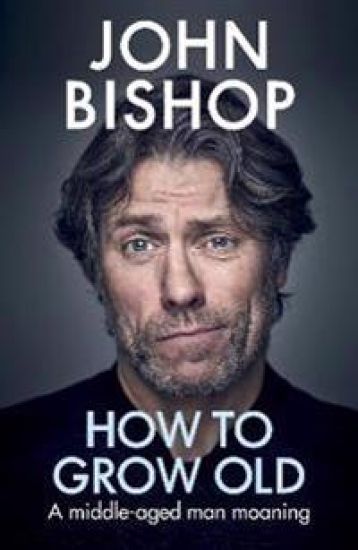
How to Grow Old

How to Grow Old

John Bishop

Ebury Press
2019
sidottu
Intimate confessions and spit-your-dentures-out hilarious commentary – this is observational comedy at its best. How to Grow Old is a stupid title, because the answer is obvious: Don’t Die. Provided you don’t die, you are growing old. Don’t come to this book under any illusions. It isn’t going to tell you how to stay alive any longer. It won’t help you understand the aging process from a sociological and anthropological perspective, and I’m not sure how much practical advice you’re going to get. However, if you happen to want to know what a white, heterosexual, middle-aged man thinks of getting old – from the struggle to stay fit, keep hold of your friends or stay relevant, to why I’m better at doing a dump now than at any time in my life – this book could very well be exactly what you have been looking for. You might even find it a bit funny.
The London Bus in Colour

The London Bus in Colour

John Bishop

Fonthill Media
2016
nidottu
The last three decades of the twentieth century saw dramatic changes in the bus industry with deregulation of bus services nationally in October 1986 in the provincial areas. Visually London seemed to stay the same with the buses still operating in the customary red liveries which all cherished from childhood. This book sets out to show how the vehicles moved forward from the traditional layout of rear platform and open half cab to the introduction of one man buses with their front entrances. The effects of deregulation are shown with dynamic colour schemes especially with the Bexleybus blue and cream colour scheme. With the passing of years we progress to the now familiar single deck buses, and also cover various other transport experiments.
British Trolleybuses in Colour

British Trolleybuses in Colour

John Bishop

Fonthill Media
2015
nidottu
The Last Decade of British Trolleybuses in Colour covers the general demise of the British trolleybus from 1961 to 1972 when the last Bradford trolleybus entered the Thornbury Works for the final time on 26 March 1972. Gripped by a fascination of trolleybuses, John Bishop and Malcolm Keeping decided to capture the vehicles on both cine-film and colour transparencies. Having seen the demise of their 'home town trolleybuses', both authors travelled the country photographing the remaining trolleybus systems, including the capital cities of Belfast, Cardiff, Glasgow and London. The photographs not only capture the vast array of colours of the vehicles, but the changing scene of the so called 'Swinging Sixties' when attitudes relaxed dramatically. Since these colourful days, the scene has changed even more so when the local government in the Seventies altered municipal operations becoming companies and many changed names or disappeared altogether. Therefore, this book records far more than just the demise of the trolleybuses, but changes in society as well.
Natural Agency

Natural Agency

John Bishop

Cambridge University Press
2008
pokkari
From a moral point of view we think of ourselves as capable of responsible actions. From a scientific point of view we think of ourselves as animals whose behaviour, however highly evolved, conforms to natural scientific laws. Natural Agency argues that these different perspectives can be reconciled, despite the scepticism of many philosophers who have argued that 'free will' is impossible under 'scientific determinism'. This scepticism is best overcome, according to the author, by defending a causal theory of action, that is by establishing that actions are constituted by behavourial events with the appropriate kind of mental causal history. He sets out a rich and subtle argument for such a theory and defends it against its critics. Thus the book demonstrates the importance of philosophical work in action theory for the central metaphysical task of understanding our place in nature.
Believing by Faith

Believing by Faith

John Bishop

Clarendon Press
2007
sidottu
Can it be justifiable to commit oneself 'by faith' to a religious claim when its truth lacks adequate support from one's total available evidence? In Believing by Faith, John Bishop defends a version of fideism inspired by William James's 1896 lecture 'The Will to Believe'. By critiquing both 'isolationist' (Wittgensteinian) and Reformed epistemologies of religious belief, Bishop argues that anyone who accepts that our publicly available evidence is equally open to theistic and naturalist/atheistic interpretations will need to defend a modest fideist position. This modest fideism understands theistic commitment as involving 'doxastic venture' - practical commitment to propositions held to be true through 'passional' causes (causes other than the recognition of evidence of or for their truth). While Bishop argues that concern about the justifiability of religious doxastic venture is ultimately moral concern, he accepts that faith-ventures can be morally justifiable only if they are in accord with the proper exercise of our rational epistemic capacities. Legitimate faith-ventures may thus never be counter-evidential, and, furthermore, may be made supra-evidentially only when the truth of the faith-proposition concerned necessarily cannot be settled on the basis of evidence. Bishop extends this Jamesian account by requiring that justifiable faith-ventures should also be morally acceptable both in motivation and content. Hard-line evidentialists, however, insist that all religious faith-ventures are morally wrong. Bishop thus conducts an extended debate between fideists and hard-line evidentialists, arguing that neither side can succeed in establishing the irrationality of its opposition. He concludes by suggesting that fideism may nevertheless be morally preferable, as a less dogmatic, more self-accepting, even a more loving, position than its evidentialist rival.