Kirjojen hintavertailu – 12 903 735 kirjaa ja 27 kauppaa

Kirjailija

John Blair

Kirjat ja teokset yhdessä paikassa: 30 kirjaa, julkaisuja vuosilta 2000–2026, suosituimpiin kuuluu History Of The Life, Adventures, And Heroic Actions Of The Celebrated William Wallace, General And Governor Of Scotland (1820). Vertaile teosten hintoja ja tarkista saatavuus suomalaisista kirjakaupoista.

30 kirjaa

Kirjojen julkaisuvuodet: 2000–2026.

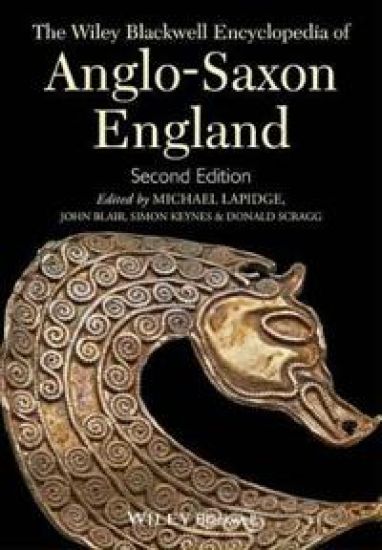
The Wiley Blackwell Encyclopedia of Anglo-Saxon England

The Wiley Blackwell Encyclopedia of Anglo-Saxon England

Michael Lapidge; John Blair; Simon Keynes; Donald Scragg

John Wiley Sons Inc
2013
sidottu
Widely acknowledged as the essential reference work for this period, this volume brings together more than 700 articles written by 150 top scholars that cover the people, places, activities, and creations of the Anglo-Saxons. The only reference work to cover the history, archaeology, arts, architecture, literatures, and languages of England from the Roman withdrawal to the Norman Conquest (c.450 – 1066 AD)Includes over 700 alphabetical entries written by 150 top scholars covering the people, places, activities, and creations of the Anglo-SaxonsUpdated and expanded with 40 brand-new entries and a new appendix detailing "English Archbishops and Bishops, c.450-1066"Accompanied by maps, line drawings, photos, a table of "English Rulers, c.450-1066," and a headword index to facilitate searchingAn essential reference tool, both for specialists in the field, and for students looking for a thorough grounding in key topics of the period

Killing the Dead

Killing the Dead

John Blair

PRINCETON UNIVERSITY PRESS
2025
sidottu

Halvin toimitettuna 33,80 €

A riveting history of vampire panics across cultures and down through the millennia—and why killing the dead is better than killing the livingKilling the Dead provides the first in-depth, global account of one of the world’s most widespread yet misunderstood forms of mass hysteria—the vampire epidemic. In a spellbinding narrative, John Blair takes readers from ancient Mesopotamia to present-day Haiti to explore a macabre frontier of life and death where corpses are believed to wander or do harm from the grave, and where the vampire is a physical expression of society’s inexplicable terrors and anxieties. In 1732, the British public opened their morning papers to read of lurid happenings in eastern Europe. Serbian villagers had dug up several corpses and had found them to be undecayed and bloated with blood. Recognizing the marks of vampirism, they mutilated and burned them. Centuries earlier, the English themselves engaged in the same behavior. In fact, vampire epidemics have flared up throughout history—in ancient Assyria, China, and Rome, medieval and early modern Europe, and the Americas. Blair blends the latest findings in archaeology, anthropology, and psychology with vampire lore from literature and popular culture to show how these episodes occur at traumatic moments in societies that upend all sense of security, and how the European vampire is just one species in a larger family of predatory supernatural entities that includes the female flying demons of Southeast Asia and the lustful yoginis of India. Richly illustrated, Killing the Dead provocatively argues that corpse-killing, far from being pathological or unhealthy, served as a therapeutic and largely harmless outlet for fear, hatred, and paranoia that would otherwise result in violence against marginalized groups and individuals.
Football Kit Italia

Football Kit Italia

John Blair

PITCH PUBLISHING LTD
2025
sidottu

Halvin toimitettuna 38,30 €

A fascinating and beautifully illustrated account of the glorious decade of 1992–2002, when Italian football reigned supreme on the world footballing stage. Follow-up to the William Hill Sports Book of the Year-nominated A Culture of Kits: The Definitive Guide to Classic Shirt Collecting. From the catalyst of World Cup Italia 90 and Paul Gascoigne’s arrival in Italy in 1992, Serie A became the number-one league in the world, with the British public gaining a ringside seat via Channel 4’s legendary weekly coverage. Inside you will find:The captivating stories of the players, clubs and kits that defined one of the most iconic periods in football history and changed the landscape of modern sports programmingA comprehensive chronicle covering everything from Signori to Batistuta, Kappa to Diadora and Fiorentina to JuventusContributions from a diverse set of key television and football-industry figures from the periodFifty eye-catching photos of the greatest Serie A shirts from 1992–2002This stunning book will whisk those who were there straight back to the days of Football Italia – and give those who weren’t a tantalising taste of what they missed.
Investigative Interviewing And Interrogation

Investigative Interviewing And Interrogation

John Blair

Jones and Bartlett Publishers, Inc
2025
nidottu
This text addresses the three critical issues of interviewing and interrogating; how to gather information from people; how to assess the credibility of the information that is collected; and how to encourage resistant sources to share the information that they possess. Investigative Interviewing and Interrogation distils the existing research on investigative interviewing into a small number of easily understood principles. After the relevant principle is introduced, it shows the reader how to utilize that principle, providing applicable examples. This principles approach enables the reader to be creative in applying the discussed principles using his/her best judgement while conducting an interview or interrogation. The intent is not to force a system on the reader; rather, it is to provide the reader with ideas which may improve his/her interviewing skills. Videos of actual police interviews that support the principles discussed will be available to adopting institutions.
A Culture of Kits

A Culture of Kits

John Blair

PITCH PUBLISHING LTD
2024
sidottu
Culture of Kits: The Definitive Guide to Classic Football Shirt Collecting is a fascinating exploration of the booming business behind the growing culture and community surrounding vintage football shirts. The intersection between fashion and football has never been more pronounced, resulting in the market for classic football shirts growing into a multi-million-pound business in the past ten years. Culture of Kits captures the story of the people and companies behind the growth in global collecting who have turned a once-niche pastime into mainstream fashion. Charting the milestones in the community’s rise to societal prominence, it explores the key questions surrounding this growth story. What makes a shirt a classic? What motivates collectors? Is shirt-collecting here to stay or a cyclical fashion trend? Drawing on intel from experts and global collectors, this book lifts the lid on the cultural phenomenon of football shirt fashion and provides the ultimate guide to classic football shirt collecting.
The Shape of Things to Come

The Shape of Things to Come

John Blair

Gival Press
2023
pokkari
"In his deeply moving new collection, The Shape of Things to Come, John Blair offers us penetrating meditation on the Manhattan Project and its consequences, in terms both historically recuperative and, mindful of a cautionary anxiety, deeply psychological. Here the author borrows from a communal legacy of ancient story to situate the bomb, in spite and in light of its break with the past, as both an illumination of human nature and a shift of mythical scope and weight. In light of the new Zeitgeist and a threat as extreme as ever and yet faded from conversation, this book breathes new life into a much-needed public understanding."-Bruce Bond
Planning in the Early Medieval Landscape

Planning in the Early Medieval Landscape

John Blair; Stephen Rippon; Christopher Smart

LIVERPOOL UNIVERSITY PRESS
2022
nidottu
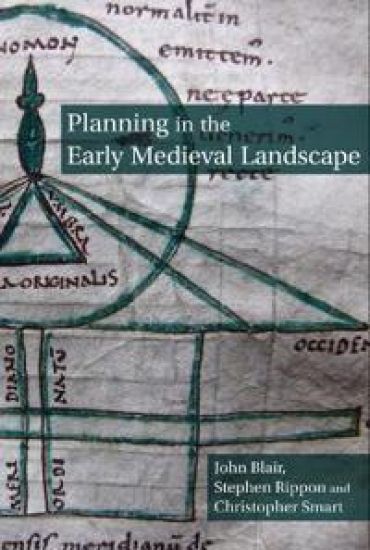
The extent to which Anglo-Saxon society was capable of large-scale transformations of the landscape is hotly disputed. This interdisciplinary book – embracing archaeological and historical sources – explores this important period in our landscape history and the extent to which buildings, settlements and field systems were laid out using sophisticated surveying techniques. In particular, recent research has found new and unexpected evidence for the construction of building complexes and settlements on geometrically precise grids, suggesting a revival of the techniques of the Roman land-surveyors (Agrimensores). Two units of measurement appear to have been used: the ‘short perch’ of 15 feet in central and eastern England, where most cases occur, and the ‘long perch’ of 18 feet at the small number of examples identified in Wessex. This technically advanced planning is evident during two periods: c.600–800, when it may have been a mostly monastic practice, and c.940–1020, when it appears to have been revived in a monastic context but then spread to a wider range of lay settlements. Planning in the Early Medieval Landscape is a completely new perspective on how villages and other settlement were formed. It combines map and field evidence with manuscript treatises on land-surveying to show that the methods described in the treatises were not just theoretical, but were put into practice. In doing so it reveals a major aspect of previously unrecognised early medieval technology.
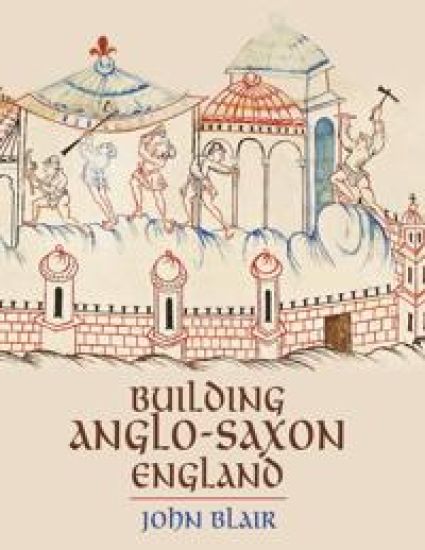
Building Anglo-Saxon England

Building Anglo-Saxon England

John Blair

Princeton University Press
2021
pokkari
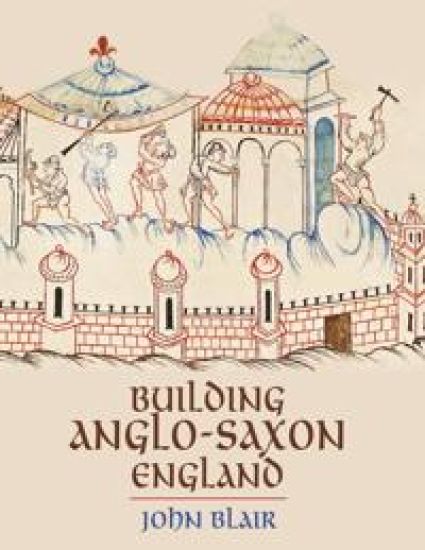
Shortlisted for the Wolfson History PrizeA radical rethinking of the Anglo-Saxon world that draws on the latest archaeological discoveriesThis beautifully illustrated book draws on the latest archaeological discoveries to present a radical reappraisal of the Anglo-Saxon built environment and its inhabitants. John Blair, one of the world's leading experts on this transformative era in England's early history, explains the origins of towns, manor houses, and castles in a completely new way, and sheds new light on the important functions of buildings and settlements in shaping people's lives during the age of the Venerable Bede and King Alfred. Building Anglo-Saxon England demonstrates how hundreds of recent excavations enable us to grasp for the first time how regionally diverse the built environment of the Anglo-Saxons truly was. Blair identifies a zone of eastern England with access to the North Sea whose economy, prosperity, and timber buildings had more in common with the Low Countries and Scandinavia than the rest of England. The origins of villages and their field systems emerge with a new clarity, as does the royal administrative organization of the kingdom of Mercia, which dominated central England for two centuries. Featuring a wealth of color illustrations throughout, Building Anglo-Saxon England explores how the natural landscape was modified to accommodate human activity, and how many settlements--secular and religious—were laid out with geometrical precision by specialist surveyors. The book also shows how the Anglo-Saxon love of elegant and intricate decoration is reflected in the construction of the living environment, which in some ways was more sophisticated than it would become after the Norman Conquest.
Planning in the Early Medieval Landscape

Planning in the Early Medieval Landscape

John Blair; Stephen Rippon; Christopher Smart

Liverpool University Press
2020
sidottu
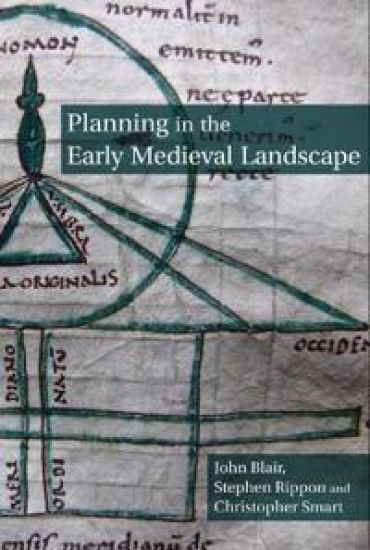
The extent to which Anglo-Saxon society was capable of large-scale transformations of the landscape is hotly disputed. This interdisciplinary book – embracing archaeological and historical sources – explores this important period in our landscape history and the extent to which buildings, settlements and field systems were laid out using sophisticated surveying techniques. In particular, recent research has found new and unexpected evidence for the construction of building complexes and settlements on geometrically precise grids, suggesting a revival of the techniques of the Roman land-surveyors (Agrimensores). Two units of measurement appear to have been used: the ‘short perch’ of 15 feet in central and eastern England, where most cases occur, and the ‘long perch’ of 18 feet at the small number of examples identified in Wessex. This technically advanced planning is evident during two periods: c.600–800, when it may have been a mostly monastic practice, and c.940–1020, when it appears to have been revived in a monastic context but then spread to a wider range of lay settlements. Planning in the Early Medieval Landscape is a completely new perspective on how villages and other settlement were formed. It combines map and field evidence with manuscript treatises on land-surveying to show that the methods described in the treatises were not just theoretical, but were put into practice. In doing so it reveals a major aspect of previously unrecognised early medieval technology.
Essays, on, First, the Nature, Uses, and Subjects of the Sacraments of the New Testament. Second, on Regeneration, Wherein the Principle of Spiritual Life, Thereby Implanted, is Particularly Considered
The 18th century was a wealth of knowledge, exploration and rapidly growing technology and expanding record-keeping made possible by advances in the printing press. In its determination to preserve the century of revolution, Gale initiated a revolution of its own: digitization of epic proportions to preserve these invaluable works in the largest archive of its kind. Now for the first time these high-quality digital copies of original 18th century manuscripts are available in print, making them highly accessible to libraries, undergraduate students, and independent scholars. The Age of Enlightenment profoundly enriched religious and philosophical understanding and continues to influence present-day thinking. Works collected here include masterpieces by David Hume, Immanuel Kant, and Jean-Jacques Rousseau, as well as religious sermons and moral debates on the issues of the day, such as the slave trade. The Age of Reason saw conflict between Protestantism and Catholicism transformed into one between faith and logic -- a debate that continues in the twenty-first century.++++The below data was compiled from various identification fields in the bibliographic record of this title. This data is provided as an additional tool in helping to insure edition identification: ++++Library of CongressW032046Date of publication suggested by Evans. Error in paging: p. 60 misnumbered 42. Litchfield Conn.]: Re-printed by Collier and Adam, 1789?]. 103, 1]p.; 12
The Chronology and History of the World, From the Creation to the Year of Christ, 1790. Illustrated in LVI Tables; ... By the Revd. John Blair L.L.D
The 18th century was a wealth of knowledge, exploration and rapidly growing technology and expanding record-keeping made possible by advances in the printing press. In its determination to preserve the century of revolution, Gale initiated a revolution of its own: digitization of epic proportions to preserve these invaluable works in the largest archive of its kind. Now for the first time these high-quality digital copies of original 18th century manuscripts are available in print, making them highly accessible to libraries, undergraduate students, and independent scholars. Rich in titles on English life and social history, this collection spans the world as it was known to eighteenth-century historians and explorers. Titles include a wealth of travel accounts and diaries, histories of nations from throughout the world, and maps and charts of a world that was still being discovered. Students of the War of American Independence will find fascinating accounts from the British side of conflict. ++++The below data was compiled from various identification fields in the bibliographic record of this title. This data is provided as an additional tool in helping to insure edition identification: ++++John Rylands University Library of ManchesterN047189The titlepage and dedication are engraved - Includes 104 leaves of unnumbered plates - Includes "On the rise and progress of geography" by John Blair - With an index. London: printed in the year, 1790. 12],20,104 leaves, 38]p., plates: maps; 2
Building Anglo-Saxon England

Building Anglo-Saxon England

John Blair

PRINCETON UNIVERSITY PRESS
2018
sidottu
Shortlisted for the Wolfson History PrizeA radical rethinking of the Anglo-Saxon world that draws on the latest archaeological discoveriesThis beautifully illustrated book draws on the latest archaeological discoveries to present a radical reappraisal of the Anglo-Saxon built environment and its inhabitants. John Blair, one of the world's leading experts on this transformative era in England's early history, explains the origins of towns, manor houses, and castles in a completely new way, and sheds new light on the important functions of buildings and settlements in shaping people's lives during the age of the Venerable Bede and King Alfred. Building Anglo-Saxon England demonstrates how hundreds of recent excavations enable us to grasp for the first time how regionally diverse the built environment of the Anglo-Saxons truly was. Blair identifies a zone of eastern England with access to the North Sea whose economy, prosperity, and timber buildings had more in common with the Low Countries and Scandinavia than the rest of England. The origins of villages and their field systems emerge with a new clarity, as does the royal administrative organization of the kingdom of Mercia, which dominated central England for two centuries. Featuring a wealth of color illustrations throughout, Building Anglo-Saxon England explores how the natural landscape was modified to accommodate human activity, and how many settlements--secular and religious—were laid out with geometrical precision by specialist surveyors. The book also shows how the Anglo-Saxon love of elegant and intricate decoration is reflected in the construction of the living environment, which in some ways was more sophisticated than it would become after the Norman Conquest.
Playful Song Called Beautiful

Playful Song Called Beautiful

John Blair

University of Iowa Press
2016
nidottu
Playful Song Called Beautiful ranges far into the intersections of faith and scientific thought, places where “there is no stranger who is / stranger than you, no / familiar who’s more / familiar.” In poems that are either formally rhymed and metered or written in syllabically structured three-line stanzas, Blair wanders among universal orders and failures of desire, where the unlikeliness of any of us being who we are, what we are, where we are forces us to consider—and reconsider—the possibilities of belief and meaning. Blair’s poems are elegant and earthy, sometimes profane, and sometimes lovingly playful. From the invisible landscape of elementary particles to Johann Wolfgang Von Goethe’s love of the smell of rotten apples, Blair’s poems direct us through a “great wide world that is / ours and never ours” and somewhere among the rolling tercets, the transcendent becomes not only possible, but entirely inevitable.
How They Broke Baxter

How They Broke Baxter

John Blair

Memoirs Publishing
2013
nidottu
A consultant surgeon tells the story of his appointment, his successful years in his hospital, and then the coming of changes which led at last to his sad resignation. The managers had arrived, amalgamations ordered, wards were closed, discord amongst colleagues raged, and personal antagonisms worsened as their worlds collapsed. The novel was written in the 1990s and you may well recognise it! " Further to the salutogenic benefits of alcohol, retired physician Dr John Blair recalls that when working at Perth Royal Infirmary in the 1950s it was customary to add 10ml of alcohol to an intravenous infusion "to make the patient feel more relaxed". Those recovering from an operation were entitled, on request, to a nightcap of a double whisky. Regrettably neither practice still prevails. Dr Blair has recently published this entertaining novel, How They Broke Baxter, a tragic tale of how the managerial invasion of the health service made life intolerable for a busy and successful surgeon. It reflects, no doubt, the experience of many" James LeFanu, The Daily Telegraph, 21 November 2013
American Standard

American Standard

John Blair

University of Pittsburgh Press
2013
pokkari
Winner of the 2002 Drue Heinz Literature Prize Selected by Elizabeth Hardwick It is difficult to see what lurks beneath the surface of a muddy river, an alligator-infested lake, or a John Blair short story. The deep currents that drive a demure, devout, church-going woman to shoot her husband; the ripple effect of a midnight rendezvous at church youth camp that goes slightly—then horribly—askew; the sinkholes that can swallow Porsche dealerships—or marriages; what is dredged up in American Standard cannot easily be forgotten. Set mostly in central Florida, Blair’s stories are filled with people living lives of disquieting longing and stubborn isolation. For them, this is the American standard, as ubiquitous and undistinguished as vitreous china bathroom fixtures.