Kirjojen hintavertailu – 12 903 725 kirjaa ja 27 kauppaa

Kirjailija

John Brockman

Kirjat ja teokset yhdessä paikassa: 27 kirjaa, julkaisuja vuosilta 1983–2020, suosituimpiin kuuluu New Essays in Technical and Scientific Communication. Vertaile teosten hintoja ja tarkista saatavuus suomalaisista kirjakaupoista.

27 kirjaa

Kirjojen julkaisuvuodet: 1983–2020.

Twisted Rails, Sunken Ships

Twisted Rails, Sunken Ships

John Brockman

Routledge
2020
nidottu
Contemporary disaster investigation reports into the Shuttle, Three Mile Island, or the World Trade Centre did not happen by chance, but were the result of an evolution of the discourse communities involved with investigating technological accidents. The relationships of private companies, coroners, outside experts, and government investigators all had to be developed and experimented with before a genre of investigation reports could exist. This book is the story of the evolution of these investigation discourse communities in published reports written between 1833 and 1879. Using the reports generated by seven different accidents on railroads and steamboats between 1833 and 1876, it is possible to observe the changes in how these reports interacted and changed over the course of the nineteenth century: The Explosion of the Steamboat New England in the Connecticut River, 1833; The Explosion of the Locomotive Engine Richmond near Reading Pennsylvania, 1844; The Explosion of the Steam Boat Moselle in Cincinatti, 1838; The Camden and Amboy Railroad Collision in Burlington, New Jersey, 1855; The Gasconade Bridge Collapse on the Pacific Railroad in Missouri, 1855; The Eastern Railroad Collision in Revere, Massachusetts, 1871; The Ashtabula Railroad Bridge Collapse in Ohio, 1876
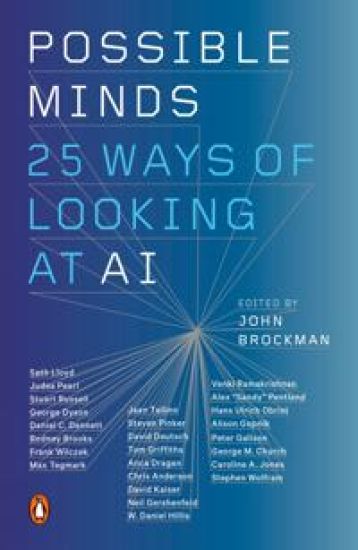
Possible Minds

Possible Minds

John Brockman

Penguin USA
2020
nidottu
Science world luminary John Brockman assembles twenty-five of the most important scientific minds, people who have been thinking about the field of artificial intelligence for most of their careers, for an unparalleled round-table examination about mind, thinking, intelligence and what it means to be human.
The Last Unknowns

The Last Unknowns

John Brockman; Daniel Kahneman

William Morrow Paperbacks
2019
nidottu

Halvin toimitettuna 25,00 €

Discover the universe's last unknowns—here are the unanswered questions that obsess "the world's finest minds" (The Guardian)Featuring a foreword by DANIEL KAHNEMAN, Nobel Prize-winning author of Thinking, Fast and SlowThis is a little book of profound questions (only questions!)—unknowns that address the secrets of our world, our civilization, the meaning of life. Here are the deepest riddles that have fascinated, obsessed, and haunted the greatest thinkers of our time, including Nobel laureates, cosmologists, philosophers, economists, prize-winning novelists, religious scholars, and more than 250 leading scientists, artists, and theorists. In The Last Unknowns, John Brockman, publisher of Edge.org, asks "a mind-blowing gathering of innovative thinkers" (Booklist): "What is ‘The Last Question,’ your last question, the question for which you will be remembered?" Featuring the Pulitzer Prize–winning author of Guns, Germs, and Steel JARED DIAMOND • Nobel Prize-winning University of Chicago economist RICHARD THALER • Harvard psychologist STEVEN PINKER • religion scholar ELAINE PAGELS • author of Seven Brief Lessons on Physics CARLO ROVELLI • Booker Prize–winning novelist IAN McEWAN • neuroscientist SAM HARRIS • philosopher DANIEL C. DENNETT • MIT theorist SHERRY TURKLE • decoder of the human genome J. CRAIG VENTER • The Coddling of the American Mind author JONATHAN HAIDT • Nobel Prize-winning physicist FRANK WILCZEK • UC Berkeley psychologist ALISON GOPNICK • philosopher REBECCA NEWBERGER GOLDSTEIN • New York Times columnist CARL ZIMMER • MIT cosmologist MAX TEGMARK • Whole Earth founder STEWART BRAND • "Marginal Revolution" economist TYLER COWEN • Anatomy of Love author HELEN FISHER • Noble Prize-winning NASA physicist JOHN C. MATHER • psychologist JUDITH RICH HARRIS • Princeton physicist FREEMAN DYSON • musician BRIAN ENO • environmental scientist JENNIFER JACQUET • Duke economist DAN ARIELY • Oxford philosopher A. C. GRAYLING • Harvard cosmologist LISA RANDALL • anthropologist MARY CATHERINE BATESON • Emotional Intelligence author DANIEL GOLEMAN • Harvard genticist GEORGE CHURCH • Blueprint author NICHOLAS A. CHRISTAKIS • Stanford political scientist MARGARET LEVI • economist ALAN S. BLINDER • publisher TIM O'REILLY • theoretical cosmologist JANNA LEVIN • Serpentine Gallery owner HANS ULRICH OBRIST • Wired founding editor KEVIN KELLY • Cambridge astrophysicist MARTIN REES, and more than 200 others.
New Essays in Technical and Scientific Communication

New Essays in Technical and Scientific Communication

Paul Anderson; John Brockman; Carolyn Miller

Routledge
2019
sidottu
New Essays in Technical and Scientific Communication represents the most important collection of writings about technical communications ever compiled. Focusing on a wide range of theoretical and practical issues, these essays reflect the rigor, vitality, and interdisciplinary nature of modern technical communications. This represents a collection of the very best scholarly work being done.
This Idea Is Brilliant

This Idea Is Brilliant

John Brockman

HarperPerennial
2018
nidottu
From the bestselling editor of This Explains Everything, 206 of the world's most brilliant minds tackle Edge.org's 2017 question: What scientific term or concept ought to be more widely known? As science informs public policy, decision making, and so many aspects of our everyday lives, a scientifically literate society is crucial. In that spirit, Edge.org publisher John Brockman asked 206 the world’s best minds the 2017 Edge Question: What scientific term or concept ought to be more widely known? Contributors include: author of The God Delusion RICHARD DAWKINS on using animals’ “Genetic Book of the Dead” to reconstruct ecological history; theoretical physicist and author of A Universe from Nothing Lawrence Krauss on "uncertainty" and resisting our temptation to assign meaning to random events; MacArthur Fellow REBECCA NEWBERGER GOLDSTEIN on “scientific realism,” the idea that scientific theories explain phenomena beyond what we can see and touch; behavioral economist RICHARD THALER on the “premortem,” which can help root out potential hazards before making a major business decision; Pulitzer Prize-winning author of Guns, Germs, and Steel JARED DIAMOND on a basic precept too often missing from scientific discourse: “common sense;” author of Seven Brief Lessons on Physics CARLO ROVELLI on “relative information,” which governs the physical world around us; author of The Shallows NICHOLAS CARR on “mysterianism,” the idea that humans’ mastery and understanding of the world around us is illusory; theoretical cosmologist JANNA LEVIN on the “principle of least action,” which allows us to express many of the most complex ideas in a single sentence; cognitive scientist and author of The Language Instinct STEVEN PINKER on “The Second Law of Thermodynamics;” author of Emotional Intelligence DANIEL GOLEMAN on “empathic concern,” a scientific basis for compassion; theoretical physicist and Time 100 influencer LISA RANDALL on “effective theories,” which reflect what we observe in the world around us; founding executive editor of Wired KEVIN KELLY on “premature optimization,” or why success so often begets failure; biogerontologist AUBREY DE GREY on why “maladaptive traits” have been conserved evolutionarily; musician and producer BRIAN ENO on “confirmation bias” in the internet age; Man Booker-winning author of Atonement IAN MCEWAN on the “Navier-Stokes Equations,” which govern everything from weather prediction to aircraft design, to blood flow; plus pieces from FRANK WILCZEK, RORY SUTHERLAND, NINA JABLONSKI, MARTIN REES, ALISON GOPNIK, and many, many others.
Know This

Know This

John Brockman

HarperPerennial
2017
nidottu
Today's most visionary thinkers reveal the cutting-edge scientific ideas and breakthroughs you must understand. Scientific developments radically change and enlighten our understanding of the world -- whether it's advances in technology and medical research or the latest revelations of neuroscience, psychology, physics, economics, anthropology, climatology, or genetics. And yet amid the flood of information today, it's often difficult to recognize the truly revolutionary ideas that will have lasting impact. In the spirit of identifying the most significant new theories and discoveries, John Brockman, publisher of Edge.org ("The world's smartest website" -- The Guardian), asked 198 of the finest minds What do you consider the most interesting recent scientific news? What makes it important? Pulitzer Prize-winning author of Guns, Germs, and Steel Jared Diamond on the best way to understand complex problems * author of Seven Brief Lessons on Physics Carlo Rovelli on the mystery of black holes * Harvard psychologist Steven Pinker on the quantification of human progress * TED Talks curator Chris J. Anderson on the growth of the global brain * Harvard cosmologist Lisa Randall on the true measure of breakthrough discoveries * Nobel Prize-winning physicist Frank Wilczek on why the twenty-first century will be shaped by our mastery of the laws of matter * philosopher Rebecca Newberger Goldstein on the underestimation of female genius * music legend Peter Gabriel on tearing down the barriers between imagination and reality * Princeton physicist Freeman Dyson on the surprising ability of small (and cheap) upstarts to compete with billion-dollar projects. Plus Nobel laureate John C. Mather, Sun Microsystems cofounder Bill Joy, Wired founding editor Kevin Kelly, psychologist Alison Gopnik, Genome author Matt Ridley, Harvard geneticist George Church, Why Does the World Exist? author Jim Holt, anthropologist Helen Fisher, and more.
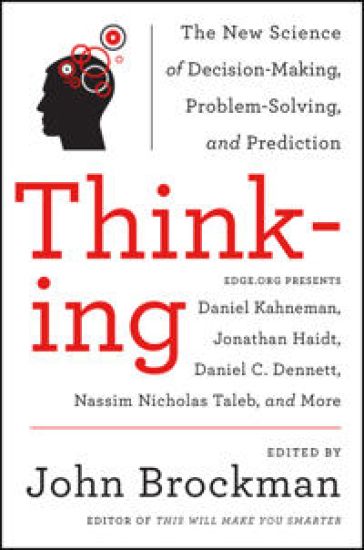
Thinking

Thinking

John Brockman

HarperPerennial
2016
nidottu
Unlock your mind From the bestselling authors of Thinking, Fast and Slow; The Black Swan; and Stumbling on Happiness comes a cutting-edge exploration of the mysteries of rational thought, decision-making, intuition, morality, willpower, problem-solving, prediction, forecasting, unconscious behavior, and beyond. Edited by John Brockman, publisher of Edge.org ("The world's smartest website"-The Guardian), Thinking presents original ideas by today's leading psychologists, neuroscientists, and philosophers who are radically expanding our understanding of human thought. Daniel Kahneman on the power (and pitfalls) of human intuition and "unconscious" thinking * Daniel Gilbert on desire, prediction, and why getting what we want doesn't always make us happy * Nassim Nicholas Taleb on the limitations of statistics in guiding decision-making * Vilayanur Ramachandran on the scientific underpinnings of human nature * Simon Baron-Cohen on the startling effects of testosterone on the brain * Daniel C. Dennett on decoding the architecture of the "normal" human mind * Sarah-Jayne Blakemore on mental disorders and the crucial developmental phase of adolescence * Jonathan Haidt, Sam Harris, and Roy Baumeister on the science of morality, ethics, and the emerging synthesis of evolutionary and biological thinking * Gerd Gigerenzer on rationality and what informs our choices
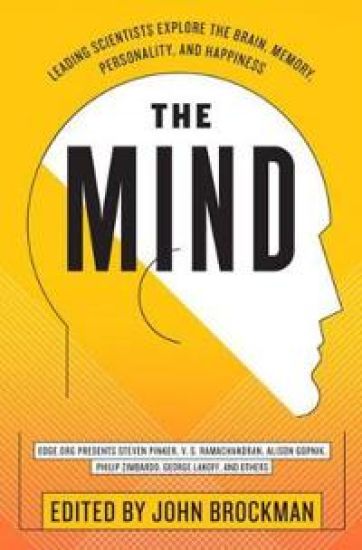
The Mind

The Mind

John Brockman

HarperPerennial
2016
nidottu
"Theway Brockman interlaces essays about research on the frontiers of science withones on artistic vision, education, psychology and economics is sure to buzzany brain." -Chicago Sun-Times on This WillChange Everything Markingthe debut of a hard-hitting new series from Edge.org and Harper Perennial,editor John Brockman delivers a cutting-edge master class covering everythingyou need to know about The Mind. With original contributions by theworld's leading thinkers and scientists, including Steven Pinker, George Lakoff, Philip Zimbardo, V. S. Ramachandran, and others, The Mind offers aconsciousness-expanding primer on a fundamental topic. Unparalleled in scope,depth, insight and quality, Edge.org's The Mind isnot to be missed.
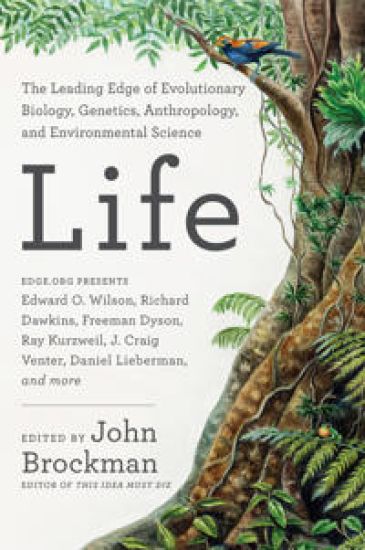
Life

Life

John Brockman

HarperPerennial
2016
nidottu
The newest addition to John Brockman's Edge.org series explores life itself, bringing together the world's leading biologists, geneticists, and evolutionary theorists-including Richard Dawkins, Edward O. Wilson, J. Craig Venter, and Freeman Dyson. Scientists' understanding of life is progressing more rapidly than at any point in human history, from the extraordinary decoding of DNA to the controversial emergence of biotechnology. Featuring pioneering biologists, geneticists, physicists, and science writers, Life explains just how far we've come-and takes a brilliantly educated guess at where we're heading. Richard Dawkins and J. Craig Venter compare genes to digital information, and sketch the frontiers of genomic research. Edward O. Wilson reveals what ants can teach us about building a superorganism-and, in turn, about how cells build an organism. Elsewhere, David Haig reports new findings on how mothers and fathers individually influence the human genome, while Kary Mullis covers cutting edge treatments for dangerous viruses. And there's much more in this fascinating volume. We may never have all the answers. But the thinkers collected in Life are asking questions that will keep us dreaming for generations.
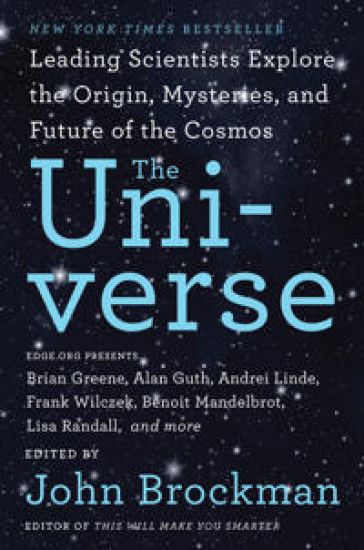
The Universe

The Universe

John Brockman

HarperPerennial
2016
nidottu
John Brockman brings together the world's best-known physicists and science writers-including Brian Greene, Walter Isaacson, Nobel Prize-winner Frank Wilczek, Benoit Mandelbrot, and Martin Rees-to explain the universe in all wondrous splendor. In The Universe, today's most influential science writers explain the science behind our evolving understanding of the universe and everything in it, including the cutting edge research and discoveries that are shaping our knowledge. Lee Smolin reveals how math and cosmology are helping us create a theory of the whole universe. Benoit Mandelbrot looks back on a career devoted to fractal geometry. Neil Turok analyzes the fundamental laws of nature, what came before the big bang, and the possibility of a unified theory. Seth Lloyd investigates the impact of computational revolutions and the informational revolution. Lawrence Krauss provides fresh insight into gravity, dark matter, and the energy of empty space. Brian Greene and Walter Isaacson illuminate the genius who revolutionized modern science: Albert Einstein. And much more. Explore the universe with some of today's greatest minds: what it is, how it came into being, and what may happen next.
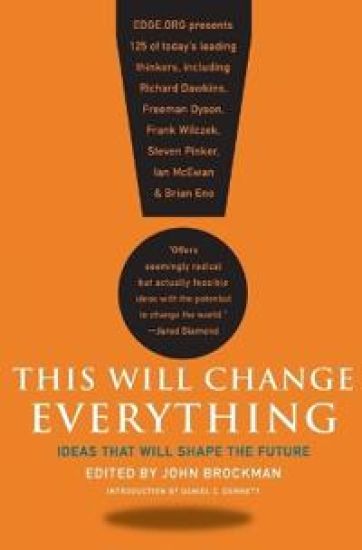
This Will Change Everything

This Will Change Everything

John Brockman

HarperPerennial
2016
nidottu
"This Will Change Everything offers seemingly radical but actually feasible ideas with the potential to change the world."-Jared Diamond, Pulitzer Prize-winning author of Guns, Germs, and Steel Editor John Brockman continues in the same vein as his popular compilations What Are You Optimistic About and What Have You Changed Your Mind About with This Will Change Everything. Brockman asks 150 intellectual superstars "what game-changing scientific ideas and developments do you expect to live to see?" Their fascinating responses are collected here, from bestselling author of Atonement Ian McEwan to Nobel Prize-winning physicist Frank Wilczek to electronic music pioneer Brian Eno to writer, actor, director, and activist Alan Alda.
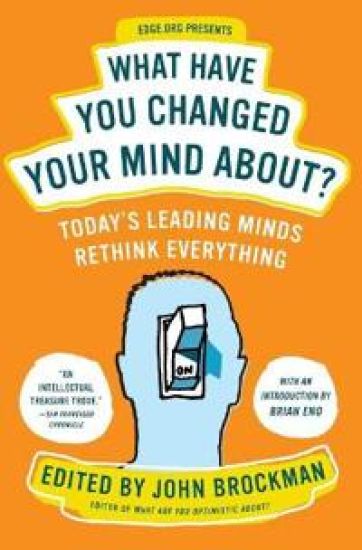
What Have You Changed Your Mind About?

What Have You Changed Your Mind About?

John Brockman

HarperPerennial
2016
nidottu
Even geniuses change their minds sometimes. Edge (www.edge.org), the influential online intellectual salon, recently asked 150 high-powered thinkers to discuss their most telling missteps and reconsiderations: What have you changed your mind about? The answers are brilliant, eye-opening, fascinating, sometimes shocking, and certain to kick-start countless passionate debates. Steven Pinker on the future of human evolution * Richard Dawkins on the mysteries of courtship * SAM HARRIS on the indifference of Mother Nature * Nassim Nicholas Taleb on the irrelevance of probability * Chris Anderson on the reality of global warming * Alan Alda on the existence of God * Ray Kurzweil on the possibility of extraterrestrial life * Brian Eno on what it means to be a "revolutionary" * Helen Fisher on love, fidelity, and the viability of marriage * Irene Pepperberg on learning from parrots ...and many others.
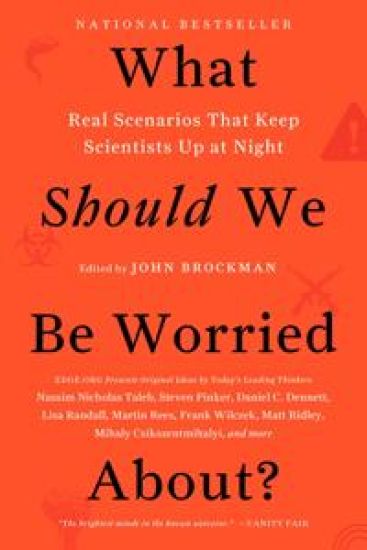
What Should We Be Worried About?

What Should We Be Worried About?

John Brockman

HarperPerennial
2016
nidottu
Drawing from the horizons of science, today's leading thinkers reveal the hidden threats nobody is talking about-and expose the false fears everyone else is distracted by. What should we be worried about? That is the question John Brockman, publisher of Edge.org ("The world's smartest website"-The Guardian), posed to the planet's most influential minds. He asked them to disclose something that, for scientific reasons, worries them-particularly scenarios that aren't on the popular radar yet. Encompassing neuroscience, economics, philosophy, physics, psychology, biology, and more-here are 150 ideas that will revolutionize your understanding of the world. Steven Pinker uncovers the real risk factors for war * Mihaly Csikszentmihalyi peers into the coming virtual abyss * Nobel laureate Frank Wilczek laments our squandered opportunities to prevent global catastrophe * Seth Lloyd calculates the threat of a financial black hole * Alison Gopnik on the loss of childhood * Nassim Nicholas Taleb explains why firefighters understand risk far better than economic "experts" * Matt Ridley on the alarming re-emergence of superstition * Daniel C. Dennett and george dyson ponder the impact of a major breakdown of the Internet * Jennifer Jacquet fears human-induced damage to the planet due to "the Anthropocebo Effect" * Douglas Rushkoff fears humanity is losing its soul * Nicholas Carr on the "patience deficit" * Tim O'Reilly foresees a coming new Dark Age * Scott Atran on the homogenization of human experience * Sherry Turkle explores what's lost when kids are constantly connected * Kevin Kelly outlines the looming "underpopulation bomb" * Helen Fisher on the fate of men * Lawrence Krauss dreads what we don't know about the universe * Susan Blackmore on the loss of manual skills * Kate Jeffery on the death of death * plus J. Craig Venter, Daniel Goleman, Virginia Heffernan, Sam Harris, Brian Eno, Martin Rees, and more
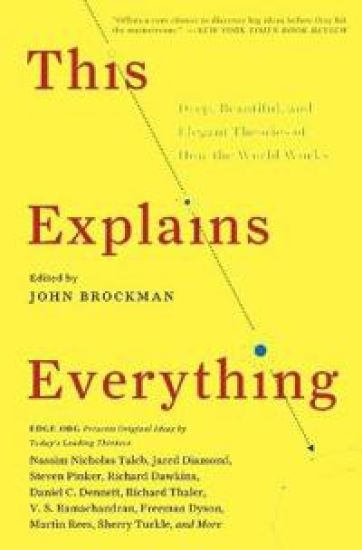
This Explains Everything

This Explains Everything

John Brockman

HarperPerennial
2016
nidottu

Halvin toimitettuna 23,40 €

In This Explains Everything, John Brockman, founder and publisher of Edge.org, asked experts in numerous fields and disciplines to come up with their favorite explanations for everyday occurrences. Why do we recognize patterns? Is there such a thing as positive stress? Are we genetically programmed to be in conflict with each other? Those are just some of the 150 questions that the world's best scientific minds answer with elegant simplicity. With contributions from Jared Diamond, Richard Dawkins, Nassim Taleb, Brian Eno, Steven Pinker, and more, everything is explained in fun, uncomplicated terms that make the most complex concepts easy to comprehend.
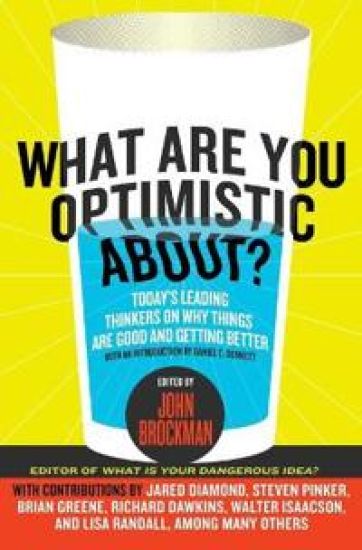
What Are You Optimistic About?

What Are You Optimistic About?

John Brockman

HarperPerennial
2016
nidottu
The nightly news and conventional wisdom tell us that things are bad and getting worse. Yet despite dire predictions, scientists see many good things on the horizon. John Brockman, publisher of Edge (www.edge.org), the influential online salon, recently asked more than 150 high-powered scientific thinkers to answer a vital question for our frequently pessimistic times: "What are you optimistic about?" Spanning a wide range of topics-from string theory to education, from population growth to medicine, and even from global warming to the end of world-What Are You Optimistic About? is an impressive array of what world-class minds (including Nobel Laureates, Pulitzer Prize winners, New York Times bestselling authors, and Harvard professors, among others) have weighed in to offer carefully considered optimistic visions of tomorrow. Their provocative and controversial ideas may rouse skepticism, but they might possibly change our perceptions of humanity's future.
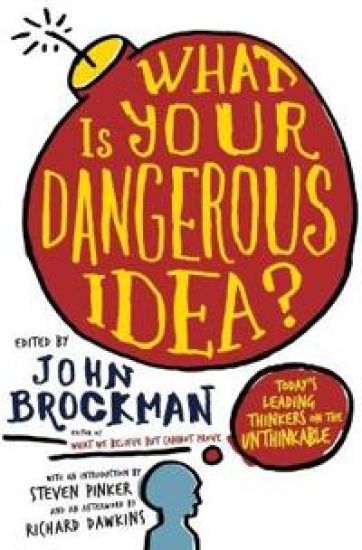
What Is Your Dangerous Idea?

What Is Your Dangerous Idea?

John Brockman

HarperPerennial
2016
nidottu

Halvin toimitettuna 24,00 €

A collection of essays by some of the world's leading scientists describes ideas and advances that could have devastating repercussions in terms of both their use and philosophical implications, ranging from using medication to change personality to examining a universe in which we are completely alone. Original. 40,000 first printing.
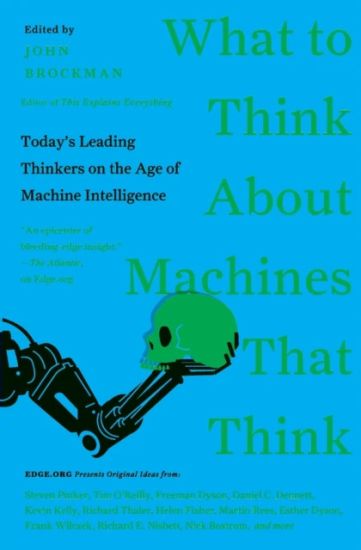
What to Think About Machines That Think

What to Think About Machines That Think

John Brockman

HarperPerennial
2015
nidottu
Weighing in from the cutting-edge frontiers of science, today's most forward-thinking minds explore the rise of "machines that think." Stephen Hawking recently made headlines by noting, "The development of full artificial intelligence could spell the end of the human race." Others, conversely, have trumpeted a new age of "superintelligence" in which smart devices will exponentially extend human capacities. No longer just a matter of science-fiction fantasy (2001, Blade Runner, The Terminator, Her, etc.), it is time to seriously consider the reality of intelligent technology, many forms of which are already being integrated into our daily lives. In that spirit, John Brockman, publisher of Edge. org ("the world's smartest website" - The Guardian), asked the world's most influential scientists, philosophers, and artists one of today's most consequential questions: What do you think about machines that think?
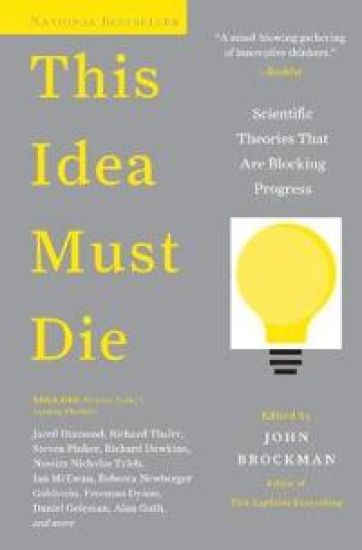
This Idea Must Die

This Idea Must Die

John Brockman

HarperPerennial
2015
nidottu
The bestselling editor of This Explains Everything brings together 175 of the world's most brilliant minds to tackle Edge.org's 2014 question: What scientific idea has become a relic blocking human progress? Each year, John Brockman, publisher of Edge.org-"The world's smartest website" (The Guardian)-challenges some of the world's greatest scientists, artists, and philosophers to answer a provocative question crucial to our time. In 2014 he asked 175 brilliant minds to ponder: What scientific idea needs to be put aside in order to make room for new ideas to advance? The answers are as surprising as they are illuminating. In : * Steven Pinker dismantles the working theory of human behavior * Richard Dawkins renounces essentialism * Sherry Turkle reevaluates our expectations of artificial intelligence * Geoffrey West challenges the concept of a "Theory of Everything" * Andrei Linde suggests that our universe and its laws may not be as unique as we think * Martin Rees explains why scientific understanding is a limitless goal * Nina Jablonski argues to rid ourselves of the concept of race * Alan Guth rethinks the origins of the universe * Hans Ulrich Obrist warns against glorifying unlimited economic growth * and much more. Profound, engaging, thoughtful, and groundbreaking, This Idea Must Die will change your perceptions and understanding of our world today ...and tomorrow.
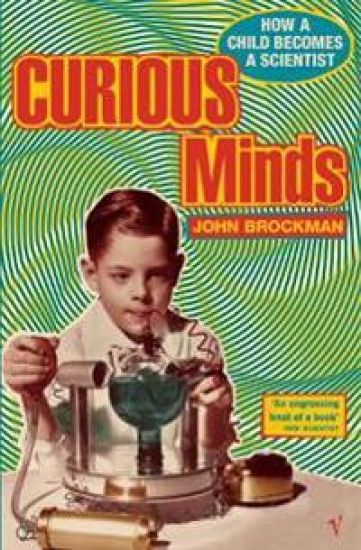
Curious Minds

Curious Minds

John Brockman

Vintage
2013
pokkari
Curious Minds is a book of original, autobiographical essays by twenty-seven scientists, including Paul Davies, Richard Dawkins, Daniel C. Personal, passionate, revealing, enthralling, Curious Minds tells as much about life as it does about science.
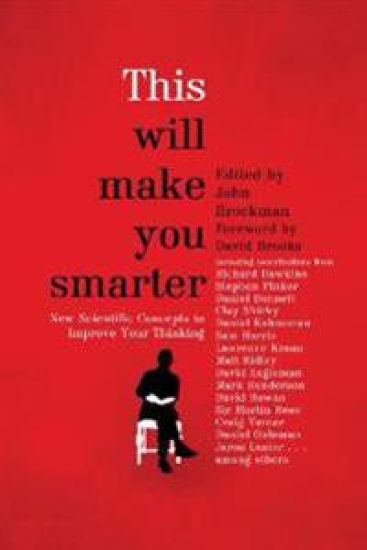
This Will Make You Smarter

This Will Make You Smarter

John Brockman

Transworld
2013
pokkari
Over 150 of the world's leading scientists and thinkers offer their choice of the ideas, and arguments. Every year the author sets them a question, this year that question was: What Scientific Concept Would Improve Everybody's Cognitive Toolkit? In this book, their answers are collected and explores philosophy, psychology, and other disciplines.