Kirjailija
John Buchan
Kirjat ja teokset yhdessä paikassa: 856 kirjaa, julkaisuja vuosilta 1915–2026, suosituimpiin kuuluu The Marquis of Montrose.by John Buchan (ILLUSTRATED). Vertaile teosten hintoja ja tarkista saatavuus suomalaisista kirjakaupoista.
856 kirjaa
Kirjojen julkaisuvuodet: 1915–2026.
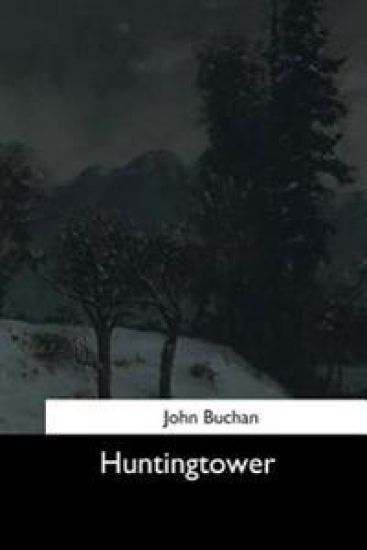
Huntingtower is a novel written by John Buchan in 1922. The rst of his three Dickson McCunn books, it is set near Carrick in south-west Scotland around 1920. The hero is a 55-year-old grocer Dickson McCunn, who has sold his business and taken early retirement. As soon as he ventures out to explore the world, he is swept out of his bourgeois rut into bizarre and outlandish adventures, and forced to become a reluctant hero. The story revolves around the imprisonment under false pretenses by Bolshevik agents of an exiled Russian noblewoman. The Scottish local community mobilises to uncover and thwart the conspiracy against her, and to defend the neutrality of Scotland against the Russian revolutionary struggle. The 1927 black-and-white silent film Huntingtower was based on the novel and directed by George Pearson. Huntingtower was adapted for BBC television in 1957. Another television adaptation was produced by BBC Scotland and broadcast over six episodes starting in October 1978. Huntingtower was also adapted in three one-hour episodes for BBC Radio in 1988 by Trevor Royle and directed by Patrick Raynor. Roy Hanlon starred as McCunn, Stuart McQuarrie as Heritage and David McKail as the Narrator. The series has been repeated on Radio 4 Extra, most recently in November 2014. This classic title has been published by RADLEY BOOKS. Each RADLEY CLASSIC is a meticulously restored, luxurious and faithful reproduction of a classic book; produced with elegant text layout, clarity of presentation, and stylistic features that make reading a true pleasure. Special attention is given to legible fonts and adequate letter sizing, correct line length for readability, generous margins and triple lead (lavish line separation); plus we do not allow any mistakes/changes/additions to creep into the author's words. Visit RADLEY BOOKS at www.radleybooks.com (or search RADLEY CLASSIC on Amazon) to see more classic book titles in this series.
Salute to Adventurers is a 1915 novel by John Buchan. John Buchan, 1st Baron Tweedsmuir (1875-1940), was a Scottish novelist and a Unionist politician who served as Governor General of Canada. Buchan at rst entered into a career in law in 1901, but almost immediately moved into politics, becoming private secretary to British colonial administrator Alfred Milner, who was high commissioner for South Africa, Governor of Cape Colony and colonial administrator of Transvaal and the Orange Free State. Born in Perth, Scotland, Buchan was admitted to the University of Glasgow in 1892 to study classics. Much of Buchan's non- ction mirrored his circumstances: his time in South Africa resulted in The African Colony, the First World War led to a series of books about the war in general, and the Scottish and South African forces in particular. He interspersed his non- ction with further novels, and also wrote ten biographies and four volumes of poetry, as well as numerous articles and stories for magazines and journals. During the war he wrote The Thirty-Nine Steps, the novel which has been adapted for lm and television more than any of his other works. This classic title has been published by RADLEY BOOKS. Each RADLEY CLASSIC is a meticulously restored, luxurious and faithful reproduction of a classic book; produced with elegant text layout, clarity of presentation, and stylistic features that make reading a true pleasure. Special attention is given to legible fonts and adequate letter sizing, correct line length for readability, generous margins and triple lead (lavish line separation); plus we do not allow any mistakes/changes/additions to creep into the author's words. Visit RADLEY BOOKS at www.radleybooks.com (or search RADLEY CLASSIC on Amazon) to see more classic book titles in this series.

The Half-Hearted is a 1900 novel of romance and adventure by the Scottish author John Buchan, in which the social expectations of the main characters shape the paths they must tread. The novel follows the life of Lewis Haystoun, a young Scottish laird, who nds himself unable to commit wholeheartedly to any course of action. His failure to seize the opportunity results in the woman he loves agreeing to marry a rival. Determined to face up to what he considers to be his cowardice, Haystoun departs for the Empire's north west frontier where he dies attempting to hold a narrow mountain pass single- handedly against an invading Cossack army. Writing for the John Buchan Society website in 2001, Christine Drews notes that this novel is the one most in uenced by John Buchan's study of Greek tragedy. She holds that the work's conclusion illumines a path of understanding that can provide perspective on small real-life disappointments and missed satisfactions. The telescoping of the immensity of a single gifted man's death into a purposeful cog in the turning of the wheel of eternity is a foreign, yet broadening philosophy, which shakes the reader's complacency. This classic title has been published by RADLEY BOOKS. Each RADLEY CLASSIC is a meticulously restored, luxurious and faithful reproduction of a classic book; produced with elegant text layout, clarity of presentation, and stylistic features that make reading a true pleasure. Special attention is given to legible fonts and adequate letter sizing, correct line length for readability, generous margins and triple lead (lavish line separation); plus we do not allow any mistakes/changes/additions to creep into the author's words. Visit RADLEY BOOKS at www.radleybooks.com (or search RADLEY CLASSIC on Amazon) to see more classic book titles in this series.
The 39 Steps: Large Print Edition
John Buchan
Createspace Independent Publishing Platform
2017
nidottu
The Path of the King is a 1921 novel by the Scottish author John Buchan, presented as a loosely-coupled series of short stories. In a prologue to the novel, three men discuss around a camp re the notion that the 'spark' of masterful men may be transmitted down from generation to generation, and even though it may smoulder for generations and may seem lost, will reappear and are up when the time is right. In in the rst episode, a Northern prince's golden "torque" represents the symbol of his royal status. On his death, the gold is remodelled as a ring which is handed down from generation to generation until it is eventually inherited by the mother of Abraham Lincoln. In an epilogue to the novel, set many years later, three men stand watching the funeral cort ge after Lincoln's death. "There goes the rst American" says one. The young British attach replies "I dare say you are right, Professor, but I think it is also the last of the Kings". In her 2009 book Reassessing John Buchan: Beyond the Thirty Nine Steps Kate Macdonald suggests that in writing the novel Buchan had the implicit purpose of fostering Anglo-American unity, and that his aim was to build up Lincoln as a shared hero of the British and American people. This classic title has been published by RADLEY BOOKS. Each RADLEY CLASSIC is a meticulously restored, luxurious and faithful reproduction of a classic book; produced with elegant text layout, clarity of presentation, and stylistic features that make reading a true pleasure. Special attention is given to legible fonts and adequate letter sizing, correct line length for readability, generous margins and triple lead (lavish line separation); plus we do not allow any mistakes/changes/additions to creep into the author's words. Visit RADLEY BOOKS at www.radleybooks.com (or search RADLEY CLASSIC on Amazon) to see more classic book titles in this series.
Salute to Adventurers. By: John Buchan ( NOVEL )
John Buchan
Createspace Independent Publishing Platform
2017
nidottu
The Thirty-Nine Steps is an adventure novel by the Scottish author John Buchan. It is the rst of ve novels featuring Richard Hannay, an all-action hero with a stiff upper lip and a miraculous knack for getting himself out of sticky situations. The Thirty-Nine Steps is one of the earliest examples of the 'man-on-the-run' thriller archetype subsequently adopted by Hollywood as an often- used plot device. In The Thirty-Nine Steps, Buchan holds up Richard Hannay as an example to his readers of an ordinary man who puts his country's interests before his own safety. The story was a great success with the men in the First World War trenches. One soldier wrote to Buchan, "The story is greatly appreciated in the midst of mud and rain and shells, and all that could make trench life depressing." The novel formed the basis for a number of lm adaptations, notably: Alfred Hitchcock's 1935 version; a 1959 colour remake; a 1978 version which is perhaps most faithful to the novel; and a 2008 version for British television. This classic title has been published by RADLEY BOOKS. Each RADLEY CLASSIC is a meticulously restored, luxurious and faithful reproduction of a classic book; produced with elegant text layout, clarity of presentation, and stylistic features that make reading a true pleasure. Special attention is given to legible fonts and adequate letter sizing, correct line length for readability, generous margins and triple lead (lavish line separation); plus we do not allow any mistakes/changes/additions to creep into the author's words. Visit RADLEY BOOKS at www.radleybooks.com (or search RADLEY CLASSIC on Amazon) to see more classic book titles in this series.
John Buchan's classic collection of dark and fanciful short stories and poetry contains such classics as "The Grove of Ashtaroth," "The Riding of Ninemileburn," "The Company of the Marjolaine," and "The Rime of True Thomas." John Buchan, 1st Baron Tweedsmuir GCMG GCVO CH PC (1875 - 1940) was a Scottish novelist, historian and Unionist politician who served as Governor General of Canada, the 15th since Canadian Confederation. After a brief legal career, Buchan simultaneously began his writing career and his political and diplomatic careers, serving as a private secretary to the colonial administrator of various colonies in southern Africa. He eventually wrote propaganda for the British war effort in the First World War. Buchan was in 1927 elected Member of Parliament for the Combined Scottish Universities, but he spent most of his time on his writing career, notably writing The Thirty-Nine Steps and other adventure fiction. This classic title has been published by RADLEY BOOKS. Each RADLEY CLASSIC is a meticulously restored, luxurious and faithful reproduction of a classic book; produced with elegant text layout, clarity of presentation, and stylistic features that make reading a true pleasure. Special attention is given to legible fonts and adequate letter sizing, correct line length for readability, generous margins and triple lead (lavish line separation); plus we do not allow any mistakes/changes/additions to creep into the author's words. Visit RADLEY BOOKS at www.radleybooks.com (or search RADLEY CLASSIC on Amazon) to see more classic book titles in this series.
Mr Standfast is the third of the Richard Hannay novels by John Buchan, first published in 1919 by Hodder & Stoughton, London. It is one of two Hannay novels set during the First World War, the other being Greenmantle (1916); Hannay's first and best-known adventure, The Thirty-Nine Steps (1915), is set in the period immediately before the war started. The title refers to a character in John Bunyan's Pilgrim's Progress, to which there are many other references in the novel; Hannay uses a copy of Pilgrim's Progress to decipher coded messages from his contacts, and letters from his friend Peter Pienaar. Set in the later years of World War I, Brigadier- General Hannay is recalled from active service on the Western Front to undertake a secret mission hunting for a dangerous German agent at large in Britain. Hannay is required to work undercover disguised as a pacifst, roaming the country incognito to investigate a German spy and his agents, and then heads to the Swiss Alps to save Europe from being overwhelmed by the German army. This classic title has been published by RADLEY BOOKS. Each RADLEY CLASSIC is a meticulously restored, luxurious and faithful reproduction of a classic book; produced with elegant text layout, clarity of presentation, and stylistic features that make reading a true pleasure. Special attention is given to legible fonts and adequate letter sizing, correct line length for readability, generous margins and triple lead (lavish line separation); plus we do not allow any mistakes/changes/additions to creep into the author's words. Visit RADLEY BOOKS at www.radleybooks.com (or search RADLEY CLASSIC on Amazon) to see more classic book titles in this series.
Prester John is a 1910 adventure novel by John Buchan. It tells the story of a young Scotsman named David Crawfurd and his adventures in South Africa, where a Zulu uprising is tied to the medieval legend of Prester John. The setting is contemporaneous with publication: the beginning of the twentieth century. Crawfurd grows up in Kirkcaple, by the North Sea, where he rst encounters the antagonist, Laputa, performing a ritual on the beach. Crawfurd's father dies, and he goes to work as a shopkeeper in a place called Blaauwildebeestefontein. Crawfurd comes into contact with a Portuguese man, Henriques, and again with Laputa, and he gradually learns of illegal diamond smuggling and of a planned rising of the native people of the region, including the Zulu people and the Swazi people, led by Laputa. Laputa's skill as a preacher allows him to inspire many tribes across the region to follow him, and he invokes the legend of Prester John and positions himself as the rightful heir and leader who can rise up against colonial rule. Following a series of exciting adventures, and with Arcoll's help, Crawfurd is rewarded with a large portion of a hidden treasure and eventually returns to Scotland a rich man. This classic title has been published by RADLEY BOOKS. Each RADLEY CLASSIC is a meticulously restored, luxurious and faithful reproduction of a classic book; produced with elegant text layout, clarity of presentation, and stylistic features that make reading a true pleasure. Special attention is given to legible fonts and adequate letter sizing, correct line length for readability, generous margins and triple lead (lavish line separation); plus we do not allow any mistakes/changes/additions to creep into the author's words. Visit RADLEY BOOKS at www.radleybooks.com (or search RADLEY CLASSIC on Amazon) to see more classic book titles in this series.
The girl came into the room with a darting movement like a swallow, looked round her with the same birdlike quickness, and then ran across the polished floor to where a young man sat on a sofa with one leg laid along it. "I have saved you this dance, Quentin," she said, pronouncing the name with a pretty staccato. "You must be so lonely not dancing, so I will sit with you. What shall we talk about?" The young man did not answer at once, for his gaze was held by her face. He had never dreamed that the gawky and rather plain little girl whom he had romped with long ago in Paris would grow into such a being. The clean delicate lines of her figure, the exquisite pure colouring of hair and skin, the charming young arrogance of the eyes-this was beauty, he reflected, a miracle, a revelation.
Greenmantle is the second of ve novels by John Buchan featuring the character of Richard Hannay, rst published in 1916 by Hodder & Stoughton, London. In Greenmantle (1916) Richard Hannay, hero of The Thirty-Nine Steps, travels across war- torn Europe in search of a German plot and an Islamic Messiah. He is joined by three more of Buchan's heroes: Peter Pienaar, the old Boer Scout; John S. Blenkiron, the American determined to ght the Kaiser; and Sandy Arbuthnot, Greenmantle himself, modelled on Lawrence of Arabia. The intrepid four move in disguise through Germany to Constantinople and the Russian border to face their enemies: the grotesque Stumm and the evil beauty of Hilda von Einem. The book was very popular when published, and was read and enjoyed by Robert Baden-Powell and by the Russian imperial family as they awaited the outcome of the Revolution in 1917. The book has been adapted for broadcast on BBC Radio 4. This classic title has been published by RADLEY BOOKS. Each RADLEY CLASSIC is a meticulously restored, luxurious and faithful reproduction of a classic book; produced with elegant text layout, clarity of presentation, and stylistic features that make reading a true pleasure. Special attention is given to legible fonts and adequate letter sizing, correct line length for readability, generous margins and triple lead (lavish line separation); plus we do not allow any mistakes/changes/additions to creep into the author's words. Visit RADLEY BOOKS at www.radleybooks.com (or search RADLEY CLASSIC on Amazon) to see more classic book titles in this series.

I tell lost tales of savage wars; And you have known the desert sands, The camp beneath the silver stars, The rush at dawn of Arab bands, The fruitless toil, the hopeless dream, The fainting feet, the faltering breath, While Gordon by the ancient stream Waited at ease on death. And now, aloof from camp and field, You spend your sunny autumn hours Where the green folds of Chiltern shield The nooks of Thames amid the flowers: You who have borne that name of pride, In honour clean from fear or stain, Which Talbot won by Henry's side In vanquished Aquitaine. The reader is asked to believe that most of the characters in this tale and many of the incidents have good historical warrant. The figure of Muckle John Gib will be familiar to the readers of Patrick Walker. Chapter 1 The Sweet-Singers When I was a child in short-coats a spaewife came to the town-end, and for a silver groat paid by my mother she riddled my fate. It came to little, being no more than that I should miss love and fortune in the sunlight and find them in the rain. The woman was a haggard, black-faced gipsy, and when my mother asked for more she turned on her heel and spoke gibberish; for which she was presently driven out of the place by Tarn Roberton, the baillie, and the village dogs. But the thing stuck in my memory, and together with the fact that I was a Thursday's bairn, and so, according to the old rhyme, "had far to go," convinced me long ere I had come to man's estate that wanderings and surprises would be my portion. It is in the rain that this tale begins. I was just turned of eighteen, and in the back-end of a dripping September set out from our moorland house of Auchencairn to complete my course at Edinburgh College. The year was 1685, an ill year for our countryside; for the folk were at odds with the King's Government, about religion, and the land was full of covenants and repressions. Small wonder that I was backward with my colleging, and at an age when most lads are buckled to a calling was still attending the prelections of the Edinburgh masters. My father had blown hot and cold in politics, for he was fiery and unstable by nature, and swift to judge a cause by its latest professor. He had cast out with the Hamilton gentry, and, having broken the head of a dragoon in the change-house of Lesmahagow, had his little estate mulcted in fines. All of which, together with some natural curiosity and a family love of fighting, sent him to the ill-fated field of Bothwell Brig, from which he was lucky to escape with a bullet in the shoulder. Thereupon he had been put to the horn, and was now lying hid in a den in the mosses of Douglas Water. It was a sore business for my mother, who had the task of warding off prying eyes from our ragged household and keeping the fugitive in life. She was a Tweedside woman, as strong and staunch as an oak, and with a heart in her like Robert Bruce. And she was cheerful, too, in the worst days, and would go about the place with a bright eye and an old song on her lips. But the thing was beyond a woman's bearing; so I had perforce to forsake my colleging and take a hand with our family vexations. The life made me hard and watchful, trusting no man, and brusque and stiff towards the world. And yet all the while youth was working in me like yeast, so that a spring day or a west wind would make me forget my troubles and thirst to be about a kindlier business than skulking in a moorland dwelling.