Kirjojen hintavertailu – 12 903 735 kirjaa ja 27 kauppaa

Kirjailija

John Buchan

Kirjat ja teokset yhdessä paikassa: 856 kirjaa, julkaisuja vuosilta 1915–2026, suosituimpiin kuuluu The Marquis of Montrose.by John Buchan (ILLUSTRATED). Vertaile teosten hintoja ja tarkista saatavuus suomalaisista kirjakaupoista.

856 kirjaa

Kirjojen julkaisuvuodet: 1915–2026.

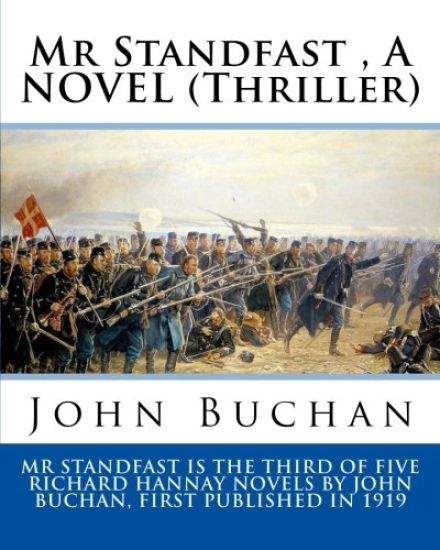
Mr Standfast, By John Buchan. A NOVEL (Thriller): John Buchan, 1st Baron Tweedsmuir, ( 26 August 1875 - 11 February 1940) was a Scottish novelist, his
Mr Standfast is the third of five Richard Hannay novels by John Buchan, first published in 1919 by Hodder & Stoughton, London. It is one of two Hannay novels set during the First World War, the other being Greenmantle (1916); Hannay's first and best-known adventure, The Thirty-Nine Steps (1915), is set in the period immediately before the war started. The title refers to a character in John Bunyan's Pilgrim's Progress, to which there are many other references in the novel; Hannay uses a copy of Pilgrim's Progress to decipher coded messages from his contacts, and letters from his friend Peter Pienaar. Plot introduction Set in the later years of World War I, Brigadier-General Hannay is recalled from active service on the Western Front to undertake a secret mission hunting for a dangerous German agent at large in Britain. Hannay is required to work undercover disguised as a pacifist, roaming the country incognito to investigate a German spy and his agents, and then heads to the Swiss Alps to save Europe from being overwhelmed by the German army. Plot summary Part One--Dick Hannay, under forty and already a successful Brigadier-General with good prospects of advancement, is called out of uniform by his old comrade, spymaster Sir Walter Bullivant, and sent to Fosse Manor in the Cotswolds to receive further instructions. He must pose as a South African, an objector to the war, and once more takes on the name Cornelius Brand (an Anglicisation of the name he had used on his adventures in Germany in Greenmantle). He is upset by the idea of such a pose, but comforted by thoughts of his friend Peter Pienaar, briefly a successful airman and now a prisoner in Germany, and by the beauty of the Cotswold countryside. At Fosse, he meets two middle-aged spinsters, their cousin Launcelot Wake, a conscientious objector, and their niece Mary Lamington, a girl whose prettiness had struck Hannay earlier, while visiting a shell-shocked friend in the hospital where she works. It emerges that she is his contact, but she can tell him little more than that he must immerse himself in the world of pacifists and objectors, picking up "atmosphere". She gives him a label to paste inside his watch, an address where he will be staying, and advises him to pick up a copy of Pilgrim's Progress............ John Buchan, 1st Baron Tweedsmuir, ( 26 August 1875 - 11 February 1940) was a Scottish novelist, historian and Unionist politician who served as Governor General of Canada, the 15th since Canadian Confederation. After a brief legal career, Buchan simultaneously began his writing career and his political and diplomatic careers, serving as a private secretary to the colonial administrator of various colonies in southern Africa. He eventually wrote propaganda for the British war effort in the First World War. Buchan was in 1927 elected Member of Parliament for the Combined Scottish Universities, but he spent most of his time on his writing career, notably writing The Thirty-Nine Steps and other adventure fiction. In 1935 he was appointed Governor General of Canada by King George V, on the recommendation of Prime Minister of Canada R. B. Bennett, to replace the Earl of Bessborough. He occupied the post until his death in 1940. Buchan proved to be enthusiastic about literacy, as well as the evolution of Canadian culture, and he received a state funeral in Canada before his ashes were returned to the United Kingdom. Early life and education...........
Les Trente-Neuf Marches

Les Trente-Neuf Marches

John Buchan

Createspace Independent Publishing Platform
2016
nidottu
L'action se d roule Londres, dimbourg et en cosse. Richard Hannay, ancien ing nieur des mines en Afrique du Sud, d couvre un cadavre dans son salon. C'est le pr lude d'une poursuite qui se d roulera dans la lande cossaise o Hannay est poursuivi par une organisation criminelle internationale, La Pierre Noire dont l'objectif est de d clencher la guerre en Europe. Durant vingt jours, Hannay cherchera sauver sa vie et la signification de ce que sont Les Trente-Neuf Marches .
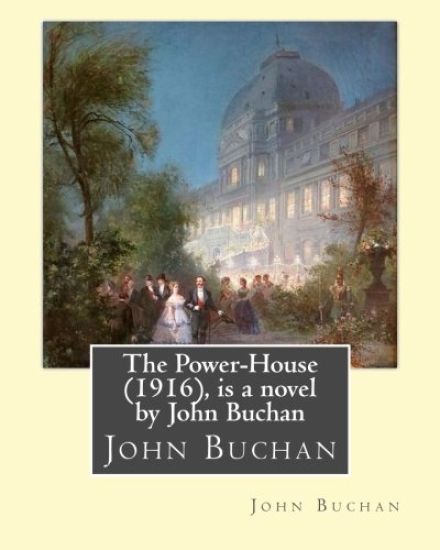
The Power-House (1916), is a novel by John Buchan

The Power-House (1916), is a novel by John Buchan

John Buchan

Createspace Independent Publishing Platform
2016
nidottu
The Power-House is a novel by John Buchan, a thriller set in London, England. It was written in 1913, when it was serialised in Blackwood's Magazine, and it was published in book form in 1916. The narrator is the barrister and Tory MP Edward Leithen, who features in a number of Buchan's novels. The urban setting contrasts with that of its sequel, John Macnab, which is set in the Scottish Highlands. The Power-House of the title is an international anarchist organization led by a rich Englishman named Andrew Lumley. Its plan to destroy Western civilisation is thwarted by Leithen with the assistance of a burly Labour MP. "The dominant theme of Buchan's fiction is the fragility of civilisation," it has been said in the context of a discussion of The Power-House. What the critic Christopher Harvie calls "perhaps the most famous line in all Buchan"occurs during the first meeting between Leithen and Lumley, when the latter tells the former, "You think that a wall as solid as the earth separates civilisation from barbarism. I tell you the division is a thread, a sheet of glass" (Chapter 3). Harvie cites a comparable passage from the second volume of The Golden Bough, where Frazer speaks of "a solid layer of savagery beneath the surface of society," which, "unaffected by the superficial changes of religion and culture," is "a standing menace to civilisation. We seem to move on a thin crust which may at any time be rent by the subterranean forces slumbering beneath." Similar sentiments were expressed by other writers of the period, including Nietzsche, Freud and Conrad. Talking to Lumley, Leithen is reminded of an encounter he once had in Tyrol with a "Nietzschean" German professor who told him, "Someday there will come the marriage of knowledge and will, and then the world will march" (Chapter 3) - words uncannily prophetic of Hitlerian militarism and the Nazi iconography of marching troops immortalised in Leni Riefenstahl's propaganda film, Triumph of the Will. The "nameless brains" who form the Power-House, Lumley reveals, are "great extra-social intelligences" who have opted out of the "conspiracy" called civilisation. "They may be idealists and desire to make a new world, or they may simply be artists, loving for its own sake the pursuit of truth." It takes "both types to bring about results, for the second find the knowledge and the first the will to use it" (Chapter 3). The Power-House is "highly-scientific" (Chapter 5) and among its members are "artists in discovery who will never use their knowledge until they can use it with full effect" (Chapter 3). When Charles Pitt-Heron, the friend of Leithen whose flight abroad is the starting-point of the novel, joins the Power-House, he turns his billiard-room into a laboratory, "where he works away half the night" (Chapter 1). The Russian anarchist theoretician Peter Kropotkin, who was also a biologist and zoologist, wrote in his pamphlet Modern Science and Anarchism (1901): "Anarchism is a world-concept based on a mechanical explanation of all phenomena.... Its method of investigation is that of the exact natural sciences." During their final meeting, Leithen accuses Lumley of believing "nothing", but Lumley dissents from this judgement. "'I am a sceptic about most things, ' he said, 'but, believe me, I have my own worship. I venerate the intellect of man. I believe in its undreamed-of possibilities, when it grows free like an oak in the forest and is not dwarfed in a flower-pot. From that allegiance I have never wavered. That is the God I have never foresworn.'"
Mr. Standfast

Mr. Standfast

John Buchan

Createspace Independent Publishing Platform
2016
nidottu
Set in the later years of World War I, Brigadier-General Hannay is recalled from active service on the Western Front to undertake a secret mission hunting for a dangerous German agent at large in Britain. Hannay is required to work undercover disguised as a pacifist, roaming the country incognito to investigate a German spy and his agents, and then heads to the Swiss Alps to save Europe from being overwhelmed by the German army.