

Kirjailija
John Bunyan
Kirjat ja teokset yhdessä paikassa: 731 kirjaa, julkaisuja vuosilta 1778–2026, suosituimpiin kuuluu The Pilgrim's Progress from This World to That Which Is to Come. Vertaile teosten hintoja ja tarkista saatavuus suomalaisista kirjakaupoista.
731 kirjaa
Kirjojen julkaisuvuodet: 1778–2026.



The pilgrim's progress from this world to that which is to come; by John Bunyan. With illustrations from designs by J. D. Watson.
John Bunyan
University of Michigan Library
2001
sidottu
How to Pray in the Spirit – Thirty–One Devotional Readings on Personal Prayer
John Bunyan; L. G. Parkhurst Jr.
Kregel Publications,U.S.
1998
nidottu
From the author of the classic Pilgrim's Progress, this devotional book will give you deeper understanding and greater freedom of expression in your personal relationship with God. Bunyan's dying words on prayer will stir the heart of readers and are only a sampling of Bunyan's insight.
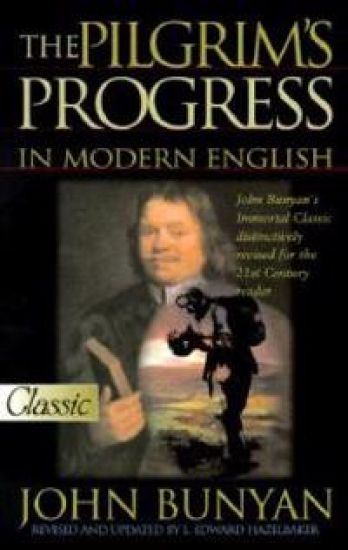
The Pilgrims Progress in Modern English
John Bunyan; L. Edward Hazelbaker
Van Schaik Publishers
1998
nidottu
Carefully revised in modern English, this modern classic includes Bunyan's original scripture references plus hundreds of additional references, chapter end-notes to help clarify scriptural and historical references, and an Index of words, meanings, titles, characters, and places. 50+ illustrations. Free audio excerpt download.
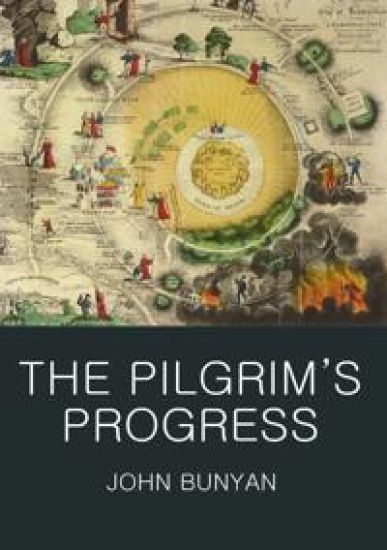
With an Introduction by Professor Stuart Sim. John Bunyan was variously a tinker, soldier, Baptist minister, prisoner and writer of outstanding narrative genius which reached its apotheosis in this, his greatest work. It is an allegory of the Christian life of true brilliance and is presented as a dream which describes the pilgrimage of the hero - Christian - from the City of Destruction via the Slough of Despond, the Hill of Difficulty, the Valley of the Shadow of Death and Vanity Fair over the River of the Water of Life and into the Celestial City. The Pilgrim's Progress has been translated into 108 languages, was a favourite of Dr Johnson and was praised by Coleridge as one of the few books which might be read repeatedly and each time with a new and different pleasure.
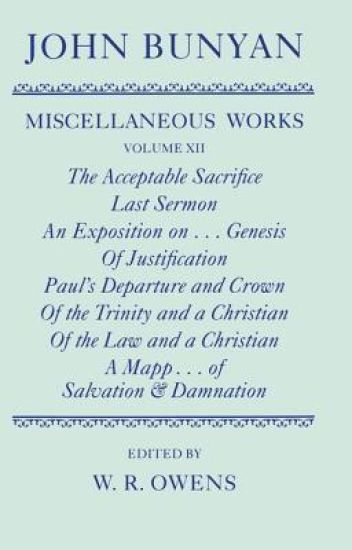
The Miscellaneous Works of John Bunyan: The Miscellaneous Works of John Bunyan
John Bunyan
Clarendon Press
1994
sidottu
Bunyan died in August 1688 from a fever contracted while riding to London in heavy rain. He had made the journey to deliver the manuscript of his latest work, The Acceptable Sacrifice to the press, and to preach to a Dissenting congregation in Whitechapel. Perhaps surprisingly, in view of his enormous popularity as a writer, Bunyan left unpublished a considerable number of manuscripts. These eventually passed into the hands of his close friend and disciple, Charles Doe, a comb-maker from Southwark who, in 1692, published twelve of them, together with ten other works, in a folio volume. Apart from The Acceptable Sacrifice and the Last Sermon, which are edited from first editions of 1689, texts of the other six works in the present volume are based on those in Doe's 1692 Folio. The most ambitious of these is a lengthy commentary on the first ten chapters of Genesis. No book of the Bible had attracted more attention from learned exegates, and the middle of the seventeenth century saw fierce controversies over its interpretation. Bunyan, though clearly aware of these great debates, seldom enters into them. Instead he offers a typological reading, enabling him to draw out the contemporary significance of the Genesis story for persecuted Dissenters.
The Miscellaneous Works of John Bunyan: Volume XIII: Israel's Hope Encouraged; The Desire of the Righteous Granted; The Saints Privilege and Profit; Christ a Compleat Saviour; The Saints Knowledge of Christ's Love; Of Antichrist, and His Ruine
John Bunyan
Clarendon Press
1994
sidottu
The six treatises which make up this concluding volume of Bunyan's Miscellaneous Works were all published posthumously, in the 1692 Folio edited by Charles Doe. Most of them seem to have been composed in the final ten years of his life, while he was the height of his fame as a preacher and writer. They are characteristic Bunyan productions, designed to edify, exhort, and comform the saints, and brimful of his conviction that the Christian pilgrimage is a strenuous affair, calling for constant vigilence, self-examination and courage. The theme of endurance under persecution is prominent, and in a late millenarian work, Of Antichrist, and His Ruine, Bunyan offers a sombre, but eloquent account of the approaching downfall of the great enemy of the ture church, the Antichrist. Unlike many of his contemporaries, Bunyan is careful not to name dates, or interpret the apocalyptic texts too literally, but a striking feature of this work is his belief that kings would be God's chosen intruments in the destruction of Antichrist.
The Miscellaneous Works of John Bunyan: The Miscellaneous Works of John Bunyan
John Bunyan
Clarendon Press
1990
sidottu
As defender of the faith and protector of his flock, at a time of great dissent on matters of theology and religious practice, Bunyan spent much of his energies on disputes, both in person and on the printed page. It was, indeed, such issues that had originally launched him into print in 1656-7 (see Volume I in this series). Six of Bunyan's controversial works, from a much later period of his life, are presented in the present volume. Bunyan directed the earliest of these works, A Defence of the Doctrine of Justification, by Faith (1672) at the latitudinarian rector Edward Fowler. A long-term dispute with some Baptists over open membership resulted in his A Confession of my Faith, and A Reason of my Practice (1672), Differences in Judgment About Water-Baptism, No Bar to Communion (1673) and Peaceable Principles and True (1674). Controversies concerning the status of women and the correct day for Sabbath observance led him to write A Case of Conscience Resolved (1683) and Questions About the Nature and Perpetuity of the Seventh-Day-Sabbath (1685). These polemical works display something of the rough and tumble world of the mechanick preachers of Bunyan's time. They add to our understanding of Bunyan's background, religious stance, and imaginative power and technique. They also reveal some of his personal human foibles.
The Miscellaneous Works of John Bunyan: Volume VII: Solomon's Temple Spiritualized, The House of the Forest of Lebanon, The Water of Life
John Bunyan
Clarendon Press
1989
sidottu
These treatises from Bunyan's last year, 1688, are edited from the first editions, one of which was published in his lifetime, and the other two posthumously. All three are variations on the traditional typological method of biblical interpretation, and reflect similar variations practised in the work of other nonconformist theologians and preachers of the day. They are of interest both to students of Bunyan's theology and the struggles of `the Church in the wilderness', and to students of his art - the methods he explored to embody his ideas imaginatively and to intensify the appeal of his teaching.
This first critical edition is one of few reprints of a book which was originally published in 1680, two years after The Pilgrim's Progress, when it was described by Bunyan as 'the Life and Death of the Ungodly, and their travel from this world to Hell', in contrast to Christian's journey to heaven. In fact, Badman is not a true sequel to the great allegory; rather, it is a very different book, a dark, coarse, vigorous delineation of provincial vice. From his apprenticeship until he becomes a prosperous shopkeeper, Badman gives free rein to greed, lust, and the exploitation of others, including his virtuous wife. Puritan moral abstraction is almost buried under realistic detail in a work which looks both back to the medieval homily and forward to the novel. It is an indispensable work for the study of seventeenth-century Puritan society and its mythology; as with the same editors' The Holy War, it contains a full introduction and commentary.
The Miscellaneous Works of John Bunyan: Volume X: Seasonable Counsel and A Discourse upon the Pharisee and the Publicane
John Bunyan
Clarendon Press
1988
sidottu
The treatises in this volume were first published when the persecution of nonconformists was reaching a fierce climax. Seasonable Counsel, subtitled Advice to Sufferers, presents Bunyan's reflections on how believers were to understand and respond to this experience. His own sufferings are reflected in his essentially practical discussion of the many issues raised and in the vigorous speech-based language of the mature preacher and writer. A Discourse upon the Pharisee and the Publicane is an exposition of the parable in Luke xviii. The work gives Bunyan's ultimate thoughts on justification by faith, which show a development from his earlier position. There is a shrewd analysis of the characters, with a lively and original discussion of body language. The introduction to this volume relates Bunyan's arguments and experience to their context, including contemporary ideas on persecution and toleration and on the connection between faith and justification.
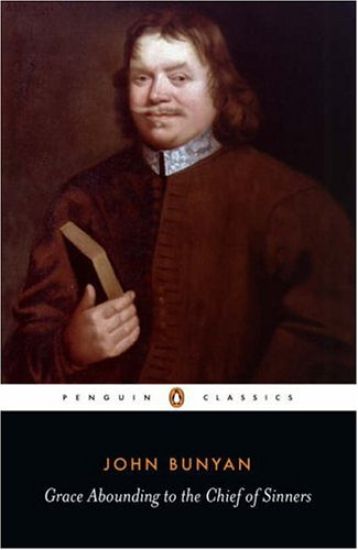
Composed and published while John Bunyan (1628-1688) was in prison for his religious principles, Grace Abounding is an extraordinary spiritual autobiography. It was written in an age when religious radicalism was regarded as socially subversive, and is a haunting, often harrowing and ultimately inspiring account of his inner life: his long struggle with and eventual triumph over doubt and despair, his spiritual regeneration and his subsequent emergence as a preacher and writer of great imaginative power. God and Satan are the chief protagonists in Bunyan's drama, existing not as theological concepts but as terrifyingly immediate adversaries in the competition for his soul. Yet he finds his spiritual defences in the Bible, and Grace Abounding charts his passionate and imaginative involvement with this ultimate source of wisdom.
The Miscellaneous Works of John Bunyan: Volume III: Christian Behaviour, The Holy City, The Resurrection of the Dead
John Bunyan
Clarendon Press
1987
sidottu
This edition, which will comprise thirteen volumes including an index volume, provides reliable scholarly texts for all Bunyan's miscellaneous writings, based on the earliest texts and Doe's Folio (1692).
The Miscellaneous Works of John Bunyan: Volume V: The Barren Fig-Tree, The Strait Gate, The Heavenly Foot-man
John Bunyan
Clarendon Press
1986
sidottu
A scholarly edition of The Miscellaneous Works of John Bunyan: Barren Fig-Tree; Strait Gate; Heavenly Footman by Graham Midgley. The edition presents an authoritative text, together with an introduction, commentary notes, and scholarly apparatus.