Kirjailija
John Burgess
Kirjat ja teokset yhdessä paikassa: 20 kirjaa, julkaisuja vuosilta 2007–2025, suosituimpiin kuuluu Deadly Secrets. Vertaile teosten hintoja ja tarkista saatavuus suomalaisista kirjakaupoista.
20 kirjaa
Kirjojen julkaisuvuodet: 2007–2025.
Why Read Pavel Florensky
John Burgess; Andrew Louth
THE CATHOLIC UNIVERSITY OF AMERICA PRESS
2024
nidottu
Halvin toimitettuna 38,20 €
This book offers an excellent, accessible introduction to the life and thought of Father Pavel Florensky, one of the most prominent religious philosophers of Russia's highly creative Silver Age at the beginning of the twentieth century. Florensky, an Orthodox priest, died in Stalin's gulag in 1937. His writings were long suppressed in the Soviet Union, and Western Protestant and Catholic theologians have known little about him. John Burgess argues that it is time to give Florensky his due. His worldview is as important today as it was during his lifetime: a deep sensitivity to the beauty of the natural world; a conviction that the religious cult—acts of worship and ritual—make human culture possible; and an understanding of the Christian faith as, above all, a way of seeing God's glorious presence in all of creation. The book takes a unique approach by examining Florensky not primarily as an academic philosopher but rather as an Orthodox priest and theologian, who speaks out of his personal religious experience to communicate the Christian faith to people who are seeking truth but do not yet know church life. The book makes an original contribution to Florensky scholarship and literature, especially in the United States, where his colleagues Sergei Bulgakov and Nicholas Berdiaev have been better known. John Burgess is a Protestant theologian who has lived and travelled in Russia, and has visited key places associated with Florensky. The author's experience, even as an outsider, of Orthodox worship and practice—its liturgical cycles, iconography, seasons of fasting and feasting, and monasteries and holy sites—has enabled him to understand Florensky's admonition that one must enter into Orthodoxy in order to understand it (and Florensky's) thinking.

Field Guide to Managing Diversity, Equality and Inclusion in Organisations
Subas Dhakal; Roslyn Cameron; John Burgess
EDWARD ELGAR PUBLISHING LTD
2022
sidottu

At the end of his first book, Life Luck and Liaisons, it was becoming apparent that sailing and travel were going to be essential ingredients in the life of John Burgess. In his teens, he had travelled the length and breadth of his homeland, New Zealand. Aged eighteen, he had travelled with a friend to Australia, hitch-hiking from Sydney to Mossman, north of Cairns. There followed a two-year sailing adventure across the Pacific and Asia. He knew that such an experience would not be his last. The seed was sown. This second book is a series of travel stories. His time spent in London in the swinging sixties and yacht racing in the English Channel and then discovering outback Australia after he finally settled in Sydney. There were excursions to fish for Barramundi in Kakadu and a camping trip with his son in the Kimberley. He travelled from Perth to Broome and on to Darwin as well as exploring Cairns to Cape York and Thursday Island. In the nineties, a sailing holiday in the West Indies reunited him with his English friend from sailing days in the UK. However, the most challenging sailing experience came later, as crew on an Australian yacht, sailing from the Maldives to Egypt. There were other travel experiences including driving around Mexico's Yucatan Peninsula at the time of the Chiapas uprising. In John's view, Cuba offers a travel experience not to be missed, although game safaris in Botswana, with a train ride through South Africa thrown in, would rank equally.
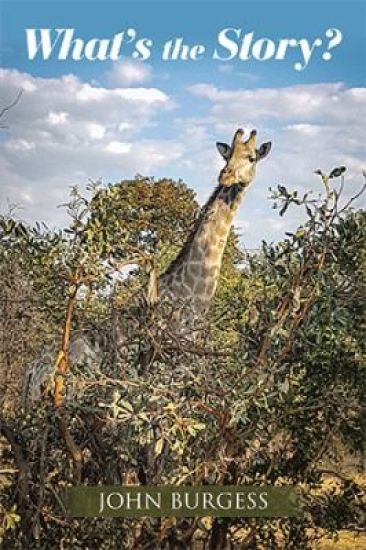
At the end of his first book, Life Luck and Liaisons, it was becoming apparent that sailing and travel were going to be essential ingredients in the life of John Burgess. In his teens, he had travelled the length and breadth of his homeland, New Zealand. Aged eighteen, he had travelled with a friend to Australia, hitch-hiking from Sydney to Mossman, north of Cairns. There followed a two-year sailing adventure across the Pacific and Asia. He knew that such an experience would not be his last. The seed was sown. This second book is a series of travel stories. His time spent in London in the swinging sixties and yacht racing in the English Channel and then discovering outback Australia after he finally settled in Sydney. There were excursions to fish for Barramundi in Kakadu and a camping trip with his son in the Kimberley. He travelled from Perth to Broome and on to Darwin as well as exploring Cairns to Cape York and Thursday Island. In the nineties, a sailing holiday in the West Indies reunited him with his English friend from sailing days in the UK. However, the most challenging sailing experience came later, as crew on an Australian yacht, sailing from the Maldives to Egypt. There were other travel experiences including driving around Mexico's Yucatan Peninsula at the time of the Chiapas uprising. In John's view, Cuba offers a travel experience not to be missed, although game safaris in Botswana, with a train ride through South Africa thrown in, would rank equally.
Angkor's Temples in the Modern Era
John Burgess
River Books
2021
nidottu
Halvin toimitettuna 29,70 €
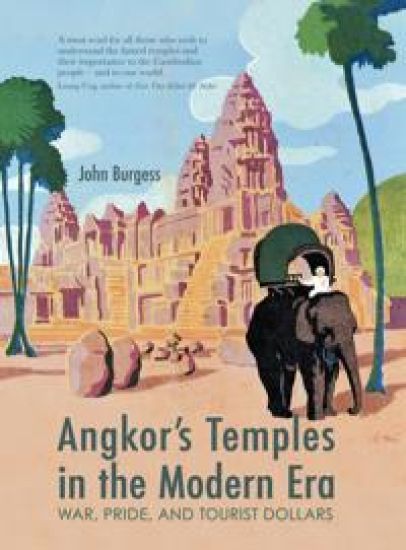
John Burgess masterfully brings to life the modern history of Cambodia's fabled Angkor temples, from their "discovery" by French explorers in the mid-19th century, through to the latter part of the 20th century, when celebrity visitors included a well-publicised one by Jackie Onassis and making Angkor one of the top 3 monuments to visit in the world. An invaluable and riveting book about one of the greatest man-made wonders in the world.
The fifties in New Zealand were glory days. It was a carefree time for children, whose parents were finally happy that the war was over. Everyone worked together to rebuild their lives and looked to the future. I helped my father when I could, spraying the orchards, harvesting, making hay and I attended a country school and mixed with local Maori families. Aged eleven I went to Boarding School in Auckland. It was a dramatic change and, along with my regular studies, I learnt to be independent and to think for myself. Upon leaving school, my parents had tertiary education in mind for me; I had in mind joining the workforce. My parents conceded and I left school with the intention to go farming. I worked on differing types of farms in New Zealand, followed by a stint in Australia, working on broadacre farming techniques. When I was sufficiently qualified, I began work with my father on the family farm in the Waikato region. After a period on the farm, I found that I was unable to work amicably with my father and I took my leave. For two years I crewed on two different yachts in the Pacific and Indonesian waters. This was a period of adventure and personal development which has provided many of the anecdotes I have related here. When I returned to the family farm, it was obvious that my father and I still could not work together. I left the farm for good and headed to the city to seek whatever came my way. I worked at several casual jobs until I could afford to travel and I flew to London with the promise of a job there. A new beginning, another book.
The fifties in New Zealand were glory days. It was a carefree time for children, whose parents were finally happy that the war was over. Everyone worked together to rebuild their lives and looked to the future. I helped my father when I could, spraying the orchards, harvesting, making hay and I attended a country school and mixed with local Maori families. Aged eleven I went to Boarding School in Auckland. It was a dramatic change and, along with my regular studies, I learnt to be independent and to think for myself. Upon leaving school, my parents had tertiary education in mind for me; I had in mind joining the workforce. My parents conceded and I left school with the intention to go farming. I worked on differing types of farms in New Zealand, followed by a stint in Australia, working on broadacre farming techniques. When I was sufficiently qualified, I began work with my father on the family farm in the Waikato region. After a period on the farm, I found that I was unable to work amicably with my father and I took my leave. For two years I crewed on two different yachts in the Pacific and Indonesian waters. This was a period of adventure and personal development which has provided many of the anecdotes I have related here. When I returned to the family farm, it was obvious that my father and I still could not work together. I left the farm for good and headed to the city to seek whatever came my way. I worked at several casual jobs until I could afford to travel and I flew to London with the promise of a job there. A new beginning, another book.
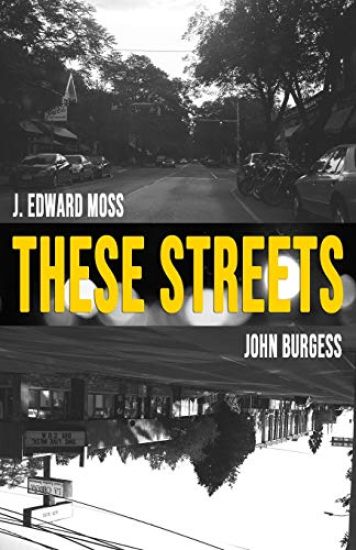
These Streets: Poems by Jordan Edward Moss & John Burgess
John Burgess; Jordan Edward Moss
Goldfish Press
2019
nidottu
INTRODUCTION The Symbiosis of Cities. Bill Evans sees the antithesis to the rush and grit of living in a city. It's as if time and motion for him were dialed back, projected in slow-mo so you can witness each blur, each passing moment, clearly and wide-eyed. "to slow it down..." Cities stand at collision points. Where geography and history, where native cultures and pioneer righteousness, where commerce and livelihood, run/ran head-on into each other. The wreckage can be disorientating. Experienced from inside bars, cities eventually become dark and grungy. The lounge pianist hitting chords and keys that alternately mimic/mock what's happening outside on these streets. We end up living in our own heads. "congruent with the city / and losing its context" When you choose to live in a city you choose improvisation, you choose collaboration. Communal and commiserate are common concerns. You react to what the other player lays down ahead of you, an action and reaction, a call and a response. "i sway when you sway" My nephew Jordan Edward Moss camped out along the Genesee River in Rochester, N. Y., near the shores of great Lake Ontario on ancestral lands of the Senecas of the Iroquois Nation. And I ensconced in the fort at Seattle, Wash., on the shores of Puget Sound on ancestral land of the Duwamish tribe. We are 2 poets riffing on shared titles from 2 cities on 2 shores. Responding to each other's lines with corresponding lines that complement and collide, dance like jazz musicians or slam like punks or stumble home like drunken beat poets. Stopping the rush for a moment to see what's left. -jb
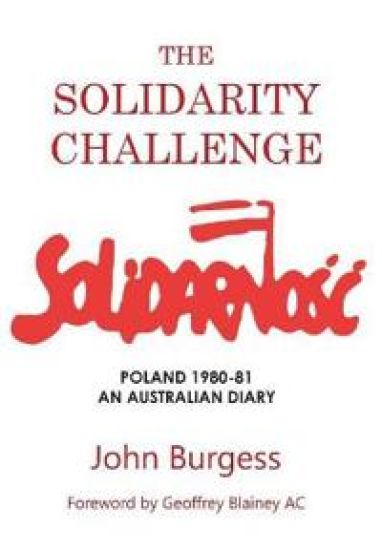
Late in September 1980, John Burgess arrived in Poland to head up the Australian Embassy in Warsaw. Little did he realise that he would witness major developments leading eventually to the end of communism in Poland and elsewhere in Eastern Europe, and dissolution of the Soviet Union. This book tells the story which Ambassador Burgess was able to witness personally at close quarters, from the emergence of the independent trade union, Solidarity, at the Lenin shipyards in Gdansk, until the imposition of martial law in December 1981 and beyond.

How can the Book of Confessions help elders and lay leaders when they face challenging situations within their congregations? John P. Burgess offers answers in Confessing Our Faith. Using the confessions as a framework, Burgess covers areas of ministry such as stewardship, evangelism, discipleship, and conflict resolution, offering in each case ways in which the lay leader can respond. A unique and practical reference, Confessing Our Faith is designed to aid church leaders in understanding how their work can be informed by the confessional documents.
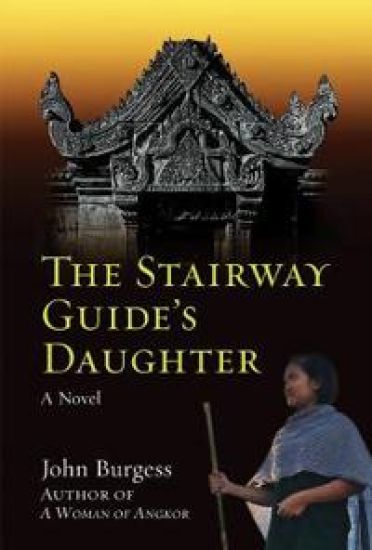
In twelfth century Cambodia, a young woman called Jorani earns her living guiding pilgrims up a two thousand-step stairway to the magnificent cliff-top temple, Preah Vihear. One day, she accidentally witnesses the furtive burning of sacred palm-leaf documents, and is drawn into a succession struggle at the temple. She is forced to choose between loyalty to family and to the son of the abbot, with whom she forms an unlikely bond. Set in the golden age of Cambodia's Angkor civilization, The Stairway Guide's Daughter brings to life a temple that is one of humankind's most remarkable creations of faith and architecture and is today a UNESCO World Heritage Site. Also available by John Burgess: A Woman of Angkor ISBN 9786167339252
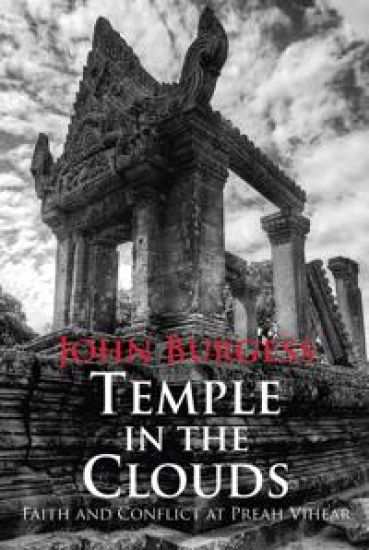
Perched atop a five-hundred-meter cliff in the far north of Cambodia, Preah Vihear ranks among the world's holiest sites. It was built a millennium ago as a shrine to Hindu god Shiva by the same civilization that gave the world Angkor Wat. Sadly, it has been transformed recently into a battlefield prize, first with Cambodian factions during the Cambodian civil war, and later (to present) it has been the focus of sometimes violent border disputes with Thailand. In Temple in the Clouds former Washington Post foreign correspondent John Burgess and author of two previous books on Cambodia, draws on extensive research in Cambodia, Thailand, France and the United States to recount the cliff top monument's full history, ancient and modern. He reveals previously unknown legal strategies and diplomatic manoeuvring behind a contentious World Court case of 1959-62 that awarded the temple to Cambodia. Written in a lively, accessible style, Temple in the Clouds brings new insight to one of Southeast Asia's greatest temples and most intractable border conflicts. With 50 photographs, plans and maps. Also by John Burgess: Stories in Stone: ISBN: 9786167339016; A Woman of Angkor ISBN: 9786167339252
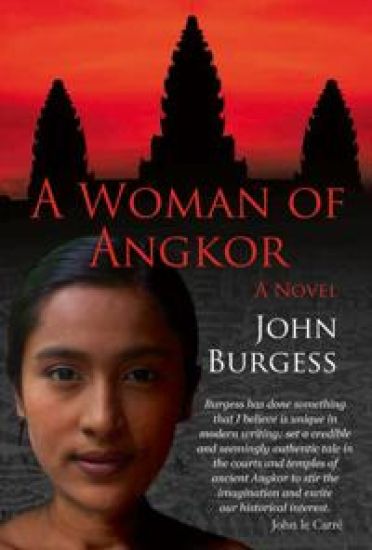
"Pure and beautiful, she glows like the moon behind clouds." The time is the 12th Century, the place Cambodia, birthplace of the lost Angkor civilisation. In a village behind a towering stone temple lives a young woman named Sray, whom neighbours liken to the heroine of a Hindu epic. Hiding a dangerous secret, she is content with quiet obscurity, but one rainy season afternoon is called to a life of prominence in the royal court. There her faith and loyalties are tested by attentions from the great king Suryavarman II. Struggling to keep her devotion is her husband Nol, palace confidante and master of the silk parasols that were symbols of the monarch's rank. This lovingly crafted first novel by former Washington Post correspondent John Burgess revives the rites and rhythms of the ancient culture that built the temples of Angkor, then abandoned them to the jungle. In telling her tale, Sray takes the reader to a hilltop monastery, a concubine pavilion and across the seas to the throne room of imperial China. She witnesses the construction of the largest of the temples, Angkor Wat, and offers an explanation for its greatest mystery - why it broke with centuries of tradition to face west instead of east.
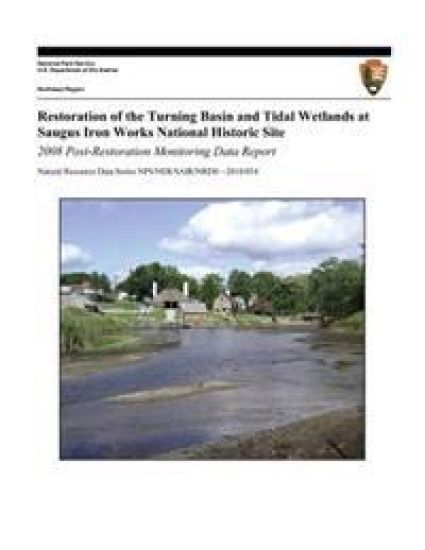
Restoration of the Turning Basin and Tidal Wetlands at Saugus Iron Works National Historic Site: 2008 Post-Restoration Monitoring Data Report
John Burgess; Charles T. Roman; Marc Albert
Createspace Independent Publishing Platform
2010
nidottu