Kirjojen hintavertailu – 12 903 725 kirjaa ja 27 kauppaa

Kirjailija

John Callow

Kirjat ja teokset yhdessä paikassa: 12 kirjaa, julkaisuja vuosilta 2000–2025, suosituimpiin kuuluu Gerald Gardner and the Creation of Wicca. Vertaile teosten hintoja ja tarkista saatavuus suomalaisista kirjakaupoista.

12 kirjaa

Kirjojen julkaisuvuodet: 2000–2025.

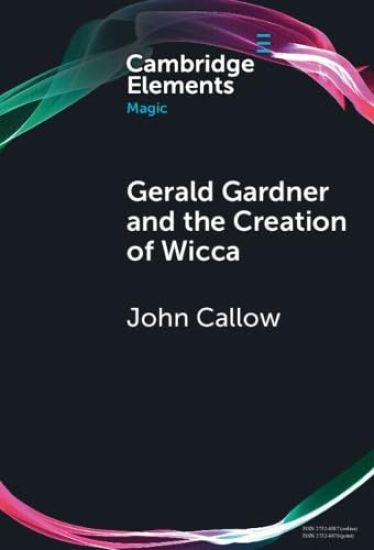
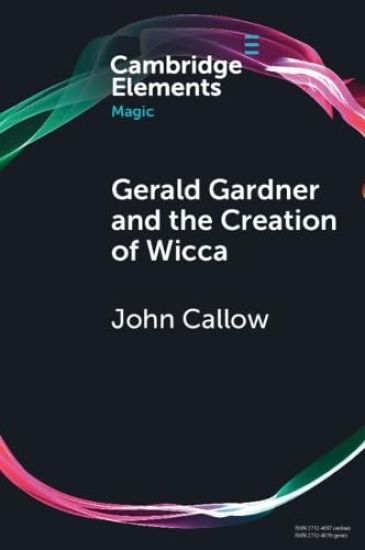
Gerald Gardner and the Creation of Wicca

Gerald Gardner and the Creation of Wicca

John Callow

Cambridge University Press
2025
nidottu
Gerald Gardner (1884–1964) provided the central inspiration for Wicca, as a modern, revived, form of Pagan witchcraft. As such, his cultural and religious significance has grown exponentially over the 60 years since his death. 'A Rough Magic' re-evaluates the sources of Gardner's inspiration, redefines his early life within the context of colonial Malaya and the opium trade, and emphasises his vision and ability in fashioning an entirely new synthesis of magical beliefs drawn from both Eastern and Western traditions. In so doing, he stripped away the demonic elements of witchcraft and emphasised Wicca as a creative, mutable and undogmatic nature religion, serving as both fertility cult and a unique source of personal empowerment, that was capable of transforming the world.
Gerald Gardner and the Creation of Wicca

Gerald Gardner and the Creation of Wicca

John Callow

Cambridge University Press
2025
sidottu
Gerald Gardner (1884–1964) provided the central inspiration for Wicca, as a modern, revived, form of Pagan witchcraft. As such, his cultural and religious significance has grown exponentially over the 60 years since his death. 'A Rough Magic' re-evaluates the sources of Gardner's inspiration, redefines his early life within the context of colonial Malaya and the opium trade, and emphasises his vision and ability in fashioning an entirely new synthesis of magical beliefs drawn from both Eastern and Western traditions. In so doing, he stripped away the demonic elements of witchcraft and emphasised Wicca as a creative, mutable and undogmatic nature religion, serving as both fertility cult and a unique source of personal empowerment, that was capable of transforming the world.
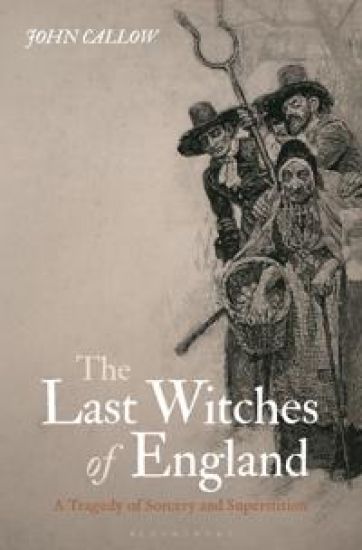
The Last Witches of England

The Last Witches of England

John Callow

BLOOMSBURY PUBLISHING PLC
2023
nidottu
"Fascinating and vivid." New Statesman"Thoroughly researched." The Spectator"Intriguing." BBC History Magazine"Vividly told." BBC History Revealed"A timely warning against persecution." Morning Star"Astute and thoughtful." History Today"An important work." All About History"Well-researched." The TabletOn the morning of Thursday 29 June 1682, a magpie came rasping, rapping and tapping at the window of a prosperous Devon merchant. Frightened by its appearance, his servants and members of his family had, within a matter of hours, convinced themselves that the bird was an emissary of the devil sent by witches to destroy the fabric of their lives. As the result of these allegations, three women of Bideford came to be forever defined as witches. A Secretary of State brushed aside their case and condemned them to the gallows; to hang as the last group of women to be executed in England for the crime. Yet, the hatred of their neighbours endured. For Bideford, it was said, was a place of witches. Though ‘pretty much worn away’ the belief in witchcraft still lingered on for more than a century after their deaths. In turn, ignored, reviled, and extinguished but never more than half-forgotten, it seems that the memory of these three women - and of their deeds and sufferings, both real and imagined – was transformed from canker to regret, and from regret into celebration in our own age. Indeed, their example was cited during the final Parliamentary debates, in 1951, that saw the last of the witchcraft acts repealed, and their names were chanted, as both inspiration and incantation, by the women beyond the wire at Greenham Common. In this book, John Callow explores this remarkable reversal of fate, and the remarkable tale of the Bideford Witches.

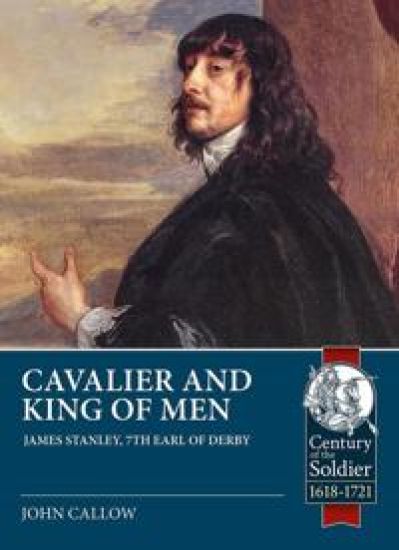
Cavalier and King of Man

Cavalier and King of Man

John Callow

Helion Company
2022
nidottu
James Stanley, 7th Earl of Derby, was a pivotal figure in the Civil War in Lancashire, between 1642-51, and in governance of North-West of England across a quarter of a Century. As Lord of the Isle of Man, he enjoyed quasi-royal powers and fostered a court culture on the island which expressed itself through poetry, plays, masques and conspicuous display. A religious visionary and man of letters, he was a supremely gifted peace time administrator who was suddenly thrown into the maelstrom of a civil war for which he was neither prepared nor militarily suited. He was a bright and reflexive courtier, conscious of the need for compromise, who was destroyed through his role in the massacre of Bolton, in 1644, and by the mistrust and ingratitude of successive Stuart monarchs. Triumphing at the battles of Warrington, he tasted bitter defeat at Sabden Brook and Wigan Lane. Yet he, more than perhaps anyone, was saviour of the Royalist cause after the Battle of Worcester, when he spirited the fugitive King Charles II to Boscobel Hall. Incredibly, ‘the Great Stanley’ has had no biographer until now. This book reveals him in his glory and his tragedy as Cavalier and Lord of Man.
The Last Witches of England

The Last Witches of England

John Callow

Bloomsbury Academic
2021
sidottu
"Fascinating and vivid." New Statesman"Thoroughly researched." The Spectator "Intriguing." BBC History Magazine"Vividly told." BBC History Revealed"A timely warning against persecution." Morning Star"Astute and thoughtful." History Today"An important work." All About History"Well-researched." The TabletOn the morning of Thursday 29 June 1682, a magpie came rasping, rapping and tapping at the window of a prosperous Devon merchant. Frightened by its appearance, his servants and members of his family had, within a matter of hours, convinced themselves that the bird was an emissary of the devil sent by witches to destroy the fabric of their lives. As the result of these allegations, three women of Bideford came to be forever defined as witches. A Secretary of State brushed aside their case and condemned them to the gallows; to hang as the last group of women to be executed in England for the crime. Yet, the hatred of their neighbours endured. For Bideford, it was said, was a place of witches. Though ‘pretty much worn away’ the belief in witchcraft still lingered on for more than a century after their deaths. In turn, ignored, reviled, and extinguished but never more than half-forgotten, it seems that the memory of these three women - and of their deeds and sufferings, both real and imagined – was transformed from canker to regret, and from regret into celebration in our own age. Indeed, their example was cited during the final Parliamentary debates, in 1951, that saw the last of the witchcraft acts repealed, and their names were chanted, as both inspiration and incantation, by the women beyond the wire at Greenham Common. In this book, John Callow explores this remarkable reversal of fate, and the remarkable tale of the Bideford Witches.
Our Mary

Our Mary

John Callow

LawrenceWishart Ltd
2019
sidottu
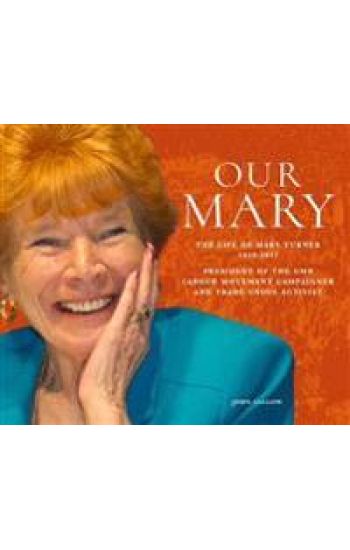
This biography tells the extraordinary story of Mary Turner (1938- 2017), the Brent dinner lady and trade union activist who rose to become president of the GMB union and chair of the Labour Party.
Embracing the Darkness

Embracing the Darkness

John Callow

I.B. Tauris
2017
sidottu
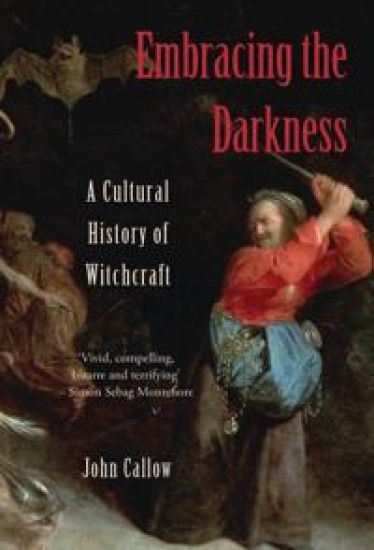
As dusk fell on a misty evening in 1521, Martin Luther - hiding from his enemies at Wartburg Castle - found himself seemingly tormented by demons hurling walnuts at his bedroom window. In a fit of rage, the great reformer threw at the Devil the inkwell from which he was preparing his colossal translation of the Bible. A belief - like Luther's - in the supernatural, and in black magic, has been central to European cultural life for 3000 years. From the Salem witch trials to the macabre novels of Dennis Wheatley; from the sadistic persecution of eccentric village women to the seductive sorceresses of TV's Charmed; and from Derek Jarman's punk film Jubilee to Ken Russell's The Devils, John Callow brings the twilight world of the witch, mage and necromancer to vivid and fascinating life. He takes us into a shadowy landscape where, in an age before modern drugs, the onset of sudden illness was readily explained by malevolent spellcasting. And where dark, winding country lanes could terrify by night, as the hoot of an owl or shriek of a fox became the desolate cries of unseen spirits. Witchcraft has profoundly shaped the western imagination, and endures in the forms of modern-day Wicca and paganism. Embracing the Darkness is an enthralling account of this fascinating aspect of the western cultural experience.
James II: King in Exile

James II: King in Exile

John Callow

The History Press Ltd
2017
nidottu
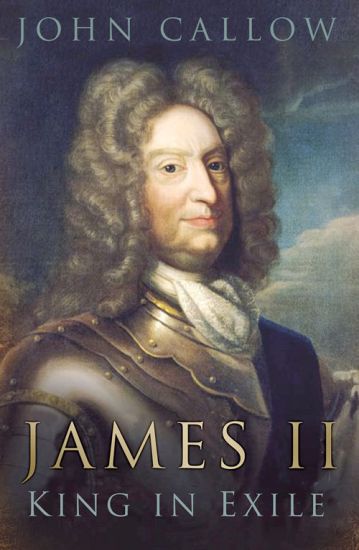
James II was Britain’s last Catholic king. The spectacular collapse of his regime in 1688 and the seizure of his throne by his nephew William of Orange are the best-known events of his reign. But what of his life after this? What became of him during his final exile? John Callow’s groundbreaking study focuses on this hitherto neglected period of his life: the twelve years he spent attempting to recover his crown through war, diplomacy, assassination and subterfuge. This is the story of the genesis of Jacobitism; of the devotion of the fallen king’s followers, who shed their blood for him at the battle of the Boyne and the massacre at Glencoe, gave up estates and riches to follow him to France, and immortalised his name in artworks, print, and song. Yet, this first ‘King Over the Water’ was far more than a figurehead. A grim, inflexible warlord and a maladroit politician, he was also a man of undeniable principle, which he pursued regardless of the cost to either himself or his subjects. He was an author of considerable talent, and a monarch capable of successive reinventions. Denied his earthly kingdoms, he finally settled upon attaining a heavenly crown and was venerated by the Jacobites as a saint. This powerful, evocative and original book will appeal to anyone interested in Stuart history, politics, culture and military studies.
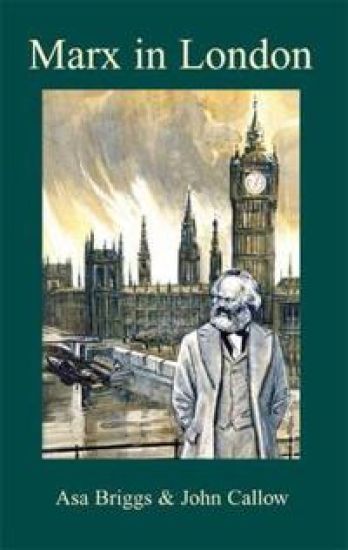
Marx in London

Marx in London

Asa Briggs; John Callow

Lawrence Wishart Ltd
2007
nidottu
Marx lived in London as a political exile from 1849 until his death in 1883. This book links the story of Marx's life in London to the places he lived and worked, and is aimed at visitors who are interested in seeing the places with which he was particularly associated. It is fully illustrated with photographs, maps and illustrations, and includes transport details to places of interest. Marx spent most of the first years in London in Soho, before moving to Kentish Town in 1856. Other places of significance to his life include the British Museum Reading Room, where he worked on Capital, Covent Garden, where the meetings of the First International took place, and Hampstead Heath, where Marx and his friends spent family Sundays.
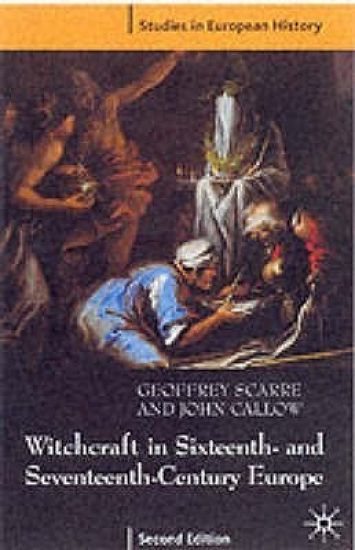
Witchcraft and Magic in Sixteenth- and Seventeenth-Century Europe

Witchcraft and Magic in Sixteenth- and Seventeenth-Century Europe

Geoffrey Scarre; John Callow

Red Globe Press
2001
nidottu

Halvin toimitettuna 44,00 €

The figure of the witch still has the ability to exert a powerful fascination on the modern mind. The vision of the elderly crone begging for charity at the crossroads, an object of fear and revulsion for her local community, has combined with the memory of prolonged judicial persecution and oppression to inspire contemporary movements as far removed from each other as Wiccans and women's liberation. In tackling such an emotive issue, where misogyny and violence combine with superstition and the basest of human instincts, Scarre and Callow chart a clear and refreshingly level-headed approach to the subject. Distinguishing between fact and fiction, they set the witch trials firnly back within the context of their own times and, without seeking to exonerate those responsible, demonstrate how it was possible for judiciaries and social elites to believe wholeheartedly in the reality and efficacy of witchcraft as a valid system of belief and as a dangerous threat to the fabric of society in which they lived. This new edition has been comprehensively updated to take account of the vast expansion in interest and scholarly research that has taken place in the field since the publication of the first edition. This work provides a provocative thesis for those seeking to understand the basis for the politics of persecution and a firm interpretative basis around which further exploratory research may be conducted.