
Kirjailija
John Calvin
Kirjat ja teokset yhdessä paikassa: 232 kirjaa, julkaisuja vuosilta 1845–2026, suosituimpiin kuuluu John. Vertaile teosten hintoja ja tarkista saatavuus suomalaisista kirjakaupoista.
232 kirjaa
Kirjojen julkaisuvuodet: 1845–2026.
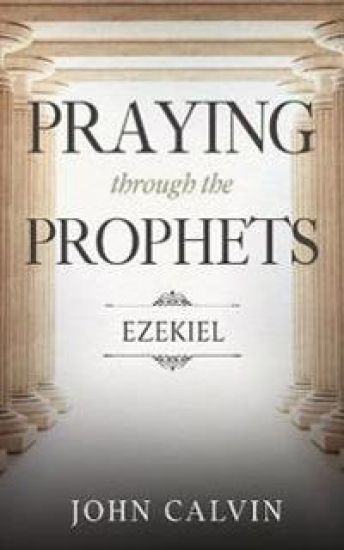
Old Testament Prophets. Dry? Boring? Irrelevant? I think not The Old Testament prophets were full of fire and passion for God. And so was John Calvin One of the guiding lights of the Reformation, John Calvin's preaching changed the lives of countless thousands. He is as relevant today as he was then. His teaching series through most of the Old Testament prophets was transcribed, and at the end of each one, was a prayer. And what a prayer This 8 book series of Calvin's prayers, is full of theological insight and wisdom. The reader cannot help but deepen their faith, and grow in knowledge as each Scripture is read, and each prayer is contemplated, and prayed. Fan into flame your dedication and devotion to God by taking serious time to read through these prayers and make them your own. Click to buy your copy today
"The Word of God leaves no half life to man, but teaches, that, in regard to life and happiness, he has utterly perished. Paul, when he speaks of our redemption, says not that the half dead are cured (Eph. 2:5, 6; 5:14) but that those who were dead are raised up." From Book II of the InstitutesInstitutes of the Christian Religion is one of the most important and straightforward works of theology ever written, yet so few people actually read it. The Christian Heritage Series presents all four books of the Institutes in complete, unabridged, easy-to-read volumes. John Calvin certainly writes good theology, but he also writes with beauty and clarity-and both these aspects are captured in Beveridge's translation. Calvin is concerned that readers not be puffed up with new knowledge, rather he wants us to be drawn to the majesty and holiness of God in order to know our sin and our need for grace. Read this classic to grow closer to God. Book 2 of the Institutes is about the knowledge of God the redeemer-Jesus Christ. Calvin captures the completeness of our redemption, explaining the depths of our sinfulness and the ways that Jesus Christ is present in both the old and new covenants. The law is a picture of Christ's righteousness, and the gospel is the declaration of Christ's redemption of us. Whether he's unpacking the ten commandments or describing Christ as prophet, priest, and king, Calvin makes Jesus and his work on the cross the center of our theology." Please remember that Calvin's goal in writing the Institutes was not to distill out of Scripture the "theology things" that we all ought to be thinking. To do so would be to attempt to replace Scripture. Rather, his goal was to give us a map so that we could run back into Scripture and better understand what we find there. And as we read book II of the Institutes, what we find is that throughout Scripture what we should always see is Christ set before us." From Ben Merkle's Introduction
"What accords better and more aptly with faith than to acknowledge ourselves divested of all virtue that we may be clothed by God, devoid of all goodness that we may be filled by Him, the slaves of sin that He may give us freedom, blind that He may enlighten, lame that He may cure, and feeble that He may sustain us; to strip ourselves of all ground of glorying that He alone may shine forth glorious, and we be glorified in him?" From Book I of the InstitutesInstitutes of the Christian Religion is one of the most important and straightforward works of theology ever written, yet so few people actually read it. The Christian Heritage Series presents all four books of the Institutes in complete, unabridged, easy-to-read volumes. John Calvin certainly writes good theology, but he also writes with beauty and clarity-and both these aspects are captured in Beveridge's translation. Calvin is concerned that readers not be puffed up with new knowledge, rather he wants us to be drawn to the majesty and holiness of God in order to know our sin and our need for grace. Read this classic to grow closer to God. Book 1 of the Institutes is about the knowledge of God the creator. As Calvin observes, the knowledge of God and the knowledge of man are inextricably intertwined, and if we are to know ourselves rightly, we must have a knowledge of God's holiness and majesty. However, since the human mind is an idol factory, our knowledge is so tainted and dim that we live in death and ignorance unless God's grace intervenes. Here Calvin discusses God, natural law, human sinfulness, Scripture, the Trinity, and providence." Of those shelved classics warranting a dusting off, Book I of Calvin's Institutes is among the most deserving. This is not because it offers much that is new; the treasures Calvin offers are not those to be unearthed only through possession of secret coordinates. As with so many literary gems, the trouble is not a lack of access but a dearth of appreciation for what lies hidden in plain sight, the contents more assumed than actually explored. The reader who takes the time to ponder the riches here will not be disappointed. He will find that this is not just a good old book, worth reading solely for its inherent literary value. More than this, it is a volume with critical import for today, as its pages soundly sketch the realm, made visible by divine revelation, that conditions our present situation." From Timothy G. Harmon's Introduction
This is the classic commentary by the French Reformer John Calvin. It has been translated to English and includes all Hebrew, Greek words, a linked table of contents, and hyperlinked footnotes.

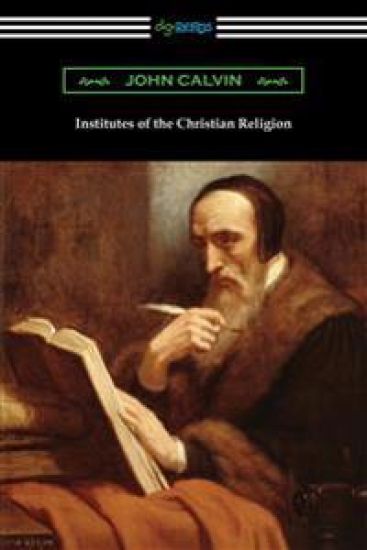
Focusing his writing on the Papal church and taking a direct Biblical approach, Calvin wrote this magnum opus to lay out what it means to be a Christian and also the core beliefs that every believer should hold on to. Although the contents in this book have been debated hotly for many centuries, the fact remains that without this text we would not have the diversity that exists within the church today. Many other Protestant writers wrote their own theology texts to counter the claims about scripture that Calvin wrote about in here. Now in larger print
John Calvin's Sermons on the Ten Commandments
John Calvin; Ford Lewis Battles
Wipf Stock Publishers
2019
pokkari
A collection of sixteen sermons by John Calvin that shed light on his understanding and application of the Ten Commandments. Widely known as one of the church's most significant theologians, John Calvin was also a skilled preacher with the ability to proclaim biblical truth with power and relevance. These sermons develop the essence of his teaching on the moral law in a popular and engaging manner. Pastors preaching through the Ten Commandments, Bible students, and anyone interested in Calvin's views on the Ten Commandments will take great delight in reading his exposition of the Decalogue, which is called ""the true and eternal rule of righteousness for all] who wish to conform their lives to God's will.""
John Calvin's Sermons on the Ten Commandments
John Calvin; Ford Lewis Battles
Wipf Stock Publishers
2019
sidottu
A collection of sixteen sermons by John Calvin that shed light on his understanding and application of the Ten Commandments. Widely known as one of the church's most significant theologians, John Calvin was also a skilled preacher with the ability to proclaim biblical truth with power and relevance. These sermons develop the essence of his teaching on the moral law in a popular and engaging manner. Pastors preaching through the Ten Commandments, Bible students, and anyone interested in Calvin's views on the Ten Commandments will take great delight in reading his exposition of the Decalogue, which is called "the true and eternal rule of righteousness for all] who wish to conform their lives to God's will."
Calvin's Calvinism A Translation of 1. The Eternal Predestination of God 2. The Secret Providence of God By John Calvin and translated by Henry Cole, D. D. This unique book constitutes the only original writings of John Calvin devoted ""expressly, exclusively, and purposely"" to the capital ""Calvinistic"" doctrines of The Eternal Predestination of God, and The Secret Providence of God. They are Calvin's own testimony and real mind concerning the doctrines of God's electing, predestinating and sovereign grace, constitute his own exposition and expression of faith, and beautifully display the spirit in which he held and taught these great Biblical truths. These important treatises were published in 1552 and 1558 respectively and lay locked in the original language of Calvin's day until translated by Henry Cole, D. D., 300 years later in 1856 under the present title of Calvin's Calvinism. The first treatise on Eternal Predestination consists of 131 pages; the second on Secret Providence covers 127 pages, the later embracing arguments (Calumnies) against Calvin and his refutation of each particular point. Illuminating ""Dedicatory Prefaces"" and prefaces by the translator add significance to the main content of this important volume. John Calvin (1509-1564) was a French reformer and theologian. His theological insight, exegetical skill, knowledge of languages, and his clear style made him the most influential writer among the reformers. His Institutes of the Christian Religion remains an important source of theological study and reflection.
The third volume of John Calvin's Harmony of the Law, which is a four volume set on the books of Exodus, Leviticus, Numbers and Deuteronomy. Unlike typical commentaries that take each verse and chapter as they come in the Bible, these commentaries take you through the four books of the Law as they come up with each topic. As each topic is thought of and discussed, Calvin takes us across all four the books of the Hebrew Law to teach us about the value of the Old Law and what it can teach us today. In today's church there is a lot of people wondering what value the Old Testament beliefs hold for us but Calvin shows that they are as important as they were when Calvin first wrote during the reformation. This book continues the study of the Ten Commandments and all the laws and practices that are related to each of the laws.
Reproduction of the original: Institutes of the Christian Religion by John Calvin