Kirjailija
John Carey
Kirjat ja teokset yhdessä paikassa: 46 kirjaa, julkaisuja vuosilta 1990–2025, suosituimpiin kuuluu The Connell Guide to William Golding's Lord of the Flies. Vertaile teosten hintoja ja tarkista saatavuus suomalaisista kirjakaupoista.
46 kirjaa
Kirjojen julkaisuvuodet: 1990–2025.
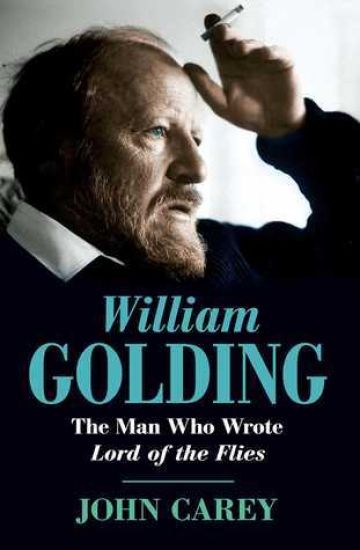
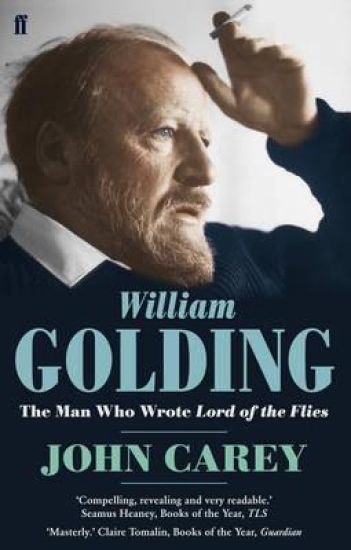
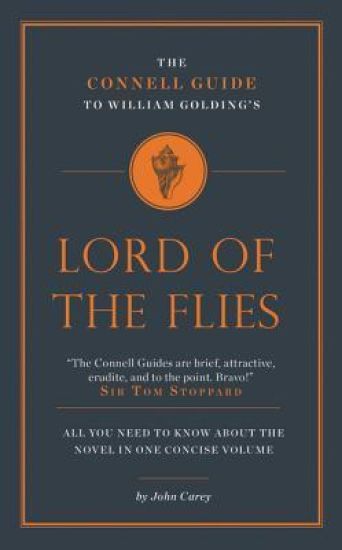
In 1954 William Golding was 43 years old and a nobody. He had been demobbed from the navy at the end of World War Two and returned to his pre-war job teaching English at Bishop Wordsworth's School in Salisbury. Always hard up, he lived in what he called a "lousy council flat" with his wife, Ann, and their two young children. In 1952 he finished the novel that was to become Lord of the Flies, and sent it to five publishers and a literary agency. They all rejected it. The sixth publisher he tried was Faber and Faber, and the professional reader wrote her opinion on the typescript: "Time the Future. Absurd & uninteresting fantasy about the explosion of an atom bomb on the Colonies. A group of children who land in jungle country near New Guinea. Rubbish & dull." But the novel was rescued from the reject pile by a new recruit to Faber, and when it was finally published in September 1954 the poet Stevie Smith greeted it as "this beautiful and desperate book". In the early 1960s cultural commentators noted that Lord of the Flies was replacing Salinger's Catcher in the Rye as the bible of the American adolescent. Its anti-war tenor helped to ensure its profound impact on the young at a time when the Cold War was hotting up. Since then, his masterpiece has established itself as a modern classic. In this short, compelling guide, John Carey tells us how and why.
Farewell Sermon, Preached in the Episcopal Churches, St. John, N. B. on Sunday, 7th September, 1840
John Carey
Antigonos Verlag
2025
nidottu
A collection of John Carey’s greatest, wisest, and wittiest reviews—amassed over a lifetime of writing In 1977, newly installed as a professor of English at Oxford, John Carey took the position of chief reviewer for the Sunday Times. In a career spanning over 40 years and upwards of 1,000 reviews, Carey has kept abreast of the brightest and best books of the day, distilling his thoughts each week for the entertainment of Sunday readers. Contained in this volume is the cream of that substantial crop: a choice selection of the books which Carey has most cherished. Covering subjects as diverse as the science of laughter, the art of Grayson Perry, the history of madness, and Sylvia Plath’s letters, this is a collection of treats and surprises, suffused with careful thought, wisdom, and enjoyment. The result is a compendium of titles that have stood the test of time, offered with Carey’s warmest recommendation.
A wonderfully readable anthology of our greatest poetry, chosen by the author of A Little History of Poetry “Does anyone know more about poetry than John Carey? Almost certainly not.”—The Times A poem seems a fragile thing. Change a word and it is broken. But poems outlive empires and survive the devastation of conquests. Celebrated author John Carey here presents a uniquely valuable anthology of verse based on a simple principle: select the one-hundred greatest poets from across the centuries, and then choose their finest poems. Ranging from Homer and Sappho to Donne and Milton, Plath and Angelou, this is a delightful and accessible introduction to the very best that poetry can offer. Familiar favorites are nestled alongside marvelous new discoveries—all woven together with Carey’s expert commentary. Particular attention is given to the works of female poets, like Christina Rossetti and Charlotte Mew. This is a personal guide to the poetry that shines brightest through the ages. Within its pages, readers will find treasured poems that remain with you for life.
'Among the wealthy elders, my views gave some offence. Two or three people walked out of my lecture in Hamburg. At a dinner in Oldenburg I was seated next to a senior academic who berated me for my leftist leanings - not what he expected of an Oxford professor...'John Carey, best known for his provocative stance on the arts and the academic establishment, looks back on his journey from an ordinary background to Oxford's oldest literary professorship. Books formed the backbone of his life: from Biggles in his boyhood home to G. K. Chesterton in his West London grammar school to rigorous scholarship on Milton, Donne and many others. In this warm and funny memoir, he remembers afresh his encounters with the great (and not so great) works of English literature - the rewards, fulfilment and sheer pleasure to be found there.
In 1953, William Golding was a provincial schoolteacher writing books on his breaks, lunch hours and holidays. His work had been rejected by every major publisher--until an editor at Faber and Faber pulled his manuscript off the rejection pile. This was to become Lord of the Flies, a book that would sell in the millions and bring Golding worldwide recognition. Golding went on to become one of the most popular and influential British authors to have emerged since World War II. He received the Booker Prize for the novel Rites of Passage in 1980, and the Nobel Prize for Literature in 1983. Stephen King has stated that the Castle Rock in Lord of the Flies continues to inspire him, so much so that he named his entertainment company after it and has placed the Golding novel prominently in his novels Hearts in Atlantis and Cujo. Golding has been called a British Vonnegut--disheveled and darkly humorous, perverse when it would have been easier to be bitter, bitter when it would have been easier to be lazy, sometimes more disturbing than he is palatable and above all fascinating beyond measure. Yet despite the fame and acclaim, the renowned author saw himself as a monster--a reclusive depressive ruled by his fears and a man who battled alcoholism throughout his life. In addition to being a schoolteacher, Golding was a scientist, a sailor and a poet before becoming a bestselling author, and his embitterment and alienation, his family, the women in his past, along with his experiences in the war, inform his work. This is the first book to unpack the life and character of a man whose entire oeuvre dealt with the conflict between light and dark in the human soul, tracing the defects of society back to the defects of human nature itself. Drawing almost entirely on materials that have never before been made public, John Carey sheds new light on Golding. Through his exclusive access to Golding's family, Carey uses hundreds of letters, unpublished works and Golding's intimate journals to draw a revelatory and definitive portrait. An acclaimed critic, Carey enriches crucially our appreciation of the literary work of Golding, bringing us, as the best literary biographies do, back to the books. And with equal parts lyricism and driving emotion, Carey brings to light a life that is extraordinary to the point of transcendent and a writer who trusted the imagination above all things.
William Golding was born in 1911 and educated at his local grammar school and Brasenose College, Oxford. He published a volume of poems in 1934 and during the war served in the Royal Navy. Afterwards he returned to being a schoolmaster in Salisbury. Lord of the Flies, his first novel, was an immediate success, and was followed by a series of remarkable novels, including The Inheritors, Pincher Martin and The Spire. He won the Booker Prize for Rites of Passage in 1980, was awarded the Nobel Prize for Literature in 1983, and was knighted in 1988. He died in 1993.
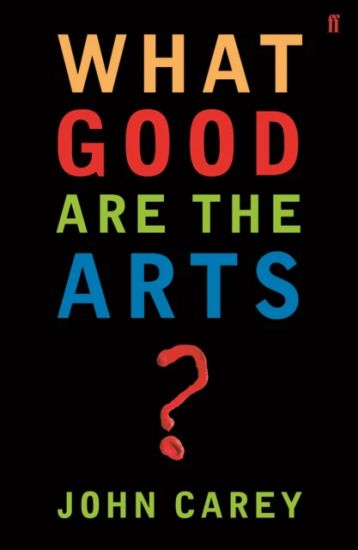
Hailed as "exhilarating and suggestive" (Spectator), "thought-provoking and entertaining" (David Lodge, Sunday Times), and "incisive and inspirational" (Guardian), What Good are the Arts? offers a delightfully skeptical look at the nature of art. John Carey--one of Britain's most respected literary critics--here cuts through the cant surrounding the fine arts, debunking claims that the arts make us better people or that judgments about art are anything more than personal opinion. But Carey does argue strongly for the value of art as an activity and for the superiority of one art in particular: literature. Literature, he contends, is the only art capable of reasoning, and the only art that can criticize. Literature has the ability to inspire the mind and the heart towards practical ends far better than any work of conceptual art. Here then is a lively and stimulating invitation to debate the value of art, a provocative book that "anyone seriously interested in the arts should read" (Michael Dirda, The Washington Post).
An exploration of the strange poetry of Dickens's imagination by leading academic and critic John Carey. Setting aside the usual interpretations of Dickens's work, A Violent Effigy delves into the wonderful, terrible fantasy world it inhabited. It shows Dickens torn between the appeal of violence and a fanatical orderliness: he was attracted by characters who commit murder or burst into flame or want to eat one another, but also required people soaped and regimented. The children he created were either the pious gnomes beloved of Victorian readers or callous, sharp-nosed children who pick out adults by the odd personal atmospheres they carry around. Among his females are mythic women whose insidious miniature weapons - needles, scissors - threaten the dominant male. He created a shadow-land between life and death, peopled by effigies, walking coffins, waxworks, stuffed creatures and disturbingly animated corpses. John Carey skilfully shows how Dickens demolished Victorian shams, while keeping at bay the terrors of his fantasy. He celebrates, above all, Dickens' peculiar genius for renewing the world by the curious lights he saw in it.
From one of the country's most eminent reviewers and academics, a delightfully sceptical and devastatingly intelligent assessment of the true value of art.
Hailed as "exhilarating and suggestive" (Spectator), "thought-provoking and entertaining" (David Lodge, Sunday Times), and "incisive and inspirational" (Guardian), What Good are the Arts? offers a delightfully skeptical look at the nature of art. John Carey--one of Britain's most respected literary critics--here cuts through the cant surrounding the fine arts, debunking claims that the arts make us better people or that judgments about art are anything more than personal opinion. But Carey does argue strongly for the value of art as an activity and for the superiority of one art in particular: literature. Literature, he contends, is the only art capable of reasoning, and the only art that can criticize. Literature has the ability to inspire the mind and the heart towards practical ends far better than any work of conceptual art. Here then is a lively and stimulating invitation to debate the value of art, a provocative book that "anyone seriously interested in the arts should read" (Michael Dirda, The Washington Post).
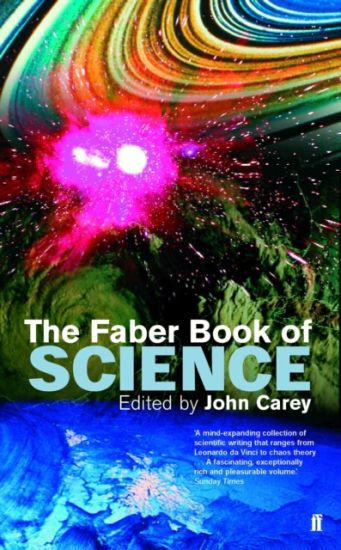
The Faber Book of Science introduces hunting spiders and black holes, gorillas and stardust, protons, photons and neutrinos. In his acclaimed anthology, John Carey plots the development of modern science from Leonardo da Vinci to Chaos Theory. The emphasis is on the scientists themselves and their own accounts of their breakthroughs and achievements. The classic science-writers are included - Darwin, T. H. Huxley and Jean Henri Fabre tracking insects through the Provencal countryside. So too are today's experts - Steve Jones on the Human Genome Project, Richard Dawkins on DNA and many other representatives of the contemporary genre of popular science-writing which, John Carey argues, challenges modern poetry and fiction in its imaginative power.
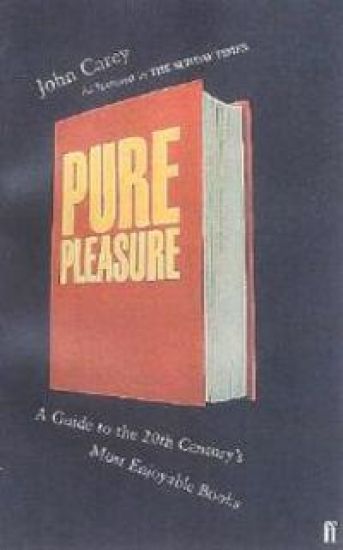
Pure Pleasure gives us fifty of the most enjoyable books of the twentieth century, chosen on a single principle - the pleasure they inspire. Pure Pleasure is an idiosyncratic antidote to the 'definitive' lists of twentieth-century classics. John Carey, one of Britain's most respected literary critics, has unearthed some overlooked gems which show the century's great authors in a new light. The result is a wonderful and witty guide for anyone looking for new recommendations or for a discussion of books they already know and love. First published weekly in the Sunday Times as 'John Carey's Books of the Century', the accompanying essays generated intense reader interest, and this collection includes a discussion of the letters of applause, outrage, debate and dissent they provoked.
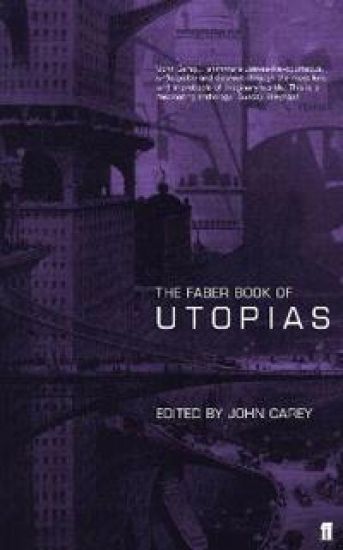
Every age has its utopias, from Plato's Republic to contemporary sci-fi visions. In this spellbinding anthology John Carey charts the course of every conceivable dream world - whether communist, fascist, anarchist, green, golden age, techno-fantastic or hermaphroditic - combining a broad historical sweep with lively variety. An experienced and imaginative anthologist, editor of The Faber Book of Reportage and The Faber Book of Science, Carey has gathered together a vast range of texts from Ancient Egypt to modern California, the authors of which, in different ways, attempt to describe a better world than our own.
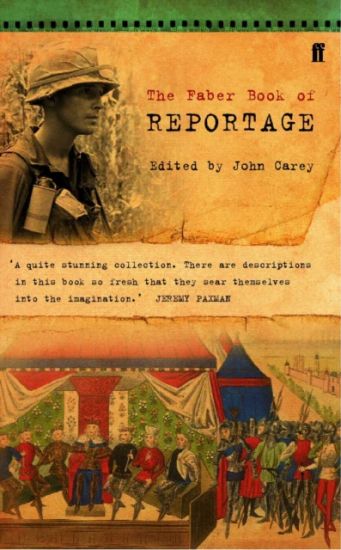
***FEATURED ON BBC 2's BETWEEN THE COVERS WITH SARA COX***The Faber Book of Reportage is John Carey's remarkable collection of eyewitness accounts that draws on the voices and emotions of the people who experienced some of history's most memorable events.'Stunning . . . There are descriptions in this book so fresh that they sear themselves into the imagination.'JEREMY PAXMAN'Fascinating - there's funny stuff, interesting stuff, loads of brilliant stuff really.'JO BRAND (on BBC 2's Between the Covers)What was it like to be caught in the firestorm that destroyed Pompeii? To have dinner with Attila the Hun? To watch the charge of the Light Brigade? To see the Titanic slide beneath the waves? John Carey's best-selling Faber Book of Reportage draws its eyewitness account from memoirs, travel books and newspapers. This is history with the varnish removed.
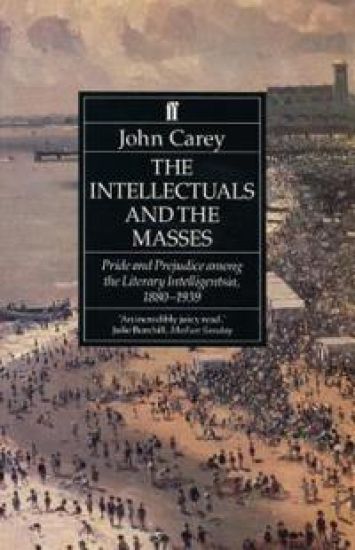
Professor John Carey shows how early twentieth-century intellectuals imagined the 'masses' as semi-human swarms, drugged by popular newspapers and cinema, and ripe for extermination. Exposing the revulsion from common humanity in George Bernard Shaw, Ezra Pound, D. H. Lawrence, E. M. Forster, Virginia Woolf, H. G. Wells, Aldous Huxley, W. B. Yeats and other canonized writers, he relates this to the cult of the Nietzschean Superman, which found its ultimate exponent in Hitler. Carey's assault on the founders of modern culture caused consternation throughout the artistic and academic establishments when it was first published in 1992.
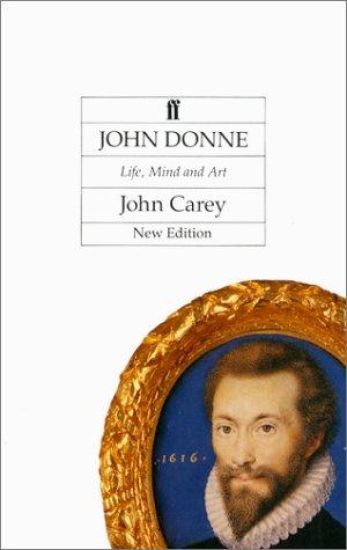
An examination of the life and work of John Donne. The book begins with an account of Donne's life and takes as its domain not only the whole range of poetry, but also the sermons, the letters, the spiritual and controversial works, and such highly personal documents as the treatise on suicide.
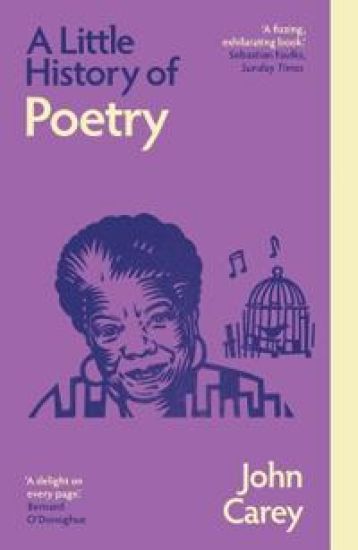
A Little History of Poetry
John Carey
YALE UNIVERSITY PRESS
2025
pokkari
Halvin toimitettuna 21,80 €
A vital guide to poetry from ancient times to the present Poetry is language made special, so that it will be remembered and valued. It does not always work – over the centuries countless thousands of poems have been forgotten. This Little History is about some that have not. John Carey tells the stories behind the world’s greatest poems, from the oldest surviving one written nearly 4,000 years ago to those being written today. Carey looks at poets whose works shape our view of the world – such as Shakespeare, Whitman and Yeats – and more recent poets like Sylvia Plath, Seamus Heaney, and Marianne Moore who have started to question what makes a poem ‘great’ in the first place. Little Histories – Inspiring Guides for Curious Minds
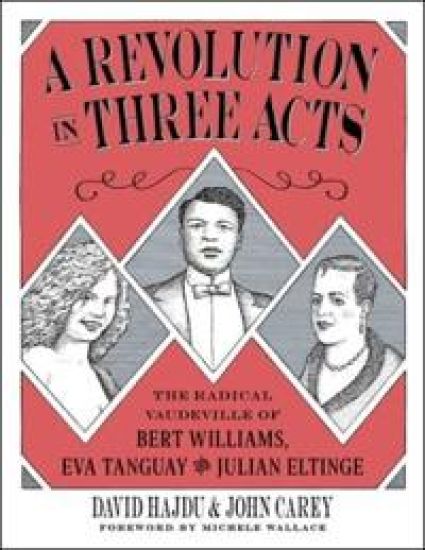
A Revolution in Three Acts
David Hajdu; John Carey; Michele Wallace
Columbia University Press
2023
pokkari
Winner - 2022 Deems Taylor / Virgil Thomson Book Awards in Pop from the American Society of Composers, Authors, and PublishersBert Williams—a Black man forced to perform in blackface who challenged the stereotypes of minstrelsy. Eva Tanguay—an entertainer with the signature song “I Don’t Care” who flouted the rules of propriety to redefine womanhood for the modern age. Julian Eltinge—a female impersonator who entranced and unnerved audiences by embodying the feminine ideal Tanguay rejected. At the turn of the twentieth century, they became three of the most provocative and popular performers in vaudeville, the form in which American mass entertainment first took shape. A Revolution in Three Acts explores how these vaudeville stars defied the standards of their time to change how their audiences thought about what it meant to be American, to be Black, to be a woman or a man. The writer David Hajdu and the artist John Carey collaborate in this work of graphic nonfiction, crafting powerful portrayals of Williams, Tanguay, and Eltinge to show how they transformed American culture. Hand-drawn images give vivid visual form to the lives and work of the book’s subjects and their world. This book is at once a deft telling of three intricately entwined stories, a lush evocation of a performance milieu with unabashed entertainment value, and an eye-opening account of a key moment in American cultural history with striking parallels to present-day questions of race, gender, and sexual identity.