
Kirjailija
John Cherry
Kirjat ja teokset yhdessä paikassa: 12 kirjaa, julkaisuja vuosilta 1992–2019, suosituimpiin kuuluu Side-by-Side Survey. Vertaile teosten hintoja ja tarkista saatavuus suomalaisista kirjakaupoista.
12 kirjaa
Kirjojen julkaisuvuodet: 1992–2019.
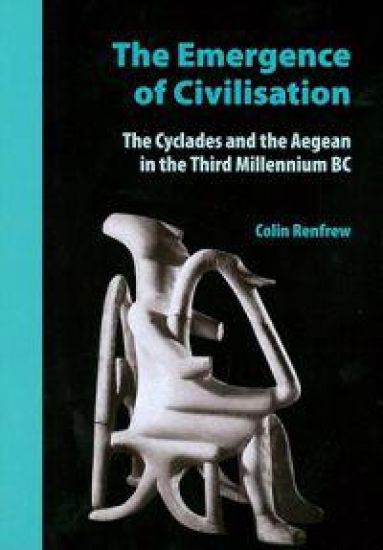
Unavailable for too long, this new edition reprints the original text of Renfrew's groundbreaking study, supplemented with a new introduction by the author and a foreword by John Cherry, in order to make this landmark publication available once again to the scholarly community.
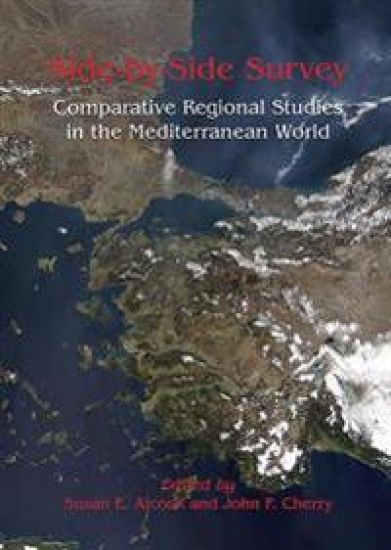
more than twenty-five years ago, John Cherry looked forward to the day when archaeological survey projects working around the Mediterranean region (the 'Frogs round the pond') would begin to compare and synthesize the information they had collected. He anticipated researchers tackling big questions of inter-regional scope in new and interesting ways, working at a geographical scale considerably larger than that of the individual survey. Was his optimism misplaced? Despite the extraordinary growth of interest in field survey projects and regional analysis, and despite the developments in survey methodology that have been discussed and implemented in the past two decades, few scholars have attempted to use survey data in a comparative mode and to answer the broad-scale questions confronting social historians. In this volume, which is the outcome of an advanced Workshop held at the University of Michigan in 2002, a number of prominent archaeologists return to the question of comparability. They discuss the potential benefits of working in a comparative format, with evidence from many different Mediterranean survey projects, and consider the practical problems that present roadblocks to achieving that objective. From mapping and manuring to human settlement and demography, environment and culture, each addresses different questions, often with quite different approaches; together they offer a range of perspectives on how to put surveys "side-by-side". Contributors include Susan E Alcock, John Cherry, Jack L Davis, Peter Attema, Martijn van Leusen, James C Wright, Robin Osborne, David Mattingly, T J Wilkinson, and Richard E Blanton.
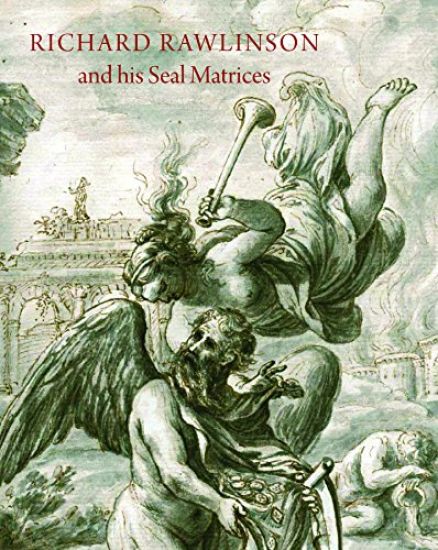
The Rawlinson collection of seal matrices in the University of Oxford is the most important early collection of European seal matrices to survive. Created by Dr Richard Rawlinson (1690-1755) in the first half of the eighteenth century, it consists of 830 matrices ranging in date from the 13th to the early 18th century. It includes the collection of seal matrices formed by Giovanni Andrea Lorenzani, a Roman bronze caster, which Rawlinson acquired in Rome together with a catalogue written in 1708. This collection is primarily Italian, but the Rawlinson collection also includes examples from many other countries England, Wales, Scotland, Ireland, France, Germany Spain, and Scandinavia as well as Italy. The study of seals was much neglected in the middle of the twentieth century, but the study now attracts greater interest. This is due to their visual appeal, sense of identity and their representation of symbols. This book will appeal to a wide variety of readers from those interested in collecting, Jacobitism, history of the early eighteenth century, the Grand Tour, antiquaries, and seals and seal matrices. This book has four introductory chapters which set the scene for the collecting of seal matrices, tell the life of Richard Rawlinson and Giovanni Andrea Lorenzani, analyse their collections and relate the history of the collection after Rawlinson's death in 1755. One hundred seals, all illustrated, are described in detail, with much unpublished data, and an indication is given of the contribution they make to the sigillography of the different countries.
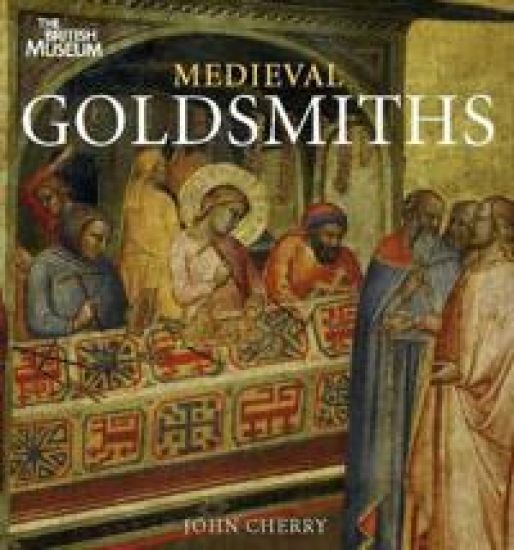
Goldsmiths were among the most highly regarded craftsmen in the medieval world, making extravagant objects from precious gold and silver, often enriched with rare stones and engraved gems. As well as royal and aristocratic patrons, much of their work was created for the Church, as it was thought that ‘such display praised God’. For this reason many pieces that survive today were preserved in the treasuries of churches, where they escaped the ravages of history. In this wonderfully illustrated book, John Cherry explores the goldsmith’s craft through works in the British Museum and from collections around the world. The British Museum holds some of the most splendid examples of medieval goldsmiths’ work in the world, including the peerless Royal Gold Cup. With a description of the craft, its reputation in medieval times, and the raw materials used, the author offers an intriguing introduction to the expertise of the workmanship and the success of the trade. Who were the goldsmiths? Who did they work for? What influenced them, and how much freedom were they given to design? These questions and others are explored in this classic book, now redesigned in a lovely new format and illustrated throughout with new colour photography.

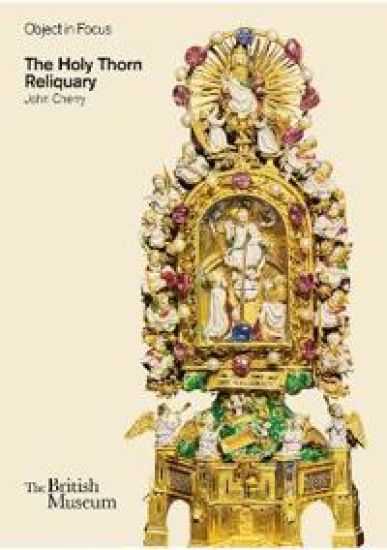
Made in gold and enamel and decorated with precious stones, the Holy Thorn Reliquary depicts the salvation of mankind through the sacrifice of Christ. It was commissioned around 1400–10 by Jean duc de Berry, a member of the French royal family, to house a single thorn from the relic of Christ’s Crown of Thorns. Having left the duke’s possession, it was recorded in Vienna from around 1544 until the 1860s, eventually being acquired by a member of the wealthy Rothschild family, with its true identity remaining undiscovered until the twentieth century. This book explores the meaning and history of this fascinating object, and tells the tale of its remarkable survival and eventual passage to the British Museum.

Better Than Lennon, the Music and Talent of Paul McCartney
John Cherry
Peppertree Press
2009
pokkari
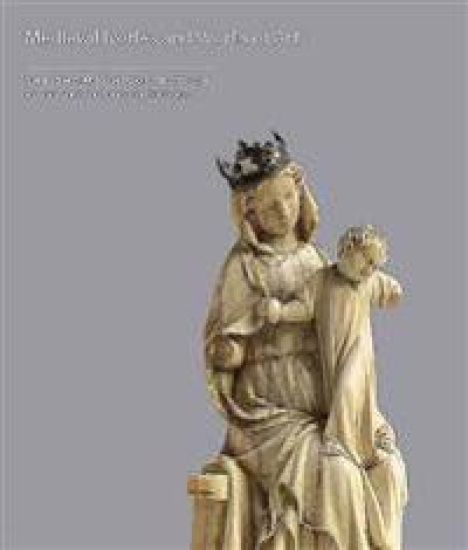
The Thomson Collection contains examples of the highest quality of most types of medieval ivory carving, both secular and religious. These include large statuettes of the Virgin and Child intended to stand on altars in chapels, small versions for private use in the home, and folding tablets or diptychs with scenes from the life of Christ carved in relief.

War on U.S.: How Policies and People are Destroying America
John Cherry
Booksurge Publishing
2008
nidottu
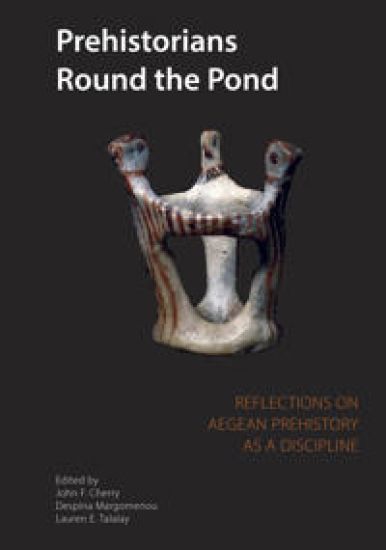
Prehistorians Round the Pond
John Cherry; Despina Margomenou; L. E. Talalay
Kelsey Museum of Archaeology
2005
nidottu
This volume represents a pioneering examination of the nature and identities of Aegean prehistory as a discipline. Emerging from a workshop that generated lively debate among a wide cross-section of scholars, it offers one of the first published attempts to situate Aegean prehistory within a modern self-critical and reflexive context. The chapters and commentaries together yield a multidisciplinary discourse, covering such topics as the current health and academic status of the field, the political and social parameters of the discipline, the relationship between Aegean prehistory and Hellenism, and the discovery of the "Aegean" by Greek modernists.
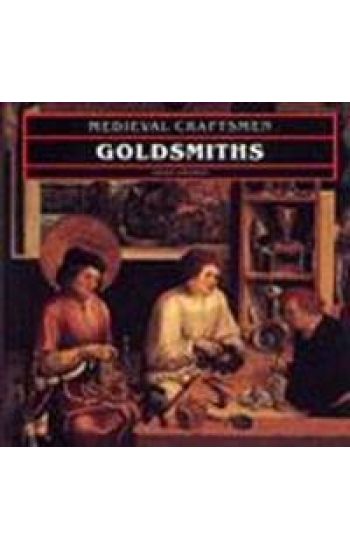
Of all the medieval craftsmen, the goldsmith worked on the two most valuable materials - gold and silver - and set them with rare stones and classical gems. He produced a wide variety of objects, from cups and chalices to rings, seals, and crowns. Such rich objects were often put to the service of God, and today it is in the treasuries of churches that we find much of the surviving material. Combining documentary, archaeological, and pictorial evidence, the author describes how goldsmiths worked for both the Church and for royalty. By the fifteenth century their trade was centred in the principal ccourts and cities of Europe. John Cherry describes the organization of the craft, including the supply of raw materials, and follows the careers of individual goldsmiths, some of whom rose to high positions in society.