Kirjojen hintavertailu – 12 903 725 kirjaa ja 27 kauppaa

Kirjailija

John Clammer

Kirjat ja teokset yhdessä paikassa: 18 kirjaa, julkaisuja vuosilta 1985–2020, suosituimpiin kuuluu Japan in Singapore. Vertaile teosten hintoja ja tarkista saatavuus suomalaisista kirjakaupoista.

18 kirjaa

Kirjojen julkaisuvuodet: 1985–2020.

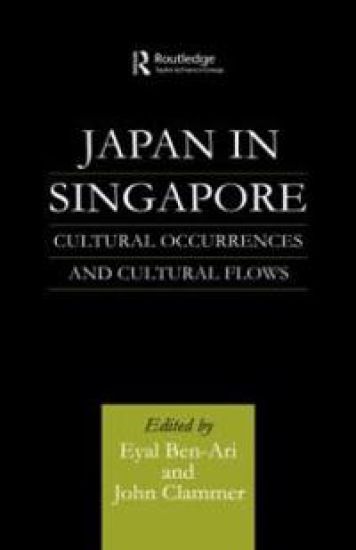
Japan in Singapore

Japan in Singapore

Eyal Ben-Ari; John Clammer

Routledge
2013
nidottu
The Japanese impact on Southeast Asia has been profound, not only in terms of economic presence, but equally in terms of an increasingly visible cultural presence. Food, fashion, TV, film, religion, sport, popular music, ideas about management and social relationships and even local literatures have been profoundly impacted by the flows of cultural influences from Japan. This volume examines these flows and their consequences in Singapore, a Southeast Asian society in which the Japanese presence is so visible as to make it a regional paradigm for a study of cultural influence in the region.
Race and State in Independent Singapore 1965–1990
First published in 1998, this volume explores Singapore as an ideal case study for the examination of the management of postcoloniality, social diversity and the pursuit of economic growth with ethnic harmony. Singapore has, since independence, evolved a unique mix of state directed capitalism, revamped Confucianism and a social order based on an ideology of multiracialism. The result has been a State with enormous sociological diversity held together by the need to create a unified political order out of a population of immigrants of very diverse origins. This has placed the management of multiethnicity at the heart of political discourse and social policy. This book examines critically the operation of ethnicity in post-independence Singapore, the social policies that have been evolved to manage it, and the implications of the Singapore experiment for other plural societies in Asia and elsewhere.
Vision and Society

Vision and Society

John Clammer

Routledge
2019
nidottu
The sociology of art is now an established sub-discipline of sociology. But little work has been done to explore the implications not of society on art, but of art on the nature and principles of sociology itself. Vision and Society explores the ways in which art (here mainly understood as visual art) structures in fundamental ways the constitution of society, the relations between societies and the ways in which society and culture should be theorized. Building initially on an unfulfilled project by the French sociologist of art Nathalie Heinich to derive a sociology from art, this book pushes this idea in unconventional directions. Rethinking the relationships between the study of art and the study of sociology and anthropology, this book explores how this rethinking might impact sociological theory in general, and certain aspects of it in particular – especially the study of social movements, social change, the urban, the constitution of space and the ways in which human social relationships are mediated and expressed.
Race and State in Independent Singapore 1965–1990
First published in 1998, this volume explores Singapore as an ideal case study for the examination of the management of postcoloniality, social diversity and the pursuit of economic growth with ethnic harmony. Singapore has, since independence, evolved a unique mix of state directed capitalism, revamped Confucianism and a social order based on an ideology of multiracialism. The result has been a State with enormous sociological diversity held together by the need to create a unified political order out of a population of immigrants of very diverse origins. This has placed the management of multiethnicity at the heart of political discourse and social policy. This book examines critically the operation of ethnicity in post-independence Singapore, the social policies that have been evolved to manage it, and the implications of the Singapore experiment for other plural societies in Asia and elsewhere.
Cultural Rights and Justice

Cultural Rights and Justice

John Clammer

Springer Verlag, Singapore
2018
sidottu
This book provides an innovative contribution to the emerging field of culture and development through the lens of cultural rights, arguing in favour of a fruitful dialogue between human rights, development studies, critical cultural studies, and concerns about the protection and preservation of cultural diversity. It breaks with established approaches by introducing the themes of aesthetics, embodiment, narrative and peace studies into the field of culture and development, and in doing so, proposes both an expanded conception of cultural rights and a holistic vision of development that not only includes these elements in a central way, but which argues that genuine sustainability must include the cultural dimension, including the notion of cultural justice as recognition, protection and respect extended to the many expressions of human imagination in this world.
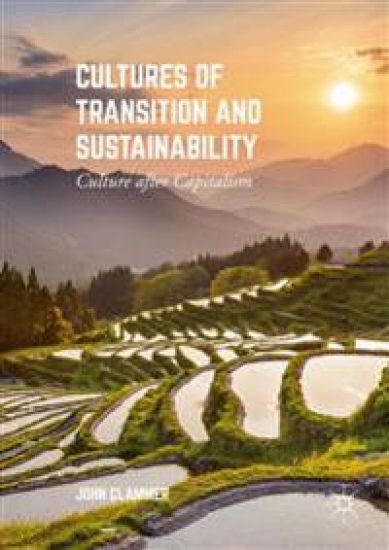
Cultures of Transition and Sustainability

Cultures of Transition and Sustainability

John Clammer

Palgrave Macmillan
2016
sidottu
Contending that culture lies at the root of our current planetary and civilizational crisis, this book uniquely explores the nature of the specifically cultural dimensions of that crisis and how culture relates to the areas of politics, policy, economics, ecology and the whole discourse of sustainability. It debates how profoundly our world is shaped by capitalist culture, emphasizing the import of political culture and policy, social justice, leadership and community in the shaping of a new cultural sustainability. It also reintroduces questions of religion, art, citizenship and comparative culture into the sustainability debate and suggests ways in which the central issue of consumer culture can be rethought and others in which socially satisfactory transitions to a sustainable future might be achieved. Addressing the specific role of culture in our crisis and of how to build cultural resources for transition, this cutting edge text provides the reader with an introduction to the literature on culture and sustainability, and both practical and theoretical tools for creating and advancing a humane and ecologically responsible future.
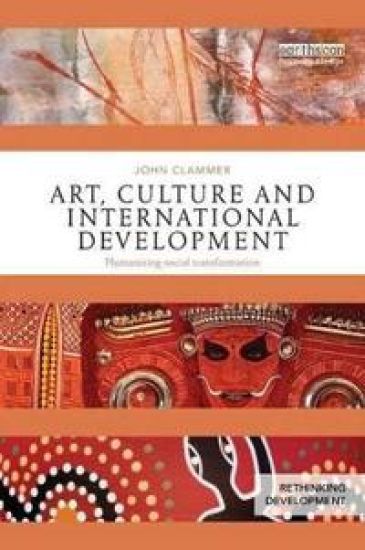
Art, Culture and International Development
Culture is not simply an explanation of last resort, but is itself a rich, multifaceted and contested concept and set of practices that needs to be expanded, appreciated and applied in fresh ways if it is to be both valued in itself and to be of use in practical development. This innovative book places culture, specifically in the form of the arts, back at the centre of debates in development studies by introducing new ways of conceptualizing art in relation to development. The book shows how the arts and development are related in very practical ways – as means to achieve development goals through visual, dramatic, filmic and craft-inspired ways. It advocates not so much culture and development, but rather for the development of culture. Without a cultural content to economic and social transformation the problems found in much development – up-rooting of cultures, loss of art forms, languages and modes of expression and performance – may only accelerate. Paying attention to the development of the arts as the content of development helps to amend this culturally destructive process. Finally, the book argues for the value of the arts in attaining sustainable cultures, promoting poverty alleviation, encouraging self-empowerment, stimulating creativity and the social imagination, which in turn flow back into wider processes of social transformation. Discussion questions at the end of each chapter make this book ideal to help foster further thinking and debate. This book is an inspiring read for postgraduate students and researchers in the fields of development studies, cultural studies and sociology of development.

Art, Culture and International Development

Art, Culture and International Development

John Clammer

Routledge
2014
nidottu

Halvin toimitettuna 74,40 €

Culture is not simply an explanation of last resort, but is itself a rich, multifaceted and contested concept and set of practices that needs to be expanded, appreciated and applied in fresh ways if it is to be both valued in itself and to be of use in practical development. This innovative book places culture, specifically in the form of the arts, back at the centre of debates in development studies by introducing new ways of conceptualizing art in relation to development. The book shows how the arts and development are related in very practical ways – as means to achieve development goals through visual, dramatic, filmic and craft-inspired ways. It advocates not so much culture and development, but rather for the development of culture. Without a cultural content to economic and social transformation the problems found in much development – up-rooting of cultures, loss of art forms, languages and modes of expression and performance – may only accelerate. Paying attention to the development of the arts as the content of development helps to amend this culturally destructive process. Finally, the book argues for the value of the arts in attaining sustainable cultures, promoting poverty alleviation, encouraging self-empowerment, stimulating creativity and the social imagination, which in turn flow back into wider processes of social transformation. Discussion questions at the end of each chapter make this book ideal to help foster further thinking and debate. This book is an inspiring read for postgraduate students and researchers in the fields of development studies, cultural studies and sociology of development.
Vision and Society

Vision and Society

John Clammer

Routledge
2014
sidottu
The sociology of art is now an established sub-discipline of sociology. But little work has been done to explore the implications not of society on art, but of art on the nature and principles of sociology itself. Vision and Society explores the ways in which art (here mainly understood as visual art) structures in fundamental ways the constitution of society, the relations between societies and the ways in which society and culture should be theorized. Building initially on an unfulfilled project by the French sociologist of art Nathalie Heinich to derive a sociology from art, this book pushes this idea in unconventional directions. Rethinking the relationships between the study of art and the study of sociology and anthropology, this book explores how this rethinking might impact sociological theory in general, and certain aspects of it in particular – especially the study of social movements, social change, the urban, the constitution of space and the ways in which human social relationships are mediated and expressed.
Difference and Modernity

Difference and Modernity

John Clammer

Routledge
2013
nidottu
The question of ‘postmodernity’ that has swept Western academic and intellectual circles raises critical comparative questions. Do societies that have not experienced the same historical development as the West pass inevitably through modernity into postmodernity, or can they skip such stages altogether? Japan, the only non-Western society to develop independently a fully-fledged capitalist-industrialist economy, poses such fundamental questions to social theory. Is Japan in fact ‘unique’ and as such is it a society which escapes the net of conventional sociological abstractions? The book questions how special Japanese society really is, the limitations of Western social theory in grasping the fullness of this dynamic and a complex Asian society, and inquires as to how Japan in turn may speak to social theory and deepen and broaden the principles on which social theory attempts to explore and categorize the social and cultural worlds.
Culture, Development and Social Theory

Culture, Development and Social Theory

John Clammer

Zed Books Ltd
2012
sidottu
This important book places culture back at the centre of debates in development studies. It introduces new ways of conceptualizing culture in relation to development by linking development studies to cultural studies, studies of social movements, religion and the notion of 'social suffering'. The author expertly argues that in the current world crises it is necessary to recover a more holistic vision of development that creates a vocabulary linking more technical (and predominantly economic) aspects of development with more humanistic and ecological goals. Any conception of post-capitalist society, he argues, requires cultural, as well as economic and political, dimensions.
Culture, Development and Social Theory

Culture, Development and Social Theory

John Clammer

Zed Books Ltd
2012
nidottu
This important book places culture back at the centre of debates in development studies. It introduces new ways of conceptualizing culture in relation to development by linking development studies to cultural studies, studies of social movements, religion and the notion of 'social suffering'. The author expertly argues that in the current world crises it is necessary to recover a more holistic vision of development that creates a vocabulary linking more technical (and predominantly economic) aspects of development with more humanistic and ecological goals. Any conception of post-capitalist society, he argues, requires cultural, as well as economic and political, dimensions.
Difference and Modernity

Difference and Modernity

John Clammer

Routledge
2010
sidottu
The question of ‘postmodernity’ that has swept Western academic and intellectual circles raises critical comparative questions. Do societies that have not experienced the same historical development as the West pass inevitably through modernity into postmodernity, or can they skip such stages altogether? Japan, the only non-Western society to develop independently a fully-fledged capitalist-industrialist economy, poses such fundamental questions to social theory. Is Japan in fact ‘unique’ and as such is it a society which escapes the net of conventional sociological abstractions? The book questions how special Japanese society really is, the limitations of Western social theory in grasping the fullness of this dynamic and a complex Asian society, and inquires as to how Japan in turn may speak to social theory and deepen and broaden the principles on which social theory attempts to explore and categorize the social and cultural worlds.
Japan in Singapore

Japan in Singapore

Eyal Ben-Ari; John Clammer

RoutledgeCurzon
2000
sidottu
The Japanese impact on Southeast Asia has been profound, not only in terms of economic presence, but equally in terms of an increasingly visible cultural presence. Food, fashion, TV, film, religion, sport, popular music, ideas about management and social relationships and even local literatures have been profoundly impacted by the flows of cultural influences from Japan. This volume examines these flows and their consequences in Singapore, a Southeast Asian society in which the Japanese presence is so visible as to make it a regional paradigm for a study of cultural influence in the region.