Kirjojen hintavertailu – 12 859 828 kirjaa ja 27 kauppaa

Kirjailija

John Clegg

Kirjat ja teokset yhdessä paikassa: 13 kirjaa, julkaisuja vuosilta 2010–2025, suosituimpiin kuuluu The Teller. Vertaile teosten hintoja ja tarkista saatavuus suomalaisista kirjakaupoista.

13 kirjaa

Kirjojen julkaisuvuodet: 2010–2025.

Young Thoughts of a Man

Young Thoughts of a Man

John Clegg

GROSVENOR HOUSE PUBLISHING LTD
2025
nidottu
The book opens with early 1950's life as viewed through the eyes of a child up until the age of seven, when out flow the memories of growing up in Ludlow, South Shropshire in the late1950's-early 1960's, capturing a mode of existence now lost in the mists of time. In the two main streets featured, only one house had a phone; prior to the late 50's only one had a TV set; laundry was done in sink or boiler, before being wrung through a mangle; most family vegetables were grown in the back garden; there was no central heating; the only take-away was the downtown chip shop, over half a mile away; the nearest thing to an off-licence was a service hatch at the local; there were two main grocery stores, but no supermarkets; no domestic refrigerators; plastic in the shape of buckets, bowls and bags had yet to make an impact; most mothers wore corsets and most men didn't use deodorant. The small market town of approximately 6,000 souls boasted twenty eight pubs, but Chinese and Indian restaurants were as yet unheard of. There were two cinemas, seven butchers, four bakeries and two newsagents, but no hint of titillation along the top shelves, for shudder the thought, even the sexual mysteries of life were rarely explained. Compared to today, things were certainly Spartan, but underlying all was a sense of immense fun as the locals forged a fresh start emerging victorious from the Second World War. The food had far more flavour; beer was the equivalent of less than half the price of a pint today; the Sunday joint was succulent and would last well into the following week; there was no real need to lock house doors; children invented their own games, roaming far and wide without their parents fretting; the family doctor would visit for something serious, but for the usual round of colds, flu, mumps, measles or chicken pox, mothers took care of things. Play clothes were often hand-me-downs courtesy of family and friends and if a neighbour needed help, it was soon forthcoming. Very few owned cars, making the family bike essential and with money being tight, holidays were often taken by staying with relatives. Amongst all this was a small gang of lads, playing out the parts of their sporting and movie heroes; inventing games of dare; exploring as far as their legs would take them; building camps in trees and hedgerows and often puzzling over the mysteries of a sexual nature. Much of the humour is contained in the fact they considered themselves far more 'grown-up' and in control than they actually were, leading to many glorious failures. This book is a tribute to those I shared those escapades with, for we literally had the time of our lives and yes, I've published other works, but It has taken years to come up with a style that hopefully captures the fun and innocence of those days. Basically, this is the book I've always wanted to write.
A Strange Encounter

A Strange Encounter

John Clegg

GROSVENOR HOUSE PUBLISHING LTD
2024
nidottu
A forsaken telephone is heard ringing in the woods and the fact our main character decides to answer it, leads to the question, 'What happens next?' He's of a rather nonconformist disposition and relates the ensuing adventure in a self-deprecating, conversational manner, weaving into his account many of the topics that people in Britain have to currently deal with. Some may find certain views contentious, especially regarding recent medical matters, while others could well applaud, that at last, their very same feelings are appearing in print. The fact the two main characters are unequivocally described as male and female, rather than theys or personages, should give hint of a little satire contained within and also prepare the reader for descriptions of a sensual nature. Those wishing for anything more lurid, however, will be disappointed. Despite latest labyrinthine entanglements on the matter, the stance is taken, men and women often have a tendency to think differently to one another, which might enrage the few who relish the chance to take offence, but hopefully the majority will find the feelings described, plus the honest exchanges, realistic and entertaining. Although there is an obvious autobiographical input, the main characters are both composites, as is the location. From a fairly innocuous start, I doubt the reader will guess what conclusion the tale eventually arrives at. I must admit, with the book seeming to write itself, even I was enthralled and I can't really tell you any more at the moment, as I'd be giving the plot away.
The Teller

The Teller

John Clegg

GROSVENOR HOUSE PUBLISHING LTD
2023
nidottu
The Teller is a tale set in the late Bronze Age, told by an itinerant storyteller to members of an Iron Age tribe living on a defended hilltop c 405 BC in the region now known as the Welsh Marches. It describes survival during worsening weather and how they sustained themselves on what little was available. Apart from when luxuries such as meat, fish, wheat, barley and peas, were obtainable, the rest of their diet was barely nourishing, similar to what would now be described as foraging fare. Central to everything, was the might of bronze and those controlling its manufacture, plus woven into that control was the power of the Seers, 'those who know,' intermediaries between the spirit world and the people. These small power groups holding sway of production of the vital metal and supposedly forces of nature, courtesy of the holy men, gripped the numerous tribes in their thrall. Then slowly emerging, with the likelihood of bringing the whole edifice crashing, came the knowledge of iron. The main family in the tale, coped better than most with prevailing conditions and also began to question accepted wisdom. Their story involves battles against injustice, slavery and wild tribal incursions, told in a conversational, unassuming manner with archaeological details dropped in where relevant. To bring the characters to life, the author took the bold step of using fairly contemporary dialogue, minus of course, modern words and phrases that would jar and those abounding from recent centuries that could not possibly have been known by a storyteller plying his trade, Mid-Iron Age, plus of course, all present day measures of time and distance were off limits. Hopefully, the reader will feel as if offered access to their escapades and lives unfolding, without them even realising they are being observed.
The Teller

The Teller

John Clegg

GROSVENOR HOUSE PUBLISHING LTD
2023
nidottu
The year is 401 BC, a new art form is burgeoning, what we now call La Tene, or Celtic, spreading north from the alpine regions. Three years earlier Athens had finally been defeated by Sparta and her allies; Rome is but a fledgling city state; the Etruscan confederation is in decline; hordes of Gallic warriors are rampaging south over the Alps and through all this, two from the far northern Tin Islands, blithely wander. It is a tale related by a contemporary storyteller, thankfully unconstrained by words and phrases that had been off limits to the Teller when entertaining his Iron Age audience. Notwithstanding, the style of delivery remains concise, avoiding hyperbole and melodrama, with the narrator hoping, as the Teller had done, to paint pictures in people's minds. The dialogue is again fairly contemporary, minus anything too modern, such as current phrases, slang, or anything pandering to recent trends. Underlying all, is the tension felt by the Teller, bound by his pact with the all-powerful spirit world, those who had bestowed the gift to entertain by his words, on condition he never immersed himself in their world. To actually alter the course of a life, he felt certain, would at the very least, bring loss of the ability he'd been granted and at worst, he could not even begin to imagine the scale of retribution exacted. Breaking that pact, invited tragedy, but when would it strike? The not knowing was worse than the certainty it would.
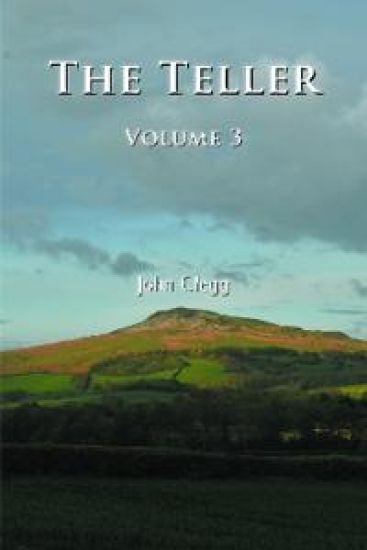
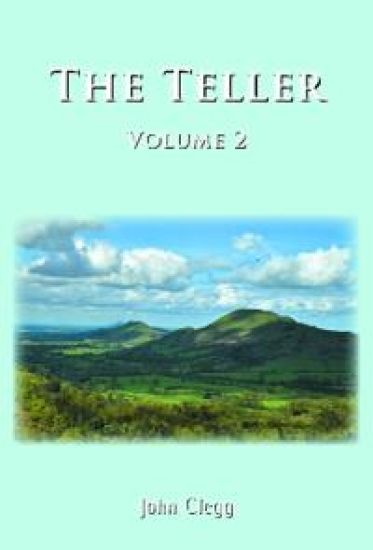
The Teller

The Teller

John Clegg

GROSVENOR HOUSE PUBLISHING LTD
2023
nidottu
The Teller, volume 2, is a continuation of the story of survival in what we call, the Early Iron Age, made all the more desperate by the fact two potentially hostile tribes now occupied the same coveted swathe of territory, actually the rich, rolling farmlands north of the river Severn. It is a tale related by an itinerant storyteller, returning as promised, 401 BC, to the hilltop tribe avidly waiting to hear more details of trials and escapades of their ancestors. Their quest for vital grain and what was then, the new wonder metal, iron, is told in the same insouciant manner by a man attempting to convey ancient reality, rather than the usual fare of implausible heroes, carnage and gore. Having said that, his tale is not bereft of drama, horror, battles and bloodshed. As in the first volume, the author has remained true to what is archaeologically known of those times, but to bring the characters alive, has again used a fairly contemporary dialogue, minus anything of a modern nature that would jar or be impossible for a storyteller back then to have known. A surprising amount of what we say without having to think about it, is off limits to someone relating an adventure to a Mid-Iron Age audience. So much of our everyday language is littered with phrases of a religious, naval or sporting origin, or is Latin and French based. The author asks for tolerance, however, for although the latter two influences came way after the time in question, a few words were allowed to slip through to keep the tale flowing. The Teller is fulfilling a promise to return and relate more of life's details of the heroine Vanya, but of course as the web of what happened is gradually untangled, other family members come to the fore, plus further characters grow to prominence, not least one of a rather unpredictable disposition, holding sway over their lives. Also, as the tale progresses, the Teller finds himself attracted to a certain lady in the audience, but his pact with those of the nether world, the spirits that had bestowed the gift of the telling, forbade him to actually enter the daily rounds of life, or alter the course of life's flow in any way. To do so would at the very least, rob him of his gift, which to his mind, would be tantamount to being denied the ability to fly.

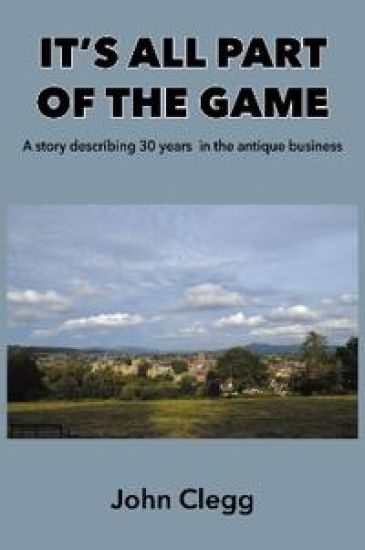
It’s All Part of the Game

It’s All Part of the Game

John Clegg

GROSVENOR HOUSE PUBLISHING LTD
2022
nidottu
The book describes how a character, starting with virtually no money and absolutely no knowledge of antiques, managed to learn and bit by bit, claw his way up the trade echelon to finally run a massive antique shop on the Welsh Marches. The tale includes door knocking escapades, the odd romantic dalliance, chanced successes, embarrassing failures, the antique ring, local gypsies, the Irish travellers, a court case and even a house clearance in Australia. It is related by a contemporary author, who having chanced on a character with first hand experience of those exciting times, uses the information, plus contacts he provides, to delve back in time, thus revealing the inside story of the antique business, over a period, roughly spanning 1974-2004. All is described with a humorous touch and even though fiction, events are true to the spirit of those times. Interspersed in the story, are little nuggets of local history, anecdotes of an almost Bohemian nature and when able to contact survivors from those years, light hearted banter. An insight is given regarding the difficulty of finding the right stock and how surprisingly narrow, some of the profit margins. Reasons are given, as to why certain things sold, plus how the vast majority that didn't, could potentially clog a business to a standstill. The book describes years of plenty and years of near bankruptcy, while on each rung of the trade ladder, pitfalls and certain individuals intent on blocking an aspiring dealer's progress, awaited. Whether humour or near tragedy, however, both are told in the same matter of fact manner.
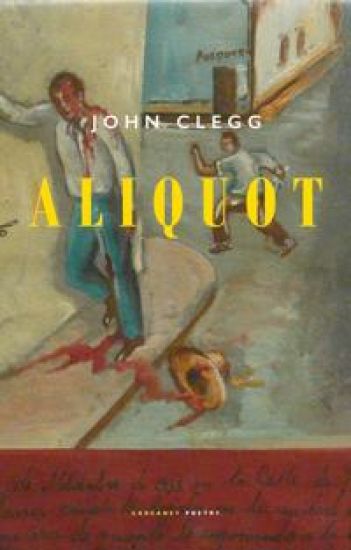
Aliquot

Aliquot

John Clegg

CARCANET PRESS LTD
2022
nidottu
The chemist with a sample analyses an aliquot of that sample, a part of a part of a larger whole. The title of John Clegg's new collection speaks to the poems' sense of being parts of larger wholes, themselves parts of a larger whole... The scientific knowledge and the sometimes old-fashioned diction that abound in these poems are both part of worlds of reference in which sequencing (narrative, historical, scientific) is crucial and revelatory, as in the series of poems 'A Gene Sequence' which take us from Codon to Coda via a number of -ines (Glycine, Asparagine, Tyrosine etc). The complex exercise grows out of George Herbert ('What though my body run to dust?') and administrative duties at a genomics conference in which the language spoken, the terms used, find their way into the organising imagination and prosody of a formidable, witty verse craftsman, with serious contemporary concerns. Aliquot, John Clegg's second Carcanet book, is storm-spooked and jumpy: haunted by jaguars and lynxes, its uneasy silences broken by the retort of punt guns, lightning strikes, and floodwater breaching defences. Among these stretches of foreboding are moments of calm, especially arising out of the joy and rowdy peace of parenthood. These poems are themselves aliquots, of a realised, restive and unique individual world.
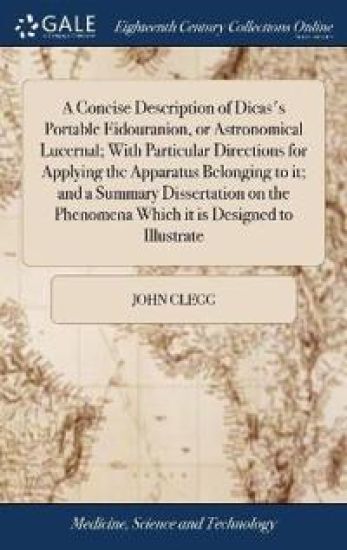
A Concise Description of Dicas's Portable Eidouranion, or Astronomical Lucernal; With Particular Directions for Applying the Apparatus Belonging to it; and a Summary Dissertation on the Phenomena Which it is Designed to Illustrate
The 18th century was a wealth of knowledge, exploration and rapidly growing technology and expanding record-keeping made possible by advances in the printing press. In its determination to preserve the century of revolution, Gale initiated a revolution of its own: digitization of epic proportions to preserve these invaluable works in the largest archive of its kind. Now for the first time these high-quality digital copies of original 18th century manuscripts are available in print, making them highly accessible to libraries, undergraduate students, and independent scholars. Medical theory and practice of the 1700s developed rapidly, as is evidenced by the extensive collection, which includes descriptions of diseases, their conditions, and treatments. Books on science and technology, agriculture, military technology, natural philosophy, even cookbooks, are all contained here.++++The below data was compiled from various identification fields in the bibliographic record of this title. This data is provided as an additional tool in helping to insure edition identification: ++++British LibraryT301288Date from British Library catalogue; Mary Dicas active 1797-1805 and paper watermarked 1794. Liverpool]: Swarbreck, printer, 1797?]. 52 p.; 8
Holy Toledo!

Holy Toledo!

John Clegg

Carcanet Press Ltd
2016
nidottu
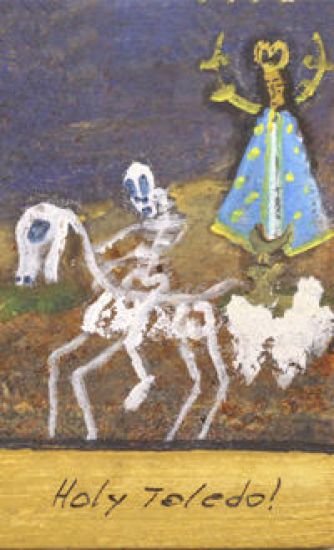
Shortlisted for the 2017 Ledbury Forte Poetry Prize For Second Collections. Sometime during the twentieth century, the self-mythology of the literary critic fused with that of the cowboy: lone outriders practising a defunct trade. In Holy Toldedo! John Clegg tracks the critic's silhouette over the dangerous, sun-drenched landscapes of New Mexico, California, Nashville, Utah, Oxford, Cambridge, and London. Here is Donald Davie listening to gospel radio in a Nashville taxi, and here is F. R. Leavis standing on a chair, 'unscrewing instead the world from round the lightbulb'. Vistas of bristlecone and citrus groves, pocked with fruit flies and rain birds, fuse with the glib-core of Oxbridge England, the university science labs where 'all three entrances felt like the back way'. Holy Toledo! is a history of English literary criticism in the twentieth century, a bestiary of the American Southwest, an unreliable guide to the desert. Generous, humorous, happily askew, Clegg's first Carcanet collection signals the flourishing of an 'emerging' poet as a major voice.
Putting CLIL into Practice

Putting CLIL into Practice

Phil Ball; Keith Kelly; John Clegg

Oxford University Press
2015
nidottu
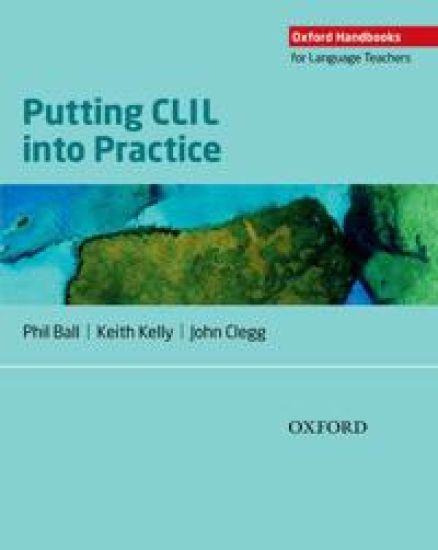
Putting CLIL into Practice offers a new methodological framework for the CLIL classroom, focusing on how to guide input and support output. Full of real-life examples and practical guidelines, the book provides support to both novice and experienced CLIL teachers.
Antler

Antler

John Clegg

Salt Publishing
2013
pokkari
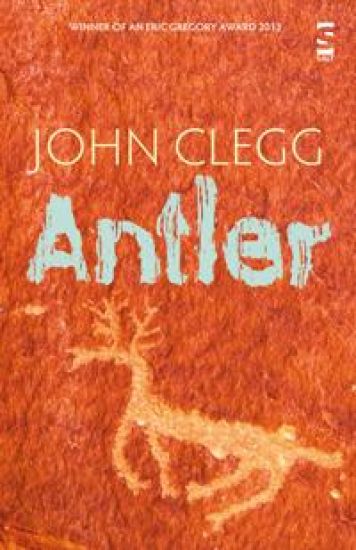
Eric Gregory Award Winner The poems in Antler stalk their quarry over difficult ground. Prehistoric landscapes blend with genuine and imaginary anthropology; the real world becomes distorted through the dark mirrors of folktale and myth; fraudsters, liars, and con-men lurk perpetually in the shadows. This panorama is emotional, too, most vividly in the collection’s centrepiece: the sequence ‘Vaisala and Sinuhe’, charting an astronomy professor’s infatuation with one of his postgraduate students, who may or may not be a werewolf. Pared-down, playful and often very funny, Clegg’s poetry keeps faith with what is tactile and tangible (moss, leather, bone), distilling plainspoken diction, luminous imagery and a unique worldview into lines which remain in the head for a long while after the book has been closed.