Kirjojen hintavertailu – 12 859 829 kirjaa ja 27 kauppaa

Kirjailija

John Coatsworth

Kirjat ja teokset yhdessä paikassa: 6 kirjaa, julkaisuja vuosilta 2004–2015, suosituimpiin kuuluu Growth Against Development. Vertaile teosten hintoja ja tarkista saatavuus suomalaisista kirjakaupoista.

6 kirjaa

Kirjojen julkaisuvuodet: 2004–2015.

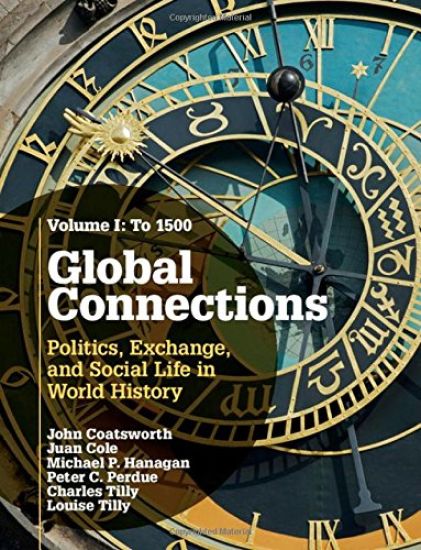
Global Connections: Volume 1, To 1500

Global Connections: Volume 1, To 1500

John Coatsworth; Juan Cole; Michael P. Hanagan; Peter C. Perdue; Charles Tilly; Louise Tilly

Cambridge University Press
2015
sidottu

Halvin toimitettuna 97,60 €

The first textbook to present world history via social history, drawing on social science methods and research. This interdisciplinary, comprehensive and comparative textbook is authored by distinguished scholars and experienced teachers, and offers expert scholarship on global history that is ideal for undergraduate students. Volume 1 takes us from the origin of hominids to ancient civilizations, the rise of empires, and the Middle Ages. The book pays particular attention to the ways in which ordinary people lived through the great changes of their times, and how everyday experience connects to great political events and the commercial exchanges of an interconnected world. With 65 maps, 45 illustrations, timelines, boxes, and primary source extracts, the book moves students easily from particular historical incidents to broader perspectives, enabling them to use historical material and social science methodologies to analyze the events of the past, present and future.
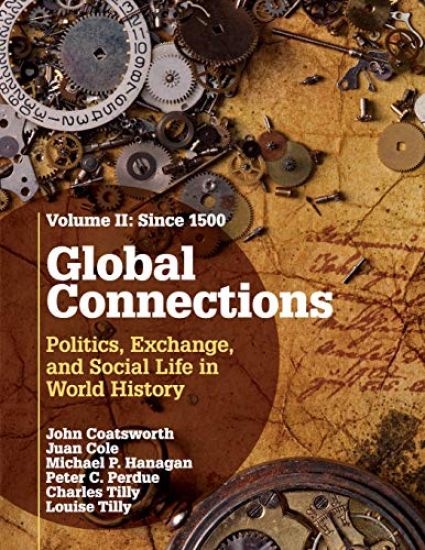
Global Connections: Volume 2, Since 1500

Global Connections: Volume 2, Since 1500

John Coatsworth; Juan Cole; Michael P. Hanagan; Peter C. Perdue; Charles Tilly; Louise Tilly

Cambridge University Press
2015
pokkari

Halvin toimitettuna 54,90 €

The first textbook to present world history via social history, drawing on social science methods and research. This interdisciplinary, comprehensive, and comparative textbook is authored by distinguished scholars and experienced teachers, and offers expert scholarship on global history that is ideal for undergraduate students. Volume 2 takes us from the early modern period to speculation about the world in 2050, visiting diverse civilizations, nation-states, ecologies, and people along the journey through time and place. The book pays particular attention to the ways in which ordinary people lived through the great changes of their times, and how everyday experience connects to great political events and the commercial exchanges of an interconnected world. With 75 maps, 65 illustrations, timelines, boxes, and primary source extracts, the book enables students to use historical material and social science methodologies to analyze the events of the past, present, and future.
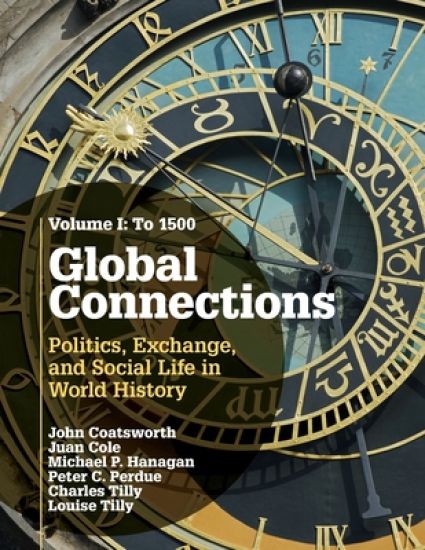
Global Connections: Volume 1, To 1500

Global Connections: Volume 1, To 1500

John Coatsworth; Juan Cole; Michael P. Hanagan; Peter C. Perdue; Charles Tilly; Louise Tilly

Cambridge University Press
2015
pokkari

Halvin toimitettuna 54,90 €

The first textbook to present world history via social history, drawing on social science methods and research. This interdisciplinary, comprehensive and comparative textbook is authored by distinguished scholars and experienced teachers, and offers expert scholarship on global history that is ideal for undergraduate students. Volume 1 takes us from the origin of hominids to ancient civilizations, the rise of empires, and the Middle Ages. The book pays particular attention to the ways in which ordinary people lived through the great changes of their times, and how everyday experience connects to great political events and the commercial exchanges of an interconnected world. With 65 maps, 45 illustrations, timelines, boxes, and primary source extracts, the book moves students easily from particular historical incidents to broader perspectives, enabling them to use historical material and social science methodologies to analyze the events of the past, present and future.
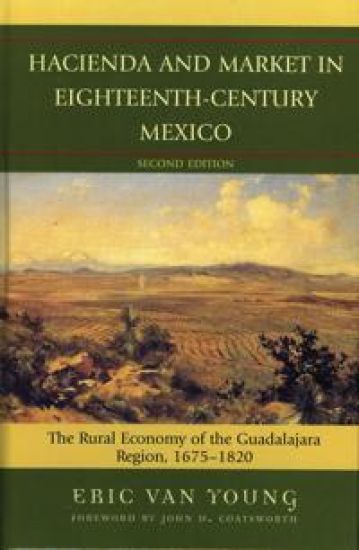
Hacienda and Market in Eighteenth-Century Mexico

Hacienda and Market in Eighteenth-Century Mexico

Eric Van Young; John Coatsworth

Rowman Littlefield Publishers
2006
nidottu
This classic history of the Mexican hacienda from the colonial period through the nineteenth century has been reissued in a silver anniversary edition complete with a substantive new introduction and foreword. Eric Van Young explores 150 years of Mexico's economic and rural development, a period when one of history's great empires was trying to extract more resources from its most important colony, and when an arguably capitalist economy was both expanding and taking deeper root. The author explains the development of a regional agrarian system, centered on the landed estates of late colonial Mexico, the central economic and social institution of an overwhelmingly rural society. With rich empirical detail, he meticulously describes the features of the rural economy, including patterns of land ownership, credit and investment, labor relations, the structure of production, and the relationship of a major colonial city to its surrounding area. The book's most interesting and innovative element is its emphasis on the way the system of rural economy shaped, and was shaped by, the internal logic of a great spatial system, the region of Guadalajara. Van Young argues that Guadalajara's population growth progressively integrated the large geographical region surrounding the city through the mechanisms of the urban market for grain and meat, which in turn put pressure on local land and labor resources. Eventually this drove white and Indian landowners into increasingly sharp conflict and led to the progressive proletarianization of the region's peasantry during the last decades of the Spanish colonial era. It is no accident, given this history, that the Guadalajara region was one of the major areas of armed insurrection for most of the decade during Mexico's struggle for independence from Spain. By highlighting the way haciendas worked and changed over time, this indispensable study illuminates Mexico's economic and social history, the movement for independence, and the origins of the Mexican Revolution.
Hacienda and Market in Eighteenth-Century Mexico

Hacienda and Market in Eighteenth-Century Mexico

Eric Van Young; John Coatsworth

Rowman Littlefield Publishers
2006
sidottu
This classic history of the Mexican hacienda from the colonial period through the nineteenth century has been reissued in a silver anniversary edition complete with a substantive new introduction and foreword. Eric Van Young explores 150 years of Mexico's economic and rural development, a period when one of history's great empires was trying to extract more resources from its most important colony, and when an arguably capitalist economy was both expanding and taking deeper root. The author explains the development of a regional agrarian system, centered on the landed estates of late colonial Mexico, the central economic and social institution of an overwhelmingly rural society. With rich empirical detail, he meticulously describes the features of the rural economy, including patterns of land ownership, credit and investment, labor relations, the structure of production, and the relationship of a major colonial city to its surrounding area. The book's most interesting and innovative element is its emphasis on the way the system of rural economy shaped, and was shaped by, the internal logic of a great spatial system, the region of Guadalajara. Van Young argues that Guadalajara's population growth progressively integrated the large geographical region surrounding the city through the mechanisms of the urban market for grain and meat, which in turn put pressure on local land and labor resources. Eventually this drove white and Indian landowners into increasingly sharp conflict and led to the progressive proletarianization of the region's peasantry during the last decades of the Spanish colonial era. It is no accident, given this history, that the Guadalajara region was one of the major areas of armed insurrection for most of the decade during Mexico's struggle for independence from Spain. By highlighting the way haciendas worked and changed over time, this indispensable study illuminates Mexico's economic and social history, the movement for independence, and the origins of the Mexican Revolution.