Kirjailija
John Connell
Kirjat ja teokset yhdessä paikassa: 48 kirjaa, julkaisuja vuosilta 1992–2026, suosituimpiin kuuluu The Farmer's Son: Calving Season on a Family Farm. Vertaile teosten hintoja ja tarkista saatavuus suomalaisista kirjakaupoista.
48 kirjaa
Kirjojen julkaisuvuodet: 1992–2026.
For fans of The Shepherd's Life, a poignant memoir--and #1 Irish bestseller--about a wayward son's return home to his family's farm, and how he found a new beginning in an age-old world Farming has been in John Connell's family for generations, but he never intended to follow in his father's footsteps. Until, one winter, after more than a decade away, he finds himself back on the farm. Connell records the hypnotic rhythm of the farming day--cleaning the barns, caring for the herd, tending to sickly lambs, helping the cows give birth. Alongside the routine events, there are the unforeseen moments when things go wrong: when a calf fails to thrive, when a sheep goes missing, when illness breaks out, when an argument between father and son erupts and things are said that cannot be unsaid. The Farmer's Son is the story of a calving season, and the story of a man who emerges from depression to find hope in the place he least expected to find it. It is the story of Connell's life as a farmer, and of his relationship with the community of County Longford, with his faith, with the animals he tends, and, above all, with his father.
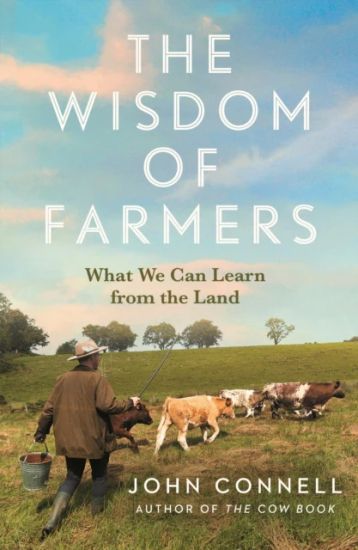
A thoughtful, illuminating rumination on the life lessons we can take from those who work the land and the millennia of wisdom they draw upon when they go about their day, 'making a living by turning light and time into money'. As with his previous bestsellers, John Connell skilfully synthesises philosophy, art, literature and spirituality to bolster his thoughts on such topics as stoicism, the food chain and the role of community, leaving the reader convinced of the importance of connecting with their own inner farmer.
Chinese Tourism in Australia
John Connell; Phil McManus; Xuesong Ding
PALGRAVE MACMILLAN
2025
nidottu
First published in 1978, The End of Tradition is the history of four Surrey villages, the Horsleys and Clandons, close to London but isolated and protected from it by the Green Belt. Towards the end of the last century, a period of rapid change began in rural England as a new way of life centred on the nearby towns and cities replaced a traditional rural village life. Estates were broken up, agricultural life declined, village schools and parish councils were set up, and the pervasive influence of the village squire disappeared. But the coming of the railway, and later the motor car, provoked the most fundamental changes, for the isolation of the village was ended. The railway linked the villages of Surrey with London. In exclusive housing estates of detached homes in culs-de-sac, the exceptionally high status of the village was enhanced by the efforts of the newcomers to protect their new style of life through the most comprehensive countryside protection system in Britain. This is a must read for students and scholars interested in British history and sociology.
The Forlorn Case of Popery! Or, the Romanist Undeceived
John Connell
Hutson Street Press
2025
pokkari
The Forlorn Case of Popery! Or, the Romanist Undeceived
John Connell
Hutson Street Press
2025
sidottu
For John Connell, the lambing season on his County Longford farm begins in the autumn. In the sheep shed, he surveys the dozen females in his care and contemplates the work ahead as the season slowly turns to winter, then spring. The twelve sheep have come into his life at just the right moment. After years of hard work, John felt a deep tiredness creeping up on him, a sadness that he couldn't shrug off. Having always sought spiritual guidance, he comes to realise that, in addition to the soothing words of literature and philosophy, perhaps the way ahead involves this simple flock of sheep. In the hard work of livestock rearing, in the long nights in the shed helping the sheep to lamb, he can reflect on what life truly means. Like the flock that he shepherds, this book is both simple and profound, a meditation on the rituals of farming life and a primer on the lessons that nature can teach us. As spring returns and the sheep and their lambs are released into the fields, skipping with joy, John recalls the words of Henry David Thoreau, reminding us to 'live in each season as it passes.'
Chinese Tourism in Australia
John Connell; Phil McManus; Xuesong Ding
SPRINGER VERLAG, SINGAPORE
2024
sidottu
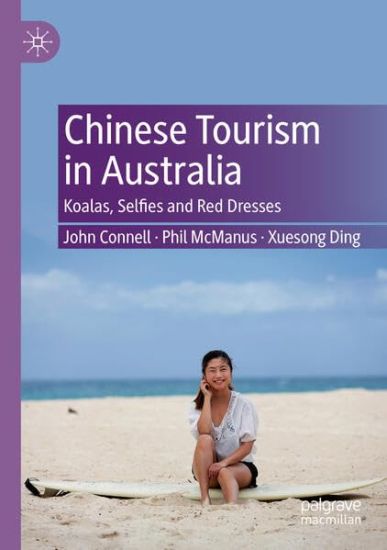
This book investigates all facets of Chinese tourism in a single destination, and its fascinating rise and evolution. It provides an overview of the first two decades of twenty-first century Chinese tourism in Australia, covering the early days, when Chinese tourism was mainly guided package tours with tourists visiting standard iconic sites, and its evolution into more individualistic tourism, with younger tourists seeking out sites of particular interest. Many of these ‘new sites’ are places where self-photography has particular merit, chosen in part because they are colourful, and images are distributed in real time to communicate with others and enhance social status. This quest for distinctiveness and colour has contributed to creating a distinctly Chinese tourist geography of Australia, analysed here in relation to conventional tourism geographies. The book takes a deliberately chronological approach to focus on the speed of change, discussing the more exciting and active ’new tourism’ in ways that integrate qualitative and quantitative research, and provide a basis for international comparison and discussion of key emerging themes in tourism studies.
For John Connell, the lambing season on his County Longford farm begins in the autumn. In the sheep shed, he surveys the dozen females in his care and contemplates the work ahead as the season slowly turns to winter, then spring. The twelve sheep have come into his life at just the right moment. After years of hard work, John felt a deep tiredness creeping up on him, a sadness that he couldn't shrug off. Having always sought spiritual guidance, he comes to realise that, in addition to the soothing words of literature and philosophy, perhaps the way ahead involves this simple flock of sheep. In the hard work of livestock rearing, in the long nights in the shed helping the sheep to lamb, he can reflect on what life truly means. Like the flock that he shepherds, this book is both simple and profound, a meditation on the rituals of farming life and a primer on the lessons that nature can teach us. As spring returns and the sheep and their lambs are released into the fields, skipping with joy, John recalls the words of Henry David Thoreau, reminding us to 'live in each season as it passes.'
Pacific Islands Guestworkers in Australia
Kirstie Petrou; John Connell
SPRINGER VERLAG, SINGAPORE
2023
nidottu
This is the first book to examine the contemporary seasonal migration of Pacific islanders to Australia through the Seasonal Worker Programme (SWP). It reflects on this new age of guestwork from a broad social, economic, political and cultural perspective in both source countries and destinations. In so doing, it offers a critical perspective on different phases of managed labour migration from nineteenth century practices of ‘blackbirding’ to the present day. This book examines why and how guestworker policies and programmes have developed, and the impact this has had in Australia and for the people, villages and islands of the sending states. It particularly focuses on Vanuatu, the main source of labour, and draws upon studies based in Australia, Vanuatu and other Pacific Island countries. The book therefore traces new patterns of migration, with intriguing economic and social consequences, that are restructuring parts of rural and regional Australia in response to labour demandsfrom agriculture and evolving regional geopolitics.
First published in 1978, The End of Tradition is the history of four Surrey villages, the Horsleys and Clandons, close to London but isolated and protected from it by the Green Belt. Towards the end of the last century, a period of rapid change began in rural England as a new way of life centred on the nearby towns and cities replaced a traditional rural village life. Estates were broken up, agricultural life declined, village schools and parish councils were set up, and the pervasive influence of the village squire disappeared. But the coming of the railway, and later the motor car, provoked the most fundamental changes, for the isolation of the village was ended. The railway linked the villages of Surrey with London. In exclusive housing estates of detached homes in culs-de-sac, the exceptionally high status of the village was enhanced by the efforts of the newcomers to protect their new style of life through the most comprehensive countryside protection system in Britain. This is a must read for students and scholars interested in British history and sociology.
Pacific Islands Guestworkers in Australia
Kirstie Petrou; John Connell
SPRINGER VERLAG, SINGAPORE
2022
sidottu
This is the first book to examine the contemporary seasonal migration of Pacific islanders to Australia through the Seasonal Worker Programme (SWP). It reflects on this new age of guestwork from a broad social, economic, political and cultural perspective in both source countries and destinations. In so doing, it offers a critical perspective on different phases of managed labour migration from nineteenth century practices of ‘blackbirding’ to the present day. This book examines why and how guestworker policies and programmes have developed, and the impact this has had in Australia and for the people, villages and islands of the sending states. It particularly focuses on Vanuatu, the main source of labour, and draws upon studies based in Australia, Vanuatu and other Pacific Island countries. The book therefore traces new patterns of migration, with intriguing economic and social consequences, that are restructuring parts of rural and regional Australia in response to labour demandsfrom agriculture and evolving regional geopolitics.
In the midst of Lockdown, confined to his local area, John Connell canoes his local river. During his meander downstream, John (author of the bestselling memoir, The Cow Book) reflects on his travels, his past relationships and his battle with depression, as well as on Irish folklore, geopolitics and philosophy. â?? Quietly triumphant.â?? Donal Ryan
This book offers a fresh analysis of constitutional, economic, demographic and cultural developments in the overseas territories of Britain, France, the Netherlands, Denmark, Spain, the United States, Australia and New Zealand. Ranging from Greenland to Gibraltar, the Falklands to the Faroes, and encompassing islands in the Atlantic, Pacific and Indian Oceans, and the Caribbean, these territories command attention because of their unique status, and for the ways that they occasionally become flashpoints for rival international claims, dubious financial activities, illegal migration and clashes between metropolitan and local mores. Connell and Aldrich argue that a negotiated dependency brings greater benefits to these territories than might independence.
‘Sensational! John Connell has done it again’ – Dean KarnazesFrom the award-winning, No.1 bestselling author of The Cow BookIn The Running Book, John Connell vividly describes a marathon through County Longford, Ireland, where he lives and farms. Because running is as much about the mind as the body, the book is about more than the physical experience. What John sees on his journey prompts him to contemplate a wide range of things: he’s as likely to think about local Irish history, the legacy of colonialism in Australia or the story of Haile Gebrselassie as he is to remember his own past runs in Arizona or Ibiza. After a mental health crisis, John found the simple act of putting one foot in front of another helped him to regain his sense of self and better appreciate the world around him. At its core, The Running Book is a life-affirming read about the nature of happiness – and how for one man it came through the feet.‘Takes the theme of running and opens it out into something much wider’ – Irish Times‘Read The Running Book and you see life in every route you run; past, present and future, life is for running’ – Sonia O'Sullivan‘Every runner will find something poignant that resonates within this book’ – Paula Radcliffe
From the award-winning, number one bestselling author of The Cow Book. It is summer, the hay and silage have not yet been made on John Connell’s farm, so he has time to indulge his other great passion: running. John sets off on a marathon run of 42.2 kilometres through his native Longford, the scene of his award-winning book The Cow Book. As he runs across woodlands, fields and tiny roads, he tells the story of his life and contemplates Ireland’s history, old and new. He also remembers other great runs he has done, from Australia to Canada, and tells the stories of some of his running heroes, such as Haile Gebrselassie. Part memoir, part essay, The Running Book explores what it is to be alive and what movement can do for a person. It is deeply intimate and wide-ranging, local and global: Connell is as likely to write about colonialism and the effect of British imperialism in Ireland and its former colonies as he is about life on his family farm in Ballinalee, County Longford. Told in 42 chapters, each another kilometre in the 42.2k race, the whole book is 42,000 words long and it captures what it is to undertake a marathon moment by moment, in body and mind. Above all, The Running Book is a book about the nature of happiness and how for one man it came through the feet.
This book offers a fresh analysis of constitutional, economic, demographic and cultural developments in the overseas territories of Britain, France, the Netherlands, Denmark, Spain, the United States, Australia and New Zealand. Ranging from Greenland to Gibraltar, the Falklands to the Faroes, and encompassing islands in the Atlantic, Pacific and Indian Oceans, and the Caribbean, these territories command attention because of their unique status, and for the ways that they occasionally become flashpoints for rival international claims, dubious financial activities, illegal migration and clashes between metropolitan and local mores. Connell and Aldrich argue that a negotiated dependency brings greater benefits to these territories than might independence.
Farming has been in John Connell's family for generations, but he never intended to follow in his father's footsteps. Until, one winter, he finds himself back on the farm and begins to learn the ways of the farmer and the way of the cows. Connell records the hypnotic rhythm of the farming day - cleaning the outhouses, milking the herd, tending to sickly lambs, helping the cows give birth. But alongside the routine events, there are the unforeseen moments when things go wrong: when a calf fails to thrive, when a sheep goes missing, when illness breaks out, when depression takes hold, when an argument erupts and things are said that cannot be unsaid. The Cow Book is the story of a calving season. It is also the story of the cow itself, from its domestication and worship as a God by the Ancient Egyptians to the modern practice of mechanized herds, via the figure of the cowboy, the destruction of the American buffalo, the demise of the aboriginal jackaroos and the consequences of BSE. And, above all, it is the story of Connell's life as a farmer, of his relationship with his birthplace of County Longford, with the community around the family farm, with the animals he tends, and with his father.
Where do thousands of people in wigs, jumpsuits and fake Priscilla eyelashes go each January to swelter in 42-degree heat as they celebrate The King? Parkes, of course - 365 kilometres west of Sydney - for the annual Parkes Elvis Festival. But how, and why, did this sleepy town get all shook up by Elvis? Written by two long-time fans of the festival, Outback Elvis introduces the local characters, the lookalikes, the impersonators and the tribute artists - and the town that made this big hunk o' Elvis love possible.