Kirjojen hintavertailu – 12 903 725 kirjaa ja 27 kauppaa

Kirjailija

John Cooley

Kirjat ja teokset yhdessä paikassa: 5 kirjaa, julkaisuja vuosilta 2006–2016, suosituimpiin kuuluu Prosperity's Predator: Thoughts on Government. Vertaile teosten hintoja ja tarkista saatavuus suomalaisista kirjakaupoista.

5 kirjaa

Kirjojen julkaisuvuodet: 2006–2016.

Green March, Black September

Green March, Black September

John Cooley

Routledge
2016
nidottu
In March 1968 Palestinian guerrillas and Jordanian troops combined forces to respond to Israeli raids into Jordan, provoking visions of new unity and future military success. Yet by September 1970 mounting friction between the Palestinian guerrillas in Jordan and King Hussein’s regime came to a head with the hijackings at Dawson’s Field and the defeat by Jordan’s forces of the Palestinians. The savagery of the fighting and the bitter consequences for the Palestinian guerrillas gave this month the name Black September: a name that was to reappear ominously in months to come. Who are the Palestinians? Many people only became aware of their existence because of terrorism, particularly the Black September operation at the Munich Olympics. Yet the Palestinians are at the very heart of the Middle East problem, and this book, first published in 1973, tells their story. The core of the book describes the emergence of the various guerrilla groups, joined by Palestinians hopeful of regaining lost land and lost dignity, and the ideologies and differences of the groups. There are personal interviews with some of the main leaders, and other chapters examine the relationships and interaction between the Palestinian groups and the Soviet bloc, the Chinese, the Third World, the West, and most important, the Israelis themselves.

Green March, Black September

Green March, Black September

John Cooley

Routledge
2015
sidottu
In March 1968 Palestinian guerrillas and Jordanian troops combined forces to respond to Israeli raids into Jordan, provoking visions of new unity and future military success. Yet by September 1970 mounting friction between the Palestinian guerrillas in Jordan and King Hussein’s regime came to a head with the hijackings at Dawson’s Field and the defeat by Jordan’s forces of the Palestinians. The savagery of the fighting and the bitter consequences for the Palestinian guerrillas gave this month the name Black September: a name that was to reappear ominously in months to come. Who are the Palestinians? Many people only became aware of their existence because of terrorism, particularly the Black September operation at the Munich Olympics. Yet the Palestinians are at the very heart of the Middle East problem, and this book, first published in 1973, tells their story. The core of the book describes the emergence of the various guerrilla groups, joined by Palestinians hopeful of regaining lost land and lost dignity, and the ideologies and differences of the groups. There are personal interviews with some of the main leaders, and other chapters examine the relationships and interaction between the Palestinian groups and the Soviet bloc, the Chinese, the Third World, the West, and most important, the Israelis themselves.

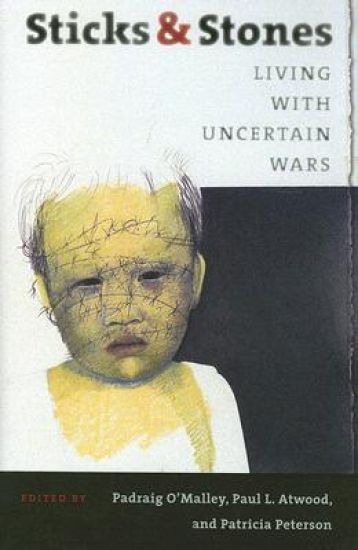
Sticks and Stones

Sticks and Stones

J. Brian Atwood; Susan J. Atwood; John Cooley; Romeo Dallaire; Ramu Damodaran; Valerie Epps; Michael Glennon

University of Massachusetts Press
2006
nidottu
Albert Einstein famously remarked that he did not know what weapons would be used in World War III, but World War IV would be fought with sticks and stones. In this volume, a distinguished group of scholars, government officials, politicians, journalists, and statesmen examine what can be learned from the wars of the twentieth century, and how that knowledge might help us as we step ever so perilously into the twenty-first. Following an introduction by Padraig O'Malley, the book is divided into four sections: Understanding the World as We Have Known It; Global Uncertainties; Whose Values? Whose Justice?; and Shaping a New World. The first section reviews what we have learned about war and establishes benchmarks for judging whether that knowledge is being translated into changes in the behaviour of our political cultures. It suggests that the world's premier superpower, in its effort to promote Western-style democracy, has taken steps that have inhibited rather than facilitated democratization. The second section examines the war on terror and the concept of global war. From the essays in this section emerges a consensus that democracy as practiced in the West cannot be exported to countries with radically different cultures, traditions, and values. The third section visits the question of means and ends in the context of varying value systems and of theocracy, democracy, and culture. In the final section, the focus shifts to our need for global institutions to maintain order and assist change in the twenty-first century. Although each contributor comes from a different starting point, speaks with a different voice, and has a different ideological perspective, the essays reach startlingly similar conclusions. In sum, they find that the West has not absorbed the lessons from the wars of the last century, and is inadequately prepared to meet the new challenges that now confront us.