Kirjojen hintavertailu – 12 903 725 kirjaa ja 27 kauppaa

Kirjailija

John Curtis

Kirjat ja teokset yhdessä paikassa: 27 kirjaa, julkaisuja vuosilta 1982–2025, suosituimpiin kuuluu Long Cases for the Final FRCR 2B. Vertaile teosten hintoja ja tarkista saatavuus suomalaisista kirjakaupoista.

27 kirjaa

Kirjojen julkaisuvuodet: 1982–2025.

Long Cases for the Final FRCR 2B

Long Cases for the Final FRCR 2B

Rebecca Hanlon; John Curtis; Hulya Wieshmann; David White; Caren Landes; Val Gough

Oxford University Press
2011
nidottu
This comprehensive revision book contains 42 practice long cases, to help radiology trainees revise for and succeed at the Final FRCR Part 2B examination. Each case is presented as it would appear in the exam, with a selection of high quality imaging and clinical details, followed by a separate model answer section, formatted in line with the Royal College guidance notes. Each case also comes with key points explaining the answer and a further reading list. Written by a highly-qualified team of authors, with a wealth of clinical, teaching and exam experience, the book also contains essential hints and tips on exam technique to help radiology trainees pass this final hurdle.

The Way of Religious Perfection in the Spiritual Exercises of St. Ignatius of Loyola
The Way of Religious Perfection in the Spiritual Exercises of St. Ignatius of Loyola, by John Curtis, offers meditations and lectures designed for an eight- or ten-day retreat tailored for members of religious orders. Originally published in 1882, this work delves into the profound teachings of St. Ignatius, guiding readers along a path toward spiritual growth and deeper understanding of religious life. The book aims to provide practical guidance and reflective exercises to assist individuals in achieving religious perfection, as envisioned through the Ignatian tradition. Curtis expertly presents the Spiritual Exercises, making them accessible and applicable to the daily lives of those dedicated to religious service. This enduring guide remains relevant for anyone seeking to enhance their spiritual journey through the wisdom and practices of St. Ignatius of Loyola. It serves as a valuable resource for both personal reflection and communal study within religious communities, offering timeless insights into faith, devotion, and the pursuit of holiness. This work has been selected by scholars as being culturally important, and is part of the knowledge base of civilization as we know it. This work was reproduced from the original artifact, and remains as true to the original work as possible. Therefore, you will see the original copyright references, library stamps (as most of these works have been housed in our most important libraries around the world), and other notations in the work. This work is in the public domain in the United States of America, and possibly other nations. Within the United States, you may freely copy and distribute this work, as no entity (individual or corporate) has a copyright on the body of the work. As a reproduction of a historical artifact, this work may contain missing or blurred pages, poor pictures, errant marks, etc. Scholars believe, and we concur, that this work is important enough to be preserved, reproduced, and made generally available to the public. We appreciate your support of the preservation process, and thank you for being an important part of keeping this knowledge alive and relevant.
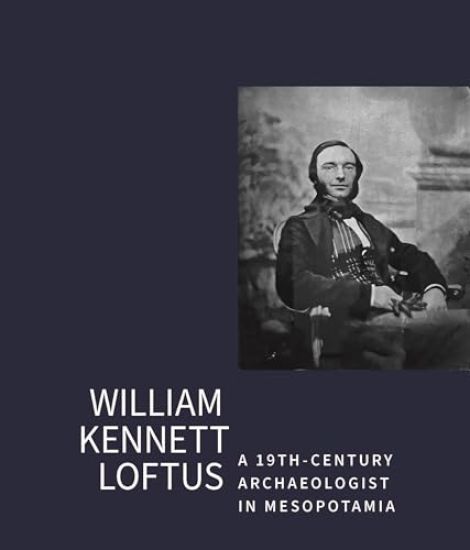
William Kennet Loftus: A 19th-Century Archaeologist in Mesopotamia

William Kennet Loftus: A 19th-Century Archaeologist in Mesopotamia

John Curtis

British Institute for the Study of Iraq (Gertrude Bell Memorial)
2023
nidottu
This book gathers together hitherto unpublished letters from William Kennett Loftus (1820-1858) to friends and relatives in Newcastle-upon-Tyne. The letters have been transcribed and are introduced by John Curtis. Loftus was a geologist attached to the Turco-Persian Frontier Commission which in the years 1849-52 was charged with establishing the border between Persia and the Ottoman Empire. In this position he was able to undertake pioneering archaeological work at sites such as Warka in Mesopotamia (Iraq) and Susa in Persia (Iran). As well as providing information about Loftus’ archaeological work, there are vivid descriptions of celebrating the birthday of Queen Victoria in Baghdad, contending with wild tribesmen, travelling on horseback through the Taurus Mountains in winter, working in temperatures of up to nearly 50° centigrade in the summer, and hunting hyenas and wild pigs. The book also contains genealogical information about Loftus and his family.
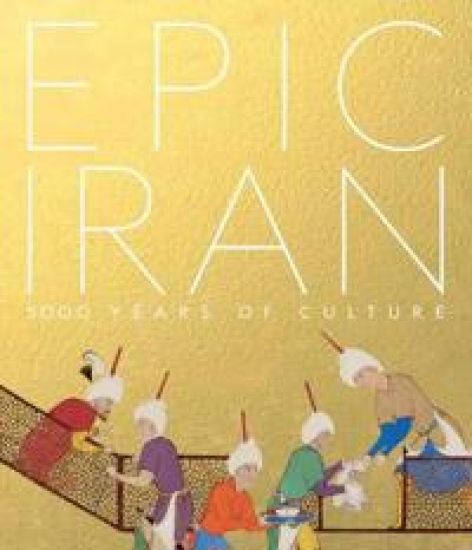
Epic Iran

Epic Iran

John Curtis; Ina Sarikhani Sandmann; Tim Stanley

V A Publishing
2020
sidottu
Iran was home to some of the greatest civilizations of both the ancient and medieval worlds, but these achievements are now little known outside the country. Epic Iran brings together 250 fascinating objects and images to cast a rare light on 5,000 years of history, showing how civilized life emerged in Iran around 3,200 BC, and how a distinctive Iranian identity, formed 2,500 years ago, has survived until today, expressed through artistic continuities, religious affiliations and the Persian language. Lavishly illustrated, this magnificent and important book encompasses metalwork, ceramics, glass, illustrated manuscripts, textiles, carpets, oil paintings, drawings and photographs from collections around the world. It brings treasures from the ancient and Islamic worlds together with the work of contemporary artists and makers, demonstrating the rich legacy that still influences many modern-day practitioners.
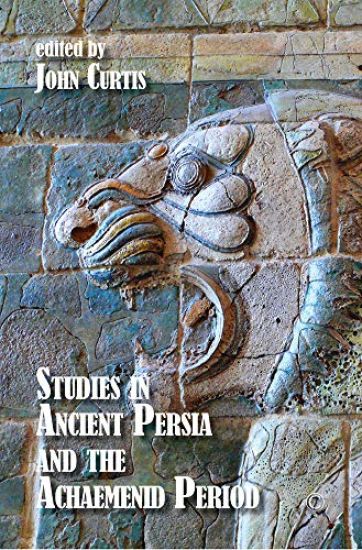
Studies in Ancient Persia and the Achaemenid Period PB
An important collection of eight essays on Ancient Persia (Iran) in the periods of the Achaemenid Empire (539-330 BC), when the Persians established control over the whole of the Ancient Near East, and later the Sasanian Empire. It will be of interest to historians, archaeologists and biblical scholars. Paul Collins writes about stone relief carvings from Persepolis; John Curtis and Christopher Walker illuminate the Achaemenid period in Babylon; Terence Mitchell, Alan Millard and Shahrokh Razmjou draw attention to neglected aspects of biblical archaeology and the books of Daniel and Isaiah; and Mahnaz Moazami and Prudence Harper explore the Sasanian period in Iran (AD 250-650) when Zoroastrianism became the state religion.
Studies in Ancient Persia and the Achaemenid Period HB
An important collection of eight essays on Ancient Persia (Iran) in the periods of the Achaemenid Empire (539-330 BC), when the Persians established control over the whole of the Ancient Near East, and later the Sasanian Empire. It will be of interest to historians, archaeologists and biblical scholars. Paul Collins writes about stone relief carvings from Persepolis; John Curtis and Christopher Walker illuminate the Achaemenid period in Babylon; Terence Mitchell, Alan Millard and Shahrokh Razmjou draw attention to neglected aspects of biblical archaeology and the books of Daniel and Isaiah; and Mahnaz Moazami and Prudence Harper explore the Sasanian period in Iran (AD 250-650) when Zoroastrianism became the state religion.
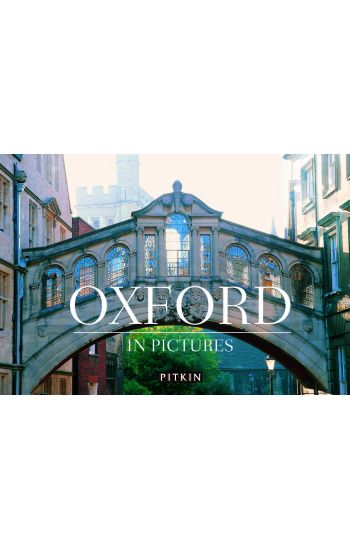
Oxford in Pictures

Oxford in Pictures

John Curtis

Pitkin Publishing
2019
sidottu
“Oxford still remains the most beautiful thing in England, and nowhere else are life and art so exquisitely blended, so perfectly made into one.” Oscar Wilde Oxford has for centuries inspired and delighted, and its beauty and antiquity have been celebrated by some of the most famous writers and artists in history. The unique characteristics of Oxford are captured in this stunning photographic collection – the famous colleges and grand buildings, the parks, the riverside walks and the wide streets. From Boars Hill to South Park, this beautiful book explores the familiar and the hidden Oxford. Extracts of poetry and prose from famous writers such as Lewis Carroll, Evelyn Waugh, Samuel Pepys, Dorothy L. Sayers and Jan Morris complement the images perfectly, creating a memorable portrait of this much-loved city.
An Introduction to Entomology, or, Elements of the Natural History of Insects

An Introduction to Entomology, or, Elements of the Natural History of Insects

John Curtis; William Spence; Richard And Arthur Taylor Printer

Palala Press
2018
pokkari
This work has been selected by scholars as being culturally important, and is part of the knowledge base of civilization as we know it. This work was reproduced from the original artifact, and remains as true to the original work as possible. Therefore, you will see the original copyright references, library stamps (as most of these works have been housed in our most important libraries around the world), and other notations in the work. This work is in the public domain in the United States of America, and possibly other nations. Within the United States, you may freely copy and distribute this work, as no entity (individual or corporate) has a copyright on the body of the work. As a reproduction of a historical artifact, this work may contain missing or blurred pages, poor pictures, errant marks, etc. Scholars believe, and we concur, that this work is important enough to be preserved, reproduced, and made generally available to the public. We appreciate your support of the preservation process, and thank you for being an important part of keeping this knowledge alive and relevant.
An Introduction to Entomology, or, Elements of the Natural History of Insects

An Introduction to Entomology, or, Elements of the Natural History of Insects

John Curtis; William Spence; Richard And Arthur Taylor Printer

Palala Press
2018
pokkari
This work has been selected by scholars as being culturally important, and is part of the knowledge base of civilization as we know it. This work was reproduced from the original artifact, and remains as true to the original work as possible. Therefore, you will see the original copyright references, library stamps (as most of these works have been housed in our most important libraries around the world), and other notations in the work. This work is in the public domain in the United States of America, and possibly other nations. Within the United States, you may freely copy and distribute this work, as no entity (individual or corporate) has a copyright on the body of the work. As a reproduction of a historical artifact, this work may contain missing or blurred pages, poor pictures, errant marks, etc. Scholars believe, and we concur, that this work is important enough to be preserved, reproduced, and made generally available to the public. We appreciate your support of the preservation process, and thank you for being an important part of keeping this knowledge alive and relevant.
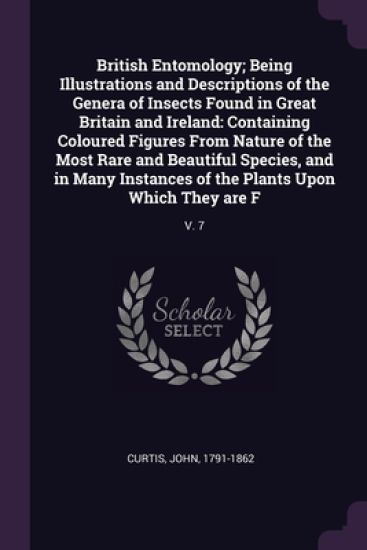
British Entomology; Being Illustrations and Descriptions of the Genera of Insects Found in Great Britain and Ireland
This work has been selected by scholars as being culturally important, and is part of the knowledge base of civilization as we know it. This work was reproduced from the original artifact, and remains as true to the original work as possible. Therefore, you will see the original copyright references, library stamps (as most of these works have been housed in our most important libraries around the world), and other notations in the work. This work is in the public domain in the United States of America, and possibly other nations. Within the United States, you may freely copy and distribute this work, as no entity (individual or corporate) has a copyright on the body of the work. As a reproduction of a historical artifact, this work may contain missing or blurred pages, poor pictures, errant marks, etc. Scholars believe, and we concur, that this work is important enough to be preserved, reproduced, and made generally available to the public. We appreciate your support of the preservation process, and thank you for being an important part of keeping this knowledge alive and relevant.
British Entomology; Being Illustrations and Descriptions of the Genera of Insects Found in Great Britain and Ireland
This work has been selected by scholars as being culturally important, and is part of the knowledge base of civilization as we know it. This work was reproduced from the original artifact, and remains as true to the original work as possible. Therefore, you will see the original copyright references, library stamps (as most of these works have been housed in our most important libraries around the world), and other notations in the work. This work is in the public domain in the United States of America, and possibly other nations. Within the United States, you may freely copy and distribute this work, as no entity (individual or corporate) has a copyright on the body of the work. As a reproduction of a historical artifact, this work may contain missing or blurred pages, poor pictures, errant marks, etc. Scholars believe, and we concur, that this work is important enough to be preserved, reproduced, and made generally available to the public. We appreciate your support of the preservation process, and thank you for being an important part of keeping this knowledge alive and relevant.
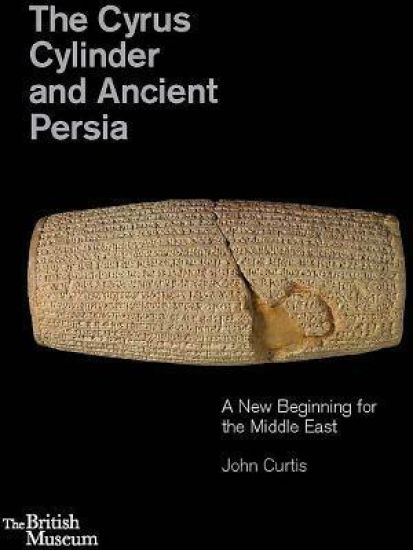
The Cyrus Cylinder and Ancient Persia

The Cyrus Cylinder and Ancient Persia

John Curtis

British Museum Press
2013
sidottu
The Cyrus Cylinder is one of the most famous objects to have survived from the ancient world. Inscribed in Babylonian cuneiform on the orders of the Persian King Cyrus the Great (559-530BC) after he captured Babylon, it is often referred to as the first bill of human rights, as it appears to permit freedom of worship throughout the Persian Empire and to allow deported people to return to their homelands. It is a valued object by people all around the world as a symbol of tolerance and respect for different peoples and different faiths, which is why a copy of the cylinder is on display in the United Nations building in New York. This lavishly illustrated catalogue is published to complement the first ever tour of the object to the United States, along with sixteen other objects from the British Museum’s world-famous collection. Including a new authoritative translation of the Cyrus Cylinder by Irving Finkel, The Cyrus Cylinder and Ancient Persia offers a fascinating introduction into a period of great social and political change in the Ancient Near East.. ‘You could almost say that the Cyrus Cylinder is a history of the Middle East in one object and it is a link to a past which we all share and to a key moment in history that has shaped the world around us.’ - Neil MacGregor, Director of the British Museum
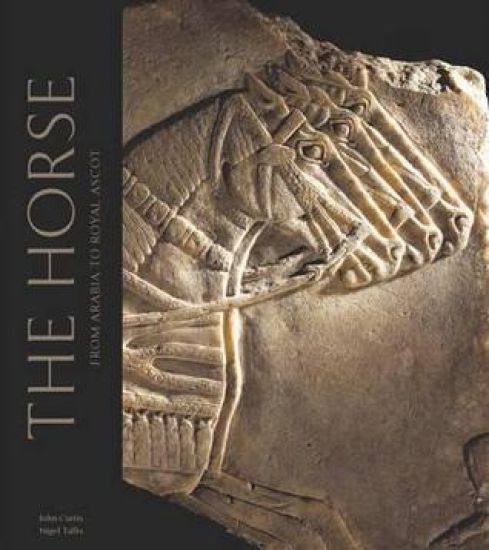
The Horse

The Horse

John Curtis; Nigel Tallis

British Museum Press
2012
nidottu
Published to accompany an exhibition at the British Museum in 2012, this beautifully illustrated book celebrates the relationship between horses and humans through the ages, revealing the immense influence of horses on human history. From the domestication of the Arabian horse circa 3500BC to the present day, this book explores how entire peoples and cultures have been characterized by the horse and its central role in society, in peace and war, in mythology and literature. Featured are 200 stunning images ranging from north Arabian rock drawings to European watercolours, illuminating how the horse represents the history of civilization itself.
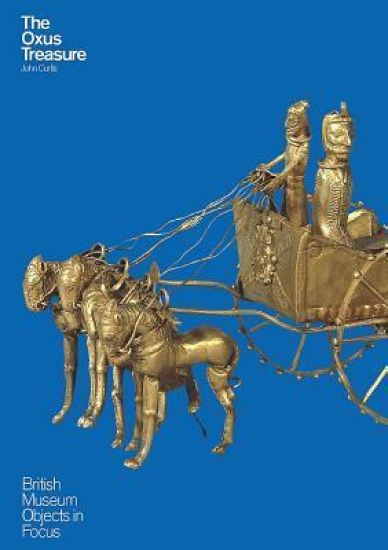
The Oxus Treasure

The Oxus Treasure

John Curtis

British Museum Press
2012
nidottu
In May 1880 Captain F. C. Burton, a British political officer in Afghanistan, rescued a group of merchants who had been captured by bandits while travelling between Kabul and Peshawar. With them was a rich and impressive collection of gold and silver objects dating back to the fifth and fourth centuries BC. From the banks of the River Oxus, the entire hoard was, in due course, bequeathed to the British Museum. Consisting of around 170 objects, including vessels, a gold scabbard, armlets, coins and much more, the collection is an example of ancient goldsmithery at its very best. With exciting and descriptive insight placing the treasure into historical and cultural context, this book takes a closer look at the individual wonders that make up the Oxus Treasure one of the British Museums most celebrated and cherished collections.
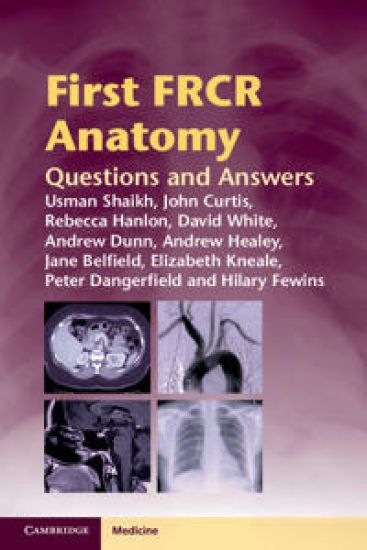
First FRCR Anatomy

First FRCR Anatomy

Usman Shaikh; John Curtis; Rebecca Hanlon; David White; Andrew Dunn; Andrew Healey; Jane Belfield; Elizabeth Kneale; Peter Dangerfield; Hilary Fewins

Cambridge University Press
2012
pokkari
First FRCR Anatomy: Questions and Answers provides eight test papers modelled on the exam format of the Royal College of Radiologists' anatomy module. Written by a team of consultant and trainee radiologists, the practice questions and answers will give you the advantage you need to succeed and stand out from the average trainee. The questions include images from all modalities – CT, MRI, ultrasound, plain film, screening and angiography, closely correlating with the images you are likely to see both in the exam and in day-to-day practice. Expanded clinical answers also distill clinical radiological knowledge accrued over many years of clinical practice, making this much more than a revision aid. First FRCR Anatomy: Questions and Answers covers the full breadth of curriculum topics including MSK, cardiac, thoracic, genitourinary, gastrointestinal, vascular, neuro and pediatric imaging. An essential resource for all First FRCR candidates.