

Kirjailija
John Cutler
Kirjat ja teokset yhdessä paikassa: 15 kirjaa, julkaisuja vuosilta 2005–2025, suosituimpiin kuuluu Principles and Practice of the Law of Evidence. Vertaile teosten hintoja ja tarkista saatavuus suomalaisista kirjakaupoista.
15 kirjaa
Kirjojen julkaisuvuodet: 2005–2025.


Stop Wasting Research
Jake Burghardt; John Cutler
Rosenfeld Media
2025
nidottu
Halvin toimitettuna 79,10 €
Why do crucial customer insights often fail to drive product decisions? The answer: wasted research. Jake Burghardt identifies the insidious root causes of research waste, giving actionable ideas to increase the impact of siloed research. You'll learn to enhance collaboration, maximize learning, and drive research-informed product launches. Anyone--from UX researchers and insight generators to data scientists and CX analysts--will benefit from these crucial customer insights. Who Should Read This Book This book is for anyone who's seen too many important customer insights that failed to drive next steps in their business. It's for leaders and practitioners who want to experiment with new ways to increase their organization's research use in product development and delivery. Specifically, it's perfect for researchers from any discipline from UX to CX to sales to data science. It's also a must-read for leaders of product, design, marketing, and engineering --anyone who wants to improve decision-making based on available customer research. And that includes operations people. Takeaways Uncover tools and methods to reduce research waste. Learn how to find and use hidden research that might have lasting impact on your organization. Discover knowledge-consolidating tools and requirements for repositories. Increase the impact of any type of customer research on your organization. Note the special "IDEA" sections that show possible actions to choose based on what makes sense for your current resources and organizational context See "You Might Be Asking" sidebars, which give answers to common questions. Search for "Imagine a Way Forward" sidebars that highlight special scenarios--telling a story of action ideas as step-by-step narratives. Look for insightful interviews from experts in the field. Read the chapter summaries of key proposals to get more value from research, including a distillation of what success might look like.




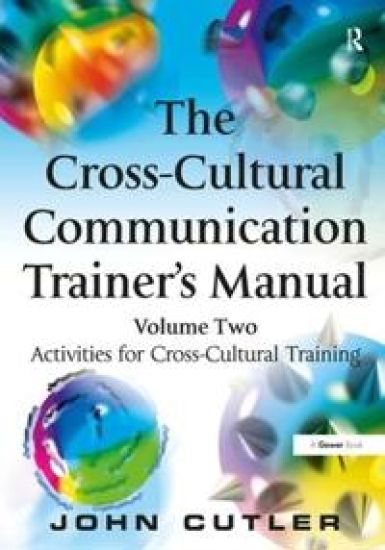
The global market means that many organizations now have offices, affiliates, suppliers, call centres, clients and customers in a wide range of countries and cultures. Employees at a variety of levels are expected to have as good skills in cross-cultural working as in any other key competency. The Cross-Cultural Communication Trainer's Manual provides a complete toolkit for the trainer/facilitator needing to design and deliver cross- or inter-cultural training, for both mono- and multicultural audiences. Volume One: Designing Cross-Cultural Training The first volume in this two-volume set opens with an outline of useful information on cross-cultural training content, design and delivery. This is followed by a series of readings that flesh out many of the concepts important for trainers and learners alike and provide important facts, theory and practical background on an area in question. They can be used as a basis for facilitator presentations or given to learners as reading exercises. The manual concludes with (1) a series of action planning activities to help consolidate what learners have experienced and (2) evaluation forms for assessing and evaluating the effectiveness of any cross-cultural training events. The Appendix offers outline designs for seven half-day, one-day and two-day workshops using activities from Volume Two: Activities for Cross-Cultural Training along with a detailed bibliography. Volume Two: Activities for Cross-Cultural Training With 80 activities (covering skills such as understanding culture and differences, stereotypes, cultural self-awareness, cultural influences, barriers to communication) this varied and imaginative collection is a must-have resource for anyone involved in cross- or inter-cultural training. The collection concludes with a detailed bibliography of further reading and references.


Principles and Practice of the Law of Evidence
Edmund Powell; John Cutler; Charles Francis Cagney
Arkose Press
2015
sidottu

Powell's Principles And Practice Of The Law Of Evidence (1885)
John Cutler; Edmund Fuller Griffin
KESSINGER PUBLISHING, LLC
2010
sidottu


Powell's Principles and Practice of the Law of Evidence
John Cutler; Edmund Fuller Griffin
Kessinger Pub
2008
pokkari

Understanding Aircraft Structures
John Cutler
Wiley-Blackwell (an imprint of John Wiley Sons Ltd)
2006
nidottu
This book explains aircraft structures so as to provide a basic understanding of the subject and the terminology used, as well as illustrating some of the problems. It provides a brief historical background, and covers parts of the aeroplane, loads, structural form, materials, processes, detail design, quality control, stressing, and the documentation associated with modification and repairs. The Fourth Edition takes account of new materials and the new European regulatory system.
The global market means that many organizations now have offices, affiliates, suppliers, call centres, clients and customers in a wide range of countries and cultures. Employees at a variety of levels are expected to have as good skills in cross-cultural working as in any other key competency. The Cross-Cultural Communication Trainer's Manual provides a complete toolkit for the trainer/facilitator needing to design and deliver cross- or inter-cultural training, for both mono- and multicultural audiences. Volume One: Designing Cross-Cultural Training The first volume in this two-volume set opens with an outline of useful information on cross-cultural training content, design and delivery. This is followed by a series of readings that flesh out many of the concepts important for trainers and learners alike and provide important facts, theory and practical background on an area in question. They can be used as a basis for facilitator presentations or given to learners as reading exercises. The manual concludes with (1) a series of action planning activities to help consolidate what learners have experienced and (2) evaluation forms for assessing and evaluating the effectiveness of any cross-cultural training events. The Appendix offers outline designs for seven half-day, one-day and two-day workshops using activities from Volume Two: Activities for Cross-Cultural Training along with a detailed bibliography. Volume Two: Activities for Cross-Cultural Training With 80 activities (covering skills such as understanding culture and differences, stereotypes, cultural self-awareness, cultural influences, barriers to communication) this varied and imaginative collection is a must-have resource for anyone involved in cross- or inter-cultural training. The collection concludes with a detailed bibliography of further reading and references.