Kirjojen hintavertailu – 12 903 725 kirjaa ja 27 kauppaa
Kirjailija
John Darwin
Kirjat ja teokset yhdessä paikassa: 19 kirjaa, julkaisuja vuosilta 1981–2022, suosituimpiin kuuluu Das unvollendete Weltreich. Vertaile teosten hintoja ja tarkista saatavuus suomalaisista kirjakaupoista.
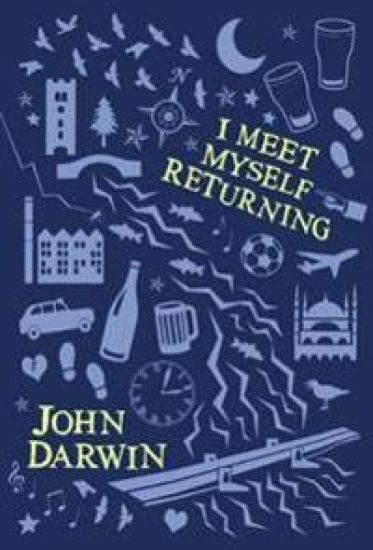
From the provincial peccadilloes of Prestwich in Manchester to coffee houses and bars by the Bosporus in Istanbul, John Darwin explores life's three stages of arriving, staying for a bit, and then leaving. A poetic reflection on the ennui of the everyday, intermittent pleasures, and the quest to understand love and belonging.
A poetic journey from the mills and moors of the industrial north to the meals and mosques of the Byzantine middle-east and back again. I Meet Myself Returning is about finding your feet in our convoluted world and letting them take you to a place to call your own. And occasionally stopping off for a pint.
Getting Your FREE Bonus Download this book, read it to the end and see "BONUS: Your FREE Gift" chapter after the conclusion. Low Carb High Fat Diet: All The Truth, Pros, And Cons Of The Ketogenic Diet + 30 Low Carb Recipes We all want to lose a few pounds, whether it be the winter weight, the baby weight, or the weight that seemed to creep on after high school and just stuck around for the long run. The idea is to be able to become completely self contained, in reality this may take several years to achieve as, not only do they need to establish a good harvest they also need to find ways to live, if possible, without relying on the grid; the usual electricity and water supplies that most people take for granted. You want to lose weight, and you want to keep it off. You want to follow the ketogenic diet, but you want to know what it really is all about. What are the real pros and cons of the diet? What truths are there that you should know but can't seem to dig up? I am going to debunk those myths that have filled your mind for months, and I am going to show you the steps you need to take the get the results that you've been hunting for. Download your E book "Low Carb High Fat Diet: All The Truth, Pros, And Cons Of The Ketogenic Diet + 30 Low Carb Recipes" by scrolling up and clicking "Buy Now with 1-Click" button
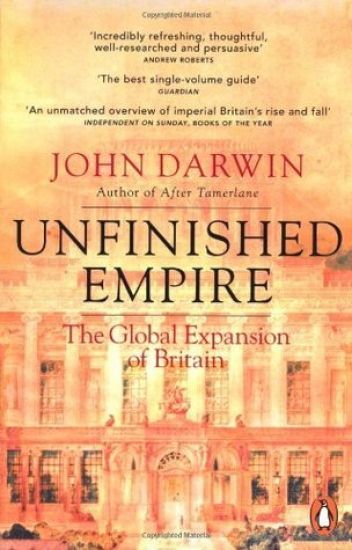
A both controversial and comprehensive historical analysis of how the British Empire worked, from Wolfson Prize-winning author and historian John DarwinThe British Empire shaped the world in countless ways: repopulating continents, carving out nations, imposing its own language, technology and values. For perhaps two centuries its expansion and final collapse were the single largest determinant of historical events, and it remains surrounded by myth, misconception and controversy today. John Darwin's provocative and richly enjoyable book shows how diverse, contradictory and in many ways chaotic the British Empire really was, controlled by interests that were often at loggerheads, and as much driven on by others' weaknesses as by its own strength.
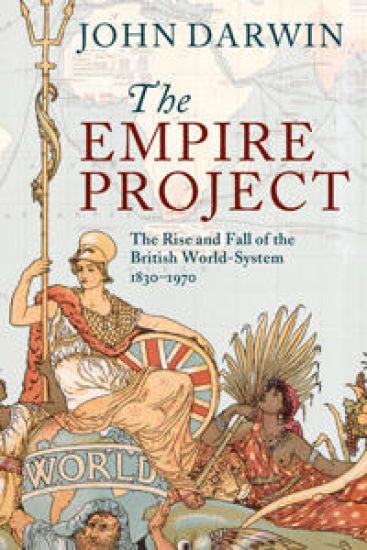
The British Empire, wrote Adam Smith, 'has hitherto been not an empire, but the project of an empire' and John Darwin offers a magisterial global history of the rise and fall of that great imperial project. The British Empire, he argues, was much more than a group of colonies ruled over by a scattering of British expatriates until eventual independence. It was, above all, a global phenomenon. Its power derived rather less from the assertion of imperial authority than from the fusing together of three different kinds of empire: the settler empire of the 'white dominions'; the commercial empire of the City of London; and 'Greater India' which contributed markets, manpower and military muscle. This unprecedented history charts how this intricate imperial web was first strengthened, then weakened and finally severed on the rollercoaster of global economic, political and geostrategic upheaval on which it rode from beginning to end.
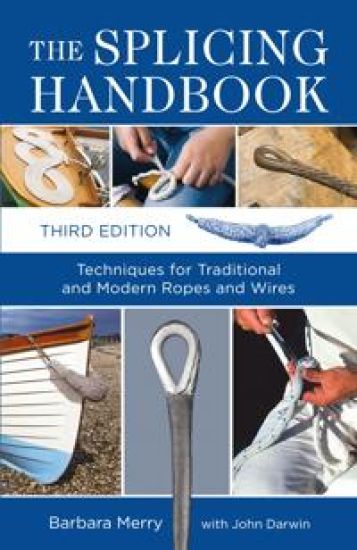
The only handbook devoted to splicing today's ropes, this bestselling reference covers every kind of splicing project a boater will ever need. Featuring step-by-step illustrations and explanations for the most useful and popular splices in traditional twisted and modern braided ropes as well as wire, it covers:- how to splice high-tech, slippery, synthetic ropes such as Spectra, Dyneema and Kevlar- mainstream rope materials such as Dacron and nylon- all standard rope constructions, including solid braid, double braid, parallel core, plaited and three-strand rope- how to splice wire for shrouds and halyards, and rope to wire splicesThis new edition has been expanded to include a section on wire selection, new wire splices and several attractive knot and splice-based projects: rope fenders, rope cargo nets, rope ladders and rope bow puddings. There isn't a rope project on board that can't be tackled with this guide.‘Covers every splicing project a yachtsman will ever need.' Kelvin Hughes‘Aimed at the beginner, though the in-depth stuff will appeal to old hands too.' Classic Boat
The British Empire, wrote Adam Smith, 'has hitherto been not an empire, but the project of an empire' and John Darwin offers a magisterial global history of the rise and fall of that great imperial project. The British Empire, he argues, was much more than a group of colonies ruled over by a scattering of British expatriates until eventual independence. It was, above all, a global phenomenon. Its power derived rather less from the assertion of imperial authority than from the fusing together of three different kinds of empire: the settler empire of the 'white dominions'; the commercial empire of the City of London; and 'Greater India' which contributed markets, manpower and military muscle. This unprecedented history charts how this intricate imperial web was first strengthened, then weakened and finally severed on the rollercoaster of global economic, political and geostrategic upheaval on which it rode from beginning to end.
Tamerlane, the Ottomans, the Mughals, the Manchus, the British, the Japanese, the Nazis, and the Soviets: All built empires meant to last forever; all were to fail. But, as John Darwin shows in this magisterial book, their empire-building created the world we know today. From the death of Tamerlane in 1405, to America's rise to world "hyperpower," to the resurgence of China and India as global economic powers, After Tamerlane is a grand historical narrative that offers a new perspective on the past, present, and future of empires.
Tamerlane, the Ottomans, the Mughals, the Manchus, the British, the Soviets, the Japanese and the Nazis. All built empires they hoped would last forever: all were destined to fail. But, as John Darwin shows in his magnificent book, their empire building created the world we know today. From the death of Tamerlane in 1405, last of the ‘world conquerors’, to the rise and fall of European empires, and from America’s growing colonial presence to the resurgence of India and China as global economic powers, After Tamerlane provides a wonderfully intriguing perspective on the past, present and future of empires.
Within twenty years of victory in the Second World War Britain had ceased to be a world power and her global empire has dissolved into fragments. With what now seems astonishing rapidity, and empire three centuries old, which had reached its greatest extent as late as 1921, was transformed into more than fifty sovereign states. Why did this great transformation come about? Had Britain simply become too weak in a world of superpowers? Had the pressure of colonial nationalism suddenly become overwhelming? Or had the British themselves decided that they no longer needed an empire, and that interests were better served by joining the rich man's club of Europe? In this short book, these and other theories are examined critically. The aim is not to present a detailed narrative of Britain's imperial retreat but to introduce the reader to the current state of debate in a rapidly expanding subject.
The only book devoted completely to slicing today's ropes, this fully illustrated, step-by-step guide has been expanded and enhanced in this new edition and now covers wire splices, and splices in Spectra and Kevlar ropes as well as Dacron braid and traditional three-strand. The Splicing Handbook includes every splice project a boater will ever need.
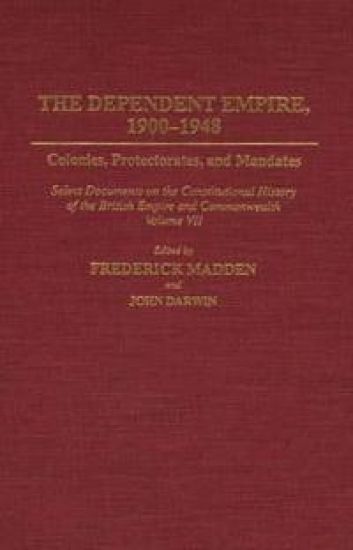
The penultimate volume in this documentary series covers the first part of the 20th century processes of decolonization within the British Empire, concluding with the independence of Ceylon, the first of the non-European-settled colonies. It also illustrates constitutional developments in the West Indies (particularly Jamaica, Trinidad, and British Guiana), Mauritius and Seychelles, Hong Kong, Fiji, the Western Pacific, Gibraltar, the Falklands, and West, East, and Central-Southern Africa, as well as advance and retreat in Malta and Cyprus. There is a section on Egypt and on the mandates of Palestine, Transjordania, and Mesopotamia. An introductory section demonstrates the changes both in attitudes to and the dimensions of colonial rule during the period from the deep freeze of trusteeship to partnership. The concluding date saw, in addition to Ceylon's full membership in the Commonwealth, the speedy replacement of an abortive union of Malaya by a federation, a failed initiative in Cyprus, and what proved to be abortive reform in Hong Kong and Fiji, treaty revision in Egypt, a policy change in the Sudan, the surrender of the Palestine mandate, and the establishment of Israel. By 1948, though doubts remained about a closer association of the colonies, protectorates, and mandates in West, East, and Central Africa, there was optimism about a possible federation of the Caribbean.
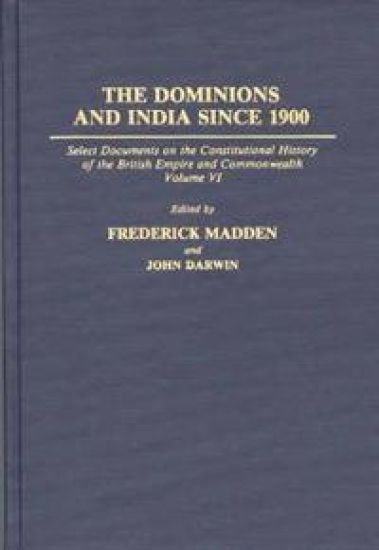
The sixth volume in Greenwood's ongoing series, this book is the first of three fine volumes to cover the twentieth century and the last stages in decolonization of the British Empire. It is concerned with the original five Dominions, the apparently inappropriate association of the Irish Free State with those Dominions, and the similarly anomalous status of India, the first non-European dependency and the first republic to secure full membership in the Commonwealth and to make it a multiracial association. The book documents the evolution of, changes in, and rise and fall of that Commonwealth association; the shifts in the balance of powers within the Canadian and Australian federations; the fulfillment of union in South Africa and Ireland; the coherence emerging in New Zealand; the bankruptcy in Newfoundland; and the separation of India and Pakistan. Two forthcoming volumes will deal with the colonies, protectorates, and mandates in the twentieth century.
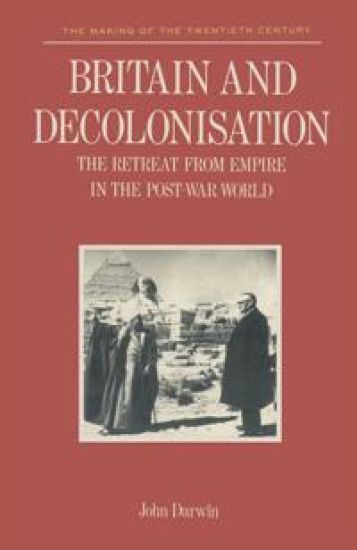
As the greatest imperial power before 1939 Britain played a leading role in the great post-war shift in the relationship between the West and the Third World which we call 'decolonisation'. But why did decolonisation come about and what were its effects? Was nationalism in colonial societies or indifference in Britain the key factor in the dissolution of the British Empire? Was the decay of British power and influence an inevitable consequence of imperial decline? Did British policies in the last phase of empire reflect an acceptance of decline or the hope that it could be postponed indefinitely by timely concessions? This book aims to answer these questions in a general account of Britain's post-war retreat from empire.
As the greatest imperial power before 1939 Britain played a leading role in the great post-war shift in the relationship between the West and the Third World which we call 'decolonisation'. But why did decolonisation come about and what were its effects? Was nationalism in colonial societies or indifference in Britain the key factor in the dissolution of the British Empire? Was the decay of British power and influence an inevitable consequence of imperial decline? Did British policies in the last phase of empire reflect an acceptance of decline or the hope that it could be postponed indefinitely by timely concessions? This book aims to answer these questions in a general account of Britain's post-war retreat from empire.