

Kirjailija
John Davenport
Kirjat ja teokset yhdessä paikassa: 41 kirjaa, julkaisuja vuosilta 1991–2025, suosituimpiin kuuluu Ford Escort - A Winner's Car. Vertaile teosten hintoja ja tarkista saatavuus suomalaisista kirjakaupoista.
41 kirjaa
Kirjojen julkaisuvuodet: 1991–2025.

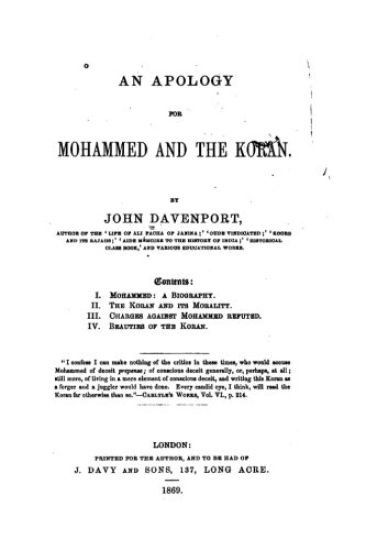
An Apology for Mohammed and the Koran
John Davenport
Createspace Independent Publishing Platform
2016
nidottu

Aphrodisiacs and Anti-Aphrodisiacs
John Davenport
Createspace Independent Publishing Platform
2015
nidottu
Thank you for checking out this book by Theophania Publishing. We appreciate your business and look forward to serving you soon. We have thousands of titles available, and we invite you to search for us by name, contact us via our website, or download our most recent catalogues. Aphrodisiacs and Anti-Aphrodisiacs: THREE ESSAYS ON THE POWERS OF REPRODUCTION; WITH SOME ACCOUNT OF THE JUDICIAL "CONGRESS" AS PRACTISED IN FRANCE DURING THE SEVENTEENTH CENTURY. THE reproductive powers of Nature were regarded by the nations of remote antiquity with an awe and reverence so great, as to form an object of worship, under a symbol, of all others the most significant, -the Phallus; and thus was founded a religion, of which the traces exist to this day, not in Asia only, but even in Europe itself. That scarcely any notices of this worship should appear in modern works, except in the erudite pages of a few antiquarians may be accounted for by considering the difference of opinion between the ancients and the moderns as to what constitutes-modesty; the former being unable to see any moral turpitude in actions they regarded was the designs of nature, while the latter, by their over-strained notions of delicacy, render themselves, viin some degree at least, obnoxious to the charge that, in proportion as manners becomes corrupt, language becomes more guarded, -modesty, when banished from the heart, taking refuge on the lips. To supply, to some extent, this lacuna in our popular literature has been the object of the present work, in which, it is hoped, may be found much curious and interesting physiological information, interspersed with recherch and festivous anecdotes. The text is illustrated by a few plates, drawn from antiquarian sources.
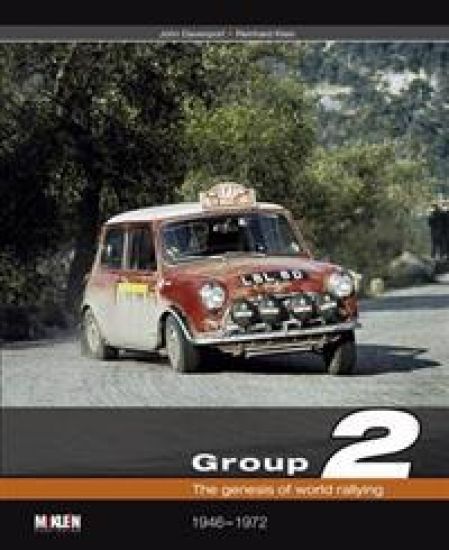
After featuring the legendary eras of Group B and Group 4 rallying, McKlein Publishing has now dedicated a book to the early years of the sport. "Group 2 - The genesis of world rallying" is a comprehensive review of the 1950s and 1960s. Then rallying was a big adventure, capable of capturing the imagination and enthusiasm of a Europe that was rediscovering its romance with the motorcar. Rallies like the Monte Carlo, the Li ge-Rome-Li ge, the Acropolis, the RAC and the Rallye des Alpes were the jewels in the diadem of the sport. And new challenges arose like the East African Safari, the 1000 Lakes and the Tour de Corse. All these events tested the crews that entered them to the very limits of speed and endurance. If the cars were less sophisticated than those we are familiar with in the 21st century, the skills to drive them quickly were perhaps of a higher order. Certainly the stars of rallying from the period of this book are still well-known names sixty years later--for example, Erik Carlsson, Timo M kinen, Paddy Hopkirk, Eugen B hringer, Jean-Pierre Nicolas and Pat Moss. The same applies to the legendary cars that changed the sport such as the Mercedes 220SEb, Mini Cooper, Porsche 911, Lancia Fulvia and Alpine-Renault A110. "Group 2--The genesis of world rallying" is the first complete review of the sport in the period 1946 to 1972. Over 256 pages, author John Davenport, who was part of that era as a co-driver and journalist, tells the story of the evolution of a sport from being largely something for amateurs to one that was fully professional. It was a time of growth, excitement and adventure and is covered here by comprehensive annual reviews, interesting features--such as a report on the great long distance rallies of that era--and results from all rounds of the European Championship and the International Championship for Makes. All this is accompanied by the greatest McKlein images from that era.



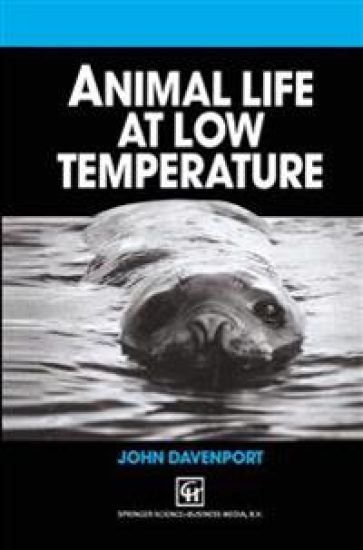
To humans, cold has a distinctly positive quality. 'Frostbite', 'a nip in the air', 'biting cold', all express the concept of cold as an entity which attacks the body, numbing and damaging it in the process. Probably the richness of descriptive English in this area stems from the early experiences of a group of essentially tropical apes, making their living on a cold and windswept island group half way between the Equator and the Arctic. During a scientific education we soon learn that there is no such thing as cold, only an absence of heat. Cold does not invade us; heat simply deserts. Later still we come to appreciate that temperature is a reflection of kinetic energy, and that the quantity of kinetic energy in a system is determined by the speed of molecular movement. Despite this realization, it is difficult to abandon the sensible prejudices of palaeolithic Homo sapiens shivering in his huts and caves. For example; appreciating that a polar bear is probably as comfortable when swimming from ice floe to ice floe as we are when swimming in the summer Mediterranean is not easy; understanding the thermal sensa tions of a 'cold-blooded' earthworm virtually impossible. We must always be wary of an anthropocentric attitude when considering the effects of cold on other species.

It is generally agreed that animal life originated in the sea and that adaptive radiation subsequently led to the colonisaHon of other environments - shores and estuaries, streams and lakes, bog, mountain and desert. In their invasion of these habitats animals left the equable, relatively stabl.e surroundings of the open sea and subjected themselves to the rigours of temperature fluctuations and extremes, a variety of ionic backgrounds, areas of depleted oxygen or the possibility of aerial exposure and potential desiccation. The spur for this radiation presumably lay in the prize of access to unexploited habitats and sources of energy. The survival of these more adventurous species has depended upon them evolving mechanisms to protect the integrity of their cellular constituents. Protoplasm can only exist within physiochemical limits which are quite narrow for each species. Water activity, salt and gas concentrations and temperature all have to be appropriate for enzyme catalysed processes to function properly within cells. Except in the open sea, environmental conditions regularly vary outside these limits. To take a familiar example; humans can only remain conscious (and hence functional) if their core (Le. deep tissues - brain, heart, liver, etc.) body temperature is maintained between about 30 and 43°C.
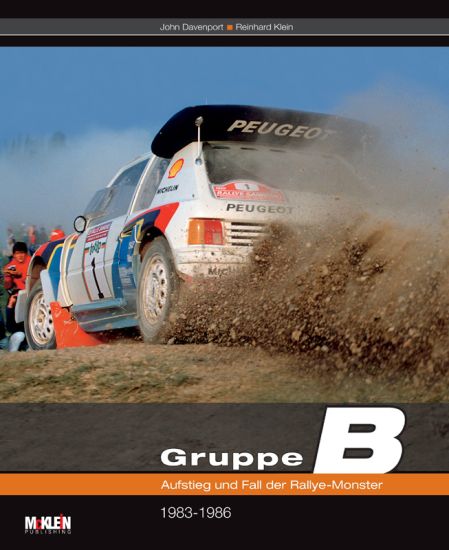
Gruppe B ? Aufstieg und Fall der Rallye-Monster
John Davenport; Reinhard Klein
McKlein Media GmbH Co.
2012
sidottu
A proven content presented in a new guise: The new edition of this standard work comes in the smaller format of 24.5 x 30cms and with just one language per book. This gave the authors Reinhard Klein and John Davenport the chance to include even more fascinating images from rallying's wildest period when limits were seemingly non-existent. To this day, many fans still consider Group B to be the epitome of madness on wheels. Never since that era have engineers had such enormous freedom to create extreme rally cars as they did during that fantastic period of the early 1980s. This book tells the story of all the cars developed within Group B, from the Quattros to the outstanding Lancias and Peugeots and to the exotic sports cars from Porsche and Mazda. But all the technical development came to a head in the year 1986, when the euphoria somehow turned into an ungovernable risk. The mischief of engineers, rally organizers, motor sport politicians and fans led to tragic accidents that finally resulted in Group B cars being banned from international rallies. John Davenport, rally-journalist and author of several books on rallying, experienced this era first-hand, as he was Motorsport Director of Austin Rover at the time. His comprehensive knowledge takes the reader on a journey into the fascinating world of these hi-tech rally cars and offers an authoritative insight into the power struggles going on behind the scenes. The book is filled with photographs from the archive of well known rally-photographer Reinhard Klein. They show to best effect the technical details of the cars, the slightly crazy ambiance of the time as well as plenty of action from the special stages.

Memoirs of the Court of France, from the year 1684 to the year 1720, now first translated from the Diary of the Marquis de Dangeau. With historical and critical notes.
Philippe De Courcillon; John Davenport
British Library, Historical Print Editions
2011
pokkari



The Historical Class Book Or Readings In Modern History: From The Reformation In 1517, To The Peace Of Pekin In 1860 (1861)
John Davenport
KESSINGER PUBLISHING, LLC
2008
nidottu
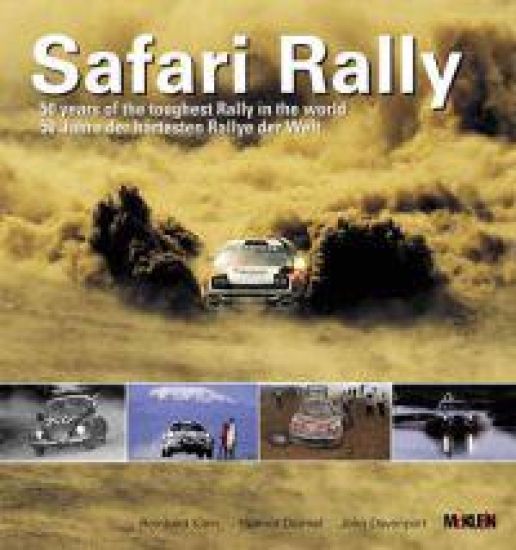
In 2002 the fiftieth event was held and it is possible that it may be the last. On the occasion of that anniversary, Reinhard Klein, in association with former co-driver John Davenport, compiled this massive work containing more than 300 pages. More than two years work has gone into its compilation. The highlight of this top-quality work is the photography. As well as the very best Reinhard Klein and McKlein shots, this book offers dozens of pictures from the private files of former participants and from the archives of Kenya's local newspapers, the Daily Nation and the East African Standard. Special features of this bilingual book are complete entry lists and results from all 50 years. There is also a photographic section devoted to the various elements that represent the diversity of the Safari Rally. These include the wildlife, the scenery, the roads, the people, the rally teams and some of those special moments where only a picture can convey the full meaning.

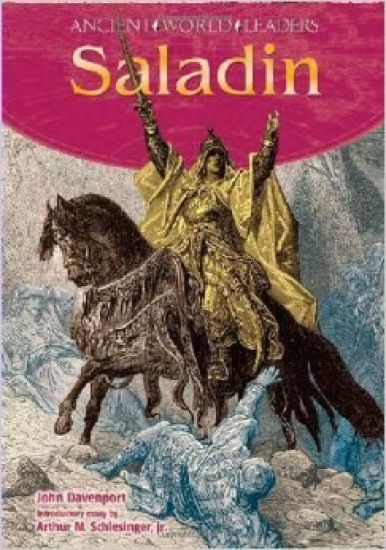
Examines the life of the very powerful and influential Muslim sultan, Saladin, who led his people in an attempt to regain holy lands in and around Jerusalem that had been lost during earlier Crusades.