Kirjojen hintavertailu – 12 903 725 kirjaa ja 27 kauppaa

Kirjailija

John Davy

Kirjat ja teokset yhdessä paikassa: 30 kirjaa, julkaisuja vuosilta 2004–2025, suosituimpiin kuuluu Barriers, Defences and Resistance. Vertaile teosten hintoja ja tarkista saatavuus suomalaisista kirjakaupoista.

30 kirjaa

Kirjojen julkaisuvuodet: 2004–2025.

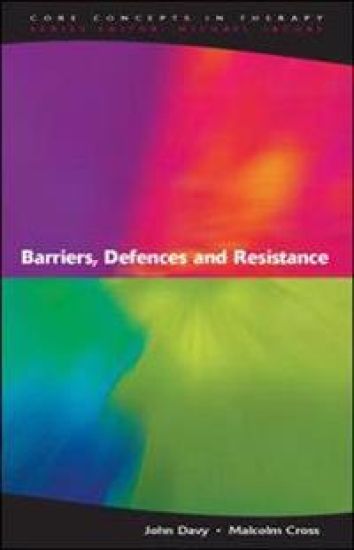
Barriers, Defences and Resistance

Barriers, Defences and Resistance

John Davy; Malcolm Cross

Open University Press
2004
nidottu
This book analyses the debates around the related concepts of barriers, defences and resistance across different forms of psychotherapy. Rather than presenting a single model, different understandings and usages of these terms are compared and contrasted using biopsychosocial, developmental and contextual perspectives. The book suggests how divergent theoretical positions might usefully be connected, but also highlights the pitfalls of poaching ideas and metaphors from other approaches with different epistemological or ethical foundations. Readers are invited to reflect on their own habitual and preferred standpoints in therapy, supervision and training, to help enhance the use of self in therapeutic relationships. Like other books in the series, the main focus of this book is on theoretical integration and interplay rather than practice, but clinical implications are also discussed throughout. Barriers, Defences and Resistance succeeds in discussing these concepts not simply in relation to therapy itself, but in relation to the broader field of professional psychotherapy such as supervision and training. It is essential reading for counsellors, counselling and clinical psychologists, psychotherapists and health professionals with an interest in therapeutic relationships.

Some Account of the Last Yellow Fever Epidemic of British Guiana
This work has been selected by scholars as being culturally important, and is part of the knowledge base of civilization as we know it. This work was reproduced from the original artifact, and remains as true to the original work as possible. Therefore, you will see the original copyright references, library stamps (as most of these works have been housed in our most important libraries around the world), and other notations in the work. This work is in the public domain in the United States of America, and possibly other nations. Within the United States, you may freely copy and distribute this work, as no entity (individual or corporate) has a copyright on the body of the work. As a reproduction of a historical artifact, this work may contain missing or blurred pages, poor pictures, errant marks, etc. Scholars believe, and we concur, that this work is important enough to be preserved, reproduced, and made generally available to the public. We appreciate your support of the preservation process, and thank you for being an important part of keeping this knowledge alive and relevant.
Notes And Observations On The Ionian Islands And Malta
This work has been selected by scholars as being culturally important, and is part of the knowledge base of civilization as we know it. This work was reproduced from the original artifact, and remains as true to the original work as possible. Therefore, you will see the original copyright references, library stamps (as most of these works have been housed in our most important libraries around the world), and other notations in the work. This work is in the public domain in the United States of America, and possibly other nations. Within the United States, you may freely copy and distribute this work, as no entity (individual or corporate) has a copyright on the body of the work. As a reproduction of a historical artifact, this work may contain missing or blurred pages, poor pictures, errant marks, etc. Scholars believe, and we concur, that this work is important enough to be preserved, reproduced, and made generally available to the public. We appreciate your support of the preservation process, and thank you for being an important part of keeping this knowledge alive and relevant.
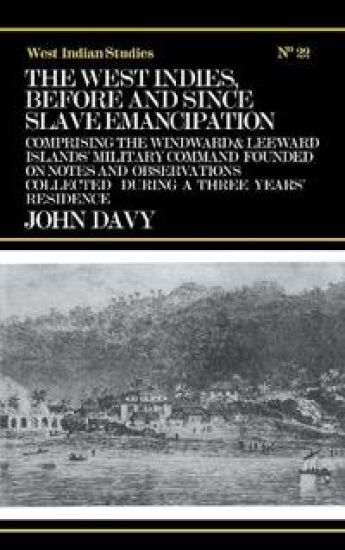
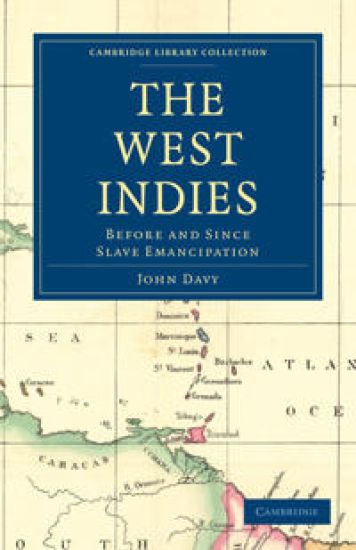
The West Indies, Before and Since Slave Emancipation
This work has been selected by scholars as being culturally important, and is part of the knowledge base of civilization as we know it. This work was reproduced from the original artifact, and remains as true to the original work as possible. Therefore, you will see the original copyright references, library stamps (as most of these works have been housed in our most important libraries around the world), and other notations in the work. This work is in the public domain in the United States of America, and possibly other nations. Within the United States, you may freely copy and distribute this work, as no entity (individual or corporate) has a copyright on the body of the work. As a reproduction of a historical artifact, this work may contain missing or blurred pages, poor pictures, errant marks, etc. Scholars believe, and we concur, that this work is important enough to be preserved, reproduced, and made generally available to the public. We appreciate your support of the preservation process, and thank you for being an important part of keeping this knowledge alive and relevant.
The West Indies Before and Since Slave Emancipation
John Davy (1790-1868) was an English doctor and brother of the chemist Sir Humphrey Davy. After graduating from Edinburgh University, in 1814 Davy became Inspector General of Army Hospitals, and he was elected a Fellow of the Royal Society in 1834. In his capacity as Inspector General, he spent 1845-1848 living in Barbados and visiting other Caribbean Islands. This volume, first published in 1854, describes the society and culture of Barbados and other islands, including Trinidad, Tobago and St Lucia. Based on Davy's notes and observations made while stationed on the island, the book describes in vivid detail the disparities in education, quality of life and behaviour between the freed slaves, indentured servants and plantation owners of Barbados and other islands. Davy's sympathetic account provides valuable first-hand descriptions of the social conditions and tensions which existed after the Emancipation Act of 1834.
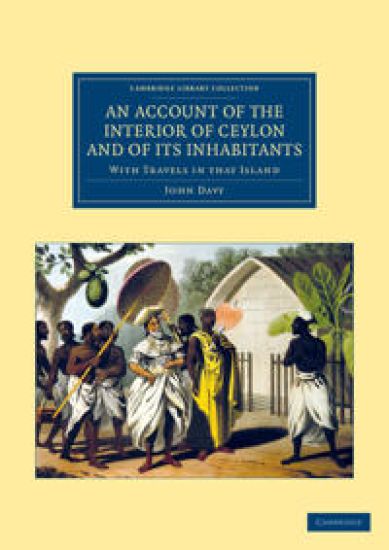
An Account of the Interior of Ceylon, and of its Inhabitants
John Davy (1790–1868), the younger brother of the chemist Sir Humphry Davy, published this account of Ceylon (present-day Sri Lanka) in 1821. An army surgeon and later Fellow of the Royal Society, he also wrote books on the Ionian Islands and the West Indies (also reissued in this series) and edited his brother's collected works. This book is a detailed study based on interviews with the islanders and Davy's own observations during his four-year visit. Part I is an overview of the natural history of the island - including its geography, geology, zoology and climate - as well as its people, demography, political system and culture, including architecture, craftwork and languages. Part II details Davy's travels within the country. With a number of beautiful reproductions of native drawings, as well as Davy's own, the work remains a rich resource for the insights of a Victorian polymath into early nineteenth-century Ceylon.
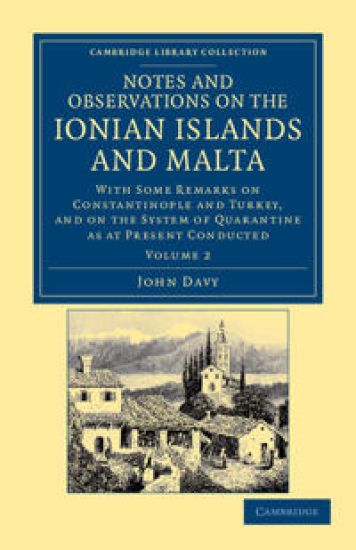
Notes and Observations on the Ionian Islands and Malta
The English doctor John Davy (1790–1868) was the younger brother of the chemist Sir Humphry Davy, of whom he wrote a memoir, also reissued in this series. After graduating from Edinburgh University, he entered the Army as a surgeon and was posted overseas. From 1824 to 1835 he was stationed in the Mediterranean, and later at Constantinople. Davy took detailed notes of the places he visited and the people he met, and turned some of these writings into books; his scientific observations led to him being made a Fellow of the Royal Society in 1834. Davy's account of his time in the Mediterranean was published in two volumes in 1842. Volume 2 continues the description of the Ionian islands and their people. Later chapters focus on health issues, such as malaria and other diseases, with the final chapters discussing Constantinople and examining the problems faced by Turkish army hospitals.
On Some of the More Important Diseases of the Army

On Some of the More Important Diseases of the Army

John Davy

Cambridge University Press
2011
pokkari
Born in Cornwall, John Davy (1790–1868) physiologist and anatomist, and the younger brother of the distinguished chemist Sir Humphry Davy (1778–1829), was one of the most prolific medical experts of his day. After taking a medical degree from Edinburgh in 1814 he became an army surgeon. He later became a hospital inspector and spent time living in overseas territories including India, Sri Lanka, and Barbados. First published in 1862, Davy's book discusses the prominence of fever, dysentery, cholera, liver disease, pneumonia, and other diseases common to the army, estimating that 45% of deaths in the British army serving abroad were caused by disease rather than by conflict. Davy also records his observations on putrefaction of bodies, particularly the vital organs, emphasising the need to determine the normal condition of human organs so that abnormal, diseased organs can be easily identified.
The Marriage of Sense and Thought

The Marriage of Sense and Thought

Stephen Edelglass; Georg Maier; Hans Gebert; John Davy

Lindisfarne Books
2011
nidottu
This is a classic work on the relationship between science and human qualities, made available again for today's readers. The authors ask questions still relevant today, such as what role can science play in describing everyday human experiences, such as greeting a friend with a smile? They trace the roots of materialism and consider human beings' physical participation in the world.
Memoirs of the Life of Sir Humphry Davy

Memoirs of the Life of Sir Humphry Davy

John Davy

Cambridge University Press
2011
pokkari
Sir Humphry Davy (1778–1829) was a hugely influential chemist, inventor, and public lecturer who is recognised as one of the first professional scientists. His apprenticeship to an apothecary in 1795 led to his introduction to chemical experiments. A chance meeting with Davis Giddy in 1798 introduced Davy into the wider scientific community, and in 1800 he was invited to a post at the Royal Institution, where he lectured to great acclaim. This two-volume memoir was published by his brother, Dr John Davy, in 1836, in response to Paris' biography of 1831, authorised by Lady Davy (also reissued in this series). John Davy had additional papers in his possession, and felt that Paris had failed to convey Sir Humphry's character as a man and philosopher. Volume 1 deals with his education and apprenticeship, work at the Royal Institution, and European travels. The author quotes extensively from his brother's writings.
Memoirs of the Life of Sir Humphry Davy

Memoirs of the Life of Sir Humphry Davy

John Davy

Cambridge University Press
2011
pokkari
Sir Humphry Davy (1778–1829) was a hugely influential chemist, inventor, and public lecturer who is recognised as one of the first professional scientists. His apprenticeship to an apothecary in 1795 led to his introduction to chemical experiments. A chance meeting with Davis Giddy in 1798 introduced Davy into the wider scientific community, and in 1800 he was invited to a post at the Royal Institution, where he lectured to great acclaim. This two-volume memoir was published by his brother, Dr John Davy, in 1836, in response to Paris' biography of 1831, authorised by Lady Davy (also reissued in this series). John Davy had additional papers in his possession, and felt that Paris had failed to convey Sir Humphry's character as a man and philosopher. Volume 2 concentrates on his researches (including on the safety lamp) and travels in Europe. It includes poetry, and also memorials of Davy by friends.
The West Indies, Before and Since Slave Emancipation

The West Indies, Before and Since Slave Emancipation

John Davy

Cambridge University Press
2010
pokkari
John Davy (1790–1868) was an English doctor and brother of the chemist Sir Humphrey Davy. After graduating from Edinburgh University, in 1814 Davy became Inspector General of Army Hospitals, and he was elected a Fellow of the Royal Society in 1834. In his capacity as Inspector General, he spent 1845–1848 living in Barbados and visiting other Caribbean Islands. This volume, first published in 1854, describes the society and culture of Barbados and other islands, including Trinidad, Tobago and St Lucia. Based on Davy's notes and observations made while stationed on the island, the book describes in vivid detail the disparities in education, quality of life and behaviour between the freed slaves, indentured servants and plantation owners of Barbados and other islands. Davy's sympathetic account provides valuable first-hand descriptions of the social conditions and tensions which existed after the Emancipation Act of 1834.