Kirjailija
John Dear
Kirjat ja teokset yhdessä paikassa: 27 kirjaa, julkaisuja vuosilta 1995–2026, suosituimpiin kuuluu You Will be My Witnesses. Vertaile teosten hintoja ja tarkista saatavuus suomalaisista kirjakaupoista.
27 kirjaa
Kirjojen julkaisuvuodet: 1995–2026.
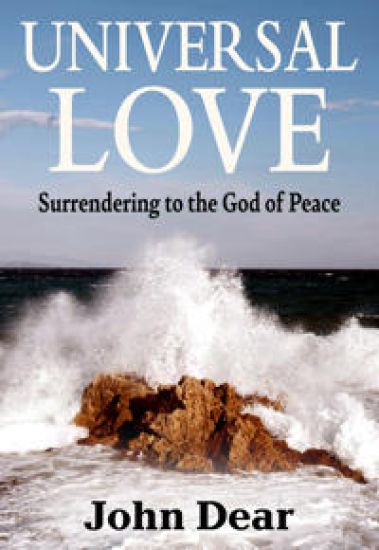
Advance Praise & Reviews "In this short, valuable, and practical book, John shares his conversations with a young spiritual seeker named Will who came to him seeking spiritual guidance. As I read each chapter, I felt like I was meeting with John for coffee, sharing my struggles, and receiving his wisdom and encouragement. This book is a treasure."--Brian McLaren, author, Faith after Doubt This book arose from a young man's request that John serve as his spiritual director. He did not believe in God, but he believed in "love and truth and compassion." John replied that those are all names for God, and they agreed that they would speak of Universal Love. From this beginning, John discovered a new understanding of spirituality, and his own life of peacemaking as an exercise in "surrendering to the God of Peace." In short reflections, he outlines what this means, offers practical exercises, and shows how this might lead us more deeply into the meaning of discipleship in a world of violence and conflict.
A Ministry of Risk
Philip Berrigan; Bill Wylie-Kellermann; John Dear
FORDHAM UNIVERSITY PRESS
2024
sidottu
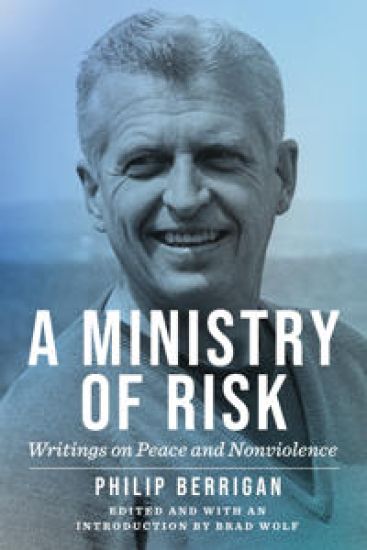
Experience the powerful legacy of Philip Berrigan's nonviolent resistance to war and empire From the battlefields of World War II to the front lines of peace activism, Philip Berrigan evolved from soldier to scholar, priest to political prisoner. Confronting the fundamental nature of America's military-focused culture, Berrigan took an unyielding stance against societal evils—war, systemic racism, unchecked materialism, and the baleful presence of nuclear weapons. Imprisoned by his government and ostracized by his Church, Berrigan's life is a courageous example of nonviolent resistance and liberation in the face of overwhelming odds. A Ministry of Risk is the definitive collection of Philip Berrigan's writings. Authorized by the Berrigan family and arranged chronologically, these writings depict the transformation of one revolutionary soul while also providing a firsthand account of a nation grappling with its martial obsessions. Threading the vibrant fabric of history with autobiographical insights, introspective theology, and a clarion call to activism, A Ministry of Risk offers both a living manifesto of nonviolent resistance and a journal of spiritual reflection by one of the 20th century's most prophetic voices.
A Ministry of Risk
Philip Berrigan; Bill Wylie-Kellermann; John Dear
FORDHAM UNIVERSITY PRESS
2024
pokkari
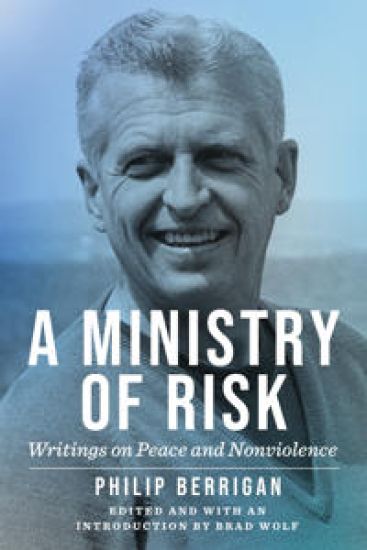
Experience the powerful legacy of Philip Berrigan's nonviolent resistance to war and empire From the battlefields of World War II to the front lines of peace activism, Philip Berrigan evolved from soldier to scholar, priest to political prisoner. Confronting the fundamental nature of America's military-focused culture, Berrigan took an unyielding stance against societal evils—war, systemic racism, unchecked materialism, and the baleful presence of nuclear weapons. Imprisoned by his government and ostracized by his Church, Berrigan's life is a courageous example of nonviolent resistance and liberation in the face of overwhelming odds. A Ministry of Risk is the definitive collection of Philip Berrigan's writings. Authorized by the Berrigan family and arranged chronologically, these writings depict the transformation of one revolutionary soul while also providing a firsthand account of a nation grappling with its martial obsessions. Threading the vibrant fabric of history with autobiographical insights, introspective theology, and a clarion call to activism, A Ministry of Risk offers both a living manifesto of nonviolent resistance and a journal of spiritual reflection by one of the 20th century's most prophetic voices.
The Gospel of Peace: A Commentary on Matthew, Mark, and Luke from the Perspective of Nonviolence
John Dear
ORBIS BOOKS (USA)
2023
nidottu
Halvin toimitettuna 29,50 €
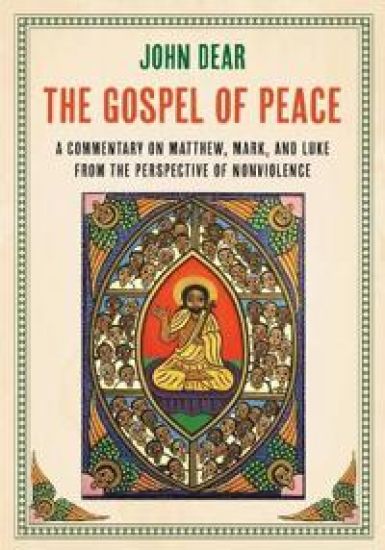
Long-time activist, author and teacher of nonviolence, Father John Dear offers here the first ever commentary on the Synoptic Gospels from the perspective of active nonviolence, in the tradition of Gandhi and Dr. King. He walks through every line of the three synoptic Gospels pointing out Jesus' practice and teachings of nonviolence each step of the way. Dear's Jesus is like Gandhi and Dr. King--nonviolent to the core, a disarming, healing presence toward those in need and a revolutionary disrupter of the unjust status quo and a political threat to the ruling authorities who succeed in killing him, only to push Jesus to the heights of nonviolence through his death and resurrection. This original commentary brings a fresh new approach to the Gospels that will help all those who preach and engage in social ministries, and inspire everyone in this time of permanent warfare, gun violence, racism, poverty and climate change.
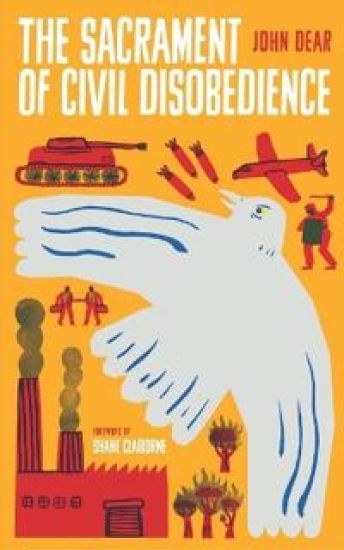
"Firm footing for a life of holy trouble." - Shane ClaiborneThe Christian faith has a rich tradition of civil disobedience. Old Testament stories of noncooperation with evil, or prophets standing up to Kings at great cost. Jesus, the nonviolent revolutionary, peacemaker, risk-taker. The early Christian communities, repeatedly imprisoned for speaking truth to power-like Dorothy Day or Martin Luther King Jr., centuries later. Nonviolent civil disobedience, when rooted in faith, is not only a way to protest unjust laws; it can be an experience of the sacred. It can be both a symbol and the reality of Christ's love, overcoming the violence that surrounds us. Within this book you'll find a civil resister's field guide to that tradition, and best practices for discernment, court appearances, even jail time. And if there comes a time to cross the line, you'll find yourself in good company.
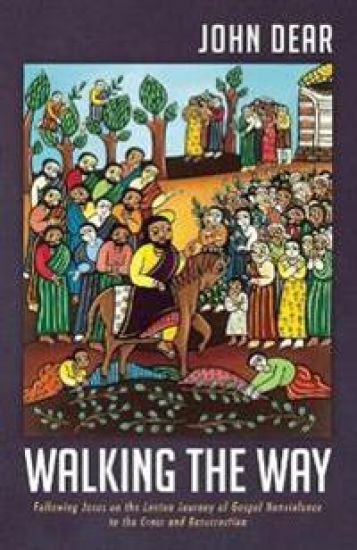
""Our world of war, poverty, corporate greed, racism, sexism, nuclear weapons, and catastrophic climate change demonstrates the total failure of violence,"" says John Dear. The internationally known peace activist and Nobel Prize nominee has always offered a single answer: Jesus. Now he invites us to follow the nonviolent Jesus through the holy season of Lent, beginning with Jesus' journey to Jerusalem and culminating in his resurrection and the new life of peace he brings to all. Deeply personal and uncompromisingly committed to peace, these prayerful reflections on Jesus' life and death challenge the notion that support of violence at any level is compatible with a life in Christ. Drawing on the insights of Mahatma Gandhi, Martin Luther King, Jr., and others, Dear shows us how we can practice gospel nonviolence, be apostles of peace, and change the world. Perfect for personal reflection or small group discussion, these meditations invite us to ""participate in our own inner disarmament and cultivate our true nonviolent nature"" as we follow the Good Shepherd, the Lamb of God. A timely, important, and inspiring book for our times.
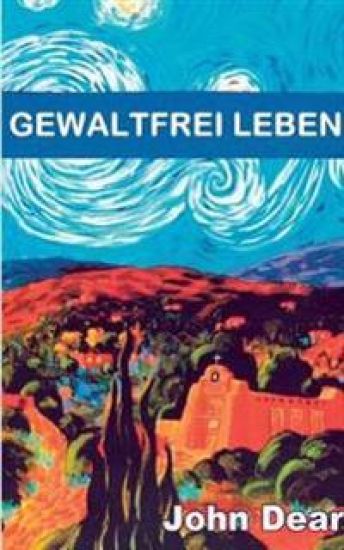
"Machen wir die aktive Gewaltfreiheit zu unserem Lebensstil." Dazu rief Papst Franziskus 2017 in der Botschaft zum Weltfriedenstag auf. Vom "Pilgerweg der Gerechtigkeit und des Friedens" spricht der kumenische Rat der Kirchen. John Dear, us-amerikanischer Aktivist und Publizist, bersetzt dies in einen dreifachen Weg, den jeder und jede zu gehen vermag, eine spirituelle Lebensreise: Gewaltfreiheit lernen im Umgang mit sich selbst; Gewaltfreiheit lernen im Umgang mit den Mitmenschen und Gewaltfreiheit leben, indem wir uns der globalen Basisbewegung der Gewaltfreiheit anschlie en. Mit gro er Eindringlichkeit und in unbeirrbarer Hoffnung wirbt Dear f r diesen dreifachen Weg: "Das k nnen wir tun. Wir k nnen ein gewaltfreies Leben f hren. Wir k nnen Gottes Gabe des Friedens in uns, unter uns und in der Welt willkommen hei en. Wir haben mehr Macht, als wir denken. Wir alle haben die Macht des Gottes des Friedens in uns, wenn wir an diesem Glauben festhalten und ihm gem zu handeln wagen. Wir k nnen den Frieden zu unserer Heimat machen und dazu beitragen, dass die Erde f r alle in eine Heimat des Friedens verwandelt wird." Ein Buch f r alle, die verstehen wollen, was es hei en k nnte, in einer Kirche gerechten Friedens als Christ zu leben. Ein Buch auch f r Menschen, die auf der Suche sind nach einem Leben, das den Herausforderungen des 21. Jahrhunderts gerecht wird.
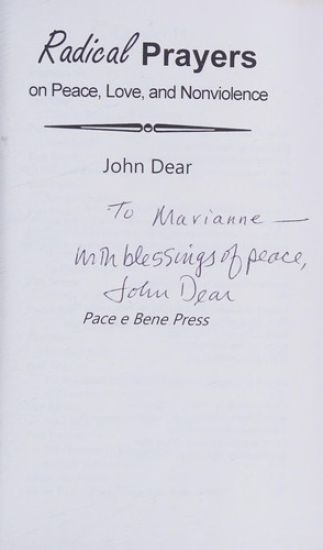
This book offers fifty short prayers to encourage, challenge and inspire you on your nonviolent journey. Prayers cover subjects ranging from healing the environment, ending war, gun violence, poverty and racism, gratitude for the blessings around us and strength to continue on the path for peace, justice and nonviolence. John Dear writes in the introduction, "Prayer and nonviolence go hand in hand. On the one hand, prayer is a daily journey toward ever-deepening intimacy with the God of peace in the Holy Spirit of peace. Through daily quiet meditation, the God of peace we encounter in our prayer disarms us, heals us and strengthens us to go forth and make peace, practice nonviolence and love others.... Nonviolent people turn to God in prayer throughout the day for protection, security, blessings and fecundity. That is the Christian way, the human ideal. That is the path of the peacemaker. ...daily meditation is politically dangerous and a threat to the culture of violence and war. As we combine prayer and nonviolence, in this culture of violence and war, we step into a new kind of dangerous mysticism where we lose our allegiance to the nation/state, and become full time citizens of God's reign..." TABLE OF CONTENTS Part 1: Thanks, Praise, and Adoration Part 2: For Myself Part 3: For All People Part 4: For All Creatures Part 5: For Creation Part 6: For the Global Grassroots Movements for Peace and Justice Part 7: For the World Part 8: For Mature Discipleship to the Nonviolent Jesus Part 9: For the Church Part 10: For the Coming of God's Reign of Peace and Nonviolence Part 11: For Life in the Holy Spirit of Peace Part 12: For Humanity's Conversion to Total Nonviolence
Plough Quarterly No. 10
Shane Claiborne; Joel Salatin; John Dear; Erna Albertz; Ron Sider; Shelley Douglass; Yacoub Yousif; Rober Mielke; Steven Fouch
Plough Publishing House
2016
pokkari
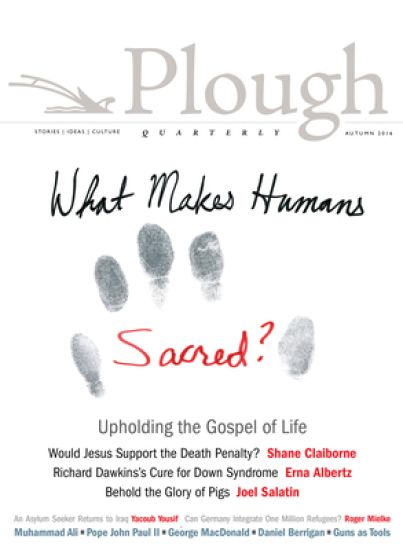
The gospel teaches that every human is sacred. Refugee children and Islamist terrorists. Police officers and young African Americans. Unborn babies, always, and also abortionists. Orange-haired casino owners, former First Ladies, progressive hipsters, prosperity-gospel televangelists, members of Congress, Confederate-flag-waving white nationalists? Sacred. This absurd claim is at the heart of the gospel. Each person is created in the image and likeness of God. Each is someone for whom Jesus died. And if this is true, we have much work to do. The writers in this issue may not agree on the best ways and means, but each challenges us to consider the implications of this gospel of life that makes no exceptions. Also in this issue: -- A former asylum seeker returns to Iraq to stand with Christians on the run from ISIS. -- Shane Claiborne tells us why abolishing the death penalty is the church’s business. -- Joel Salatin, America’s most famous farmer, reveals what pigs can teach us about the glory of God. -- John Dear reports on the Vatican’s historic turn toward nonviolence. -- Erna Albertz tells Richard Dawkins how her sister with Down syndrome can help him. -- Gun owners respond to gun violence with a fresh take on “swords into plowshares.” -- Ron Sider looks at the consistently pro-life witness of the early church. -- A hospice nurse reflects on euthanasia and the value of being a burden. -- Jason Landsel asks what made MohammadMuhammad Ali great. Then there’s new poetry, book reviews, a children’s story, insights from Pope Francis and George MacDonald, and art by Pawel Kuczynski, Xenia Hausner, William H. Johnson, Käthe Kollwitz, and Deidre Scherer. Plough Quarterly features stories, ideas, and culture for people eager to put their faith into action. Each issue brings you in-depth articles, interviews, poetry, book reviews, and art to help you put Jesus’ message into practice and find common cause with others.
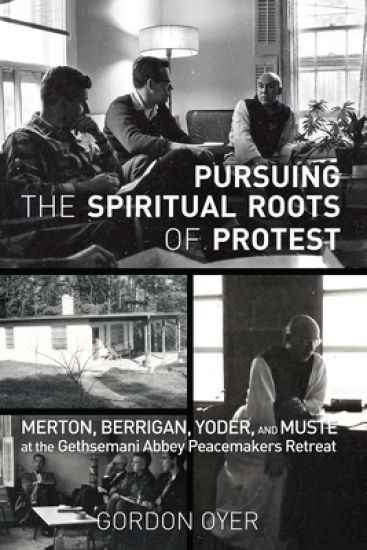
A noted peacemaker reflects on Thomas Merton's lessons for peacemaking today. In this centenary year of Thomas Merton's birth, longtime peace activist and author John Dear shares meditations on Merton's writings on peace and spiritual life. "The God of peace is never glorified by human violence," Merton wrote. In the early 1960s, the famous Trappist monk, author, and poet broke new ground through his prophetic writings on nuclear weapons, war, and racism. For Merton these were not only moral challenges. They reflected a deeper spiritual crisis. Among the lessons John Dear has learned from Merton: the connection between contemplation and nonviolence; the importance of faithful reliance on God instead of weapons or war; the need to speak out publicly for disarmament and justice; the importance of silence, solitude, and minduflness; the daily celebration of the resurrection and the wonder of creation. In the end, John Dear invites us to take up Thomas Merton's journey and become mature spiritual seekers who break beyond the accepted norms of religious obligation into universal love, compassion, and friendship with God, that we too might become peacemakers, the beloved sons and daughters of the God of peace.
Pursuing the Spiritual Roots of Protest
Gordon Oyer; James Forest; John Dear
Cascade Books
2014
sidottu
The Monk - The Artist - The Aunt - The Essayist - The Woman - The Jesuit - The Mother - Self-Portrait Berrigan's Portraits is his first completely biographical work, and it is perhaps his most intimate book. Here he speaks candidly of some of the people he has known and admired, people of fame and people who will probably never be memorialized or even remembered outside these pages. Here are Thomas Merton, Dorothy Day, Peter Maurin--guides to the vision that has inspired Berrigan's own witness to Christian peace. Here is an unknown woman painter, dying of cancer but gifted with uncanny powers of insight. Here are members of Berrigan's own family: a tough-minded aunt, who found in the currently outmoded pieties of the past a remedy for the terrible day-in-and-day-out of the religious life; his own mother, providential, foreseeing, compassionate. Lastly there is a self-portrait--not in a convex mirror, not a picture at an exhibition--of what has been the meaning of these various people and of their influence on him and his work. ""For me, Father Daniel Berrigan is Jesus as a poet. If this be heresy, make the most of it."" -Kurt Vonnegut ""Daniel Berrigan is America's greatest prophet-poet."" -- James Carroll ""Father Daniel Berrigan is an altogether winning and warm intelligence and a man who, I think, has more than anyone I have ever met the true wide-ranging and simple heart of the Jesuit: zeal, compassion, understanding, and uninhibited religious freedom. Just seeing him restores one's hope in the church."" -- Thomas Merton, in ""Conjectures of a Guilty Bystander"" Daniel Berrigan is an internationally known voice for peace and disarmament. A Jesuit priest, award-winning poet, and the author of over fifty books, he has spoken for peace, justice, and nuclear disarmament for nearly fifty years. He spent several years in prison for his part in the 1968 Catonsville Nine antiwar action and later acted with the Plowshares Eight. Nominated many times for the Nobel Peace Prize, he lives and works in New York City.
Committed radical that he is, Daniel Berrigan, launches his personal rockets against the social evils that disturb and preoccupy him. Beginning with a long autobiographical piece he traces the influences that brought him first to a radical stance and then to a direct confrontation with society. From this very intimate statement he develops his theme of a need for nonviolent revolutionary change in his reflections on his own trial and sentencing, in his thoughtful examination of the true implications of Christianity, and in his consideration of prophets as revolutionaries. In a long dialog with an SDS student about the 1969 Black/White confrontation at Cornell University, he relates the questions raised by that crisis to the larger crises of American life. Finally, he directs two stinging parables at the well-fed and the complacent. Probing and provocative, this work illuminates starkly the agonizing decisions people must make.
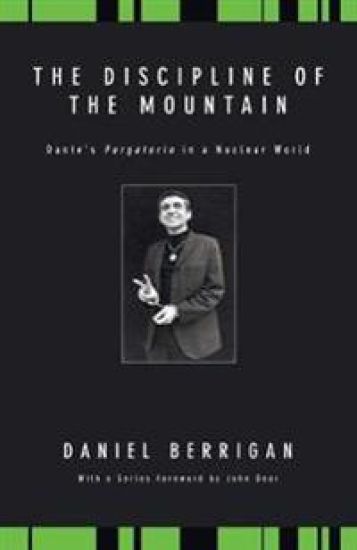
In The Discipline of the Mountain Daniel Berrigan offers ""ways of imagining our plight"" through the poetic vision of Dante's Purgatorio. There can be found ""a faithful vision, an alternative, a truthful image of God, of ourselves, of history."" Berrigan employs free, poetic adaptation of the original--its themes, moods, discourses, encounters--with a prose commentary relating the text to political-moral issues of the present day. With its themes of lust and hatred, religious strife and ecclesiastical corruption, military power and oppression, the Purgatorio is an apt allegory of modern society. Thirteenth-century kings and princes shade into twentieth-century colonels and shahs and juntas. The Discipline of the Mountain is evocatively illustrated by Robert F. McGovern. ""What is God saying to us, what would he have us do, as a seemingly irreversible course leads humanity, like a blindfolded beast, towards the abattoir? Might there be ways of coping, ways which might properly be named spiritual, surpassing whatever the politics of the Left or Right might offer?"" --from the Introduction ""Let us hope that our country will become wise. But until it does---indeed, in order that it should---we as its citizens must act on the wisdom of our own conscience. That, to me, is the ultimate meaning of what Father Daniel Berrigan, in prose and poetry, says and leaves unsaid."" -- Howard Zinn ""Daniel Berrigan is a poet and prophet for these times."" --Jim Wallis, editor of Sojourners magazine Daniel Berrigan is an internationally known voice for peace and disarmament. A Jesuit priest, award-winning poet, and the author of over fifty books, he has spoken for peace, justice, and nuclear disarmament for nearly fifty years. He spent several years in prison for his part in the 1968 Catonsville Nine antiwar action and later acted with the Plowshares Eight. Nominated many times for the Nobel Peace Prize, he lives and works in New York City. Robert F. McGovern, whose woodcuts appear in The Discipline of the Mountain, is Professor Emeritus at Philadelphia College of Art and lives in Narbeth, Pennsylvania. In addition to illustrating several books, his work has appeared in New Covenant Magazine and the Catholic Worker.

This extraordinary book, written during the four months that Daniel Berrigan was resisting arrest and living underground, is an unexpected gift. Rather than being merely an account of a fugitive's life, this is a spiritual work of the highest order, the work of an unusual man brooding over injustice, war, and love and setting forth his vision of what a man can become. His starting point is St. John of the Cross, from whom the author draws the inspiration that informs his unorthodox ""commentary"" on The Dark Night of the Soul. Here, John is the guru, the master to whom the disciple comes for enlightenment, the one whose vision inspires the disciple as he searches for his own vision. As the ""commentary"" moves on, it becomes the instrument by which Father Berrigan extends his own moral commitment to explore and reaffirm his spiritual philosophy, his concern for the world, his intense desire to awaken and move society in a nonviolent way. The result is a magnificent outpouring of prose and poetry--intense, personal, witty; the exposition of the heart of a man. ""How are we to live our lives today? We are in the dark preliminary stages of a new humanity, together. Imagine my brother in prison, myself on the run, our friends here and there (in prison, on the run), and in every city between. Thus, all of us are enabled, in an utterly new way, to probe and ponder new forms of community, the questions about the future, the usefulness and joy and hope that may arise from this."" --from the first chapter ""Daniel Berrigan is a poet and prophet for these times."" --Jim Wallis, editor of Sojourners magazine ""Daniel Berrigan is the sort of priest who causes the lights of the Vatican to burn through the night."" --Newsweek Daniel Berrigan is an internationally known voice for peace and disarmament. A Jesuit priest, award-winning poet, and the author of over fifty books, he has spoken for peace, justice, and nuclear disarmament for nearly fifty years. He spent several years in prison for his part in the 1968 Catonsville Nine antiwar action and later acted with the Plowshares Eight. Nominated many times for the Nobel Peace Prize, he lives and works in New York City.
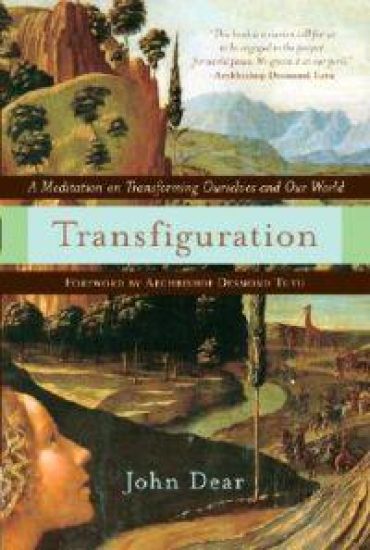
A human rights activist and author of Living Peace utilizes the gospel account of the transfiguration of Jesus to call for readers to shape their lives in his path and to continue his mission of love and peace. Original. 12,500 first printing.