Kirjojen hintavertailu – 12 903 725 kirjaa ja 27 kauppaa

Kirjailija

John Docker

Kirjat ja teokset yhdessä paikassa: 9 kirjaa, julkaisuja vuosilta 1994–2024, suosituimpiin kuuluu The Historiography of Genocide. Vertaile teosten hintoja ja tarkista saatavuus suomalaisista kirjakaupoista.

9 kirjaa

Kirjojen julkaisuvuodet: 1994–2024.

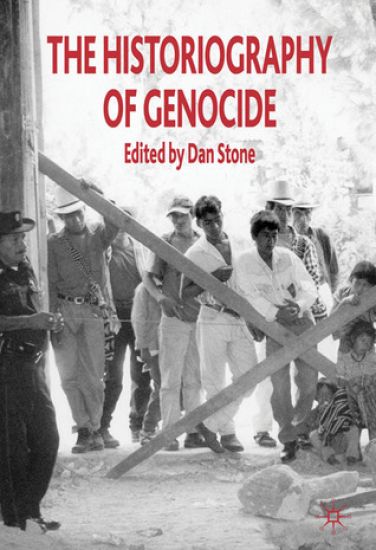
The Historiography of Genocide

The Historiography of Genocide

Anton Weiss-Wendt; Robert Krieken; Alfred A. Cave; Ben Kiernan; Doris Bergen; David Moshman; Victoria Sanford; John Docker; Robert Hitchcock

Palgrave Macmillan
2008
nidottu
The Historiography of Genocide is an indispensable guide to the development of the emerging discipline of genocide studies and the only available assessment of the historical literature pertaining to genocides.
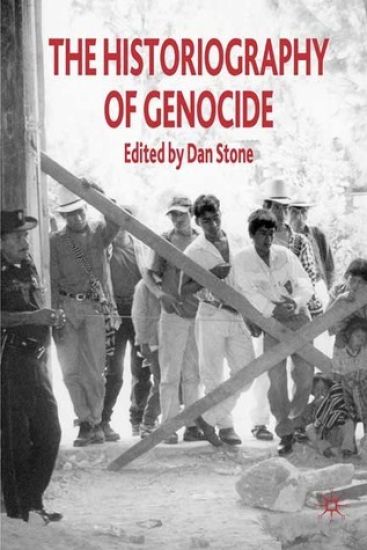
The Historiography of Genocide

The Historiography of Genocide

Anton Weiss-Wendt; Robert Krieken; Alfred A. Cave; Ben Kiernan; Doris Bergen; David Moshman; Victoria Sanford; John Docker; Robert Hitchcock

Palgrave Macmillan
2008
sidottu
The Historiography of Genocide is an indispensable guide to the development of the emerging discipline of genocide studies and the only available assessment of the historical literature pertaining to genocides.
Legacies of Orientalism and Slavery in European Intellectual and Literary History
This book is an exercise in ethical criticism. It draws on and works with ideas and suggestions from two of its notable exponents, Wayne C. Booth and Martha C. Nussbaum, who propose that we regard cultural texts as "friends" with whom we can enjoy productive conversations that address contemporary challenges and developments, such as coercive control in gender relations, imperial and colonial thinking, and the centuries-long history of slavery. Throughout, attention is drawn to female agency in figures from Joan of Arc, Lady Mary Wortley Montagu, and Rebecca in Sir Walter Scott's Ivanhoe through to Princess Diana. The book begins by looking closely at The Thousand and One Nights in terms of its wayward narratology, its displays of female power, and its significance for arguments over the relationship between the Enlightenment and the conceptual underpinnings of the Holocaust. Montesquieu in Persian Letters and Voltaire in Zadig destabilise any certainty that the Enlightenment was straightforward or easily definable. After evoking a slavery thread in chapters on Jane Austen's Persuasion and Mansfield Park, Patricia Rozema's film Mansfield Park, and Jamaica Kincaid's Annie John, the book concludes with a radical re-reading of Middlemarch.
Growing Up Communist and Jewish in Bondi Volume 3
John Docker grew up in Bondi, the son of Communist parents, his mother Jewish from the East End of London and his father of Irish descent. His Bondi is not the site of sunny mindlessness but rather a place of intense immigrant and political life. This book traces his often comic experiences at Bondi Wellington Primary School and Randwick Boys High School. At the University of Sydney from 1963, he became a teenage Leavisite and participated in the anarchistic New Left. With Ann Curthoys he travelled on the Hippie Trail through Asia to London, which became for both the scene of what Gorky referred to as the University of Life.
Growing Up Communist and Jewish in Bondi Volume 2
Elsie Levy was born in the Jewish East End of London, came to Sydney with her family when she was 14, and joined the Communist Party of Australia when she was a young woman. In this book, her son explores her disaporic Jewish identity, both English and Australian, and in the process journeys into Jewish cultural histories. We meet important cultural figures such as Leonard Woolf, Freud, Schnitzler, Veza Canetti and Ida Rubinstein. This journey leads also to English anti-Semitism, including, shockingly, Bloomsbury. In turning to Communism and marrying out, Elsie Levy became one of history's undutiful daughters.
Growing Up Communist and Jewish in Bondi Volume 1
Ted Docker was an Australian of Irish descent who as a young man wanted to change the world, joining first the Industrial Workers of the World and then helping form the Communist Party of Australia. He was steadfastly loyal to the Soviet Union and by historical record a stern hard-liner. This is not the whole story.
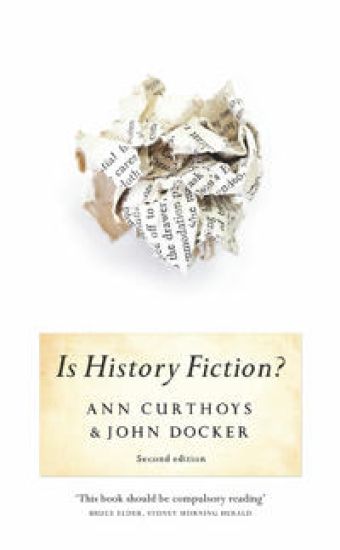
Is History Fiction?

Is History Fiction?

Ann Curthoys; John Docker

The University of Michigan Press
2015
nidottu
The title question becomes a rabbit-hole through which we tumble in search of an answer, encountering everyone from Herodotus to Humphrey Bogart along the way. Is History Fiction? is an invaluable guide on how to weld creative thinking and sound research into meaningful history, and how to understand the different arguments that have abounded throughout time regarding the nature of history. More than a book of theory, this innovative work is an asset to the undergraduate classroom and the research seminar alike. Is History Fiction? will be a welcome aid for teaching historical writing and examining an age-old question. Is History Fiction? is a must-read for undergraduate and graduate students and scholars from the humanities and social sciences, or anyone grappling with the enduring issues that have shaped the theory and practice of recording history. In this second edition, Curthoys and Docker bring their history of history up to the present in their study of the History Wars and new approaches to world history and environmental history.
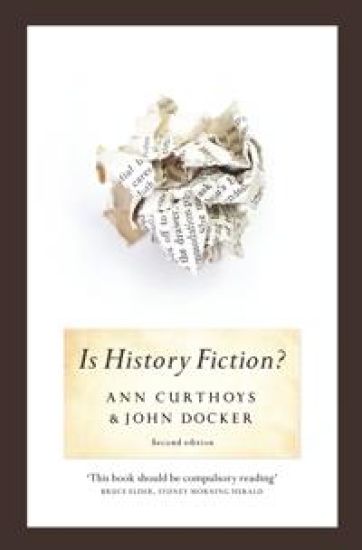
Is History Fiction?

Is History Fiction?

Ann Curthoys; John Docker

NewSouth Publishing
2010
nidottu
An original and insightful examination of the ways in which history is - and might be - written. It traces history's divided nature, beginning with its founding figures, Herodotus and Thucydides, right up to the key figures of historical reflection, such as Nietzsche, Walter Benjamin, Hannah Arendt, and Hayden White. It also explores the challenges posed by postmodernism, and the literary conventions of historical writing.
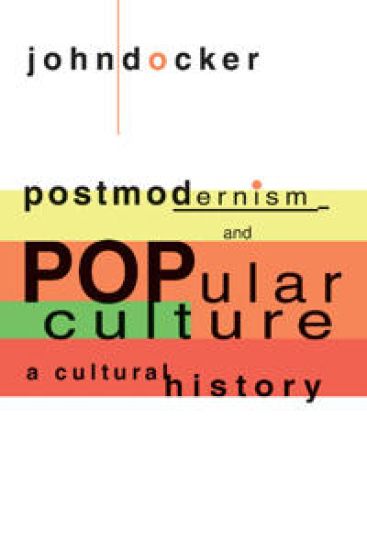
Postmodernism and Popular Culture

Postmodernism and Popular Culture

John Docker

Cambridge University Press
1994
pokkari
In this provocative and timely book, John Docker takes his readers on an intellectual adventure. The journey includes an introductory guided tour of the history of modernism, consideration of the development of postmodernism, explanation of the difference between structuralism and poststructuralism and discussion of the debates and conflicts around each. Along the way readers will visit the architecture of Le Corbusier, take a ride on the Sydney monorail, watch Prisoner (Cell Block H) on TV, come into contact with Derrida, read some crime fiction and enter into the world of carnival. The book engages, in a stimulating and illuminating way, with some of the most important academic debates of our time. It combines polemical force with intellectual rigour, reclaiming popular culture from the forces opposed to it. John Docker’s personal style and accessible prose will introduce postmodernism to many interested general readers and students intimidated by other dense, theoretical tracts. The breadth and intelligence of his cultural history will make the book essential reading for scholars, in a range of disciplines, around the world.