Kirjojen hintavertailu – 12 859 828 kirjaa ja 27 kauppaa

Kirjailija

John Dominic Crossan

Kirjat ja teokset yhdessä paikassa: 36 kirjaa, julkaisuja vuosilta 1981–2022, suosituimpiin kuuluu Profiles of Jesus. Vertaile teosten hintoja ja tarkista saatavuus suomalaisista kirjakaupoista.

36 kirjaa

Kirjojen julkaisuvuodet: 1981–2022.

Finding Is the First Act

Finding Is the First Act

John Dominic Crossan

Wipf Stock Publishers
2008
pokkari
An imaginative and illuminating study, Finding Is the First Act places historical thinking in creative tension with literary appreciation. The structures of Jesus's parable of the hidden treasure (Matt 13:44) are examined by mapping its plot options (finding, acting, buying) in view of other Jewish treasure stories and the vast array of treasure plots in world folklore. Startling differences emerge in the plot options chosen by Jesus that point to a new understanding of the directive to give up all one has for the Kingdom of God. ""Why Jesus' treasure parable? For three reasons that I am aware of. First, . . . the story has always fascinated me. . . . Second, in recent work on parables there has often been a tendency to concentrate especially on the longer parables of Jesus. I wanted deliberately to move in theopposite direction and to give full emphasis to a very short parable . . . . Third, this particular parable, in contrast, for example, to that of The Mustard Seed, does not furnish much grist for the diachronic mill of biblical studies. I was deliberately choosing an item which, in isolation from its Matthean context, could hardly sustain a monograph study along the standard lines of tradition criticism."" --from the Preface John Dominic Crossan is Professor Emeritus of Religious Studies at DePaul University, Chicago. He has written twenty books on the historical Jesus in the last thirty years, four of which have become national religious bestsellers: The Historical Jesus (1991), Jesus: A Revolutionary Biography (1994), Who Killed Jesus? (1995), and The Birth of Christianity (1998). He is a former cochair of the Jesus Seminar and a former chair of the Historical Jesus Section of the Society of Biblical Literature.

The Essential Jesus

The Essential Jesus

John Dominic Crossan

Wipf Stock Publishers
2008
pokkari
After his definitive The Historical Jesus, John Dominic Crossan delivered Jesus: A Revolutionary Biography--a popularized, bestselling account of what we can know about the life of Jesus. Here he offers the core of his life's work--a concise and astonishing presentation of the authentic teachings and earliest images of the revolutionary Galilean sage. Crossan's fresh translations of Jesus' sayings show Jesus to be a teacher whose radical message that all are equal before God is as timely today as it was two thousand years ago. This picture is dramatically confirmed by the preConstantinian, Christian renderings of Jesus, which show that he was remembered by the first Christians not as God but as a revolutionary healer and leader. ""Another triumph in inimitable Crossan style. The wedding of words and images is a powerful new approach to the historical Jesus. A dramatic conclusion to a trilogy that opens a new epoch in the quest of the historical Jesus."" --Robert W. Funk, author of The Five Gospels: The Search for the Authentic Worlds of Jesus ""I continue to be a fan of John Dominic Crossan's work. His presentation of Jesus's sayings in The Essential Jesus has his typical erudition and his readable style; when you add the illustrations it makes for an unusually informative and useful book."" --Harvey Cox, Harvard University ""The Essential Jesus pictures the religious dream and social program of the historical Jesus. Like an archival video, this fascinating book leads us back to the original voice of Jesus."" --Uta Ranke-Heinemann, author of Eunuchs for the Kingdom of Heaven and Putting Away Childish Things John Dominic Crossan is Professor Emeritus of Religious Studies at DePaul University, Chicago. He has written twenty books on the historical Jesus in the last thirty years, four of which have become national religious bestsellers: The Historical Jesus (1991), Jesus: A Revolutionary Biography (1994), Who Killed Jesus? (1995), and The Birth of Christianity (1998). He is a former co-chair of the Jesus Seminar, and a former chair of the Historical Jesus Section of the Society of Biblical Literature, an international scholarly association for biblical study based in the United States.
Cliffs of Fall

Cliffs of Fall

John Dominic Crossan

Wipf Stock Publishers
2008
pokkari
When John Dominic Crossan's book, In Parables: The Challenge of the Historical Jesus, was published in 1973, it was heralded as a major development in research both on the parables and on the historical Jesus. This was due not only to its sophisticated use of historical, literary, and philosophical disciplines but also to the sensitive way in which they were combined and to the novel insights that resulted when this combination was focused on individual parables. The present book continues most directly and explicitly the study initiated by In Parables and may be regarded as bringing that earlier volume up to date on three major issues. Conceptually, the emphasis on metaphor from In Parables has led to the discussion of polyvalence, or semantic pluralism, in Jesus's parables. Pluralistic meaning is an intensely paradoxical concept and it raises issues that touch the very roots of our consciousness and our reality. Metaphor is now no longer a clearing within the forest of language but is rather the very ground of that language itself. Any given metaphor illumines and reveals the radical metaphoricity of all reality. Philosophically, the question is raised whether the polyvalence inherent in metaphor, along with the critically iterated claims for its untranslatability, may be better explained as a surplus of meaning, or as an absence of the meaning, a refusal of canonical meaning which is then the necessary but negative basis for the plurality of meanings and the abiding fecundity of interpretations. Exegetically, as specific example and deliberate narratival metaphor of the entire book, Jesus's serenely pastoral parable of the Sower, with its specified triad of gains, its plurality or polyvalence both of failure and success, is centrally discussed as textual focus for the volume. John Dominic Crossan is Professor Emeritus of Religious Studies at DePaul University, Chicago. He has written twenty books on the historical Jesus in the last thirty years, four of which have become national religious bestsellers: The Historical Jesus (1991), Jesus: A Revolutionary Biography (1994), Who Killed Jesus? (1995), and The Birth of Christianity (1998). He is a former co-chair of the Jesus Seminar, and a former chair of the Historical Jesus Section of the Society of Biblical Literature, an international scholarly association for biblical study based in the United States.
God And Empire

God And Empire

John Dominic Crossan

HarperOne
2008
nidottu
At the heart of the Bible is a moral and ethical call to fight unjust superpowers, whether they are Babylon, Rome, or even America. From the divine punishment and promise found in Genesis through the revolutionary messages of Jesus and Paul, John Dominic Crossan reveals what the Bible has to say about land and economy, violence and retribution, justice and peace, and, ultimately, redemption. In contrast to the oppressive Roman military occupation of the first century, he examines the meaning of the non-violent Kingdom of God prophesized by Jesus and the equality advocated by Paul to the early Christian churches. Crossan contrasts these messages of peace with the misinterpreted apocalyptic vision from the Book of Revelation, which has been misrepresented by modern right-wing theologians and televangelists to justify U. S. military actions in the Middle East. In God and Empire Crossan surveys the Bible from Genesis to Apocalypse, or the Book of Revelation, and discovers a hopeful message that cannot be ignored in these turbulent times. The first-century Pax Romana, Crossan points out, was in fact a "peace" won through violent military action. Jesus preached a different kind of peace--a peace that surpasses all understanding--and a kingdom not of Caesar but of God. The Romans executed Jesus because he preached this Kingdom of God, a kingdom based on peace and justice, over the empire of Rome, which ruled by violence and force. For Jesus and Paul, Crossan explains, peace cannot be won the Roman way, through military victory, but only through justice and fair and equal treatment of all people.
The Resurrection of Jesus

The Resurrection of Jesus

John Dominic Crossan; N T Wright

Augsburg Fortress
2005
muu
Two of today's most important and popular New Testament scholars--John Dominic Crossan and N. T. Wright--air their very different understandings of the many historical realities and theological meanings of Jesus' Resurrection.
In Search Of Paul

In Search Of Paul

John Dominic Crossan; Jonathan L Reed

HARPERCOLLINS PUBLISHERS INC
2005
nidottu
John Dominic Crossan, the eminent historical Jesus scholar, and Jonathan L. Reed, an expert in biblical archaeology, reveal through archaeology and textual scholarship that Paul, like Jesus, focused on championing the Kingdom of God--a realm of justice and equality--against the dominant, worldly powers of the Roman empire. Many theories exist about who Paul was, what he believed, and what role he played in the origins of Christianity. Using archaeological and textual evidence, and taking advantage of recent major discoveries in Italy, Greece, Turkey, and Syria, Crossan and Reed show that Paul was a fallible but dedicated successor to Jesus, carrying on Jesus's mission of inaugurating the Kingdom of God on earth in opposition to the reign of Rome. Against the concrete backdrop of first-century Grego-Roman and Jewish life, In Search of Paul reveals the work of Paul as never before, showing how and why the liberating messages and practices of equality, caring for the poor, and a just society under God's rules, not Rome's, were so appealing. Readers interested in Paul as a historical figure and his place in the development of Christianity -Readers interested in archaeology and anthropology
Excavating Jesus

Excavating Jesus

John Dominic Crossan; Jonathan L Reed

HARPERCOLLINS PUBLISHERS INC
2003
nidottu
The premier historical Jesus scholar joins a brilliant archaeologist to illuminate the life and teaching of Jesus against the background of his world. There have been phenomenal advances in the historical understanding of Jesus and his world and times, but also huge, lesser known advances in first-century Palestine archaeology that explain a great deal about Jesus, his followers, and his teachings. This is the first book that combines the two and it does it in a fresh, accessible way that will interest both biblical scholars and students and also the thousands of lay readers of Biblical Archaeology Review (150,000+ circulation), National Geographic, and other archaeology and ancient history books and magazines. Each chapter of the book focuses on a major modern archaeological or textual discovery and shows how that discovery opens a window onto a major feature of Jesus's life and teachings.
Jesus Controversy

Jesus Controversy

John Dominic Crossan

Continuum International Publishing Group - Trinity
1999
sidottu
The current controversy over the historical Jesus and his significance for both scholarship and religious belief continues to rage inside and outside the academy. In this volume, three distinguished New Testament scholars debate the historical, textual, and theological problems at the core of the controversy. John Dominic Crossan offers a theological defense of the historical reconstruction of Jesus, arguing that if Christian faith is not founded on the historical Jesus, it will fall into Docetism. Luke Timothy Johnson counters this thesis, arguing that the biblical Christ and his presence in the life of believers is the proper focus of Christian faith. Werner Kelber takes issue with both views. Placing them in the broader context and history of Christian hermeneutics, he seeks to overcome the alternatives that govern the controversy. John Dominic Crossan is Professor Emeritus of Religious Studies at De Paul University. Luke Timothy Johnson is Robert W. Woodruff Professor of New Testament and Christian Origins at Emory University. Werner H. Kelber is Turner Professor of Biblical Studies at Rice University.
Who Is Jesus?

Who Is Jesus?

John Dominic Crossan; Richard G. Watts

Westminster/John Knox Press,U.S.
1999
nidottu
This fascinating book makes the results of a lifetime of scholarship readily available to nonspecialists who want to meet the historical Jesus. Eminent biblical scholar John Dominic Crossan collaborates with pastor Richard G. Watts to rediscover the life, the work, and the message of the Man from Galilee.
Birth of Christianity

Birth of Christianity

John Dominic Crossan

T. T.Clark Ltd
1999
nidottu
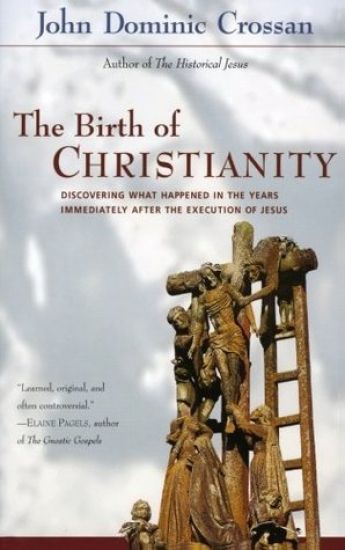
John Dominic Crossan explores the lost years of earliest Christianity, the years immediately following Jesus' execution. He establishes the contextual setting through a combination of literary, anthropological, historical and archaeological approaches. He challenges the assumptions about the role of Paul and the meaning of resurrection, and forges a new understanding of the birth of the Christian church. Here is a vivid account of early Christianity's interaction with the world around it, and of the new traditions and communities established as Jesus' companions continued their movement after his death.
The Birth of Christianity

The Birth of Christianity

John Dominic Crossan

Morrow/Avon
1999
pokkari
John Dominic Crossan, expert on the historical Jesus, explores the lost years of earliest Christianity, those immediately following the execution of Jesus. He establishes the contextual setting by an interdisciplinary combination of anthropological, historical, and archaeological approaches. He identifies the textual sources by a literary analysis of the earliest discernible layers within our present gospels, both inside and outside the New Testament. Context and text come together to challenge long-standing assumptions about the role of Paul and the meaning of resurrection, and to forge new understanding of the birth of the Christian church.
Who Killed Jesus?

Who Killed Jesus?

John Dominic Crossan

HarperOne
1996
nidottu
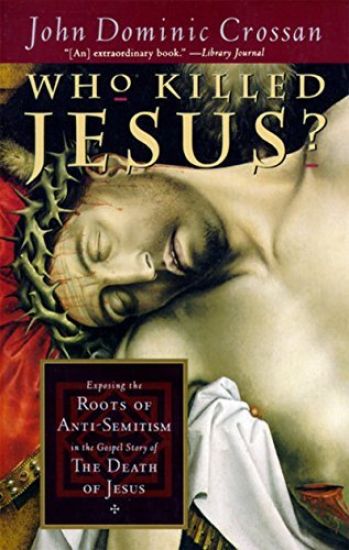
The death of Jesus is one of the most hotly debated questions in Christianity today. In his massive and highly publicized The Death of the Messiah, Raymond Brown -- while clearly rejecting anti-Semitism -- never questions the essential historicity of the passion stories. Yet it is these stories, in which the Jews decide Jesus' execution, that have fueled centuries of Christian anti-Semitism. Now, in his most controversial book, John Dominic Crossan shows that this traditional understanding of the Gospels as historical fact is not only wrong but dangerous. Drawing on the best of biblical, anthropological, sociological and historical research, he demonstrates definitively that it was the Roman government that tried and executed Jesus as a social agitator. Crossan also candidly addresses such key theological questions as "Did Jesus die for our sins?" and "Is our faith in vain if there was no bodily resurrection?" Ultimately, however, Crossan's radical reexamination shows that the belief that the Jews killed Jesus is an early Christian myth (directed against rival Jewish groups) that must be eradicated from authentic Christian faith.
In Parables

In Parables

John Dominic Crossan

Polebridge Press
1994
nidottu
With In Parables, John Dominic Crossan boldly attempts to understand the parables from inside their own world. Combining critical, theological, and literary approaches, he sets the reading and study of the parables in an entirely new context.
Dark Interval

Dark Interval

John Dominic Crossan

Polebridge Press
1994
nidottu
From myth to parable, Crossan identifies five types of stories. Among these types it is parable that subverts the world and undercuts the safe shelter we build. Using literary theory, philosophy, theology and biblical studies, he demonstrates the subversive power of the parable.
The Historical Jesus: The Life of a Mediterranean Jewish Peasa
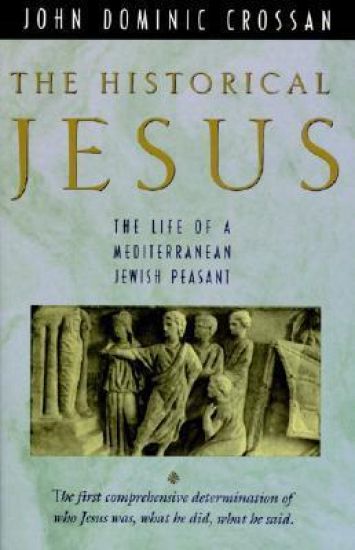
"He comes as yet unknown into a hamlet of Lower Galilee. He is watched by the cold, hard eyes of peasants living long enough at a subsistence level to know exactly where the line is drawn between poverty and destitution. He looks like a beggar yet his eyes lack the proper cringe, his voice the proper whine, his walk the proper shuffle. He speaks about the rule of God and they listen as much from curiosity as anything else. They know all about rule and power, about kingdom and empire, but they know it in terms of tax and debt, malnutrition and sickness, agrarian oppression and demonic possession. What, they really want to know, can this kingdom of God do for a lame child, a blind parent, a demented soul screaming its tortured isolation among the graves that mark the edges of the village?" -- from "The Gospel of Jesus," overture to The Historical Jesus The Historical Jesus reveals the true Jesus--who he was, what he did, what he said. It opens with "The Gospel of Jesus," Crossan's studied determination of Jesus' actual words and actions stripped of any subsequent additions and placed in a capsule account of his life story. The Jesus who emerges is a savvy and courageous Jewish Mediterranean peasant, a radical social revolutionary, with a rhapsodic vision of economic, political, and religious egalitarianism and a social program for creating it. The conventional wisdom of critical historical scholarship has long held that too little is known about the historical Jesus to say definitively much more than that he lived and had a tremendous impact on his followers. "There were always historians who said it could not be done because of historical problems," writes Crossan. "There were always theologians who said it should not be done because of theological objections. And there were always scholars who said the former when they meant the latter.' With this ground-breaking work, John Dominic Crossan emphatically sweeps these notions aside. He demonstrates that Jesus is actually one of the best documented figures in ancient history; the challenge is the complexity of the sources. The vivid portrayal of Jesus that emerges from Crossan's unique methodology combines the complementary disciplines of social anthropology, Greco-Roman history, and the literary analysis of specific pronouncements, anecdotes, confessions and interpretations involving Jesus. All three levels cooperate equally and fully in an effective synthesis that provides the most definitive presentation of the historical Jesus yet attained.