
Kirjailija
John Donaldson
Kirjat ja teokset yhdessä paikassa: 16 kirjaa, julkaisuja vuosilta 1998–2026, suosituimpiin kuuluu International Economic Relations. Vertaile teosten hintoja ja tarkista saatavuus suomalaisista kirjakaupoista.
16 kirjaa
Kirjojen julkaisuvuodet: 1998–2026.

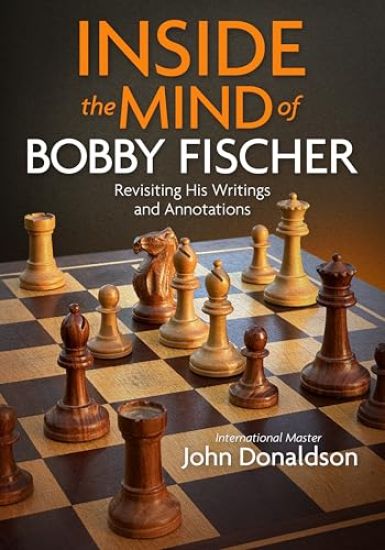
Inside the Mind of Bobby Fischer
John Donaldson
SILES PRESS,U.S.
2025
nidottu
Halvin toimitettuna 27,50 €
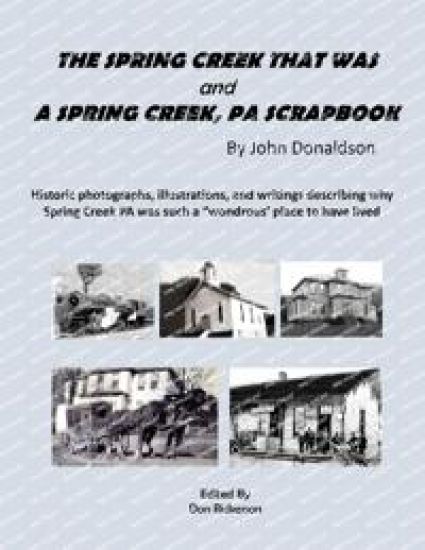
John Donaldson (1928-2014) wrote The Spring Creek that was to capture the Spring Creek that he remembered in his youth. Chances are you never traveled through Spring Creek during the thirties, forties, or fifties, because not many people did. His father, LR, was a Republican who owned the general store, while his mother was a pro-Roosevelt Democrat who served as a deacon in the Congregational church. Despite poverty and passionate political squabbles, we know the country survived. And in ironic hindsight, the one thing that all friends, relatives, and neighbors would have agreed upon is that -back then-they never realized that they were supposed to have been depressed in his in the Depression. John Donaldson was reared in Spring Creek Pennsylvania and attended Thiel Collage in Northern Pennsylvania. He published many technical papers about electroplating and metal finishing and has been a featured columnist for magazines in the metalworking industry. When he retired, the author resided in California where he worked as a consultant and wrote these funny books about his youth. This book is the combination of John's two book, "The Spring Creek That Was" and "A Spring Creek, PA Scrapbook". There is a great deal of overlap in the topics between the two books, so I have merged them into one. Please see John's Donaldson's other funny books on Spring Creek, "When Turkey Talked and Politicians were People" and "Accidental All Star" -Don
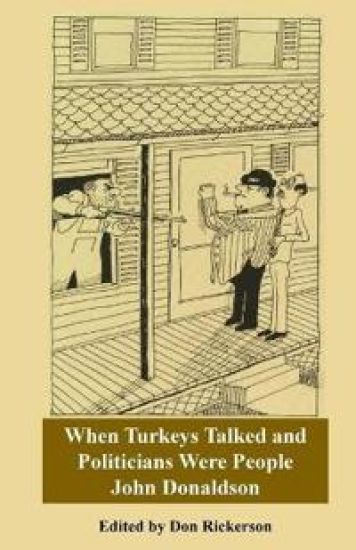
Chances are you never traveled through Spring Creek during the thirties, because not many people did. When Turkeys Talked and Politicians Were People, written by John Donaldson, is the author's upbeat, whimsical reminiscence of adolescent life in rural Pennsylvania during the depression. His father, LR, was a Republican who owned the general store, while his mother was a pro-Roosevelt Democrat who served as a deacon in the Congregational church. Despite poverty and passionate political squabbles, we know the country survived. And in ironic hindsight, the one thing that all friends, relatives, and neighbors would have agreed upon is that -back then-they never realized that they were supposed to have been depressed. Well-written, this book offers a delightful romp through the era of muddled innocence and great hardship.
John Donaldson is a native of Spring Creek, PA a very small town in the Allegheny Mt. foothills of NW Pennsylvania. He attended high school in Youngsville, PA a very small city, also in the Allegheny Mt. foothills. And he graduated from Thiel College in the small city of Greenville which is also in Pennsylvania but not in the Allegheny Mt. foothills. This book is a memoir of his youth in Spring Creek PA, his life in the military during the Korean War and his early working life.
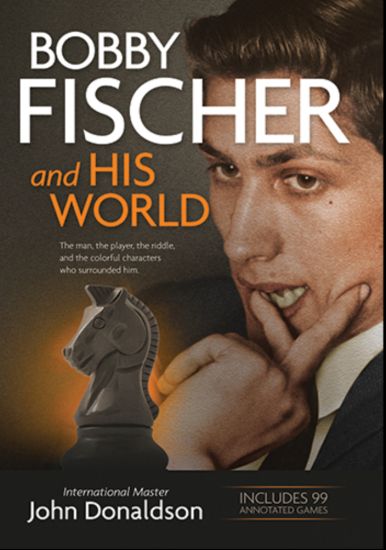
IM Donaldson examines Fischers life and career from his days as a child prodigy through the height of his World Championship triumph and into his tumultuous final years. Donaldsons meticulous research has uncovered previously lost games and a wealth of unknown material about Fischer -- ranging from his close friendships with players and supporters to his acrimonious relationships with organisers, journalists, lawyers, and publishers. Bobby Fischer and His World is brought to life through a potpourri of first-hand accounts, interviews, letters, and articles by and about the colourful characters that inhabited Fischers world. Unifying this wide-ranging tale are over 100 photos and illustrations and 99 newly annotated games. This is the story of Fischer the man and the player, shedding new light on the riddle of the most famous chessplayer in history. International Master John Donaldson is a player, a chess journalist and historian, and a thirteen-time United States World Chess Olympiad coach (his 2016 team won gold).

This work has been selected by scholars as being culturally important, and is part of the knowledge base of civilization as we know it. This work was reproduced from the original artifact, and remains as true to the original work as possible. Therefore, you will see the original copyright references, library stamps (as most of these works have been housed in our most important libraries around the world), and other notations in the work. This work is in the public domain in the United States of America, and possibly other nations. Within the United States, you may freely copy and distribute this work, as no entity (individual or corporate) has a copyright on the body of the work. As a reproduction of a historical artifact, this work may contain missing or blurred pages, poor pictures, errant marks, etc. Scholars believe, and we concur, that this work is important enough to be preserved, reproduced, and made generally available to the public. We appreciate your support of the preservation process, and thank you for being an important part of keeping this knowledge alive and relevant.
An Analysis of David Hume's Dialogues Concerning Natural Religion
John Donaldson; Ian Jackson
Macat International Limited
2017
sidottu
David Hume’s Dialogues Concerning Natural Religion is a philosophical classic that displays a powerful mastery of the critical thinking skills of reasoning and evaluation. Hume’s subject, the question of the existence and possible nature of God, was, and still is, a persistent topic of philosophical and theological debate. What makes Hume’s text a classic of reasoning, though, is less what he says, than how he says it. As he noted in his preface to the book, the question of ‘natural religion’ was unanswerable: so ‘obscure and uncertain’ that ‘human reason can reach no fixed determination with regard to it.’ Hume chose, as a result, to cast his thoughts on the topic in the form of a dialogue – allowing different points of view to be reasoned out, evaluated and answered by different characters. Considering and judging different or opposing points of view, as Hume’s characters do, is an important part of reasoning, and is vital to building strong persuasive arguments. Even if, as Hume suggests, there can be no final answer to what a god might be like, Dialogues Concerning Natural Religion shows high-level reasoning and evaluation at their best.
An Analysis of David Hume's Dialogues Concerning Natural Religion
John Donaldson; Ian Jackson
Macat International Limited
2017
nidottu
David Hume’s Dialogues Concerning Natural Religion is a philosophical classic that displays a powerful mastery of the critical thinking skills of reasoning and evaluation. Hume’s subject, the question of the existence and possible nature of God, was, and still is, a persistent topic of philosophical and theological debate. What makes Hume’s text a classic of reasoning, though, is less what he says, than how he says it. As he noted in his preface to the book, the question of ‘natural religion’ was unanswerable: so ‘obscure and uncertain’ that ‘human reason can reach no fixed determination with regard to it.’ Hume chose, as a result, to cast his thoughts on the topic in the form of a dialogue – allowing different points of view to be reasoned out, evaluated and answered by different characters. Considering and judging different or opposing points of view, as Hume’s characters do, is an important part of reasoning, and is vital to building strong persuasive arguments. Even if, as Hume suggests, there can be no final answer to what a god might be like, Dialogues Concerning Natural Religion shows high-level reasoning and evaluation at their best.
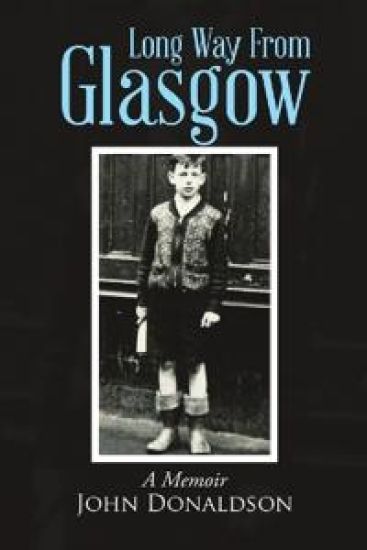
Long Way From Glasgow is a memoir of John Donaldson, born in Glasgow 1936, growning up during the Second World War. his adventures take him from Canada to Africa and back again. This is the chronicle of those adventures and of his career in the trade union movement.
A Minister's Week in Argyll. August, 1879
John Donaldson
British Library, Historical Print Editions
2011
pokkari
Title: A Minister's Week in Argyll. August, 1879. Publisher: British Library, Historical Print EditionsThe British Library is the national library of the United Kingdom. It is one of the world's largest research libraries holding over 150 million items in all known languages and formats: books, journals, newspapers, sound recordings, patents, maps, stamps, prints and much more. Its collections include around 14 million books, along with substantial additional collections of manuscripts and historical items dating back as far as 300 BC. The HISTORY OF BRITAIN & IRELAND collection includes books from the British Library digitised by Microsoft. As well as historical works, this collection includes geographies, travelogues, and titles covering periods of competition and cooperation among the people of Great Britain and Ireland. Works also explore the countries' relations with France, Germany, the Low Countries, Denmark, and Scandinavia. ++++The below data was compiled from various identification fields in the bibliographic record of this title. This data is provided as an additional tool in helping to insure edition identification: ++++ British Library Donaldson, John; 1881 32 p.; 8 . 10347.c.4.(10.)

Rudimentary Treatise On Clay Lands And Loamy Soils (1852)
John Donaldson
KESSINGER PUBLISHING CO
2008
pokkari
Accelerated Dragons
John Donaldson; Jeremy Silman
Everyman Chess
1998
pokkari
Halvin toimitettuna 29,10 €
Many players are attracted to the Dragon Sicilian, but are put off by the fierce mating attacks that White can launch. In the Accelerated Dragon, Black aims for an improved version, saving a move with his queen's pawn. If White tries to ignore the difference, Black's instant detonation of the centre will come as an unwelcome cold shower! The authors show that White's main reply, the Maroczy Bind, is not so fearsome as was once thought Black has many ways to break out, while quite often it is possible to manoeuvre around White's 'binding pawns' and show that they imprison White's pieces as much as they do Black's.