Kirjojen hintavertailu – 12 859 818 kirjaa ja 27 kauppaa

Kirjailija

John Douglas

Kirjat ja teokset yhdessä paikassa: 59 kirjaa, julkaisuja vuosilta 1975–2026, suosituimpiin kuuluu Why Technology Feels So Hard (And How to Finally Make It Easy). Vertaile teosten hintoja ja tarkista saatavuus suomalaisista kirjakaupoista.

59 kirjaa

Kirjojen julkaisuvuodet: 1975–2026.

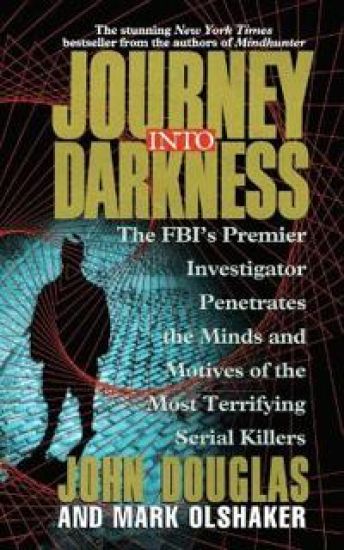
Journey Into Darkness

Journey Into Darkness

John Douglas; Mark Olshaker

Simon Schuster
2010
pokkari
In the #1 "New York Times" bestseller "Mindhunter," John Douglas, who headed the FBI's elite Investigative Support Unit, told the story of his brilliant and terrifying career tracking down some of the most heinous criminals in history. Using behavioral profiling and criminal investigative analysis to get into the head and psyche of both the criminal and victim -- to feel what they felt at the critical moment -- Douglas helped crack many high profile cases, including the Trailside Killer, the Atlanta child murders, and the Tylenol murders. Now, working again with his co-author Mark Olshaker, Douglas delves further into the criminal mind with a series of chilling new cases in "Journey into Darkness" Follow the FBI's premier investigative profiler as he penetrates the minds and motives of the most terrifying serial killers. In "Journey into Darkness," Douglas profiles vicious serial killers, rapists, and child molesters. He is straightforward, blunt, often irreverent, and outspoken, but takes pains not to glorify any of these murderers. Some of the unique cases Douglas discusses include: The Clairemont killer -- Six women were found stabbed to death in San Diego, three in the same apartment complex. In each case, the killer entered through an unlocked door or window in the late morning to early afternoon. A suspect was in custody, tied to one of the murders through a DNA match. Douglas was called upon to use his profiling techniques to link the other five murders to the suspect. Douglas looked at the "signature" of the killer, and found that all the murders were committed by the same man. The prosecution used the profile to force the jury to find the defendant guilty of all six murders, if they felt he was guilty of the one murder. Celophus Prince was found guilty on all counts. The schoolgirl murders -- What became Canada's "trial of the century." Several schoolgirls disappeared in 1992; their bodies were dumped several weeks later, beaten and sexually attacked. Canadian police agencies contacted the FBI for help on the case and to get a profile on the killer and, according to witnesses, his accomplice. Following the advice of the Investigative Support Unit in Quantico, Canada aired a television special entitled "The Abduction of Kristin French," allowing agent Gregg McCrary to describe the killer's profile on air. Knowing that the murderer and his accomplice would be watching, he planned to confront the unknown killer, assuring him he would be caught. Paul Bernardo was arrested on February 17, 1993, turned in by his wife and partner in crime, Karla Leanne Homolka.. The profile was dead on the money. Richmond's First Serial Murderer -- In 1987, Richmodd, Virginia, was struck by a serial rapist/murderer. The Richmond police called upon the Investigative Support Unit in Quantico to make up a profile of the perpetrator. The crimes and profile beared a remarkable resemblance to a string of burglaries, rapes and murders in Alexandria, Virginia, several years before. Agent Steve Mardigian then formulated a complex strategy that caught the killer who fit the profile to a tee. In the process he helped free a wrongly convicted man, who due to his low intelligence level, had become confused and confessed to the crime. The brutal and sadistic murder of Suzanne Marie Collins, a beautiful young Marine on the verge of a brilliant career. The culprit was caught and confessed to her killing, but his story was very different than what really happened. By delving into Sedley Alley's mind, Douglas helped bring the murderer to justice, recreating the evening from the perspective of a sadistic and angry man. Suzanne Collins' horrifying end haunts Douglas to this day. Douglas delves into other cases, including Polly Klaas' abduction and murder by Richard Allen Davis, the tragedy that lead to the creation of Megan's Law; the abduction and murder of six-year-old Cassandra Lynn Hansen, who was snatched from an evening church service; and the vicious murder and sexual assault of Nancy Newman and her two daughters, eight-year-old Melissa and three-year-old Angie in Anchorage, Alaska. He also explores the murders of Nicole Brown Simpson and Ronald Goldman, focusing on the double homicide purely from a behavioral perspective. Douglas examines what the facts at and surrounding the crime scene told about the killer from a behavioral point of view. From Douglas's profile, the only viable suspect to date is O. J. Simpson. With "Journey into Darkness, " Douglas provides more than a glimpse into the minds of serial killers; he demonstrates what a powerful weapon behavioral science has become. Profiling criminals helps not only to capture them, but also helps society understand how these predators work and what can be done to prevent them from striking again. Douglas focuses especially on pedophiles and child abductors, fully explaining what drives them, and how to keep children away from them. As he points out, "The best way to protect your children is to know your enemy." He includes eight rules for safety, a list of steps parents can take to prevent child abduction and exploitation, tips on how to detect sexual exploitation, basic rules of safety for children, and a chart, based on age, which details the safety skills children should have to protect themselves. In his review for "Mindhunter" in "The New York Times Book Review, " Dean Koontz said, "Because of his insights and the power of the material, he leaves us shaken, gripped by a quiet grief for the innocent victims and anguished by the human condition." Journey into Darkness continues this perilous trip into the psyche of the serial killer, but also offers a glimmer of hope that profiling may enable law enforcement to see the indicators of a serial killer's mind and intervene before he kills, or kills again.

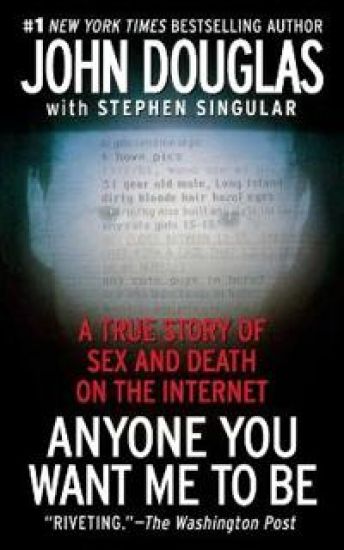
Anyone You Want Me to Be

Anyone You Want Me to Be

John Douglas; Stephen Singular

Pocket Books
2009
pokkari
Legendary FBI profiler and "New York Times" bestselling author John Douglas explore the shocking case of John Robinson a harmless, unassuming family man whose criminal history began with embezzlement and fraud -- and ended with his arrest for the savage murders of six women and his suspected involvement in at least five disappearances. Most disturbing was the hunting ground in which Robinson seduced his prey: the world of cyberspace. Haunting chat rooms, targeting vulnerable women, and exploiting the anonimity of the Internet, his bloody spree was finally halted by a relentless parole officer who spent ten years trying to nail Robinson as a cold-blooded killer. A cautionary tale set in a virtual world where relationships are established without the benefit of physical contact, "Anyone You Want Me to Be" is a contemporary real-life drama of high-tech crime and punishment.
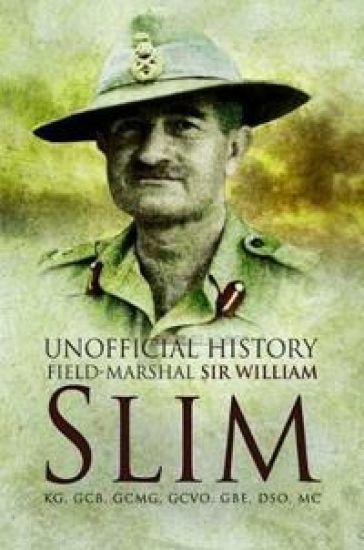
Unofficial History field-Mrshall Sir William Slim
Like most members of the professional military freemasonry, Slim came to admire "all the soldiers of different races who have fought with me and most of those who have fought against me." Among the most likable of his enemies were the Wazirs of India's Northwest Frontier. In 1920, Slim took part in a retaliatory raid on an obscure village. It was an unusually easy victory over the canny Wazirs, whom the British took by surprise and escaped from with scant loss. Afterwards, in the casual frontier way, the British sent a message to the Wazirs, expressing surprise at the enemy's unusually poor shooting. The Wazirs replied in courtly fashion that their rifles were Short Magazine Lee-Enfields captured in previous fights with the British and that they had failed to sight the guns to accord with a new stock of ammunition. Now, having calculated the adjustment, they would be delighted to demonstrate their bull's-eye accuracy any time the British wanted. "One cannot help feeling," Slim says, "that the fellows who wrote that ought to be on our side." Slim genuinely enjoyed his virtually blood-free skirmishes with such foes as the Turks, the Wazirs and the Italians in 1940 Ethiopia.
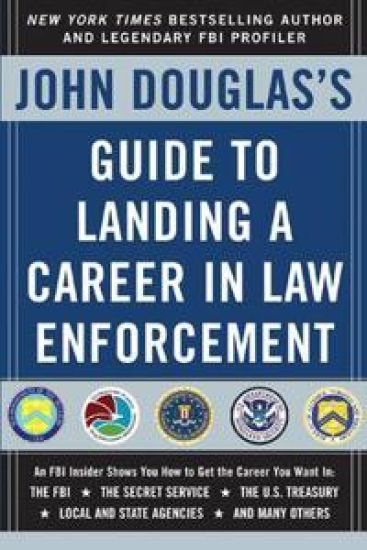
John Douglas's Guide to Landing a Career in Law Enforcement
A legendary FBI profiler uses his twenty-five years of experience in law enforcement to create a unique career guide, indispensable for anyone seeking to gain employment with the FBI, the Secret Service, air marshals, or any police agency, with helpful contact information, study guides Web sites, worksheets, checklists, self-evaluations, and other useful resources. Original. 20,000 first printing.
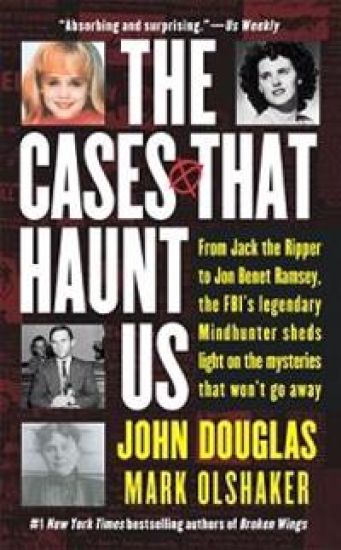
The Cases That Haunt Us

The Cases That Haunt Us

John Douglas; Mark Olshaker

Simon Schuster
2001
pokkari

Halvin toimitettuna 16,30 €

Violent. Provocative. Shocking. Call them what you will...but don't call them open and shut. Did Lizzie Borden murder her own father and stepmother? Was Jack the Ripper actually the Duke of Clarence? Who killed JonBenet Ramsey? America's foremost expert on criminal profiling and twenty-five-year FBI veteran John Douglas, along with author and filmmaker Mark Olshaker, explores those tantalizing questions and more in this mesmerizing work of detection. With uniquely gripping analysis, the authors reexamine and reinterpret the accepted facts, evidence, and victimology of the most notorious murder cases in the history of crime, including the Lindbergh baby kidnapping, the Zodiac Killer, and the Whitechapel murders. Utilizing techniques developed by Douglas himself, they give detailed profiles and reveal chief suspects in pursuit of what really happened in each case. "The Cases That Haunt Us" not only offers convincing and controversial conclusions, it deconstructs the evidence and widely held beliefs surrounding each case and rebuilds them -- with fascinating, surprising, and haunting results.
Bacteriophages

Bacteriophages

John Douglas

Chapman and Hall
1975
nidottu
The contribution of bacteriophages to the development of modern biology cannot be overestimated yet, sixty years after their discovery, they are as remote and mysterious to many scientists as they are to most laymen. This book endeavours to remedy the situation: an attempt has been made to provide, in readily comprehensible form, a nucleus of information essential to anyone embarking on the study of bacteriophages or using them in their work for the first time. It shows the range of bacteriophage structure and behaviour; it illustrates the role of bacteriophage in molecular biology; it surveys the current state of the art; it presents the medical and industrial aspects. Some simple experimental procedures are given in sufficient detail for the beginner to attempt them successfully. Other, more sophisticated pro­ cedures are presented so as to impart a feeling of intimate reality without dazzling the reader with technical complexity. I hope that young readers will forgive me for assuming that they have some knowledge of bacteria, nucleic acids, antibodies and isotopes. Likewise I would ask mature workers to excuse the omission of cherished specialities. To have included all these, valuable though they are, might have put this book beyond the re ach of the phage-novices for whom it is intended. Specific references, save a few of particular interest, have been omitted. Other books on bacteriophage v vi BACTERIOPHAGES provide them in abundance.