Kirjojen hintavertailu – 12 903 725 kirjaa ja 27 kauppaa

Kirjailija

John E. Eck

Kirjat ja teokset yhdessä paikassa: 10 kirjaa, julkaisuja vuosilta 2003–2026, suosituimpiin kuuluu Place Matters. Vertaile teosten hintoja ja tarkista saatavuus suomalaisista kirjakaupoista.

10 kirjaa

Kirjojen julkaisuvuodet: 2003–2026.

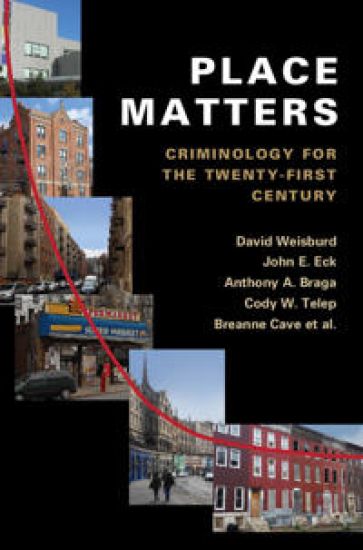
Place Matters

Place Matters

David Weisburd; John E. Eck; Anthony A. Braga; Cody W. Telep; Breanne Cave; Kate Bowers; Gerben Bruinsma; Charlotte Gill; Elizabeth R. Groff; Julie Hibdon; Joshua C. Hinkle; Shane D. Johnson; Brian Lawton; Cynthia Lum; Jerry H. Ratcliffe; George Rengert; Travis Taniguchi; Sue-Ming Yang

Cambridge University Press
2016
sidottu
Over the last two decades, there has been increased interest in the distribution of crime and other antisocial behavior at lower levels of geography. The focus on micro geography and its contribution to the understanding and prevention of crime has been called the 'criminology of place'. It pushes scholars to examine small geographic areas within cities, often as small as addresses or street segments, for their contribution to crime. Here, the authors describe what is known about crime and place, providing the most up-to-date and comprehensive review available. Place Matters shows that the study of criminology of place should be a central focus of criminology in the twenty-first century. It creates a tremendous opportunity for advancing our understanding of crime, and for addressing it. The book brings together eighteen top scholars in criminology and place to provide comprehensive research expanding across different themes.
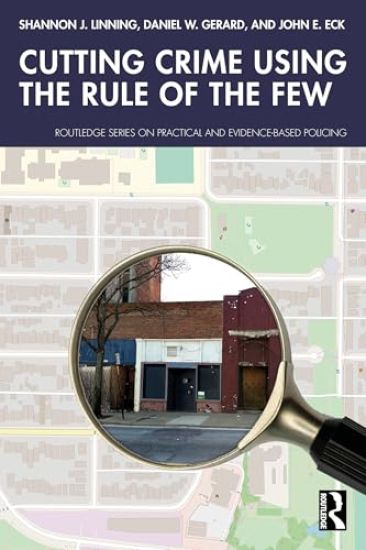
Cutting Crime Using the Rule of the Few

Cutting Crime Using the Rule of the Few

Shannon J. Linning; Daniel W. Gerard; John E. Eck

TAYLOR FRANCIS LTD
2026
nidottu
Based on decades of research, this book reveals how the rule of the few can redirect your focus to create effective crime control policies. Many crime reduction strategies fail because they apply common crime fallacies. They assume that: solutions to crime need to be complicated, crime is widespread, residents matter the most, more arrests reduce crime, and police can solve all crime problems. At the heart of each fallacy is a failure to consider an old idea: the rule of the few. The rule of the few means a tiny fraction of inputs cause most of the outcomes. Research shows that: solving problems at smaller scales can cut crime substantially, crime is highly concentrated at a few places in any city, only a few residents can usually effect change, only a few people commit most of the crime, and a few everyday people can dismantle crime opportunities. Cutting Crime Using the Rule of the Few shows that crime is not merely a police problem. It explains how those who own or manage property and design the products we use have far more power to suppress crime opportunities than they realize. Cutting Crime reveals how to use the rule of the few to identify and solve crime problems. It provides a set of tools and spells out specific strategies the police, property owners, business owners, and government agencies can use to reduce crime. Just as it only takes a few to create a lot of crime, it only takes a few to prevent those crimes.
Cutting Crime Using the Rule of the Few

Cutting Crime Using the Rule of the Few

Shannon J. Linning; Daniel W. Gerard; John E. Eck

TAYLOR FRANCIS LTD
2026
sidottu
Based on decades of research, this book reveals how the rule of the few can redirect your focus to create effective crime control policies. Many crime reduction strategies fail because they apply common crime fallacies. They assume that: solutions to crime need to be complicated, crime is widespread, residents matter the most, more arrests reduce crime, and police can solve all crime problems. At the heart of each fallacy is a failure to consider an old idea: the rule of the few. The rule of the few means a tiny fraction of inputs cause most of the outcomes. Research shows that: solving problems at smaller scales can cut crime substantially, crime is highly concentrated at a few places in any city, only a few residents can usually effect change, only a few people commit most of the crime, and a few everyday people can dismantle crime opportunities. Cutting Crime Using the Rule of the Few shows that crime is not merely a police problem. It explains how those who own or manage property and design the products we use have far more power to suppress crime opportunities than they realize. Cutting Crime reveals how to use the rule of the few to identify and solve crime problems. It provides a set of tools and spells out specific strategies the police, property owners, business owners, and government agencies can use to reduce crime. Just as it only takes a few to create a lot of crime, it only takes a few to prevent those crimes.
Place Management and Crime

Place Management and Crime

John E. Eck; Shannon J. Linning; Tamara D. Herold

Springer International Publishing AG
2023
nidottu
This brief describes the theory and evidence of a form of social control known as place management. Created by property owners, place management is an alternative to the two other domains of social control: formally created by the state and informally created by residents. It helps explain the high concentration of crime and disorder at a relatively small proportion of addresses and facilities. This volume examines the specifics of place management and extends it in three ways: to show how high crime places may radiate crime into their surroundings; to reveal networks of places that create crime hotspot spanning blocks; to demonstrate how networks of place managers influence crime throughout neighborhoods. Finally, it shows that the policy implications of place management extend far beyond the police and should include regulatory policies.
Writing with Sweet Clarity

Writing with Sweet Clarity

John E. Eck

TAYLOR FRANCIS LTD
2022
nidottu
In this book, criminologist and experienced educator John E. Eck draws on decades of academic and professional writing experience to provide an analytical toolkit for clear professional writing. This book focuses on the essential objective of clarity, and addresses topics seldom addressed in other books, such as ethics beyond plagiarism; writing with co-authors; organizing complex ideas; using analytics to improve writing; crafting strong beginnings and endings; using examples and metaphors; and integrating tables, charts, and diagrams. As universities continue to demand writing-intensive courses in the social sciences, this book is indispensable in university settings and throughout a professional career. The reader will use the practical advice, examples, and exercises in this book to master a method for clear writing unimpaired by stereotypical academic jargon. The book will help both new and seasoned researchers seeking to translate their work into a clear and accessible presentation for both professional and lay audiences. Designed for and field-tested with graduate and advanced undergraduate students, this lively and easy-to-read book will work for courses taught in criminology, sociology, geography, and other social sciences, and will enable scholars to extend and broaden the impact of their research.
Writing with Sweet Clarity

Writing with Sweet Clarity

John E. Eck

TAYLOR FRANCIS LTD
2022
sidottu
In this book, criminologist and experienced educator John E. Eck draws on decades of academic and professional writing experience to provide an analytical toolkit for clear professional writing. This book focuses on the essential objective of clarity, and addresses topics seldom addressed in other books, such as ethics beyond plagiarism; writing with co-authors; organizing complex ideas; using analytics to improve writing; crafting strong beginnings and endings; using examples and metaphors; and integrating tables, charts, and diagrams. As universities continue to demand writing-intensive courses in the social sciences, this book is indispensable in university settings and throughout a professional career. The reader will use the practical advice, examples, and exercises in this book to master a method for clear writing unimpaired by stereotypical academic jargon. The book will help both new and seasoned researchers seeking to translate their work into a clear and accessible presentation for both professional and lay audiences. Designed for and field-tested with graduate and advanced undergraduate students, this lively and easy-to-read book will work for courses taught in criminology, sociology, geography, and other social sciences, and will enable scholars to extend and broaden the impact of their research.
Whose 'Eyes on the Street' Control Crime?

Whose 'Eyes on the Street' Control Crime?

Shannon J. Linning; John E. Eck

Cambridge University Press
2021
pokkari
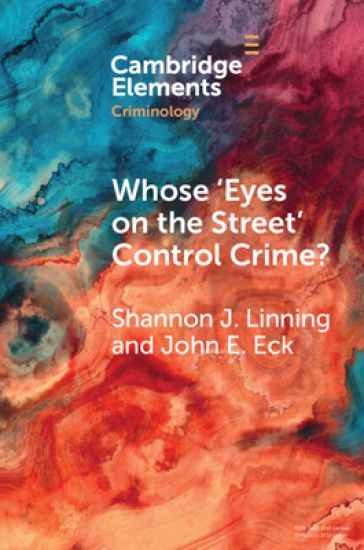
Jane Jacobs coined the phrase 'eyes on the street' to depict those who maintain order in cities. Most criminologists assume these eyes belong to residents. In this Element we show that most of the eyes she described belonged to shopkeepers and property owners. They, along with governments, wield immense power through property ownership and regulation. From her work, we propose a Neo-Jacobian perspective to reframe how crime is connected to neighborhood function through deliberate decision-making at places. It advances three major turning points for criminology. This includes turns from: 1. residents to place managers as the primary source of informal social control; 2. ecological processes to outsiders' deliberate actions that create crime opportunities; and 3. a top-down macro- to bottom-up micro-spatial explanation of crime patterns. This perspective demonstrates the need for criminology to integrate further into economics, political science, urban planning, and history to improve crime control policies.
Become a Problem-Solving Crime Analyst

Become a Problem-Solving Crime Analyst

Ronald Clarke; John E. Eck

CRC Press
2016
sidottu
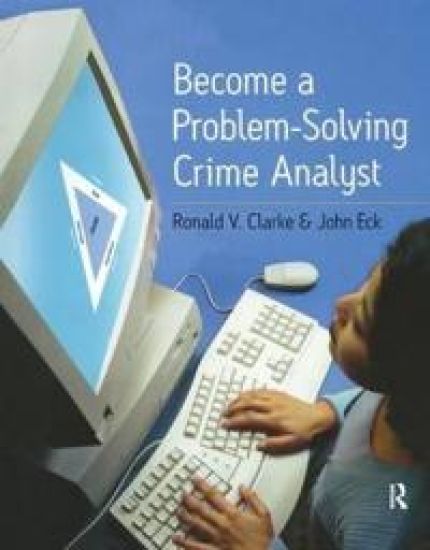
Crime analysis has become an increasingly important part of policing and crime prevention, and thousands of specialist crime analysts are now employed by police forces worldwide. This is the first book to set out the principles and practice of crime analysis, and is designed to be used both by crime analysts themselves, by those responsible for the training of crime analysts and teaching its principles, and those teaching this subject as part of broader policing and criminal justice courses. The particular focus of this book is on the adoption of a problem solving approach, showing how crime analysis can be used and developed to support a problem oriented policing approach – based on the idea that the police should concentrate on identifying patterns of crime and anticipating crimes rather than just reacting to crimes once they have been committed. In his foreword to this book, Nick Ross, presenter of BBC Crime Watch, argues passionately that crime analysts are 'the new face of policing', and have a crucial part to play in the increasingly sophisticated police response to crime and its approach to crime prevention – 'You are the brains, the expert, the specialist, the boffin.'
Environmental Corrections

Environmental Corrections

Lacey Schaefer; Francis T. Cullen; John E. Eck

SAGE Publications Inc
2015
nidottu
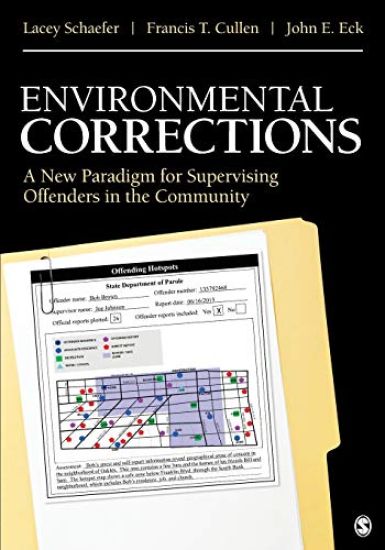
A new paradigm for supervising offenders in the community Environmental Corrections is an innovative guide filled with rich insights and strategies for probation and parole officers to effectively integrate offenders back into the community and reduce recidivism. Authors Lacey Schaefer, Francis T. Cullen, and John E. Eck move beyond traditional models for interventions and build directly on the applied focus of environmental criminology theories. Using this approach, the authors answer the question of what officers can do to decrease opportunities for an offender to commit a crime. Readers will learn how to recognize and assess specific criminal opportunities in an offender’s past and gain the tools and strategies they need to design an individualized supervision plan that channels offenders away from these criminogenic situations.
Become a Problem-Solving Crime Analyst

Become a Problem-Solving Crime Analyst

Ronald Clarke; John E. Eck

Jill Dando Institute Of Crime Science
2003
nidottu
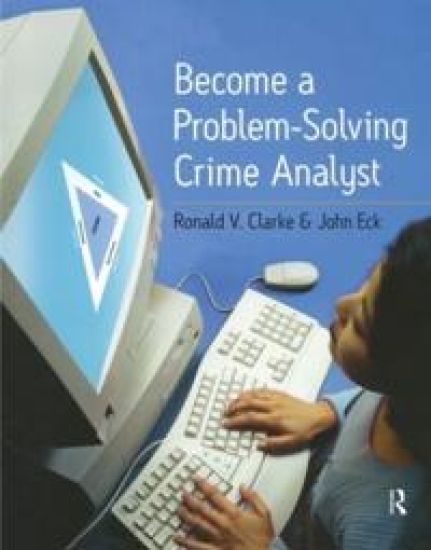
Crime analysis has become an increasingly important part of policing and crime prevention, and thousands of specialist crime analysts are now employed by police forces worldwide. This is the first book to set out the principles and practice of crime analysis, and is designed to be used both by crime analysts themselves, by those responsible for the training of crime analysts and teaching its principles, and those teaching this subject as part of broader policing and criminal justice courses. The particular focus of this book is on the adoption of a problem solving approach, showing how crime analysis can be used and developed to support a problem oriented policing approach based on the idea that the police should concentrate on identifying patterns of crime and anticipating crimes rather than just reacting to crimes once they have been committed. In his foreword to this book, Nick Ross, presenter of BBC Crime Watch, argues passionately that crime analysts are 'the new face of policing', and have a crucial part to play in the increasingly sophisticated police response to crime and its approach to crime prevention 'You are the brains, the expert, the specialist, the boffin.'