Kirjojen hintavertailu – 12 903 725 kirjaa ja 27 kauppaa

Kirjailija

John E. Schulenberg

Kirjat ja teokset yhdessä paikassa: 7 kirjaa, julkaisuja vuosilta 1986–2013, suosituimpiin kuuluu The Education-Drug Use Connection. Vertaile teosten hintoja ja tarkista saatavuus suomalaisista kirjakaupoista.

7 kirjaa

Kirjojen julkaisuvuodet: 1986–2013.

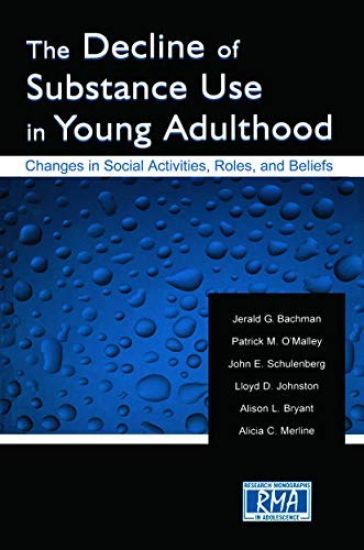
The Decline of Substance Use in Young Adulthood

The Decline of Substance Use in Young Adulthood

Jerald G. Bachman; Patrick M. O'Malley; John E. Schulenberg; Lloyd D. Johnston; Alison L. Bryant; Alicia C. Merline

Psychology Press Ltd
2013
nidottu
This book is intended as a thoughtful extension to Bachman et al.'s well-received monograph Smoking, Drinking, and Drug Use in Young Adulthood. That volume showed that the new freedoms of young adulthood lead to increases in substance use, while the responsibilities of adulthood--marriage, pregnancy, parenthood--contribute to declines in substance use. The Decline of Substance Use in Young Adulthood examines how the changes in social and religious experiences and in attitudes toward substance use observed among young adults are related to changes in substance use, family transitions, living arrangements, college experience, and employment. The research uses a variety of analysis techniques and is based on the nationwide Monitoring the Future surveys of more than 38,000 young people followed from high school into adulthood. The research covers the last quarter of the 20th century, a period when drug use and views about drugs underwent many important changes. In spite of these shifts, the overall patterns of relationships reported in this book are impressive in their consistency across time and in their general similarity for men and women. Specific questions addressed include the following: *As young adults experience new freedoms and responsibilities, do their attitudes about drugs change? *Do their religious views and behaviors shift? *Do their new freedoms and responsibilities affect the amount of time they spend in social activities, including going to parties and bars? *And how are any of these changes linked to changes in cigarette use, alcohol use, marijuana use, and cocaine use?
The Education-Drug Use Connection

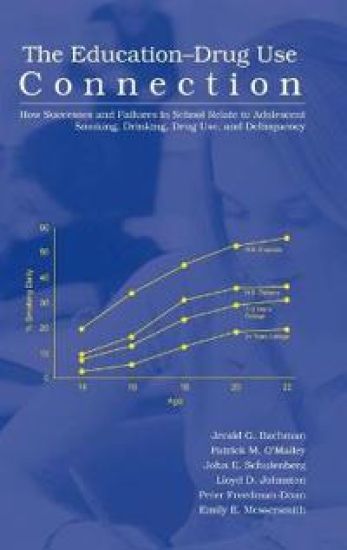
The Education-Drug Use Connection

Jerald G. Bachman; Patrick M. O'Malley; John E. Schulenberg; Lloyd D. Johnston; Peter Freedman-Doan; Emily E. Messersmith

Psychology Press
2007
sidottu
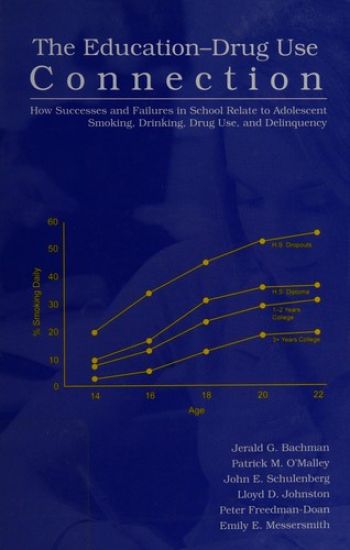
Does success in school protect teenagers from drug use? Does drug use impair scholastic success? This book tackles a key issue in adolescent development and health - the education-drug use connection. The authors examine the links and likely causal connections between educational experiences, delinquent behavior, and adolescent use of tobacco, alcohol, marijuana, and cocaine. The book uses data from the University of Michigan's Monitoring the Future project. It focuses on a large and nationally representative sample of 8th grade students in the United States who were initially surveyed in 1991-1993 and then followed over the vitally important developmental period between ages 14 and 22. The volume uses a variety of statistical analysis techniques, and the findings can be understood by individuals with limited, as well as with extensive, backgrounds in research design. The findings convincingly demonstrate that if young people can be successful in school, it can improve a broad range of outcomes in their lives, not the least of which is their ability to resist pressures to use drugs. The book provides: a summary of the findings and conclusions; a review of relevant literature; a detailed discussion of the survey and analysis methods; the academic attainment of those in the longitudinal panel; the delinquent behaviors of panel members as they relate to measures of educational success; and the patterns of initiation, continuation, and cessation for each substance: cigarettes, marijuana, cocaine, and alcohol. This book is intended for anyone who deals with education and/or substance use, including educational, developmental, and social psychologists; sociologists; epidemiologists; educators; and policy makers. The analysis of panel survey data, using a variety of techniques, will also appeal to survey methodologists and students.
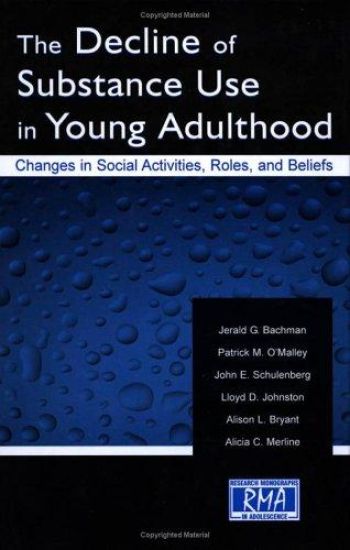
The Decline of Substance Use in Young Adulthood

The Decline of Substance Use in Young Adulthood

Jerald G. Bachman; Patrick M. O'Malley; John E. Schulenberg; Lloyd D. Johnston; Alison L. Bryant; Alicia C. Merline

Psychology Press
2001
sidottu
This book is intended as a thoughtful extension to Bachman et al.'s well-received monograph Smoking, Drinking, and Drug Use in Young Adulthood. That volume showed that the new freedoms of young adulthood lead to increases in substance use, while the responsibilities of adulthood--marriage, pregnancy, parenthood--contribute to declines in substance use. The Decline of Substance Use in Young Adulthood examines how the changes in social and religious experiences and in attitudes toward substance use observed among young adults are related to changes in substance use, family transitions, living arrangements, college experience, and employment. The research uses a variety of analysis techniques and is based on the nationwide Monitoring the Future surveys of more than 38,000 young people followed from high school into adulthood. The research covers the last quarter of the 20th century, a period when drug use and views about drugs underwent many important changes. In spite of these shifts, the overall patterns of relationships reported in this book are impressive in their consistency across time and in their general similarity for men and women. Specific questions addressed include the following: *As young adults experience new freedoms and responsibilities, do their attitudes about drugs change? *Do their religious views and behaviors shift? *Do their new freedoms and responsibilities affect the amount of time they spend in social activities, including going to parties and bars? *And how are any of these changes linked to changes in cigarette use, alcohol use, marijuana use, and cocaine use?
Smoking, Drinking, and Drug Use in Young Adulthood

Smoking, Drinking, and Drug Use in Young Adulthood

Jerald G. Bachman; Katherine N. Wadsworth; Patrick M. O'Malley; Lloyd D. Johnston; John E. Schulenberg

Psychology Press
1997
nidottu
Why do some young adults substantially change their patterns of smoking, drinking, or illicit drug use after graduating from high school? In this book, the authors show that leaving high school and leaving home create new freedoms that are linked to increases in the use of cigarettes, alcohol, marijuana, and cocaine. They also show that marriage, pregnancy, and parenthood create new responsibilities that are linked to decreases in drug use. The research is based on more than 33,000 young people followed from high school through young adulthood by the nationwide Monitoring the Future project. Every two years, participants reported on their drug use, as well as their schooling, employment, military service, living arrangements, marriages, pregnancies, parenthood, and even their divorces. The unique qualities of this research--large nationally representative samples, follow-ups extending up to 14 years beyond high school, and multiple approaches to analysis and data presentation--allowed the examination of several important influences simultaneously, while retaining much of the rich detail encountered in the real world. On the whole, the results are encouraging, suggesting that the potentials for change and improvement during the transition to adulthood are as important as the detrimental effects of problem behavior in adolescence. This research is a "must" read for anyone concerned with how new freedoms and responsibilities impact adolescents, young adults, and the use of licit and illicit drugs.
Smoking, Drinking, and Drug Use in Young Adulthood

Smoking, Drinking, and Drug Use in Young Adulthood

Jerald G. Bachman; Katherine N. Wadsworth; Patrick M. O'Malley; Lloyd D. Johnston; John E. Schulenberg

Psychology Press
1997
sidottu
Why do some young adults substantially change their patterns of smoking, drinking, or illicit drug use after graduating from high school? In this book, the authors show that leaving high school and leaving home create new freedoms that are linked to increases in the use of cigarettes, alcohol, marijuana, and cocaine. They also show that marriage, pregnancy, and parenthood create new responsibilities that are linked to decreases in drug use. The research is based on more than 33,000 young people followed from high school through young adulthood by the nationwide Monitoring the Future project. Every two years, participants reported on their drug use, as well as their schooling, employment, military service, living arrangements, marriages, pregnancies, parenthood, and even their divorces. The unique qualities of this research--large nationally representative samples, follow-ups extending up to 14 years beyond high school, and multiple approaches to analysis and data presentation--allowed the examination of several important influences simultaneously, while retaining much of the rich detail encountered in the real world. On the whole, the results are encouraging, suggesting that the potentials for change and improvement during the transition to adulthood are as important as the detrimental effects of problem behavior in adolescence. This research is a "must" read for anyone concerned with how new freedoms and responsibilities impact adolescents, young adults, and the use of licit and illicit drugs.
The Education-Drug Use Connection

The Education-Drug Use Connection

Jerald G. Bachman; Patrick M. O'Malley; John E. Schulenberg; Lloyd D. Johnston; Peter Freedman-Doan; Emily E. Messersmith

Psychology Press
2007
nidottu
Does success in school protect teenagers from drug use? Does drug use impair scholastic success? This book tackles a key issue in adolescent development and health - the education-drug use connection. The authors examine the links and likely causal connections between educational experiences, delinquent behavior, and adolescent use of tobacco, alcohol, marijuana, and cocaine. The book uses data from the University of Michigan's Monitoring the Future project. It focuses on a large and nationally representative sample of 8th grade students in the United States who were initially surveyed in 1991-1993 and then followed over the vitally important developmental period between ages 14 and 22. The volume uses a variety of statistical analysis techniques, and the findings can be understood by individuals with limited, as well as with extensive, backgrounds in research design. The findings convincingly demonstrate that if young people can be successful in school, it can improve a broad range of outcomes in their lives, not the least of which is their ability to resist pressures to use drugs. The book provides: a summary of the findings and conclusions; a review of relevant literature; a detailed discussion of the survey and analysis methods; the academic attainment of those in the longitudinal panel; the delinquent behaviors of panel members as they relate to measures of educational success; and the patterns of initiation, continuation, and cessation for each substance: cigarettes, marijuana, cocaine, and alcohol. This book is intended for anyone who deals with education and/or substance use, including educational, developmental, and social psychologists; sociologists; epidemiologists; educators; and policy makers. The analysis of panel survey data, using a variety of techniques, will also appeal to survey methodologists and students.
Career Development

Career Development

Fred W. Vondracek; Richard M. Lerner; John E. Schulenberg

Lawrence Erlbaum Associates Inc
1986
sidottu
This book places career development into the mainstream of human development research and theory. The result is a powerful synthesis of vocational psychology and the most recent advances in lifespan developmental psychology, thus offering a developmental-contextual framework for guiding theory and research in career development. Its chapters demonstrate the utility of this framework for the study of women's career development, health and careers, career intervention, and the selection and application of appropriate research methodologies. Scholars as well as intervention specialists should find this volume to be of great value. The adaption of this developmental-contextual framework for career development theory, research, and intervention may represent an important future for vocational psychology and the study of career development.