Kirjojen hintavertailu – 12 903 735 kirjaa ja 27 kauppaa

Kirjailija

John Eatwell

Kirjat ja teokset yhdessä paikassa: 8 kirjaa, julkaisuja vuosilta 1995–2014, suosituimpiin kuuluu Challenges for Europe in the World, 2030. Vertaile teosten hintoja ja tarkista saatavuus suomalaisista kirjakaupoista.

8 kirjaa

Kirjojen julkaisuvuodet: 1995–2014.

Challenges for Europe in the World, 2030

Challenges for Europe in the World, 2030

John Eatwell; Terry McKinley

Routledge
2014
nidottu
Challenges for Europe in the World, 2030 embodies critical thinking about the long-term implications for Europe of the clear shift of power from the West to the East and the South. Designed as a multi-faceted project, this book presents an integrated assessment covering a wide range of policy areas and alternative assumptions about trends in global and European governance. In order to reach this ambitious objective in a comprehensive and consistent way, several types of quantitative and qualitative approaches have been combined: a model of macro regions of the world economy, an institutional perspective, and lessons from foresight studies. With a strong focus on policy implications, the book is introduced by an executive summary which outlines the project assumptions, especially on the future of Europe in the context of the current economic crisis and of the emergence of a new balance of powers in the global economy. Subsequent chapters cover the regulation of finance, trade and technology developments, environmental sustainability, employment conditions and population wellbeing. The book concludes with an assessment of the extent to which these developments are likely to lead to significant political changes in Europe. In sum this book challenges public policy makers to re-assess their thinking in shaping Europe’s future.

Challenges for Europe in the World, 2030

Challenges for Europe in the World, 2030

John Eatwell; Terry McKinley

Routledge
2014
sidottu
Challenges for Europe in the World, 2030 embodies critical thinking about the long-term implications for Europe of the clear shift of power from the West to the East and the South. Designed as a multi-faceted project, this book presents an integrated assessment covering a wide range of policy areas and alternative assumptions about trends in global and European governance. In order to reach this ambitious objective in a comprehensive and consistent way, several types of quantitative and qualitative approaches have been combined: a model of macro regions of the world economy, an institutional perspective, and lessons from foresight studies. With a strong focus on policy implications, the book is introduced by an executive summary which outlines the project assumptions, especially on the future of Europe in the context of the current economic crisis and of the emergence of a new balance of powers in the global economy. Subsequent chapters cover the regulation of finance, trade and technology developments, environmental sustainability, employment conditions and population wellbeing. The book concludes with an assessment of the extent to which these developments are likely to lead to significant political changes in Europe. In sum this book challenges public policy makers to re-assess their thinking in shaping Europe’s future.
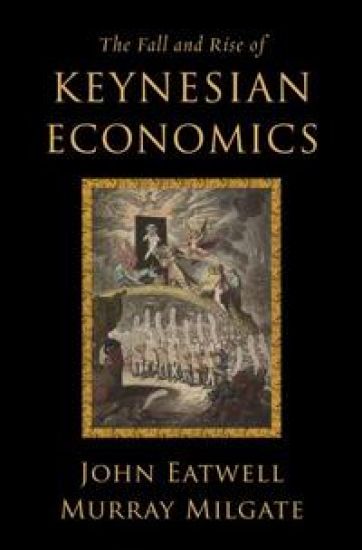
The Fall and Rise of Keynesian Economics

The Fall and Rise of Keynesian Economics

John Eatwell; Murray Milgate

Oxford University Press Inc
2011
sidottu
During the 1970s, when doctrines like monetarism and new classical macroeconomics ushered in an era of neoliberal economic policymaking, Keynesian economics was pushed aside. It was almost forgotten that when Keynesian thinking had dominated economic policymaking in the middle decades of the twentieth century, it had underwritten postwar economic reconstruction in both Europe and Japan, and was largely responsible for the unprecedented prosperity and stable growth of the 1950s and 1960s. The global financial crisis and recession changed all that. Influential voices in progressive economics circles began to remind us how useful Keynesian ways of thinking could be again, especially in assisting us to come to terms with our economic predicaments. When politicians across the globe were confronted with economic crisis, almost by accident they introduced pragmatic and workable measures that bore all the hallmarks of Keynesianism. This book is about this fall and rise of Keynesian economics. Eatwell and Milgate range widely across the landscape that defines their subject matter. They consider how powerful Keynesian ideas can be when applied to our past and present economic problems. They show how helpful these ideas are in explaining why we came to find ourselves in the mess we are in. They examine where and how the analytical and methodological foundations of conventional macroeconomic wisdom went wrong. They set out a blueprint for an alternative that provides a clearer, more consistent, and more applicable approach to understanding how markets work. They also highlight the interpretive shortcomings that have come to characterize Keynes scholarship itself. They do all of this within the context of a provocative reconsideration of some of the most pressing economic problems that confront financial markets and the global economy today.
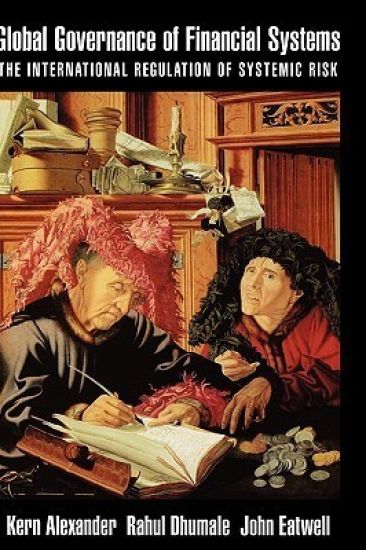
Global Governance of Financial Systems

Global Governance of Financial Systems

Kern Alexander; Rahul Dhumale; John Eatwell

Oxford University Press Inc
2005
sidottu
The book sets forth the economic rationale for international financial regulation and what role, if any, international regulation can play in effectively managing systemic risk while providing accountability to all affected nations. The book suggests that a particular type of global governance structure is necessary to have more efficient regulation of the international financial systems.
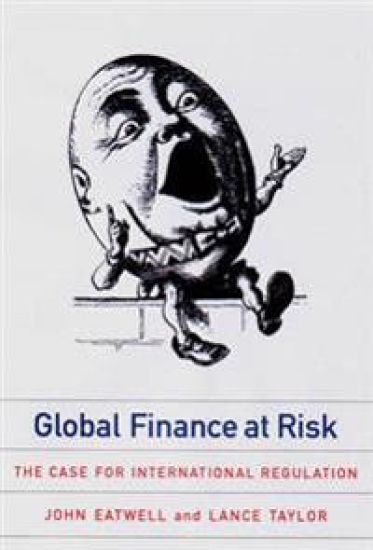
Global Finance at Risk

Global Finance at Risk

John Eatwell; Lance Taylor

The New Press
2001
nidottu
In Global Finance at Risk, two economists whom John Kenneth Galbraith has hailed as "accomplished scholars of the first rank" propose a bold solution to the financial crises that threaten us all: a World Financial Authority with powers to establish worldwide best-practice financial regulation and risk management. Expansion of finance in industrialized economies, including that of the nineteenth-century United States, was accompanied by the same kind of turbulence now afflicting Asia, Russia, and Latin America. Then, the solution was to establish national banking and securities regulators, create deposit insurance, and empower lenders of last resort. But in our increasingly globalized times, an account opened at a local bank can be based on bad debt from anywhere in the world, including places outside the jurisdiction of those national agencies. And when banks fail, it is not only their account holders who suffer, but all of us. This is why, argue John Eatwell and Lance Taylor in this timely and urgent book, effective regulation of international finance is crucial to the economic health of all nations. Global Finance at Risk casts a welcome light on the deepening intricacies of world financial systems.
Global Finance at Risk

Global Finance at Risk

John Eatwell; Lance Taylor

Polity Press
2000
sidottu
In Global Finance at Risk, two acclaimed economists propose a bold and necessary solution to the financial crises that threaten us all: a World Financial Authority with powers to establish best-practice financial regulation and risk management everywhere. The expansion of finance in industrialized economies, including nineteenth-century Britain and the United States, saw exactly the same kind of turbulence now afflicting Asia, Russia and Latin America. Then, the solution was to establish national banking and securities regulators, deposit insurance and lenders of last resort. But in our increasingly globalized world, the savings account you open at your local bank can be based on bad debt from anywhere in the world, including places outside the jurisdiction of those national agencies. And when banks fail, it is not just their account-holders who suffer, but all of us. This is why, argue John Eatwell and Lance Taylor in this timely and urgent book, effective regulation of the international financial system is crucial for the economic health of all nations. Global Finance at Risk presents a compelling case for the international regulation of world financial systems. Written in a clear and accessible style and addressing one of the most critical issues in the world today, this is a book which deserves to be widely read and discussed.
Coping with Global Unemployment

Coping with Global Unemployment

John Eatwell

M.E. Sharpe
1995
sidottu
A collection of papers that address unemployment as a social phenomenon. It suggests there are solutions if society is willing to take the steps necessary to find and implement them. Focus is on the persistent unemployment in the USA and the UK.
Coping with Global Unemployment

Coping with Global Unemployment

John Eatwell

M.E. Sharpe
1995
nidottu
A collection of papers that address unemployment as a social phenomenon. It suggests there are solutions if society is willing to take the steps necessary to find and implement them. Focus is on the persistent unemployment in the USA and the UK.