Kirjojen hintavertailu – 12 859 824 kirjaa ja 27 kauppaa

Kirjailija

John Elder

Kirjat ja teokset yhdessä paikassa: 24 kirjaa, julkaisuja vuosilta 1996–2026, suosituimpiin kuuluu Archipelago. Vertaile teosten hintoja ja tarkista saatavuus suomalaisista kirjakaupoista.

24 kirjaa

Kirjojen julkaisuvuodet: 1996–2026.

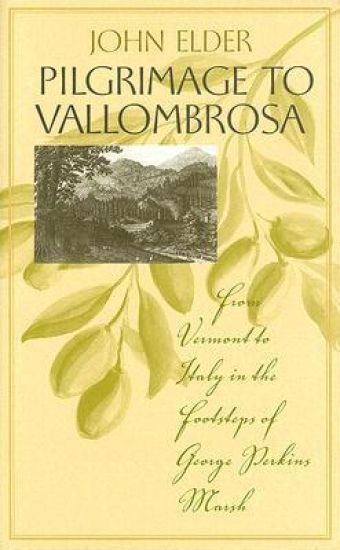
Pilgrimage to Vallombrosa

Pilgrimage to Vallombrosa

John Elder

University of Virginia Press
2006
sidottu
The pivotal figure in John Elder's latest book - itself a combination of environmental history, travel writing, literary criticism, and memoir - is the nineteenth-century diplomat and writer George Perkins Marsh, generally regarded now as Americais first environmentalist. Like Elder, Marsh was a Vermonter, and his diplomatic career took him for some years to Italy, where, witnessing the ecological devastation wrought upon the landscape by runaway deforestation and the plundering of other natural resources, he was moved to produce his famous manifesto, Man and Nature. Marsh drew parallels between the despoiled Italian environment and his home landscape of Vermont, warning that it was vulnerable to ecological woes of a similar magnitude if not carefully maintained and protected. In short, his was a prescient voice for stewardship. On a Fulbright year, Elder chooses to follow in Marsh's footsteps along a trajectory running from Vermont to Italy, and at length fetches up at the managed forest of Vallombrosa - which, as it happens, boasts a stand of sugar maples planted by Marsh. Punctuated throughout with learned and genial considerations of the poetry of Wordsworth, Basho, Dante, and Frost, Elderis narrative takes up issues of sustainability as practiced locally, reports on family doings (including his wife's reconnecting with Italian relatives), and returns finally - as did Marsh's - to Vermont, where he measures traditional stewardship values against more aggressive conservation-oriented measures such as the expansion of wilderness areas. Elder also extends the idea of sustainability from maintaining a healthy human-environmental balance to maintaining a strong web of social relationships within both the family and the larger community. Here is an exceptional reading experience, the chance to follow two of the finest chroniclers of our place in nature - separated by years, but by surprisingly little else.
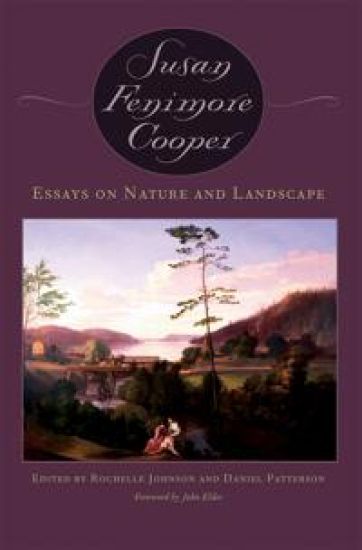
Essays on Nature and Landscape

Essays on Nature and Landscape

Susan Fenimore Cooper; John Elder

University of Georgia Press
2002
pokkari
Susan Fenimore Cooper (1813-1894), though often overshadowed by her celebrity father, James Fenimore Cooper, has recently become recognized as both a pioneer of American nature writing and an early advocate for ecological sustainability. Editors Rochelle Johnson and Daniel Patterson have assembled here a collection of ten pieces by Cooper that represent her most accomplished nature writing and the fullest articulation of her environmental principles. With one exception, these essays have not been available in print since their original appearance in Cooper's lifetime. A portrait of her thoughts on nature and how we should live and think in relation to it, this collection both contextualizes Cooper's magnum opus, Rural Hours (1850), and demonstrates how she perceived her work as a nature writer. Frequently her essays are models of how to catch and keep the interest of a reader when writing about plants, animals, and our relationship to the physical environment. By lamenting the decline of bird populations, original forests, and overall biodiversity, she champions preservation and invokes a collective environmental conscience that would not begin to awaken until the end of her life and century. The selections include independent essays, miscellaneous introductions and prefaces, and the first three installments from Cooper's work of literary ornithology, "Otsego Leaves," arguably her most mature and fully realized contribution to American environmental writing. In addition to a foreword by John Elder, one of the nation's leading environmental educators, an introduction analyzes each essay in various cultural contexts. Brief but handy textual notes supplement the essays. Perfect for nature-writing aficionados, environmental historians, and environmental activists, this collection will radically expand Cooper's importance to the history of American environmental thought.
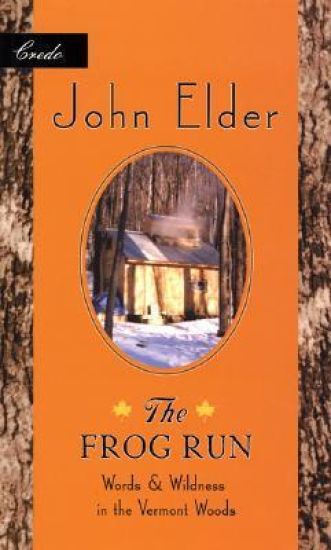
The Frog Run

The Frog Run

John Elder

Milkweed Editions
2002
pokkari
The North Woods tradition of making maple syrup serves as an illuminating backdrop for John Elder’s reflections on nature, literature, playfulness, and fatherhood, as he builds a sugaring house with his sons. The tail end of the sugaring season in New England is called the “frog run,” when pools of snowmelt teem with frogs and the last run of sap good for making syrup flows from the maple trees. For John Elder, a longtime resident of Vermont, a professor of English, and a man at midlife, this moment is a metaphor of loss and resurgence. In The Frog Run, Elder describes how he found a way to balance his passions for literature and for the outdoors by building a sugarhouse with his sons in the Vermont woods. For Elder, who also writes in this book about the resurgence of New England forests and about his life as a reader—moving from the game of Go to the Psalms and Basho—the frog run is a time to savor and celebrate the fleeting beauties of his family’s place on earth. Moving and elegant, The Frog Run is a testimony to the value of embracing what seems lost.
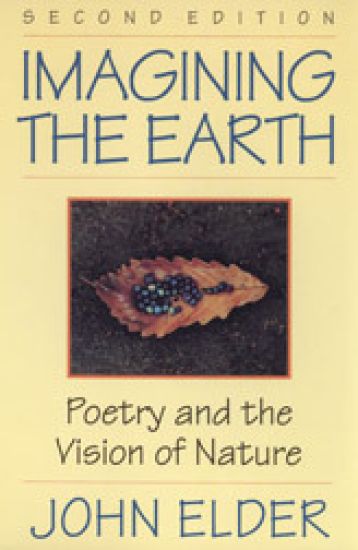
Imagining the Earth

Imagining the Earth

John Elder

University of Georgia Press
1996
pokkari
A landmark work in the burgeoning field of literary ecology, Imagining the Earth explores the ways in which our attitudes toward nature are mirrored in and influenced by poetry. In the work of some of our most widely read poets, says John Elder, one can discern a resurgent vision of humanity in harmony with the rest of the natural order. To show us the power of poetry to identify, interpret, and celebrate a wide range of issues related to nature and our place in it, Elder uses numerous examples of works by Gary Snyder, Wendell Berry, A. R. Ammons, Denise Levertov, and William Everson. Elder places these poets within a cultural tradition flowing from William Wordsworth through Alfred North Whitehead, T. S. Eliot, and Robinson Jeffers, and uses their poems to illuminate the relationships between culture and wilderness, imagination and landscape, and science and poetry. Elder's commentaries are interlinked with two remarkable essays in which he describes his ow