Kirjojen hintavertailu – 12 903 725 kirjaa ja 27 kauppaa

Kirjailija

John Ellis

Kirjat ja teokset yhdessä paikassa: 107 kirjaa, julkaisuja vuosilta 1986–2026, suosituimpiin kuuluu The Avoidable Causes of Disease, insanity and Deformity. Fourth Edition. by John Ellis ... A Book For the People As Well As For the Profession .... Vertaile teosten hintoja ja tarkista saatavuus suomalaisista kirjakaupoista.

107 kirjaa

Kirjojen julkaisuvuodet: 1986–2026.

French Vocabulary for Key Stage 3 and Common Entrance (2nd Edition)
This vocabulary book contains over 100 pages, covering all the topics in the 13+ French syllabus making it ideal for all Key Stage 3 and Common Entrance pupils. Clearly arranged by topic, the book is divided into basic and advanced vocabulary to stretch the most able pupils.- Endorsed by ISEB- Includes all the vocabulary required for Key Stage 3, Common Entrance and other entrance exams at 13+ to ensure pupils know the French vocabulary required at this level- Material is arranged by topic for ease of learning- The clear and structured format of the book makes it ideal for revision and independent learning outside the classroom

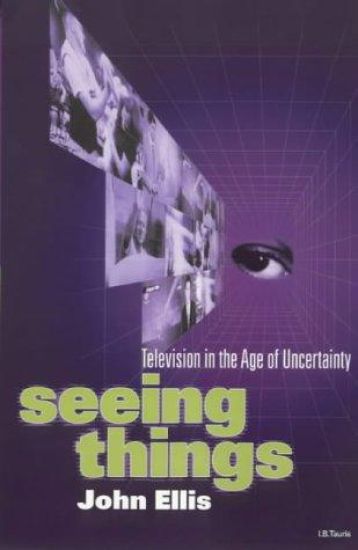
Seeing Things

Seeing Things

John Ellis

I.B. Tauris
1999
sidottu
Television, the author argues, responds to two powerful desires of our age: it makes us witnesses of often traumatic events and it tries - and fails - to provide us with narratives that make sense of the world. The author makes sense of modern television, both by exploring its processes and in terms of its dynamic relationships with the cultures that provide it with raw material. Television, he proposes, offers us multiple ways of understanding the world, yet does not arbitrate between them. He explores this process as one of "working through", whereby television news takes in the chaos and conflict of the world and subsequent programmes of all kinds offer diverse ways of unravelling its confusions, from the psychobabble of talk shows to the open narratives of soaps, documentaries and dramas. By means of this working through, problems are exhausted rather than resolved. The author demonstrates how television's function in its new era is no longer that of building consensus; rather it uses all the means at its disposal, including sophisticated computer graphics, to mediate etween conflicting approaches to our age of uncertainty.
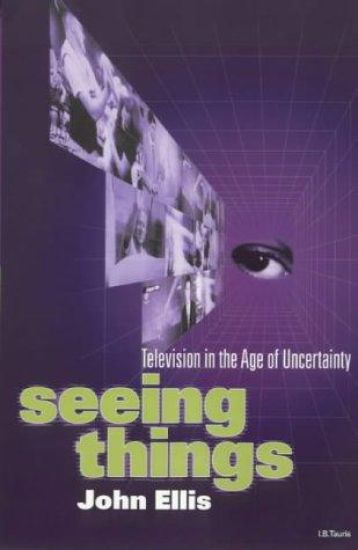
Seeing Things

Seeing Things

John Ellis

I.B. Tauris
1999
nidottu
Television, the author argues, responds to two powerful desires of our age: it makes us witnesses of often traumatic events and it tries - and fails - to provide us with narratives that make sense of the world. The author makes sense of modern television, both by exploring its processes and in terms of its dynamic relationships with the cultures that provide it with raw material. Television, he proposes, offers us multiple ways of understanding the world, yet does not arbitrate between them. He explores this process as one of "working through", whereby television news takes in the chaos and conflict of the world and subsequent programmes of all kinds offer diverse ways of unravelling its confusions, from the psychobabble of talk shows to the open narratives of soaps, documentaries and dramas. By means of this working through, problems are exhausted rather than resolved. The author demonstrates how television's function in its new era is no longer that of building consensus; rather it uses all the means at its disposal, including sophisticated computer graphics, to mediate between conflicting approaches to our age of uncertainty.
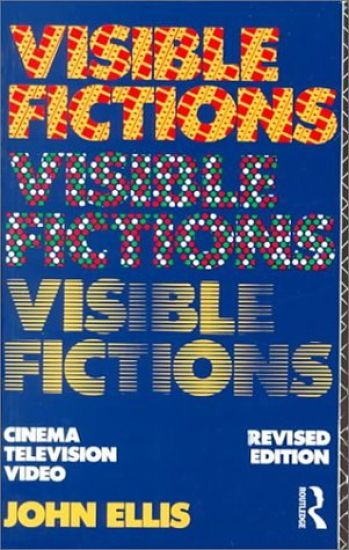
Visible Fictions

Visible Fictions

John Ellis

Routledge
1992
nidottu
This revised edition of a standard textbook combines an examination of the cinema and television industries with a detailed analysis of their aesthetic and semiotic characteristics. John Ellis draws on his experience as an independent television producer to provide a comprehensive and challenging overview of the place of film, television and video in our daily lives and their future prospects in a changing media landscape.
Eye-Deep in Hell

Eye-Deep in Hell

John Ellis

Johns Hopkins University Press
1989
pokkari
Millions of men lived in the trenches during World War I. More than six million died there. In Eye-Deep in Hell, the author explores this unique and terrifying world-the rituals of battle, the habits of daily life, and the constant struggle of men to find meaning amid excruciating boredom and the specter of impending death.
The Social History of the Machine Gun

The Social History of the Machine Gun

John Ellis

Johns Hopkins University Press
1986
pokkari
In this stunning account of the human impact of a single machine, John Ellis argues that the history of technology and military history are "part and parcel of social history in general." The Social History of the Machine Gun, now with a new foreword by Edward C. Ezell, provides an original and fascinating interpretation of weaponry, warfare, and society in nineteenth-and twentieth-century Europe and America. From its beginning, the machine gun threatened established assumptions about the nature of war. In spite of its highly effective use in the European colonization of Africa, the machine gun was resisted by military elites, who clung to "the old certanties of the battlefield—the glorious change and opportunities for individual heroism." These values were carried into the trenches of World War I and swept away along with a generation of soldiers. After the war, machine guns became commercially availble in America and in many ways became a symbol of the times. Advertisements touted the Thompson submachine gun as the ideal weapon for protecting factory and farm, while "tommy guns" entered the culture's imagination with Machine Gun Kelly and Boonie and Clyde. More significantly, Ellis suggests, the machine gun was the catalyst for the modern arms race. It necessitated a technological response: first the armored tank, then the jet fighter, and, perhaps ultimately, the hydrogen bomb.