Kirjojen hintavertailu – 12 903 724 kirjaa ja 27 kauppaa

Kirjailija

John Etty

Kirjat ja teokset yhdessä paikassa: 7 kirjaa, julkaisuja vuosilta 2018–2025, suosituimpiin kuuluu Cambridge IGCSE™ and O Level History Option B: the 20th Century Coursebook with Digital Access (2 Years). Vertaile teosten hintoja ja tarkista saatavuus suomalaisista kirjakaupoista.

7 kirjaa

Kirjojen julkaisuvuodet: 2018–2025.

Cambridge IGCSE™ and O Level History Option B: the 20th Century Coursebook with Digital Access (2 Years)

Cambridge IGCSE™ and O Level History Option B: the 20th Century Coursebook with Digital Access (2 Years)

Paul Grey; Rosemarie Little; Robin Macpherson; John Etty

Cambridge University Press
2023
muu
Help your learners discover a curiosity for exploring the past with our new history coursebook with digital access. Endorsed for Option B, the 20th Century, this resource provides comprehensive coverage of all six core Key Questions as well as five depth studies, including Germany, Russia, USA, The First World War and The Second World War. From essay writing support and highlighted key terms, to source analysis and revision tips, this clear and accessible coursebook is ideal for international learners. Access your digital resource on Cambridge GO.
Cambridge IGCSE® and O Level History Option B: the 20th Century Coursebook

Cambridge IGCSE® and O Level History Option B: the 20th Century Coursebook

Paul Grey; Rosemarie Little; Robin Macpherson; John Etty; Graham Goodlad

Cambridge University Press
2018
pokkari
Cambridge IGCSE® and O Level History Second edition for Option B: the 20th Century of the syllabus (0470,2147), updated for the revised syllabus for first examination from 2020 and now supporting O Level as well. Help your students take an enquiry-led approach to historical learning with Cambridge IGCSE® and O Level History. Full of activities and primary and secondary sources, this resource encourages the application of historical skills and enables investigative questioning of cause and consequence. Endorsed by Cambridge Assessment International Education for Option B, the coursebook is written by a team of experienced teachers and provides comprehensive coverage of all of the Key Questions and four of the Depth Studies for syllabus Option B: the 20th Century. Sample answers to a selection of the exam-style questions can be found in the teacher's resource.
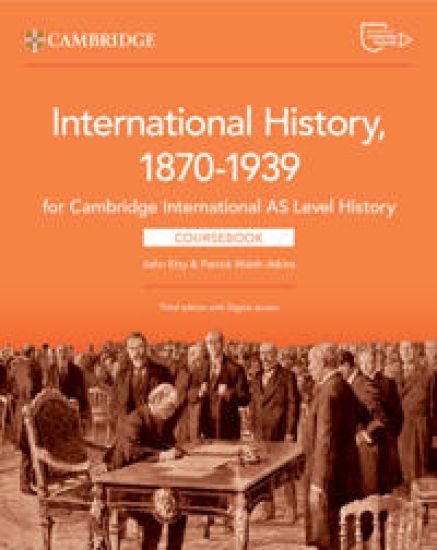
Cambridge International AS Level History International History 1870–1939 Coursebook with Digital Access (2 Years)
This coursebook supports students as they explore global history. This edition offers a variety of activities, including source work and practice questions, to help students build a deep understanding of key historical concepts and develop essential skills. Activities throughout each chapter encourage independent learning, and with opportunities for reflection. This edition brings global history to life, with engaging features to spark discussions and deepen understanding. Suitable for the Cambridge International AS Level History syllabus (9489/9982) for examination from 2027, this coursebook also provides digital access, offering digital resources and answers on Cambridge GO.
Cambridge IGCSE™ and O Level History Option B: the 20th Century Digital Teacher's Resource Access Card
Feel supported as you and your learners work through the Cambridge IGCSE™ and O Level History Option B: the 20th Century syllabus with our digital teacher's resource. From 'Teaching plans' for the Core and Depth Study chapters, to language support boxes and assessment ideas, you will feel confident in your teaching approach. Access to your digital teacher's resource is available via Cambridge GO.
Cambridge International AS Level History Digital Teacher's Resource Access Card

Cambridge International AS Level History Digital Teacher's Resource Access Card

John Etty; Philip Wadsworth; Anna Cowper

Cambridge University Press
2019
lisenssiavain
This series is for the Cambridge International AS History syllabus (9489) for examination from 2021. This card gives you access to your digital teacher's resource on the Cambridge Elevate platform. Providing you with practical assistance for all three coursebooks, this Cambridge Elevate teacher's resource saves you time with preparation and planning. The digital resource places an emphasis on language support with detailed advice and multiple activities you can include in your lessons to help build students' confidence. We understand the importance of enabling your students to practise with sources, so we've included a wealth of activities and worksheets which will develop their skills and enhance your lessons. Includes sample answers to activities and exam-style questions.
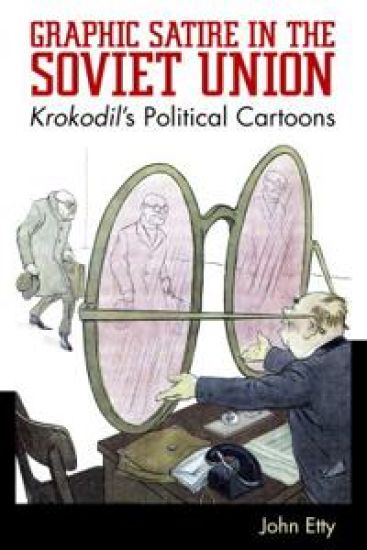
Graphic Satire in the Soviet Union

Graphic Satire in the Soviet Union

John Etty

University Press of Mississippi
2019
sidottu
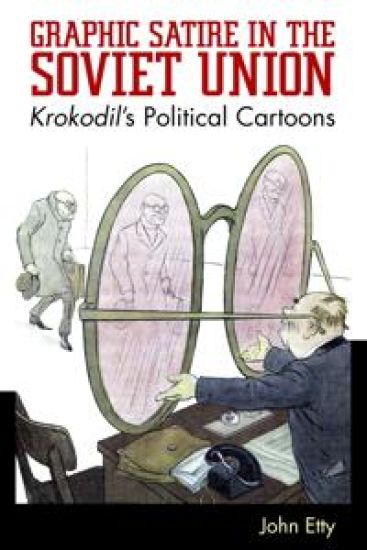
After the death of Joseph Stalin, Soviet-era Russia experienced a flourishing artistic movement due to relaxed censorship and new economic growth. In this new atmosphere of freedom, Russia's satirical magazine Krokodil (The Crocodile) became rejuvenated. John Etty explores Soviet graphic satire through Krokodil and its political cartoons. He investigates the forms, production, consumption, and functions of Krokodil, focusing on the period from 1954 to 1964. Krokodil remained the longest-serving and most important satirical journal in the Soviet Union, unique in producing state-sanctioned graphic satirical comment on Soviet and international affairs for over seventy years. Etty's analysis of Krokodil extends and enhances our understanding of Soviet graphic satire beyond state-sponsored propaganda. For most of its life, Krokodil consisted of a sixteen-page satirical magazine comprising a range of cartoons, photographs, and verbal texts. Authored by professional and nonprofessional contributors and published by Pravda in Moscow, it produced state-sanctioned satirical comment on Soviet and international affairs from 1922 onward. Soviet citizens and scholars of the USSR recognized Krokodil as the most significant, influential source of Soviet graphic satire. Indeed, the magazine enjoyed an international reputation, and many Americans and Western Europeans, regardless of political affiliation, found the images pointed and witty. Astoundingly, the magazine outlived the USSR but until now has received little scholarly attention.
Graphic Satire in the Soviet Union

Graphic Satire in the Soviet Union

John Etty

University Press of Mississippi
2018
nidottu
After the death of Joseph Stalin, Soviet-era Russia experienced a flourishing artistic movement due to relaxed censorship and new economic growth. In this new atmosphere of freedom, Russia's satirical magazine Krokodil (The Crocodile) became rejuvenated. John Etty explores Soviet graphic satire through Krokodil and its political cartoons. He investigates the forms, production, consumption, and functions of Krokodil, focusing on the period from 1954 to 1964. Krokodil remained the longest-serving and most important satirical journal in the Soviet Union, unique in producing state-sanctioned graphic satirical comment on Soviet and international affairs for over seventy years. Etty's analysis of Krokodil extends and enhances our understanding of Soviet graphic satire beyond state-sponsored propaganda. For most of its life, Krokodil consisted of a sixteen-page satirical magazine comprising a range of cartoons, photographs, and verbal texts. Authored by professional and nonprofessional contributors and published by Pravda in Moscow, it produced state-sanctioned satirical comment on Soviet and international affairs from 1922 onward. Soviet citizens and scholars of the USSR recognized Krokodil as the most significant, influential source of Soviet graphic satire. Indeed, the magazine enjoyed an international reputation, and many Americans and Western Europeans, regardless of political affiliation, found the images pointed and witty. Astoundingly, the magazine outlived the USSR but until now has received little scholarly attention.